Nestled between the Churchill River and the shore of Hudson Bay, Churchill is the self-proclaimed ’Polar Bear and Beluga Whale Capital of the World’ and is also one of the best places to see the Aurora Borealis.
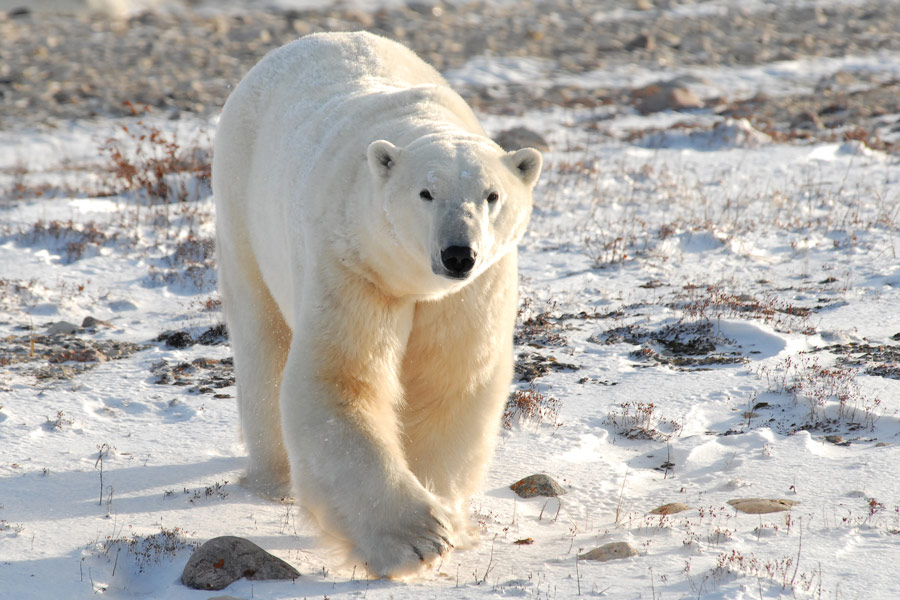
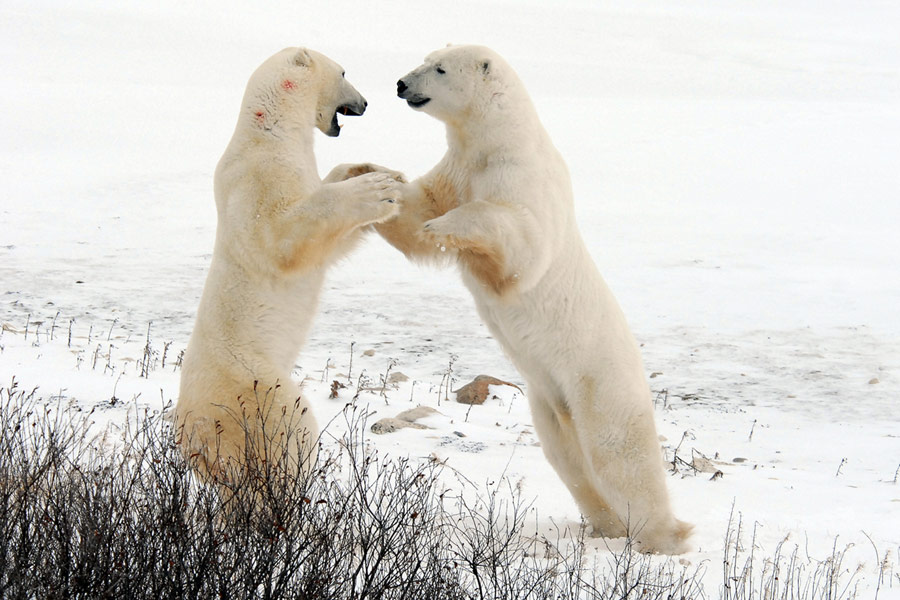
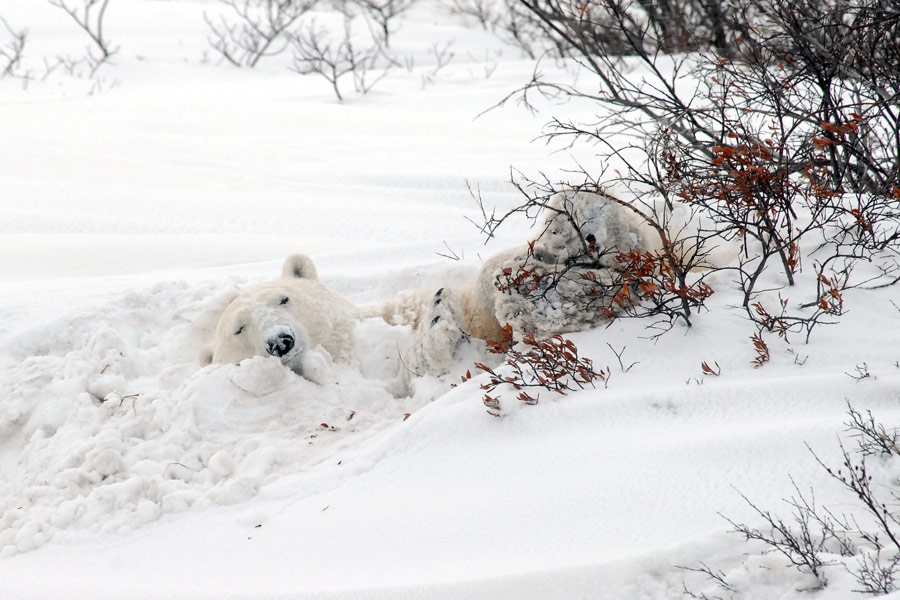
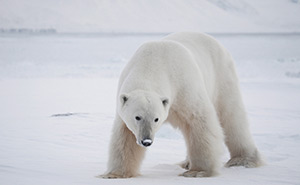
Each autumn hundreds of polar bears congregate near Churchill, which lies on the bear’s migratory path, meaning it’s the only human settlement where they can be observed in the wild. Set in the pristine wilderness area of Northern Manitoba, the coastline is so remote that it has changed little in thousands of years, and its wildlife and landscapes attract travellers and photographers from around the world.
The town’s primary industry is tourism, and visitors come each year to see the flora and fauna that thrives on the tundra and in the icy waters of Hudson Bay. As Churchill lies beyond the northernmost extent of the boreal forest, its climate is sub arctic: in July the average temperature is around 12° Celsius, whereas in winter it dips to −27°.
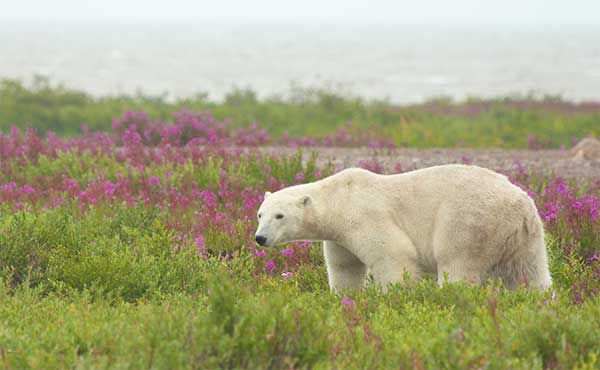
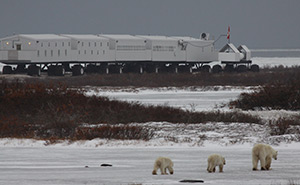
The polar bears spend the short summer season along the Hudson Bay coastline before heading towards Cape Churchill, as winter approaches and the sea begins to freeze. Once the sea ice is thick enough, the bears head north onto the ice floes to spend the winter hunting seals – their preferred food. Most polar bear tours take place in October and November, at the peak of this annual migration, although bears may also be seen in summer foraging for whatever food they can find.
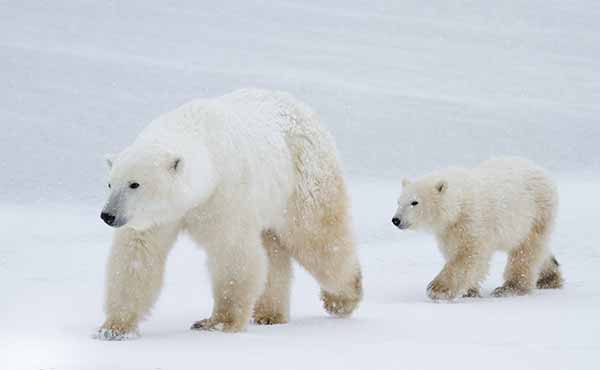
Some 45kms south of Churchill, on the shore of Hudson Bay, wild and remote, Cape Churchill is renowned as the best location in the world to see and photograph polar bears in the wild. The cape is in Wapusk National Park, established in 1996, which takes its name from the Cree word for ‘white bear.’ This boggy peatland protects one of the world’s largest polar bear denning areas, where mothers give birth to their cubs. Numerous birds are found here, including the short-billed dowitcher which breeds here.
The only access to the protected area of 11,475sqkms is by purpose-designed Tundra Buggy or helicopter. During the peak season for bear watching, accommodation becomes scarce in Churchill, and we use various hotels, all of which are small, clean and functional, rather than luxurious. And all offer a hearty welcome, adequate comfort, plus warm rooms with en suite facilities, and are close to the town centre – so make a good base for a polar bear adventure.
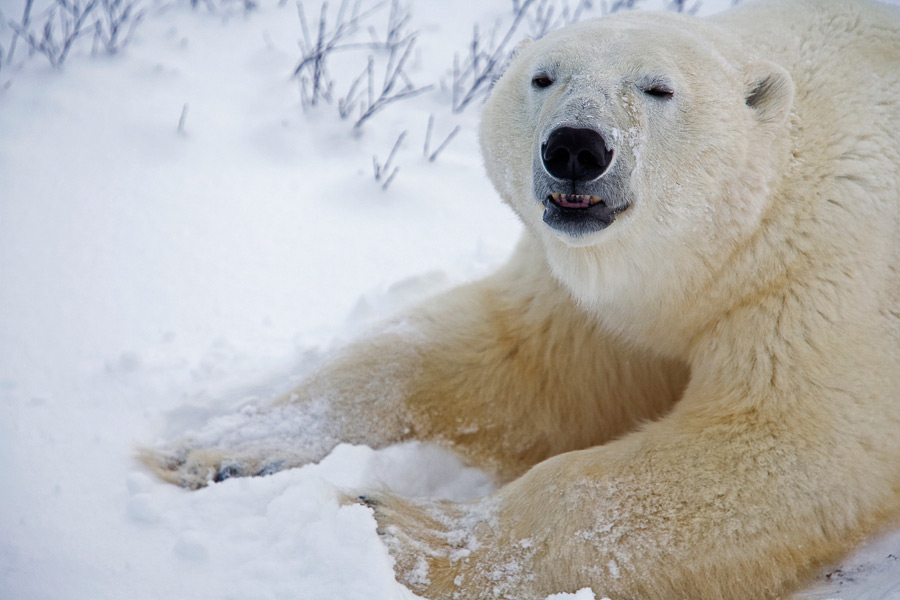
The polar bear is the world’s largest land-dwelling carnivore, and are supremely well adapted for living in extremely low temperatures, for moving across snow, ice and open water, and for hunting seals – which makes up the bulk of their diet. During the summer, when there is no sea ice, they live on land and from their fat reserves.
During the summer months, the waters at the mouth of the Churchill River are home to roughly 3,000 beluga whales – the world’s largest concentration of these marine mammals. The beluga, or white whale (Delphinapterus leucas), is an Arctic and sub-Arctic-dwelling species, which – along with the narwhal – is one of two members of the family Monodontidae. This cetacean is often referred to as the sea canary due to the high-pitched twitter it produces. It can reach up to 5ms in length and sports a distinctive protuberance on its head. Conservation wise, the planet’s various beluga populations are considered anything from near threatened to critically endangered.
Males are larger than females, ranging in length from 2.6 to 6.7ms and weighing between 1,100 and 1,600 kilogrammes (occasionally up to 1,900 kilogrammes); females on the other hand measure an average of 3.6ms and weigh 700 to 1,200 kilogrammes. Alongside other species of toothed whales, this makes them medium sized. It’s impossible to confuse an adult beluga with any other species due to their white or greyish-white colour (although calves are usually a darker gray) and distinctive head shape. The so-called melon — a bulbous lump of oily, fatty tissue – is situated right in the centre of their forehead. Unlike many whales and dolphins, the beluga’s neck vertebrae are not fused, which allows it to turn its head in anthropomorphic fashion.
View suggested itineraries