Contrary to most pre-conceptions, Namibia is a land of remarkable diversity. Classed as an 'arid' country, the importance that water plays in its life cycle cannot be underestimated; it affects the very core of the country, sustains its living beings and shapes the surfaces upon which we gaze.
There are no compromises with Namibia; it as an unforgivingly and unapologetically beautiful country that, when visited, demands your attention. The scenery is mightily impressive in every possible way – incomprehensible at times, and though the species of wildlife that can been seen are not out of the ordinary, to encounter and observe any of them at close quarters in such surroundings is both humbling and exhilarating.
Accompanied by Wildlife Worldwide Director Nick Joynes, this small group luxury trip includes plenty of scenic flights by private light aircraft and some exceptional - and occasionally unique - accommodation, with opportunities to experience the diverse wildlife and landscapes of Namibia at close quarters.
Typical Itinerary
-
Day 1:
Depart UK
Depart from London Heathrow to O.R. Tambo International Airport.
-
Day 2:
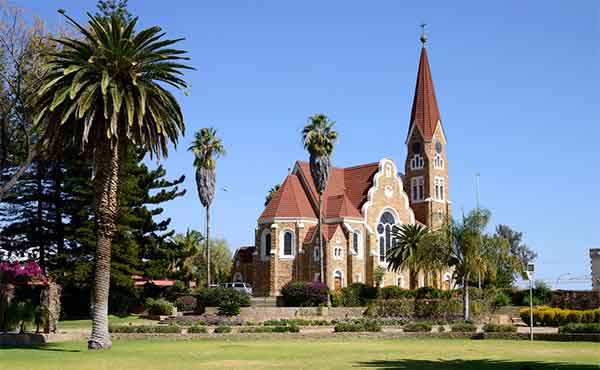
Arrive Windhoek
Having arrived into Windhoek airport you will be met and transferred by road to our accommodation. Nick Joynes will meet with the group in the evening and conduct an informal tour briefing over drinks, before an evening meal and early night.
Accommodation: Olive Grove Guesthouse, 1-night
-
Day 3:
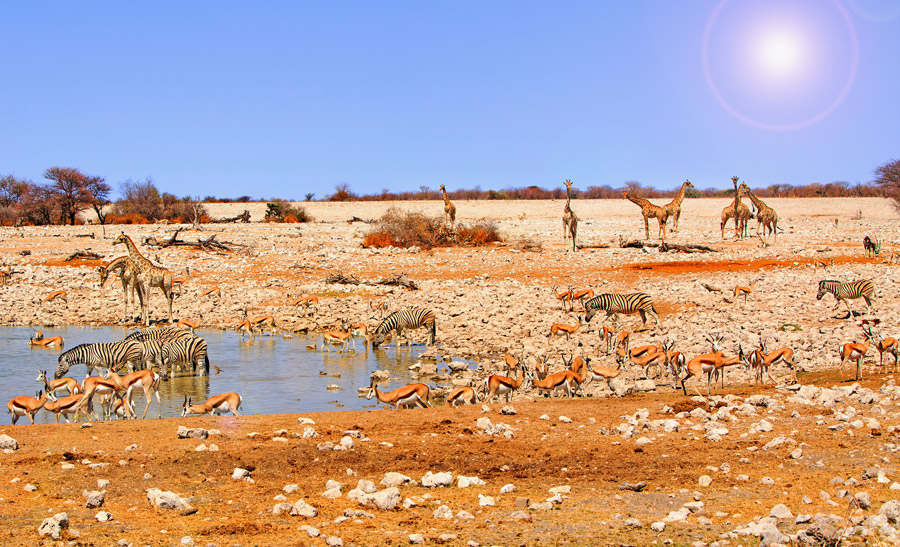
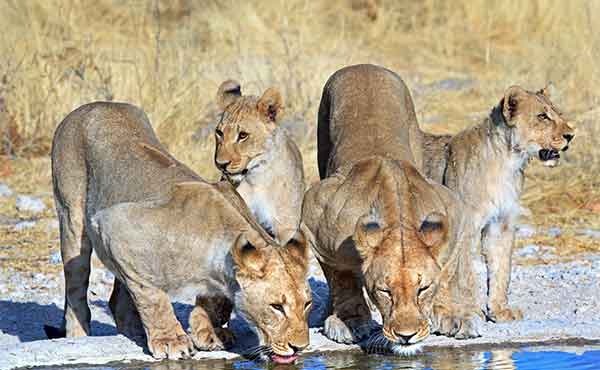
Fly-in to Onguma Private Reserve, game drives in Etosha National Park
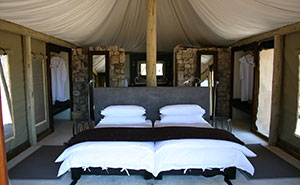
After a relaxed breakfast, we will transfer to the city centre airport and board a private light aircraft to Onguma Tented Camp, on the eastern edge of Etosha National Park.
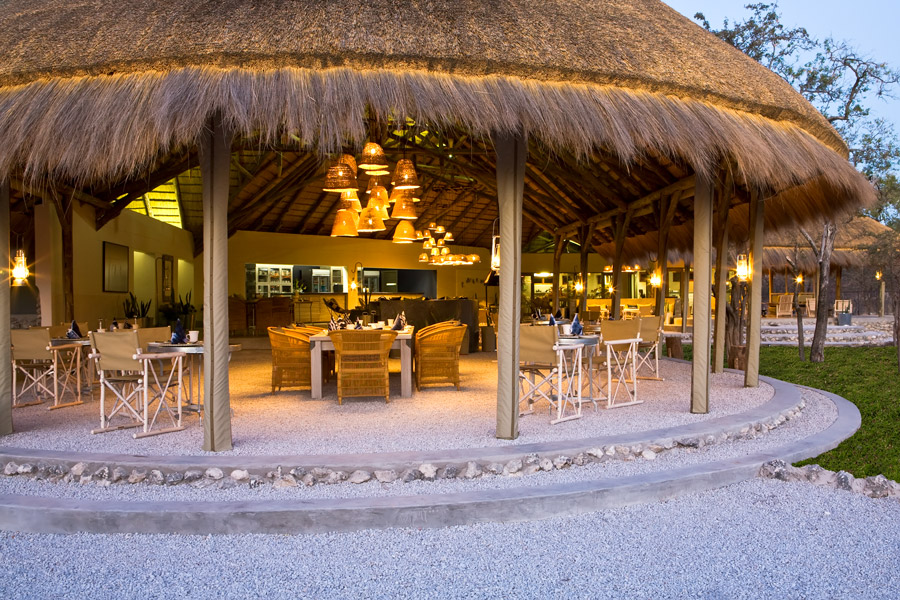
Having transferred to the camp from the private airstrip we will have a short while to settle into our rooms before enjoying a light lunch. We will then depart in the mid afternoon for our first game drive, to either explore the Onguma Private Reserve or eastern side of Etosha National Park.
Accommodation: Onguma Tented Camp, 2-nights
-
Day 4:
Etosha National Park & Onguma Private Reserve
Our day will be spent exploring the Onguma Private Reserve and eastern side of Etosha National Park - enjoying early morning and late afternoon game drives.
Although the decision of which order we shall embark on these safari's will be very much dictated by the movement of the animals, it is likely that we'll head into Etosha for a sunrise safari, before returning for lunch and an afternoon siesta, and enjoying a sunset safari in Onguma later on.
-
Day 5:
Explore southern side of Etosha National Park
We may have time for an early morning activity on the Onguma Private Reserve, before transferring to the airstrip and boarding our private light aircraft once more to transfer across Etosha to the Ongava Private Reserve on the National Park's southern perimeter.
Having transferred to the Camp from their private airstrip we will have a short while to settle into our rooms before enjoying a light lunch and then departing in the mid afternoon for our first game drive, to either explore the Ongava Private Reserve or the southern side Etosha National Park.
Accommodation: Anderssons at Ongava, 2-nights
-
Day 6:
Etosha National Park & Ongava Private Reserve
Our day will be spent exploring the Ongava Private Reserve and southern side of Etosha National Park - enjoying early morning and late afternoon game drives.
Again, the decision of which order we shall embark on these safari's will be very much dictated by the movement of the animals, it is likely that we'll head into Etosha for a sunrise safari, before returning for lunch and an afternoon siesta, and enjoying a sunset safari in Ongava later on.
-
Day 7:
Fly-in to Skeleton Coast - Hoanib River
This morning we will have an early breakfast before transferring to the airstrip and boarding our private light aircraft once more for a spectacular journey to the Hoanib River, backing on to the Skeleton Coast National Park. It is likely that our journey will be in two stages – first flying to an airstrip where our 4x4 land vehicles will meet us before transferring deeper into the Hoanib Concession to our luxury camp.
After a light lunch at the Camp we will have a short while to settle into our rooms before departing on our first of three explorations in search of some the desert adapted species that inhabit this area.
Accommodation: Hoanib Valley Camp, 2-nights
-
Day 8:
Morning & afternoon Hoanib River Explorations
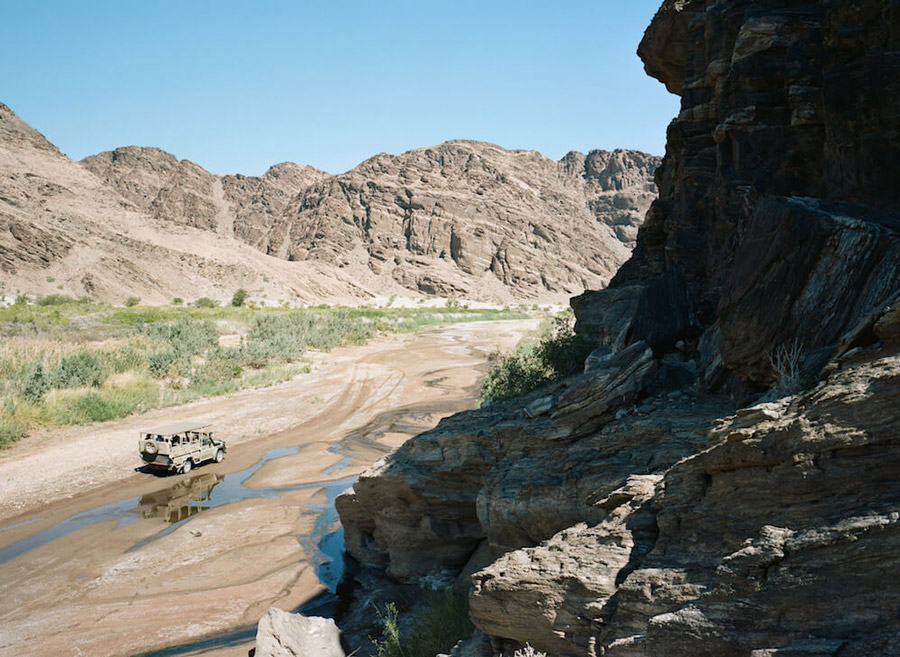
Our entire day will be spent exploring the dried river systems that feed into the Skeleton Coast National Park.
This is a remote land of rugged scenery, inhabited by plant and animal life that has adapted superbly to the harsh environment of mountains, vast plains, dunes and dry riverbeds.
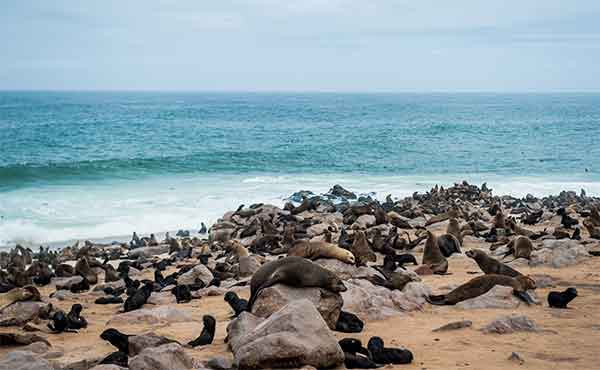
The northern sector in particular contains everything from soaring sand dunes and plains, to deep canyons, towering mountains, wide saltpans, huge seal colonies and numerous shipwrecks, as well as some interesting wildlife.
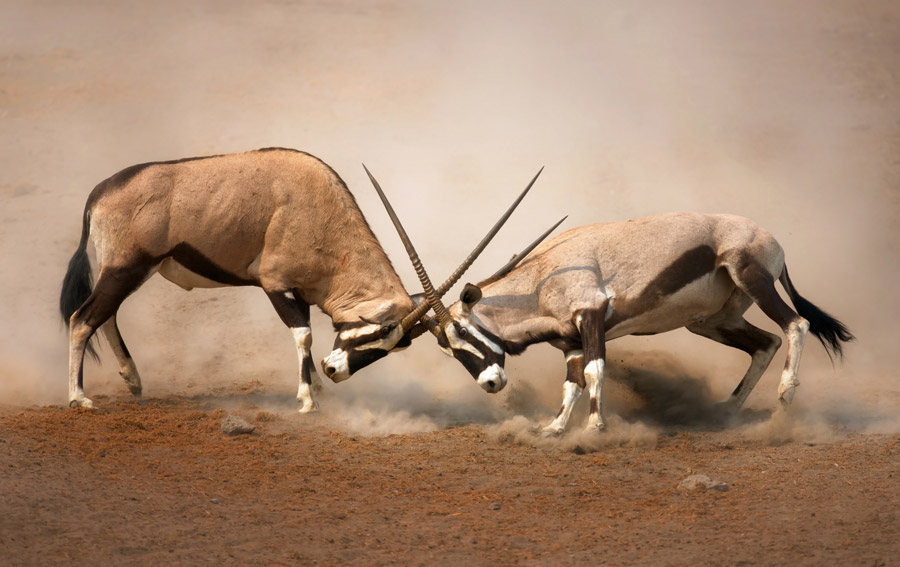
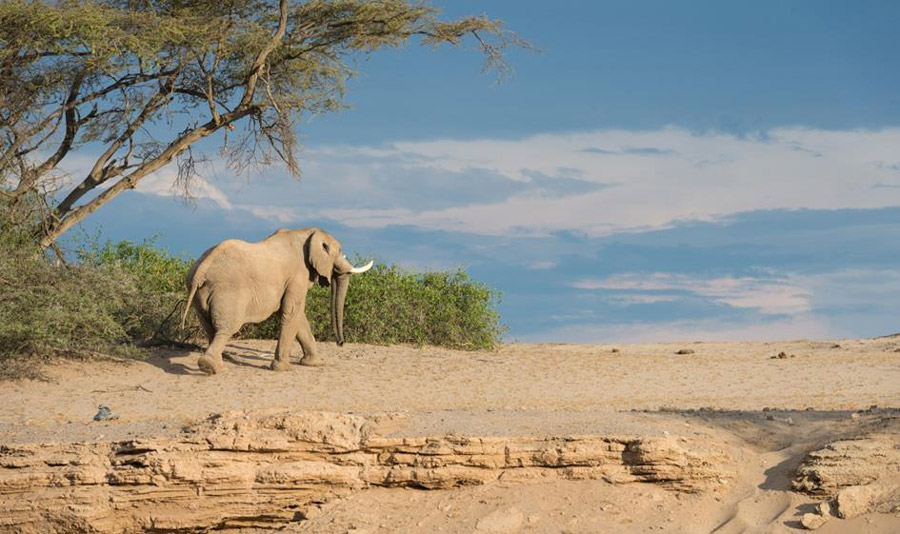
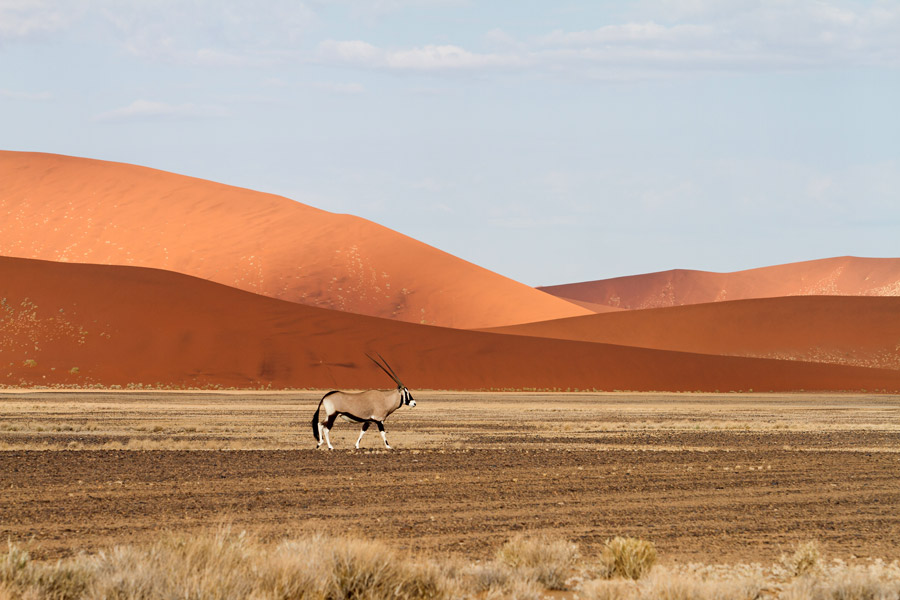
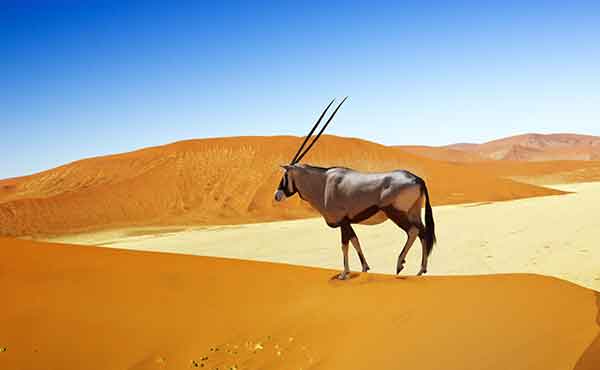
Freshwater springs permeate the barren sands to create life-sustaining oases for small pockets of wildlife in the middle of the desert. Hartmann’s mountain zebra, gemsbok, desert-adapted elephant, Cape fur seals, brown hyena, giraffe and - occasionally - cheetah and lion may all be found in this wild and rugged landscape.
-
Day 9:
Scenic transfer through Skeleton Coast to Hoarusib River & Atlantic Coast
This morning we will embark on our final exploration of the Hoanib river system area, which will also form the first part of an extended journey by land, northwards across the high and arid coastal plateau to the Hoarusib River. Also an ephemeral river, the Hoarusib is entirely different from the Hoanib. Not only does it flow through the northern dune belt of the Skeleton Coast National Park, but the river has many springs that sustain a healthy population of deserted adapted species.
Having crossed the plateau, we’ll cross the Skeleton Coast National Park boundary and continue to follow the course of Hoarusib river system through its ‘ports’ and visit the geologically-remarkable Clay Castles, taking time to enjoy a packed lunch en route. Eventually we will detect the smell of salt in the air and the Atlantic Ocean will emerge on the deserted horizon.
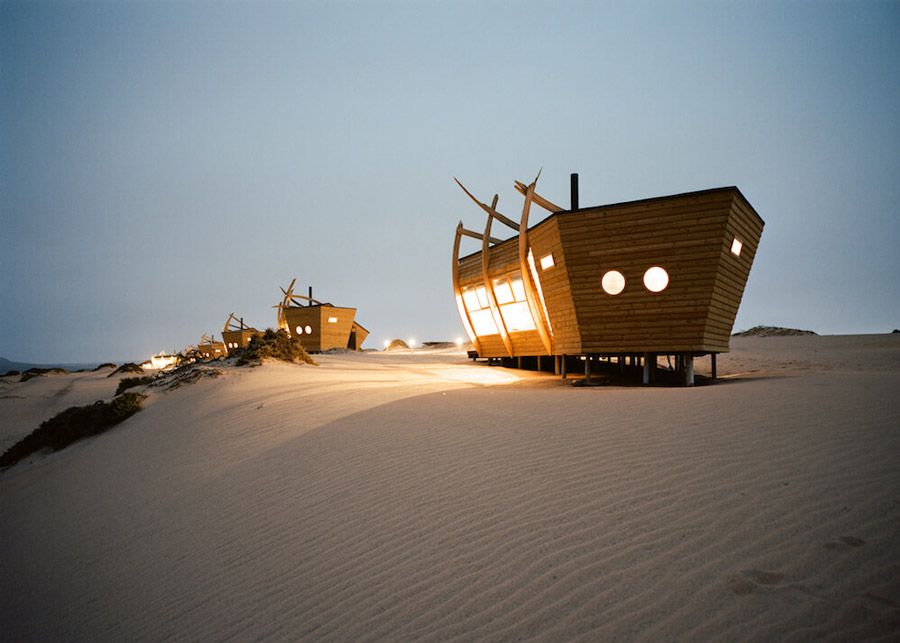
Our vehicles will nose-dive into coastal sand dunes and wade their way through thick sand to deliver us to our accommodation at the aptly named ‘Shipwreck Lodge’.
Surrounded by a mix of ecosystems the coastal region attracts varied wildlife and our stay at Shipwreck Lodge will involve drives that will aim to encounter desert-dwelling fauna, as well as providing an insight to the remarkable stories that are linked to this outstanding habitat.
Having spent a couple of hours settling into our new surroundings, we will depart on a late afternoon exploration of the area to visit a few of the most infamous locations of this incredible coastline.
Accommodation: Shipwreck Lodge, 2-nights
-
Day 10:
Explore Skeleton Coastline
It’s fair to say that there are few other parts of the continent quite like the Skeleton Coast. It’s a raw, rugged and impossibly remote slice of African wilderness, where towering dunes and wind-swept plains roll as far as the eye can see, buffeted by the icy Atlantic seas.
This morning, we will climb atop the dunes and spend time beachcombing for whale bones and debris from centuries of shipwrecks, all the while looking out for the wildlife that inhabitats the coastline.
-
Day 11:
Transfer to Swakopmund
Today we transfer down the Skeleton Coastline to Mowe Bay, to rendezvous with our private light aircraft and fly to the coastal town of Swakopmund.
Accommodation: The Strand Hotel, 1-night
-
Day 12:
Birdwatching - Walvis Bay dune lagoons & Namib Desert: Dune Sundowner
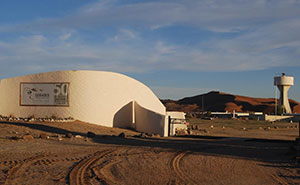
This morning we will meet with our 4x4 land vehicles and transfer into the spectacular landscapes of the Namib-Naukluft Desert – specifically to one of the most important and impressive arid areas of the country; The Kuiseb river, where the world famous Desert Research Centre is located.
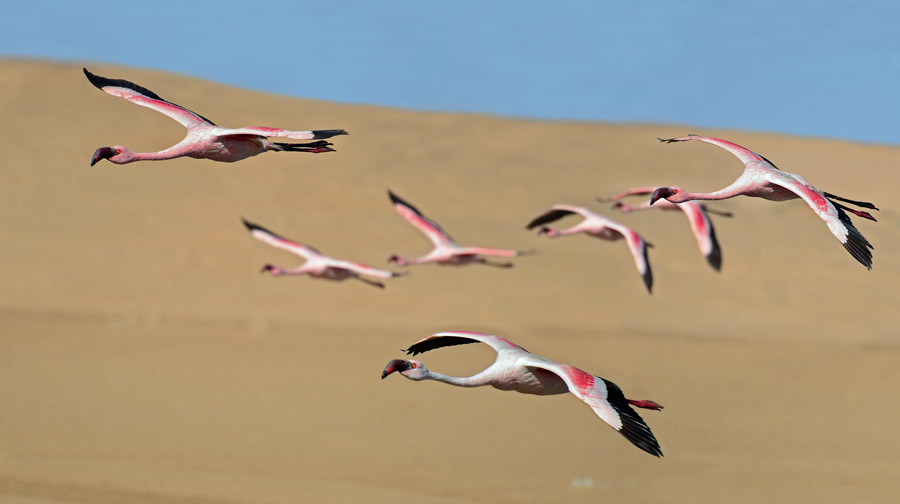
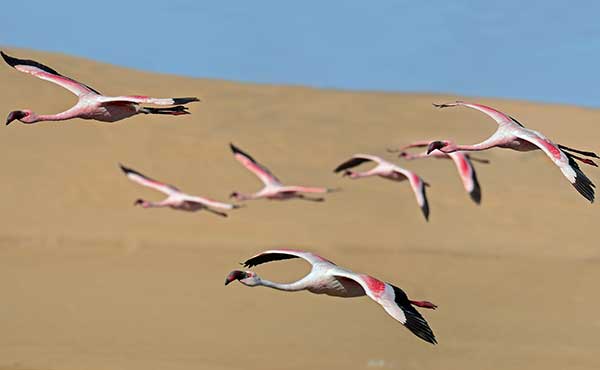
En route, we will visit the lagoons and coastal areas of Walvis Bay, which are a world-renowned sanctuary for some 160,000 birds, as well as a bi-annual feeding station for 200,000 migratory shore birds and terns. Some 70% of the world's chestnut-banded plovers rely on these lagoons for survival, and 80% of southern Africa's flamingos feed here.
Having spent a few hours enjoying a packed lunch and enjoying spotting a variety of birds, we will then take a two hour road transfer deeper into the northern section of the desert.
Having arrived at the Centre, we will have a short while to settle into our rooms before enjoying a relaxing guided walk into the dried river system of The Kuiseb and then climbing the northern dune ‘wall’ for an enjoyable sundowner before dinner and an introductory film about the work of the Desert Research Centre.
Accommodation: Gobabeb Research & Training Centre, 2-nights
-
Day 13:
Kuiseb River, northern Namib & Desert Research Centre
Our time at the Centre will be spent with some of the resident and visiting researchers exploring the dunes and understanding more about the work of the research that continues here.
-
Day 14:
Transfer to Walvis Bay & depart
This morning we will return by road to Walvis Bay and depart on a flight to Johannesburg. It is likely that we will need to pass through immigration at Johannesburg, collect our bags and check in again for our onward connecting flight back to the UK.
-
Day 15:
Arrive UK
Please note: Optional extensions are available to spend time at the AfriCat Foundation or to explore Sossusvlei and the Namib Desert, should you wish to extend your holiday. Please contact us for further details.