Experience the wildlife and landscape highlights of Namibia on this small group holiday. Enjoy safaris in Etosha National Park, track black rhino in the Palmwag Concession and see desert-adapted elephants in Damaraland.
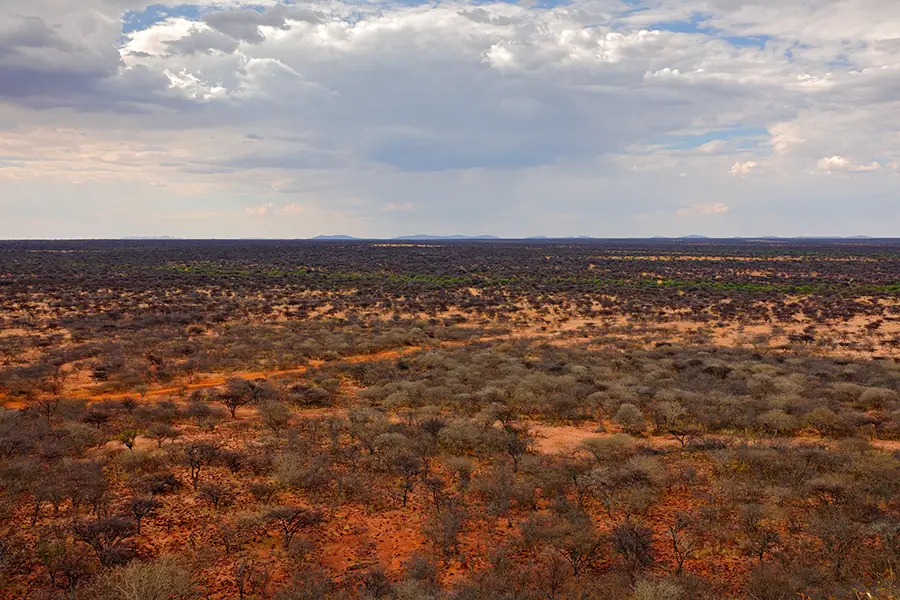
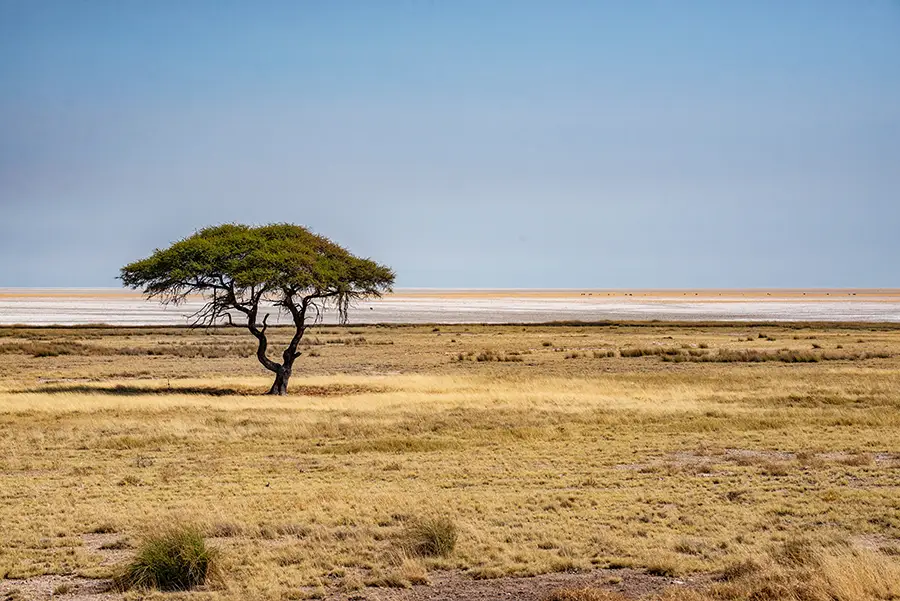
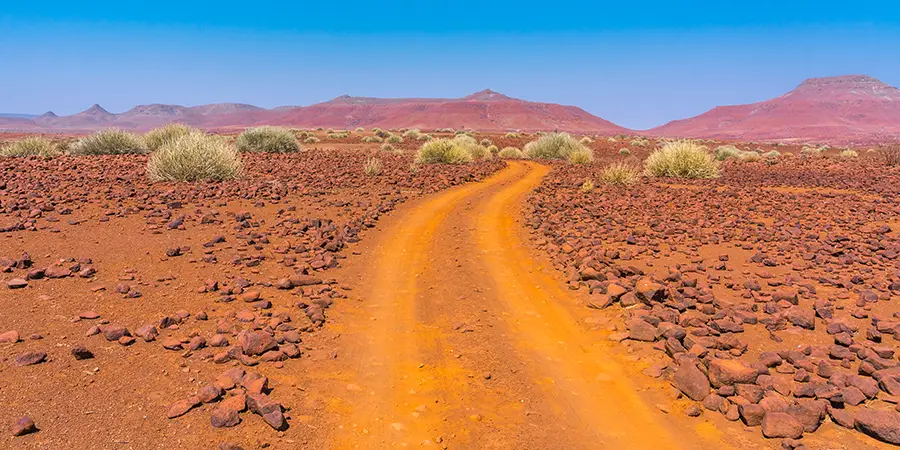
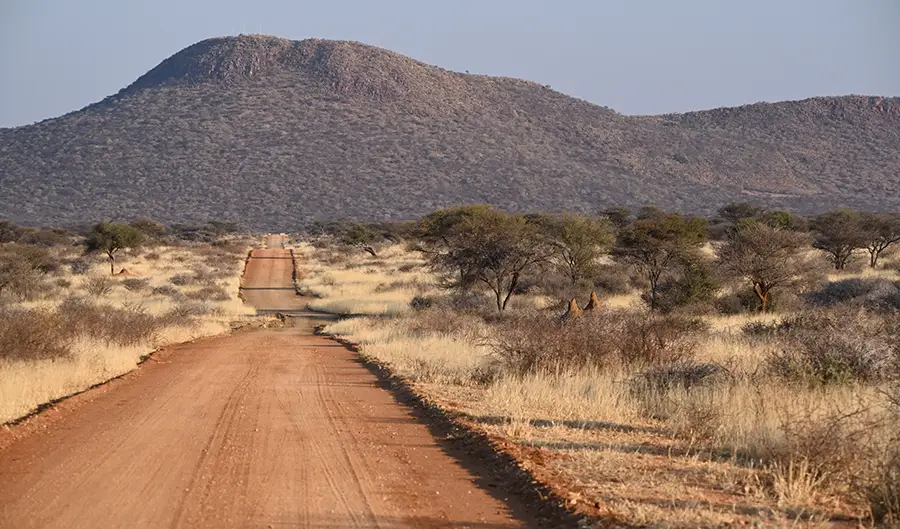
Contrary to most pre-conceptions, Namibia is a land of remarkable diversity. Classed as an ‘arid’ country, the importance that water plays in its life cycle cannot be over stated; it affects the very core of the country, sustains its living beings and shapes the surfaces upon which we gaze.
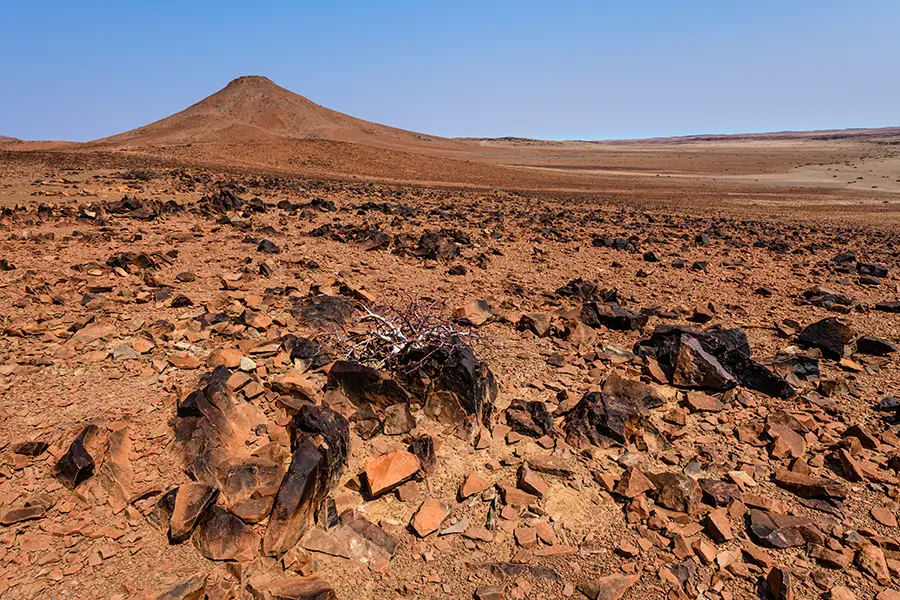
There are no compromises with Namibia; it is an unforgivingly and unapologetically beautiful country that, when visited, demands your attention. The scenery is mightily impressive in every possible way – incomprehensible at times, and though the species of wildlife that can been seen are not out of the ordinary, to encounter and observe any of them at close quarters in such surroundings is both humbling and exhilarating.
"It is like no other country in Africa that I have ever visited and virtually all of my finest and most memorable wildlife encounters have been experienced in Namibia." Nick Joynes, Wildlife Worldwide Director
Typical Itinerary
-
Day 1:
Depart UK
-
Day 2:
Transfer to accommodation
Upon arrival, our guides transfer us to our accommodation in the centre of Windhoek, where we have the afternoon to relax and recover from our journey and prepare for our itinerary through Namibia.
Accommodation: Utopia Boutique Guesthouse, 1-night
-
Day 3:
The AfriCat Foundation
Having had a relaxing night to recover from our journey from the UK, we make a prompt start after an early breakfast to make the four hour drive northwards to the private reserve of Okonjima.
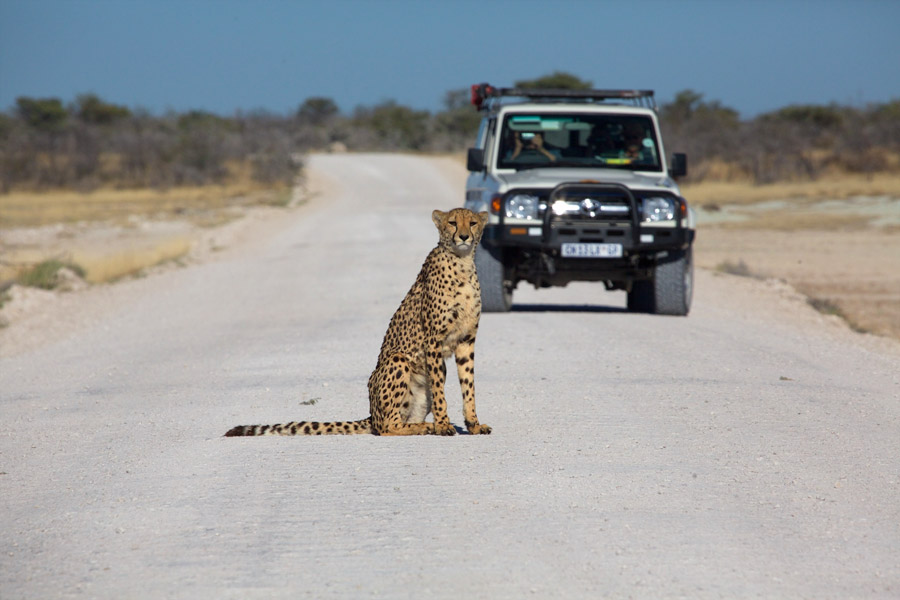
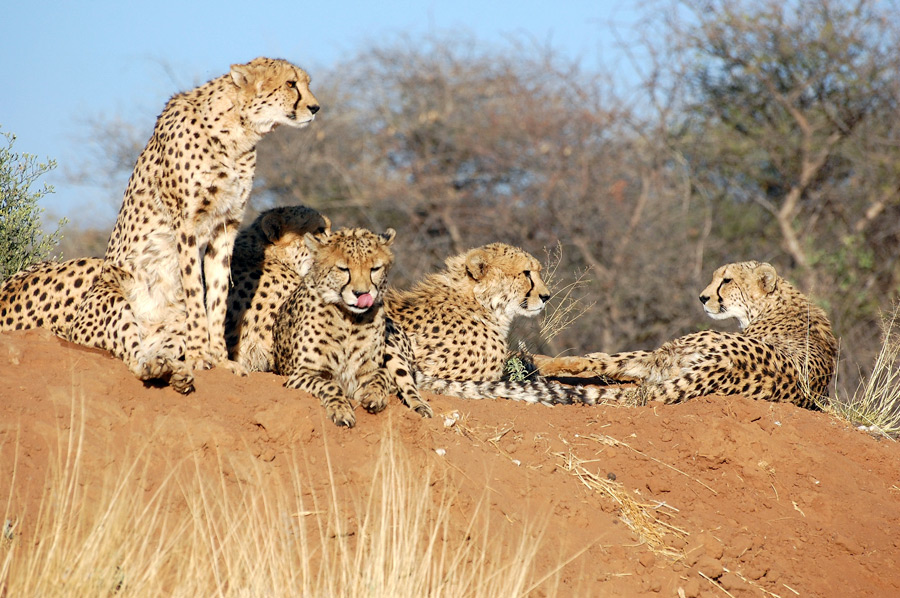
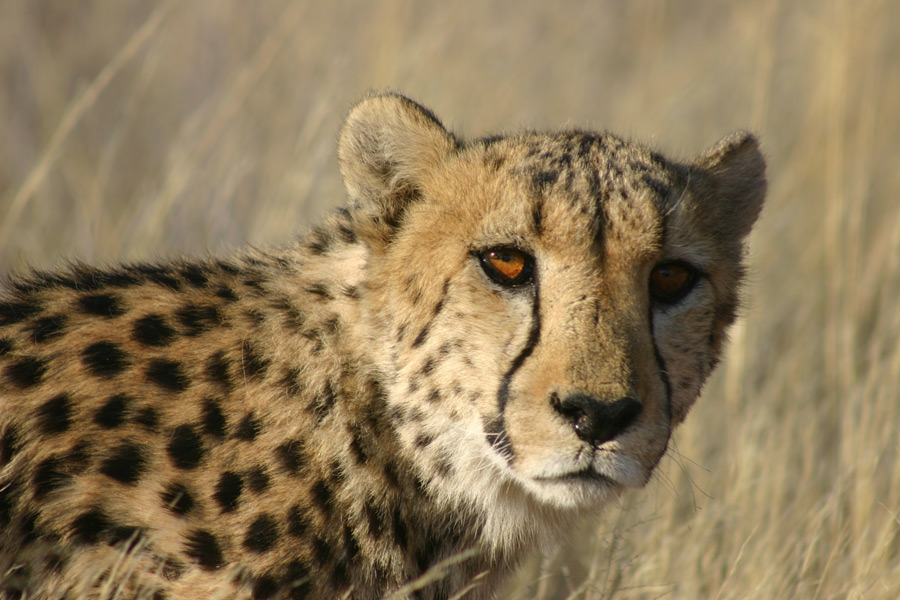
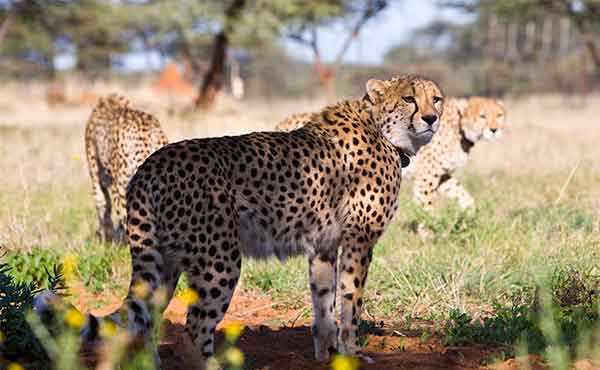
Nestled among the Omboroko Mountains, Okonjima (a Herero name meaning ‘Place of the baboons’), is home to the AfriCat Foundation, one of the world’s largest cheetah and leopard rescue-and-release programmes.
Having enjoyed a short period of time to settle in to our accommodation, we meet again for a mid afternoon snack before commencing on a guided leopard tracking activity on the reserve.
Accommodation: Okonjima Plains Camp, 1-night
-
Day 4:
Transfer to Etosha National Park
This morning we rise early for a morning's wildlife activity, before breakfast.
We then depart Okonjima mid-morning and continue our journey northwards, on a four hour journey to the eastern-side of Etosha National Park, arriving at our accommodation in the late afternoon.
Depending upon our arrival time, there may be enough time to do a quick-turn-around and head into the Onguma Private Reserve for an optional evening drive. The alternative is to rest for what remains of the day and prepare for an early start tomorrow, to maximise our morning's safari tomorrow into the eastern-side of Etosha National Park.
Accommodation: Onguma Bush Camp, 2-nights
-
Day 5:
Etosha National Park Safari
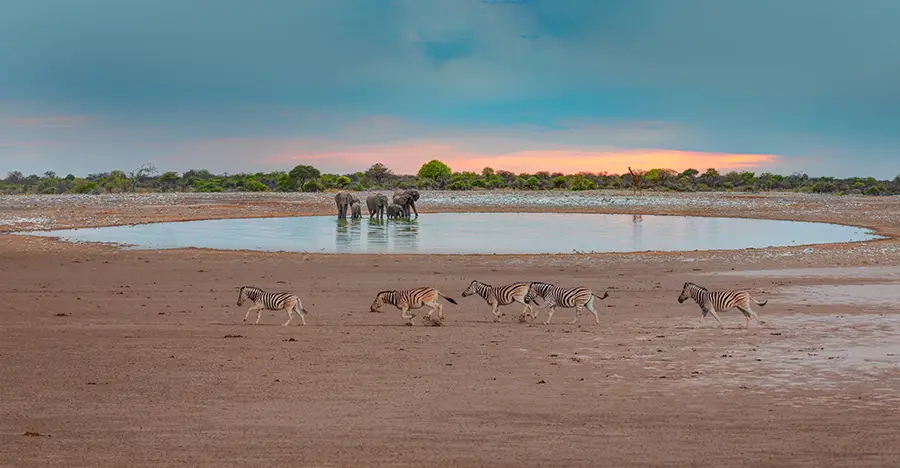
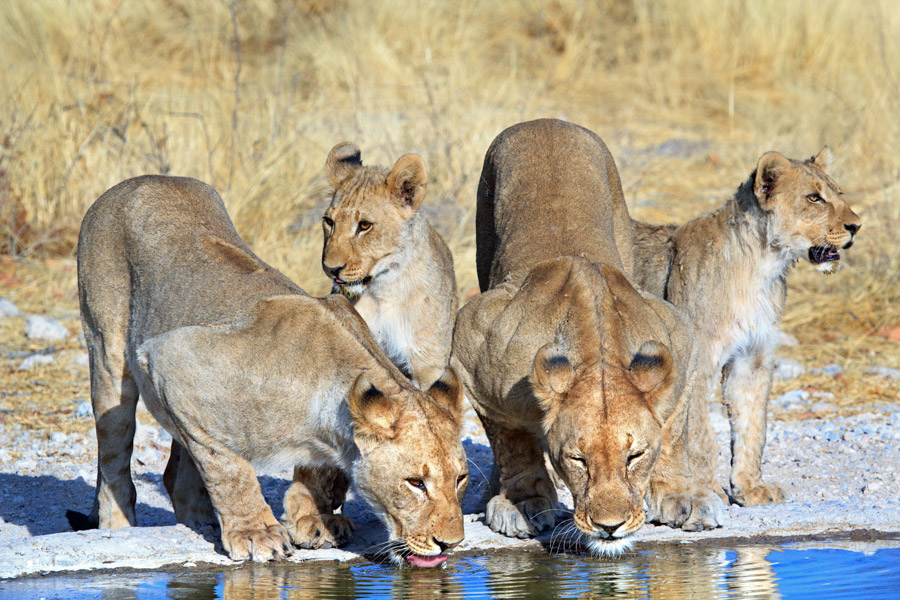
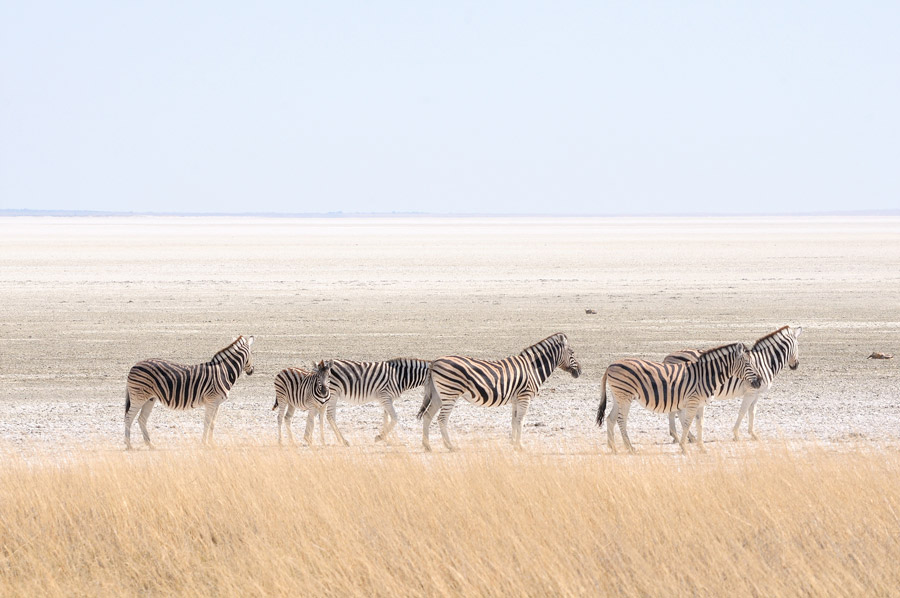
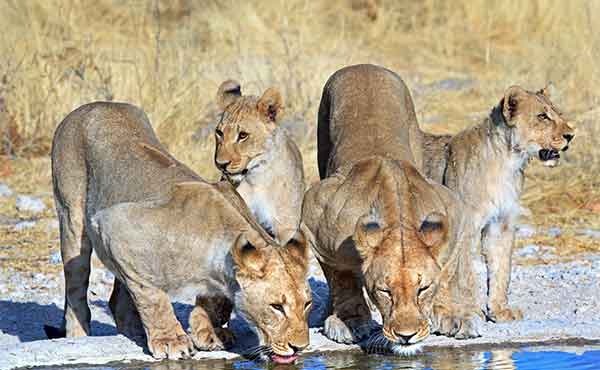
It is an early start this morning to enter Etosha National Park at sunrise and spend the morning exploring the waterholes of the eastern side of the park.
This afternoon we either enjoy a sundowner safari on the Onguma Private Reserve, or return to Etosha National Park and enjoy a late afternoon safari.
-
Day 6:
Safari transfer to Ongava Private Reserve
Having explored the eastern side, today we turn our attention to the southern end of the park by making a day’s ‘safari-transfer’ across over 200 kilometres of the national park.
In order to maximise the opportunities for viewing wildlife in Etosha National Park, we depart our accommodation shortly before sunrise to re-enter the eastern section of the park and continue through the central section to reach the southern perimeter of the park mid-afternoon.
The final part of our journey will have us exit the national park and enter the private reserve of Ongava, which immediately borders the southern perimeter of Etosha.
Accommodation: Anderssons at Ongava, 2-nights
-
Day 7:
Safaris in Ongava Private Reserve & Etosha
This morning we return to Etosha National Park to explore the routes that lead to the waterholes of the southern area of the park.
Later we meet for late afternoon refreshments before enjoying a sundowner safari on the Ongava Private Reserve.
-
Day 8:
Transfer to Palmwag Concession
From Ongava, we make a four hour transfer by road westwards to the Palmwag Concession, which forms part of an important wildlife corridor between the western side of Etosha and the Skeleton Coast National Park.
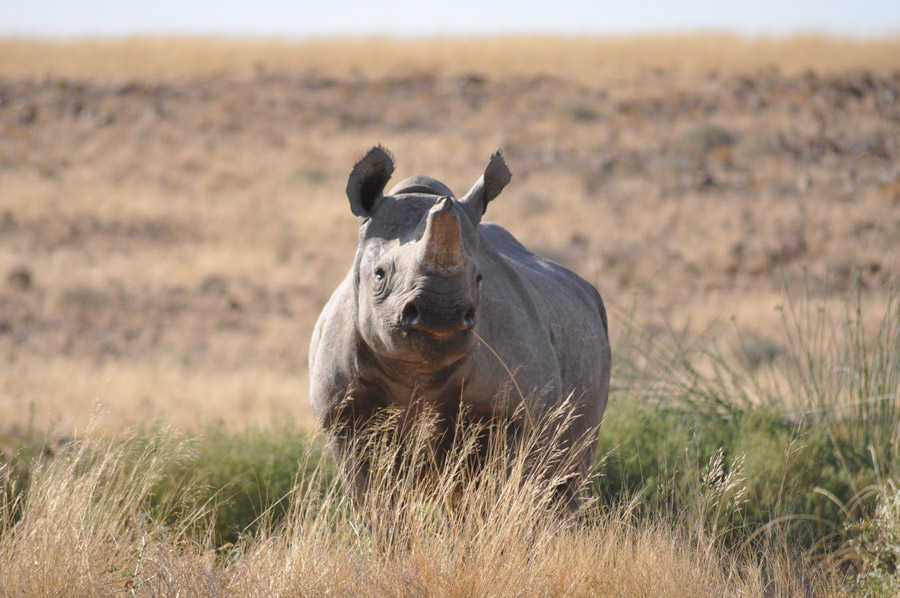
Having arrived at our accommodation, we can rest for the remainder of the day and prepare for a very early start the following morning when we embark on a remarkable tracking experience in search of the only truly 'free-roaming' black rhino in the world; a briefing of the activity will be given by our lead guide over dinner.
Accommodation: Palmwag Lodge, 2-nights
-
Day 9:
Black rhino tracking in the Palmwag Concession
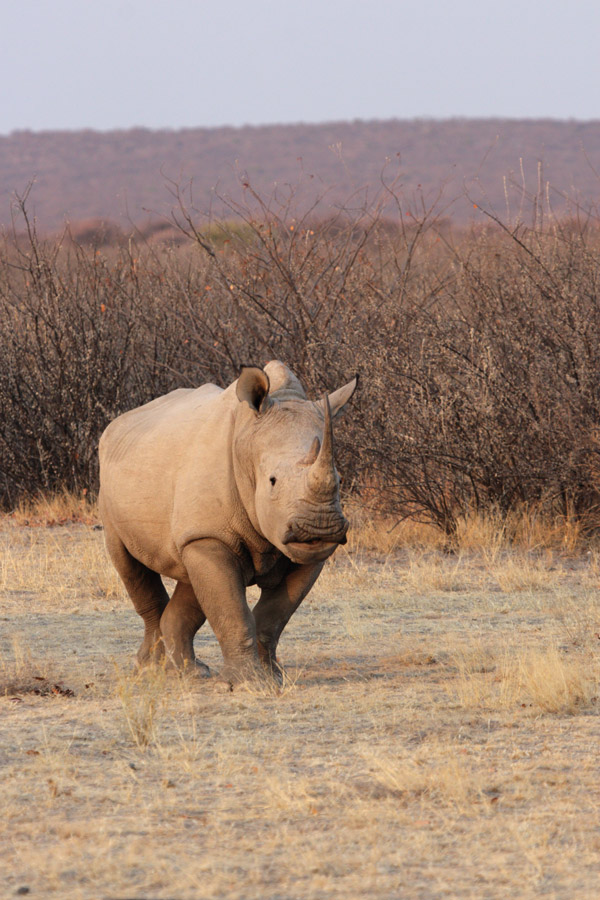
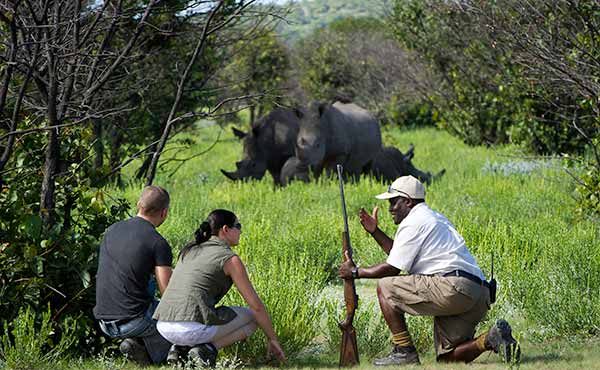
Given the sensitive nature of this wildlife encounter, the entire activity is closely monitored, supervised and guided by staff of the Save the Rhino Trust – an organisation founded in the early 1980s to protect the desert black rhinos from poachers. Thanks to their vigilance, monitoring and conservation work, rhino numbers here have steadily increased and continue to do so.
It will be an extremely early start, departing an hour before sunrise to drive into the Palmwag Concession and rendezvous with our ranger and tracking team who will start tracking the animals with our vehicle, and then finally, by foot.
It is an exhilarating and unforgettable experience to approach the black rhinos on foot – a rare opportunity that is thrilling and for many, very moving. Once the rhino have been located, it is normal that no more than 30 minutes is spent observing them, so as not to casue the animals alarm or stress.
Late morning refreshments are normally served as part of the activity, before a nature drive and returning for a late lunch.
The rest of the afternoon will be spent relaxing at the lodge, before enjoying a sundowner and early dinner.
-
Day 10:
Transfer to Damaraland
We will want to leave promptly after an early breakfast today, in order to make a long transfer south and travel deep into the ancient region of Damaraland.
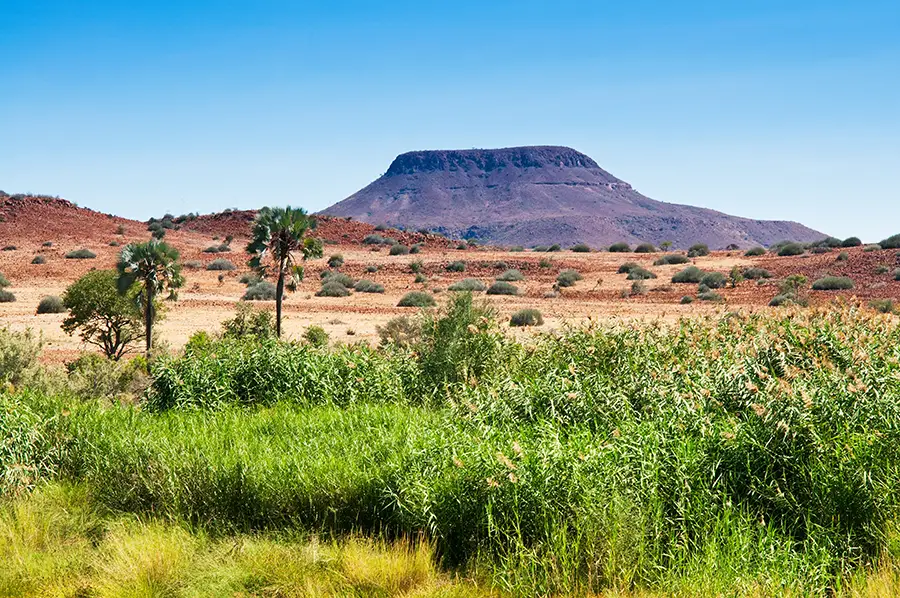
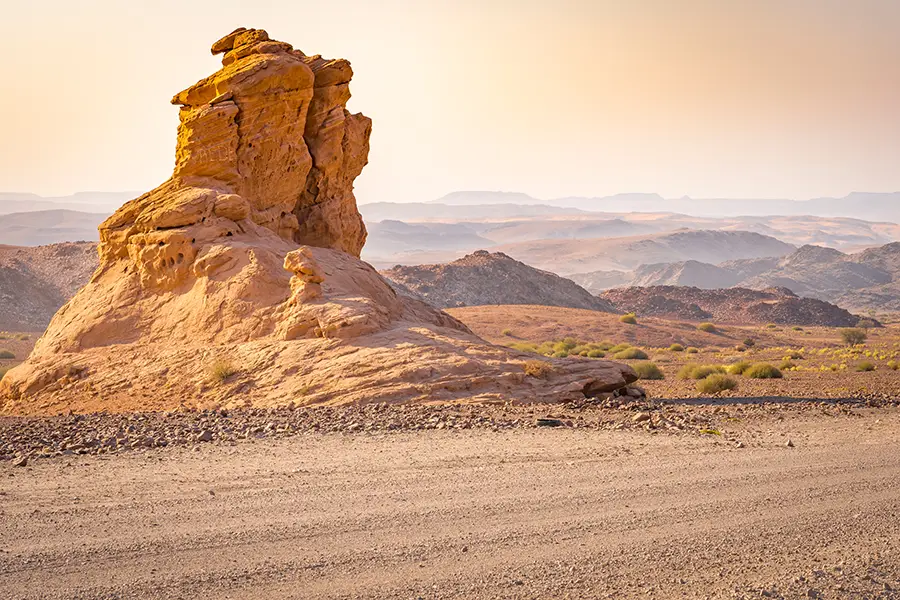
As our journey becomes more remote, the scenery becomes increasingly spectacular – rocky mountains dominate the horizon and sand dunes punctuate the ancient desert savannah. This is the heart of Namibia – an area that separates it from all other countries on the continent – ruggedly beautiful, extremely remote and full of desert adapted wildlife.
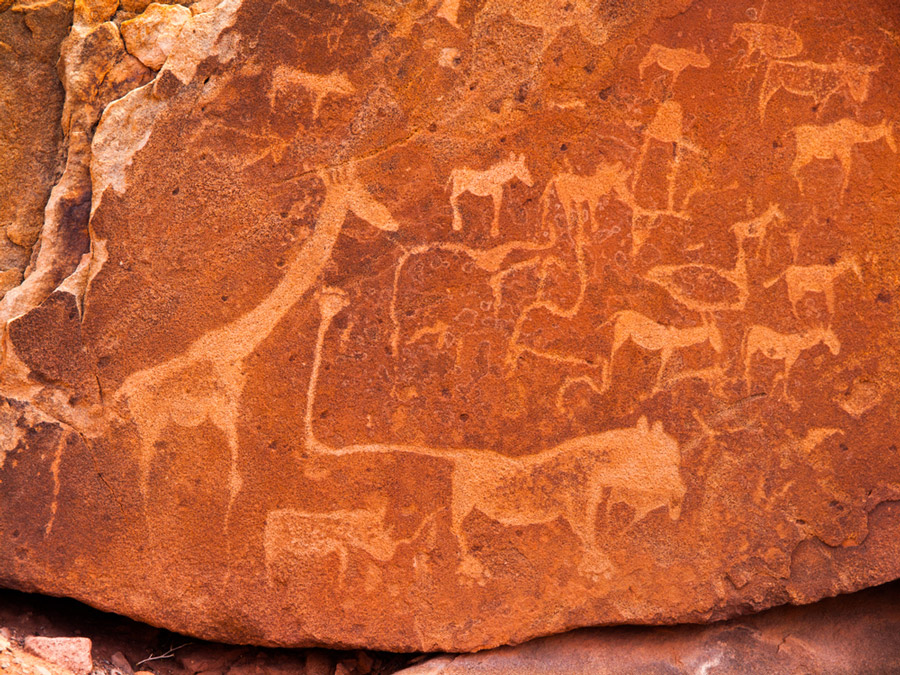
If we have time, we may visit Twyfelfontein, one of the most culturally important sites in the entire country. This rocky site situated in the Kunene Region of north-western Namibia contains some 2,500 rock engravings on over 200 slabs of rock - one of the largest and most important concentrations of rock art in Africa.
Accommodation: Ozondjou Trails, 2-nights
-
Day 11:
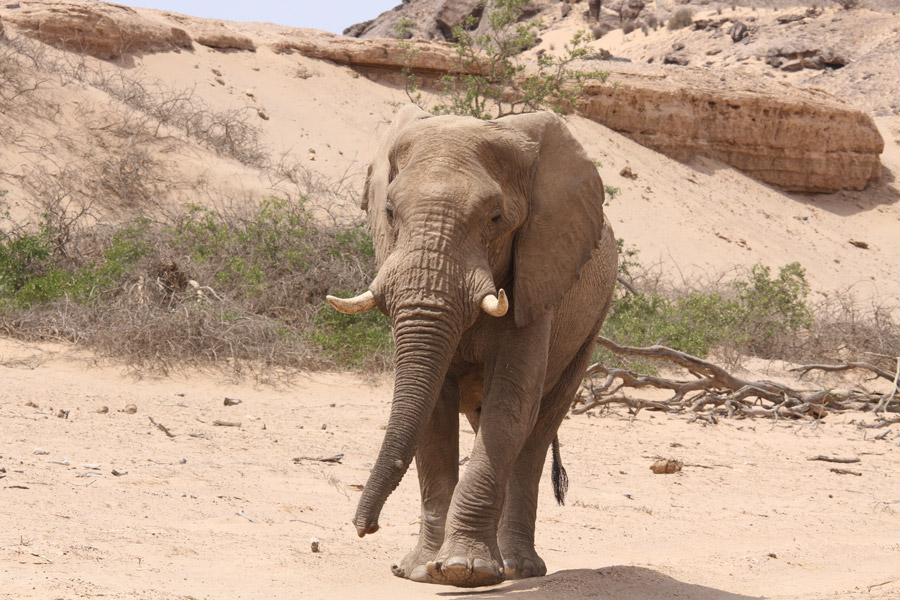
Desert elephant tracking in the Ugab River
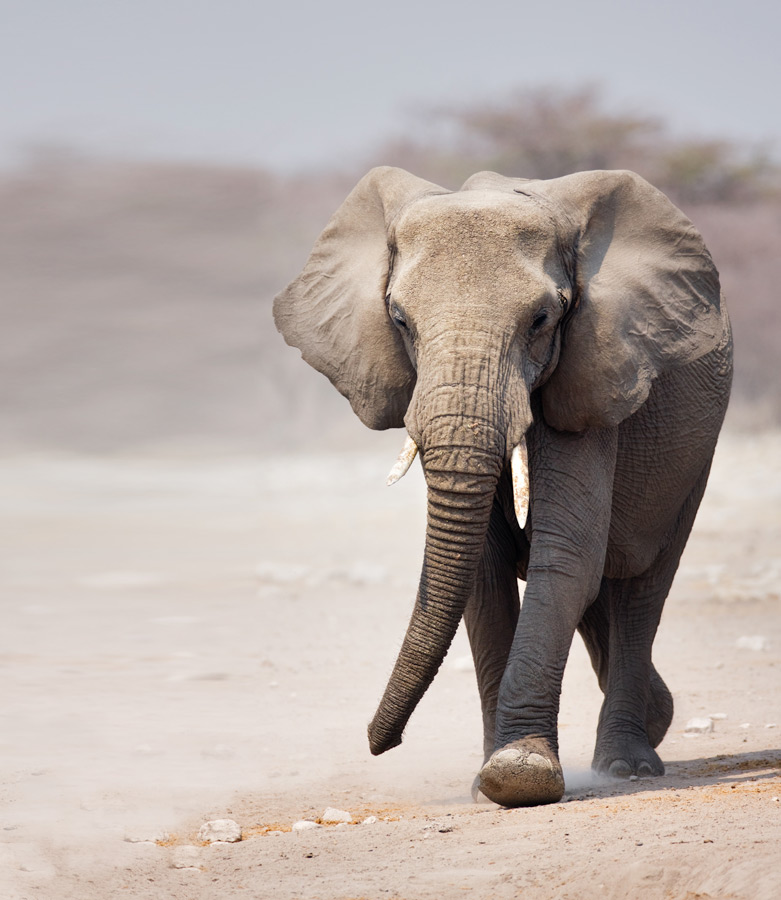
Today, we embark on a demanding desert-elephant tracking drive in the Ugab River and surrounding area. The drive will take an entire day and it is likely we may not find the elephants until lunchtime.
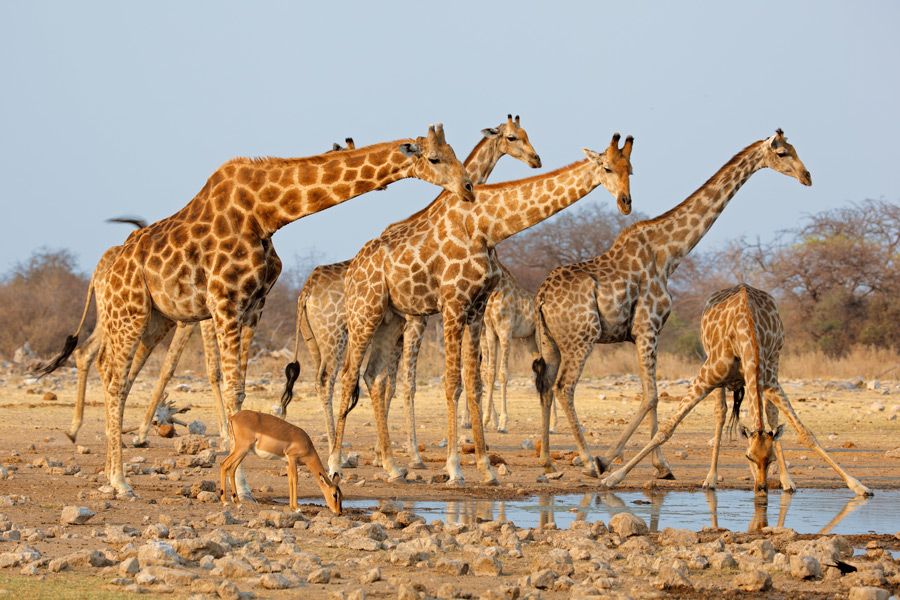
We join the EHRA team in their day-to-day patrol work searching for desert elephants and studying their behaviour. Following the tracks of the elephants in the dried river bed provides a good opportunity to encounter normal plains game like zebra, kudu, oryx, springbok, ostrich and giraffe.
-
Day 12:
Explore Swakopmund
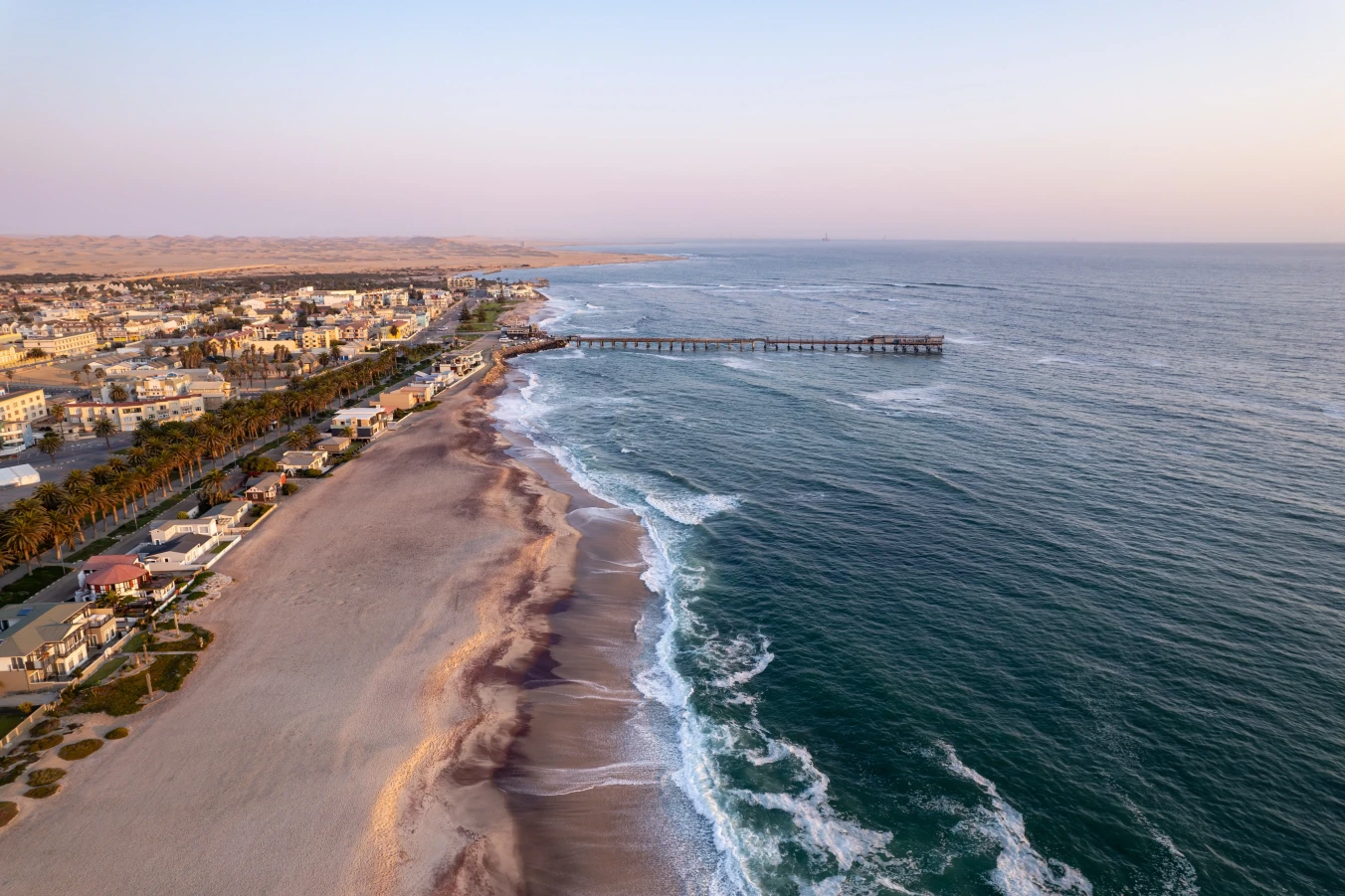
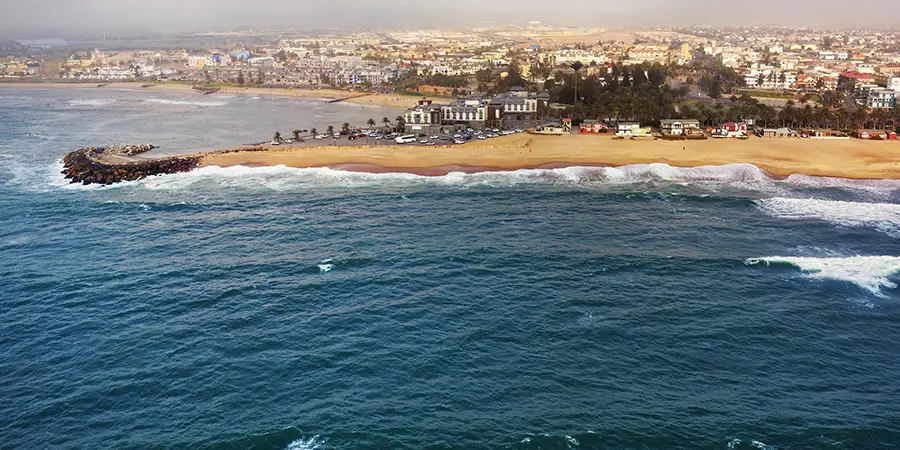
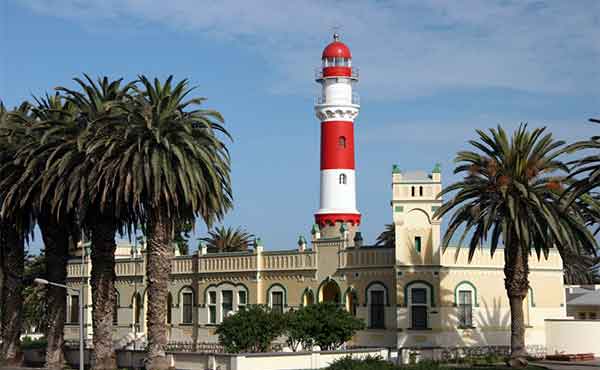
Leaving Damaraland, we head to the coastal town of Swakopmund, for our final night of the tour.
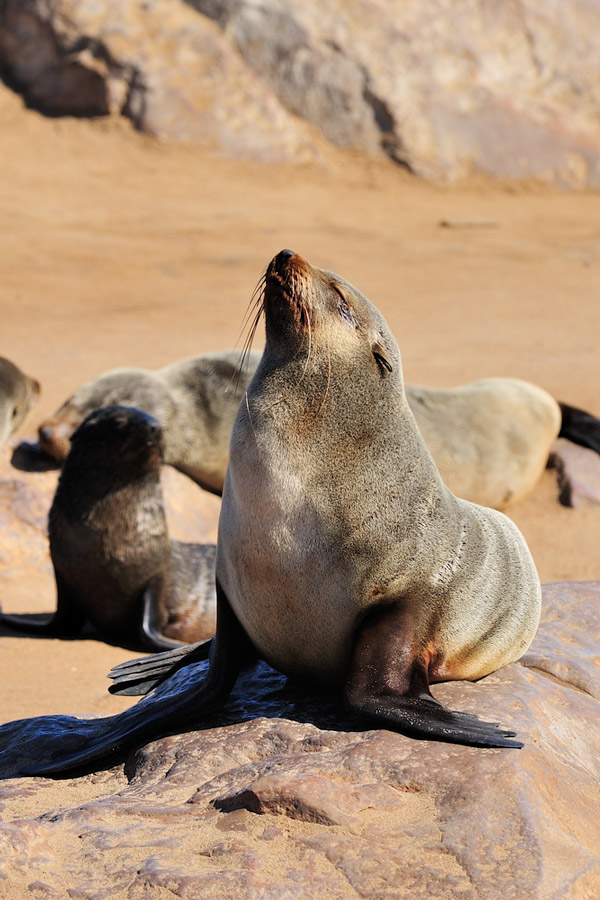
If time allows, we may have the opportunity to make a three hour detour from Henties Bay, north, and drive a public section of the Skeleton Coast to Cape Cross – home to the largest colony of Cape fur seals on this coastline, where we can stop to observe the mass of seals and abundance of birdlife, before re-tracing part of our journey and continuing south, from Henties Bay, to Swakopmund.
Accommodation: The Strand Hotel, 1-night
-
Day 13:
Free morning & transfer to airport
There will be a couple of hours spare in the morning for some final souvenir shopping before a mid-morning transfer to the airport.
-
Day 14:
Arrive UK