A Tail of Two Cats in India & Sri Lanka

Our new trip idea combines two destinations. A Wildlife Worldwide favourite, Nagarhole National Park in India and Sri Lanka’s largest park Wilpattu. Team member Ian Loyd encapsulates how both parks support exquisite wildlife yet are contrasting in experience.
Geologically, Sri Lanka is an extension of peninsular India that broke from the mainland perhaps as recently as the Miocene Epoch. Now separated by the Palk Strait and Gulf of Mannar, just a ghostly tendril of natural limestone shoals suggests the former land connection between the two. After millions of years of separation, the flora and fauna of each country hold remarkable parallels whilst revealing exciting contrasts.
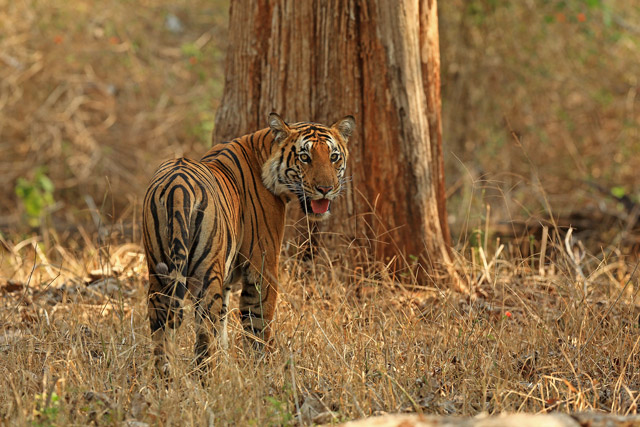
Our tour takes us first to India, where we explore the picturesque hills and valleys of Nagarhole National Park. The park gets its name from the combination of two Kannada words, ‘naga’ meaning snake and ‘hole’ meaning streams. True to its name, various serpentine streams fork through the rich tropical forests of the park. This jewel, located in the southern state of Karnataka, is unlike the parks on Central India’s beaten track. With a very strict limit on the number of vehicles entering each day, sightings of tigers, leopards and wild dogs are rarely crowded, and we encounter them almost daily.
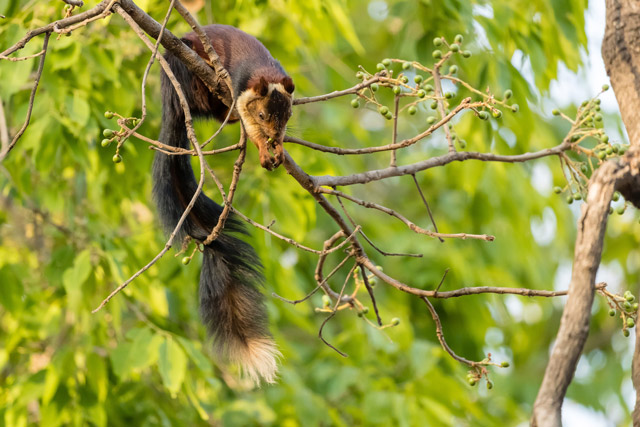
 Chital deer, with jungle mynas perched on their rumps and antlers, lustrous Indian giant squirrels, handsome stripe-necked mongooses, and elephant tuskers standing placidly at the edge of the forest support the majestic cast of wildlife on parade through this park.
 Nagarhole is home to India’s only regularly seen black panther (a melanistic leopard). Though there are known to be black panthers in several Southern Indian parks, Nagarhole’s male is the only one which inhabits the heart of a tourist area and has grown up accustomed to jeeps. Since Kipling created the character of Bagheera in The Jungle Book, this male is unquestionably the most photographed and most loved black panther in India’s history.
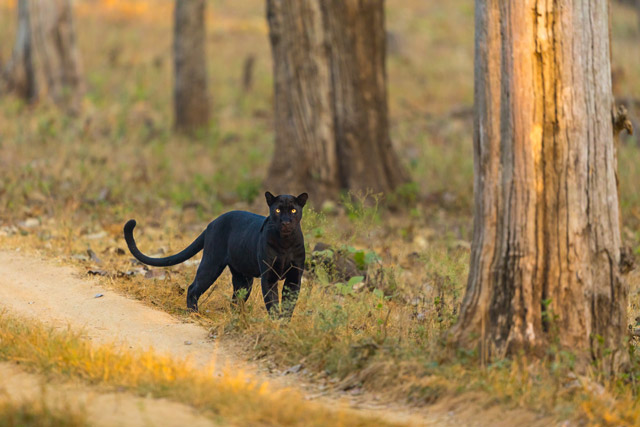 Image by Bharath Sheryas
From the serpentine streams of Nagarhole, we journey across the ocean divide to the Land of Lakes. Our time in Sri Lanka will be spent in Wilpattu National Park. Wilpattu means ten lakes, ‘wil’ meaning lake and ‘pattu’ meaning ten in Tamil. In this lowland forest, we navigate through ebony, mahogany, satinwood, and teak trees in search of leopard, sloth bear and elephant which are some of the large mammals recognisable from your first week. However, unlike on the continent, those we encounter in Sri Lanka are subspecies. Geographic isolation has resulted in Sri Lanka having one of the highest rates of biological endemism in the world.
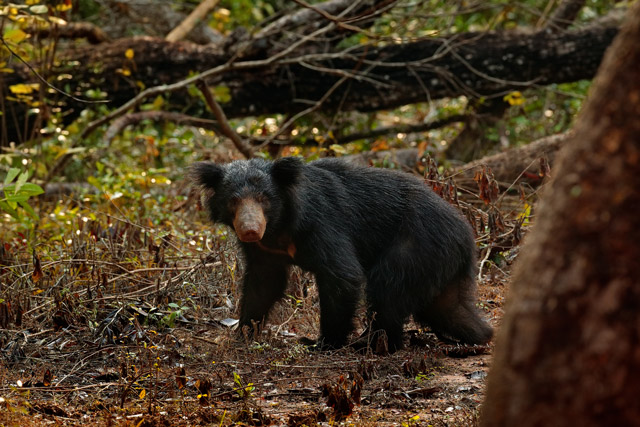
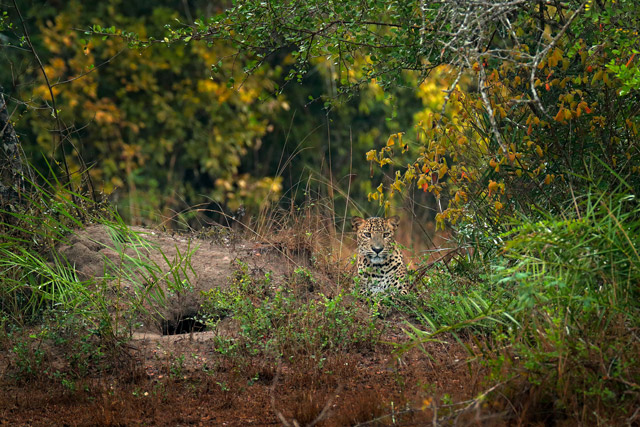 Historic existence of tiger on Sri Lanka has been supported by fossil discoveries, but for many thousands of years the Sri Lankan leopard has been the island’s apex predator. The subspecies is not only larger but their behaviour also contrasts with their Indian cousins; lounging on rocks and mounds, these confident cats rarely even haul their kill into trees. Without tiger, the Sri Lankan sloth bear are easier to see as they confidently scuttle around the park, noses trained to the ground tracking the termite scent. These entertaining creatures will be another focus of our safaris here.
 This two-week itinerary gives you the opportunity to enjoy a fantastic number of dedicated safari drives. In both India’s Nagarhole and Sri Lanka’s Wilpattu we will search for iconic mammals as well as excellent birdlife. Expert naturalist guides in each destination will help you to compare, contrast and importantly enjoy the remarkable wildlife of each country.
Watch wildlife in India & Sri Lanka on this exciting tailor-made trip idea. Speak to our team to find out more or book your place.