Amazing Azores!
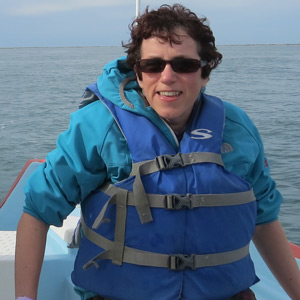
In May 2013 Carolyn travelled to the Azores for a whistle-stop tour of four of its nine islands. Here she gives us a taster of what these atmospheric volcanic islands have to offer, and why we shouldn’t be keeping them a secret any longer.
Colours & Calderas
 I spent a few days exploring four of the Azores’ nine islands - São Miguel, Pico, Terceira and Faial – with some other UK tour operators, hoping to learn more about the destination.
Flying into São Miguel (the largest island of the archipelago), I was glad to have secured a window seat – the view as we swooped in to land at Ponta Delgada was, quite simply, stunning. São Miguel is part of the Eastern Group of the Azores, and is known as the “green island”. I later discovered that each island has adopted its own colour – Pico is the “grey island” due to the extensive lava fields that dot the landscape; Faial is – somewhat more charmingly – known as the “blue island”, as a result of its prolific hydrangeas.
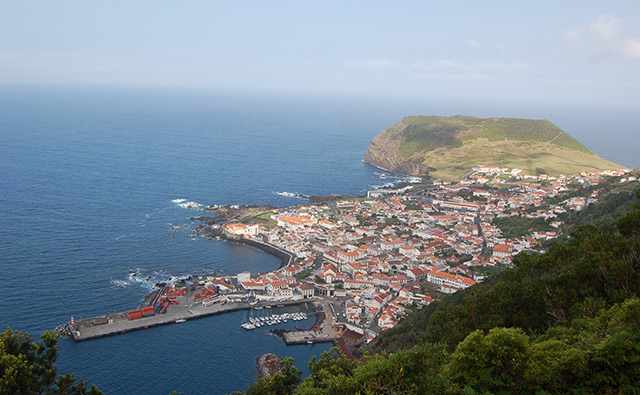 São Miguel offers a variety of activities in magnificent surroundings, thanks to the calderas (volcanic craters) that dominate the landscape. You can enjoy mountain biking, kayaking, birdwatching, and walking on trails with amazing views at every turn. We spent some time in Furnas Valley and its centrepiece, Furnas Lake. Adjoining the lake, and seemingly around every corner (including residential streets!), are boiling, smoking hot springs, and the unmistakable smell of sulphur. We were treated to a traditional “cozido” (stew) – cooked in the steam generated by one of these natural cauldrons. There was also a surprise visit to a tea plantation – now that was something I didn’t expect in the middle of the Atlantic! Also unexpected were the vineyards sporadically scattered across the hillsides – they thrive in the dark soil, sheltered from the Atlantic breezes.
Heading off to Faial
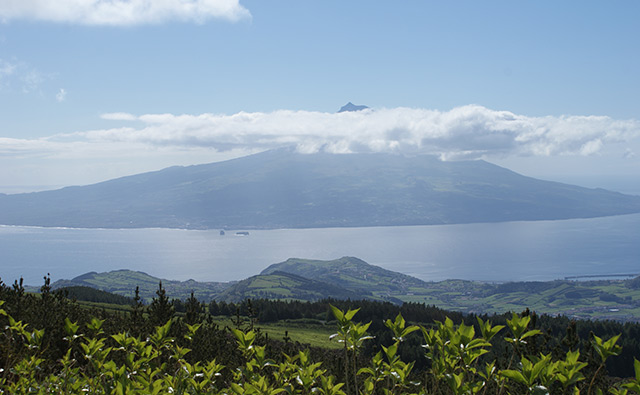
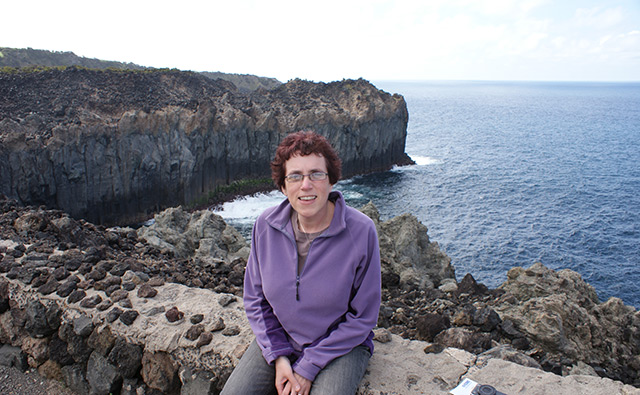 No sooner had we arrived in São Miguel, than it was time to head off to the smaller island of Faial in the Central group. All the islands are connected by an extensive network of domestic flights, which made it easy to get around. Some, like Faial and Pico, are also linked by a ferry service, which is a quick and picturesque way of seeing more of the islands. Flying into Horta, we headed straight to Capelinhos where, in 1957, a volcano erupted around one kilometre off the coast. Over the next year it deposited large quantities of lava and ash, eventually creating a peninsula and adding some two square kilometres to the landmass of Faial island. The resulting landscape is lunar and eerie.
Whales & Dolphins
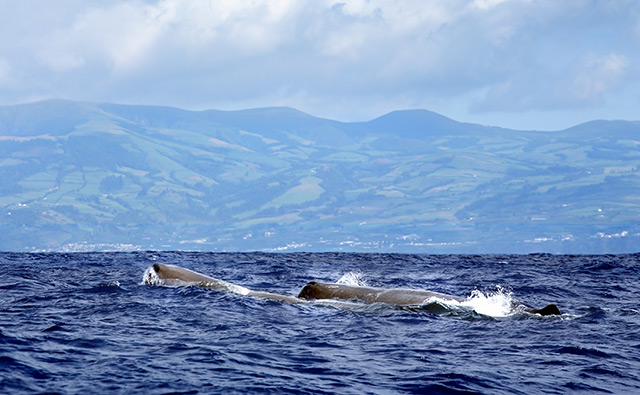 We then headed down to Horta harbour, a meeting place for thousands of yachts that pass through the Azores each year while crossing the Atlantic, and one of the starting points (along with Pico) for some of the best whale and dolphin watching trips in the islands. While talking to our whale watching operator at the harbour, I learned that their morning trip had sighted sperm whale and orcas (unusually early in the season!), as well as common and bottlenose dolphins (a megapod of 60 or so swimming and playing with their young around the boat). Those species regularly seen include sperm, pilot, Cuvier's and Sowerby's beaked whales, plus bottlenose, Risso's, common, spotted, and striped dolphins. Later in the week my travelling companions were lucky enough to see a finback and even a rarely-seen blue whale (probably just about the time when I landed back in rainy London!).
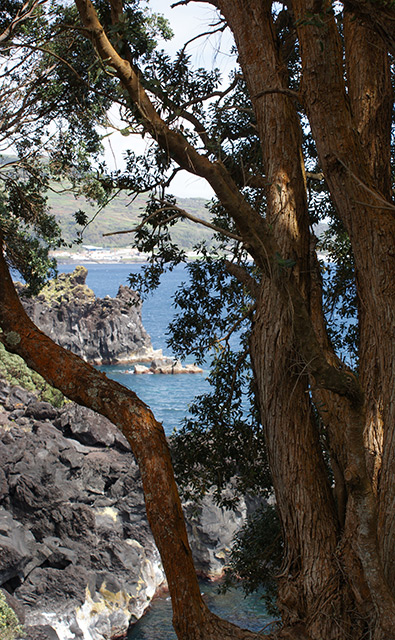 After a light lunch and traditional (honestly!) gin-and-tonic at the iconic Peter’s Café Sport, we took a short ferry ride across to Pico, home to Pico Mountain, the highest peak in Portugal. Hayley, our lovely trip organiser, had climbed it a few weeks previously – a pretty tough hike by all accounts, taking 4-6 hours.
Our next stop was Terceira, a short flight from Pico. Terceira is much less visited than both Pico and Faial, and has a much quieter feel about it, with some good trails for walking. It also has more than its fair share of impressive “geo-locations”, with volcanic caves, patchwork calderas and volcanic rock flows.
Heading home
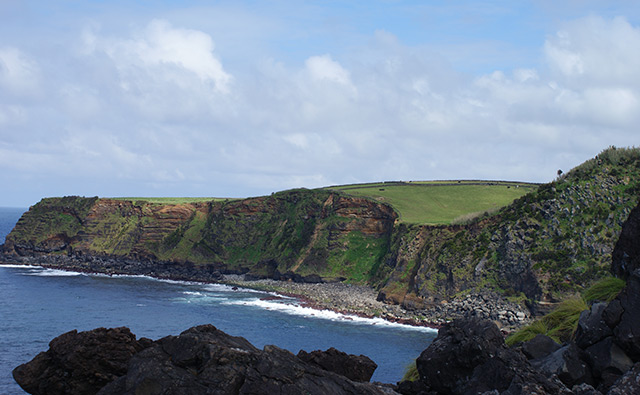 Returning to São Miguel, my mind was racing with all the hotels I’d visited, the fantastic food I’d enjoyed, and the amazing whale watching opportunities these islands have to offer.
To all the people who said “The Azores, where’s that then?” when I announced my trip, the answer is they’re only 4 hours from London, so get on a plane and go watch yourself some whales!
Join us in the Azores on a whale watching trip to see sperm whales and bottlenose dolpins and enjoy the spectacular scenery these islands have to offer.