Bear Cave Mountain trip report
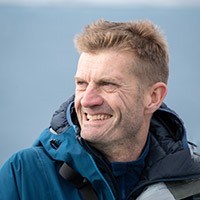
I arrived into the Yukon after having been in the ‘Greatest’ Bear Rainforest accompanying our 21st anniversary trip in the company of professional photographer and my great friend Nick Garbutt. I say ‘greatest’ deliberately because the Great Bear Rainforest - the last intact temperate rainforest on earth - is great in every possible way. It is huge, it is pristine, it is home to numerous wonderful species, and over the years it has become a second home to me - bears and all.
On return to Vancouver (from Bella Bella), together with Brian Jackman from the Daily Telegraph I boarded a flight to Whitehorse, Yukon’s capital. Canada is immense - the flight to Whitehorse takes just over two hours, and I arrived late at night and checked into my hotel. At check-in there was a bag waiting with cold weather gear - arranged for me in advance so I didn’t have to lug it all the way from the UK. An early departure the following morning saw us arrive into Dawson City (another hour’s flight north) in time for a fresh cup of mid-morning coffee.
 From here we were due to head out directly by helicopter to Bear Cave Mountain, but the weather was against us and we had to overnight in Dawson. The chopper flight north to Bear Cave Mountain takes another two hours (almost to the Arctic Circle) and weather conditions play a big part in the process. With the helicopter’s limited fuel capacity, the pilots need to be sure of being able to not only get in, but also back out again, and if they have to fly around bad weather this can make the round trip impossible. An overnight in Dawson is to be savoured, however, as this gold rush frontier town is a place to be explored and enjoyed.
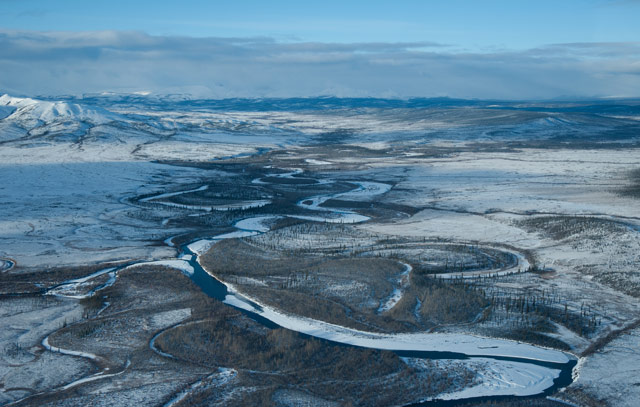
We were up early, the weather was good, and we had had word from Bear Cave Mountain that the weather was good there too - so we headed to the helipad and boarded the chopper. Flying over country that can only be described as ‘spectacular’, we watched the tundra unfold beneath us. Mile upon mile of untouched monochrome wilderness - rivers, creeks and forests - all covered with a thick layer of snow and beautifully lit by the sun low in the sky.
.
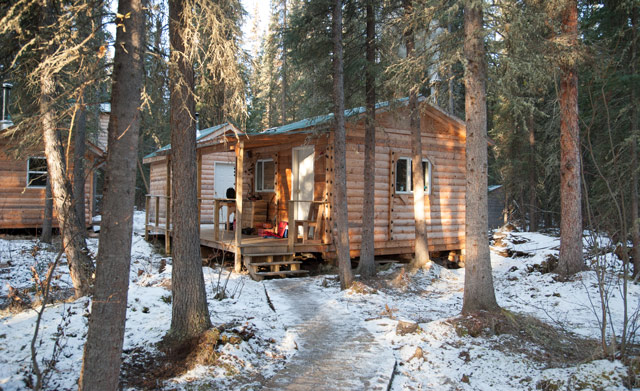 The two-hour flight passed swiftly and we landed beside the river right in front of camp, to be greeted (when the blades stopped turning) by Phil Tympany and his 'bear dog' - a Norwegian elk hound called Smokey. We walked up to the decking walkway and into the small, simple camp where a fire was roaring in the kitchen-diner, and Phil gave us an introduction to the area
Phil is a force to be reckoned with when it comes to grizzlies - he lets them decide how close is too close, and the bears set the agenda. It is their home, not ours, so Phil is very happy to let them come as close as they want. They are often to be seen having a back-scratch on the tree just outside the kitchen, sleeping right next to the deck, or walking up the walkway right into camp - this is their place and we are just visiting. And it is this, the mutual understanding between man and bear, that makes this such a special place. They know we are here, and are really not bothered about us at all - there are far more interesting things to eat in the river. Phil hums to the bears, Smokey gives a short and not too loud ‘woof’ to tell us they are around, and we just watch them and take photographs.
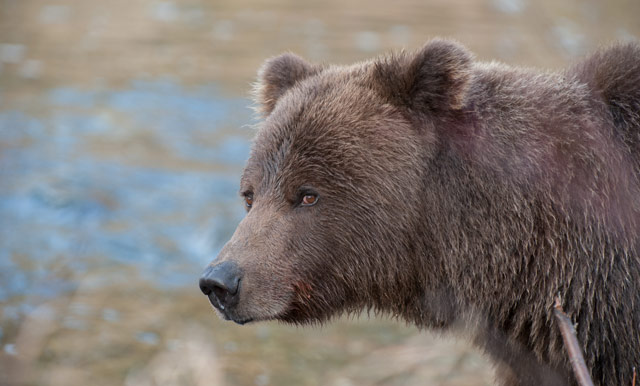 It is cold here too, and this is another very important factor. You can expect the temperature to be somewhere between -10⁰ and -20⁰ Celsius - that’s cold! But, with the right gear this doesn’t need to be a problem, and with Phil’s excellent cooking skills and a warming fire it is easy to thaw out.
We sat by the river and watched as the bears walked up and down the banks, got into the water, and out of the water, and hauled out fish in plenty. Of course, because it was so cold outside, every time they got out of the water their fur froze into the most amazing icicles and they took on a completely different appearance. On one particularly memorable encounter we sat by the river, on the ground (there are no hides here) and watched as mum and cub (Mrs Tucker and Biban) walked past us - so close you could hear their paws crunching the leaves underfoot.
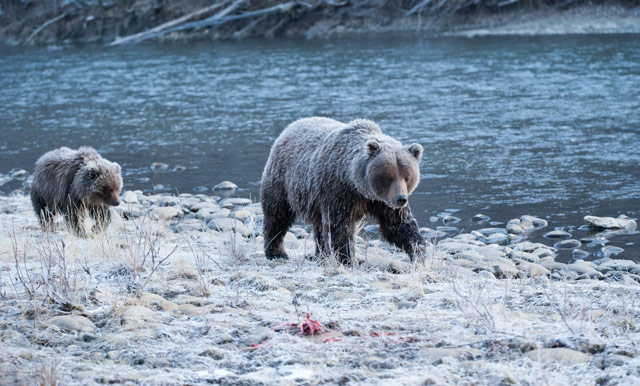 Biban was a bit more interested in us than his mother and stopped to see what or who we were. He turned and faced us, smelling the air, working out what these curious creatures wrapped in red could be. It was enormously exciting - the great thrill of knowing that there was nothing at all between us and a large bear cub, weighing in at around 100kg, that could have wiped us out with a single swipe of his powerful paws. But he wasn’t interested in doing that - he was just curious.
We paced it out after they had walked past - three paces from the foot of my tripod to the bear tracks. Amazing, wonderful, inspiring, enlightening – and difficult to put into words!
Our few days here was in the company of Phil Tympany - a man who knows the bears alright,
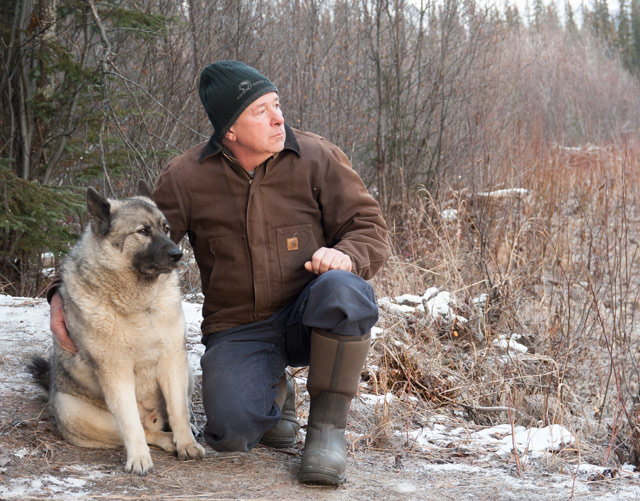 but who also knows ‘the place’, the sense of place that is Fishing Branch River, the river that never freezes. Phil has created this incredibly simply, but incredibly comfortable lodge in partnership with the local Vuntut First Nations people. Phil guides, cooks, organises, cleans and makes this place what it is - a truly remarkable experience. And, in this 6,500 square kilometres of pristine wilderness, only five people are allowed at any one time - Phil and four guests.
In 30 plus years of looking at wildlife in some of the world’s wildest places, this is without doubt one of the best I have ever been fortunate enough to visit!
Check out our brand new trip Yukon's Ice Bears