Floe Edge, Nunavut, Canada 2016
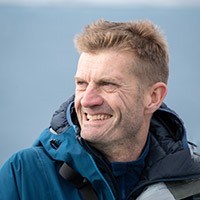
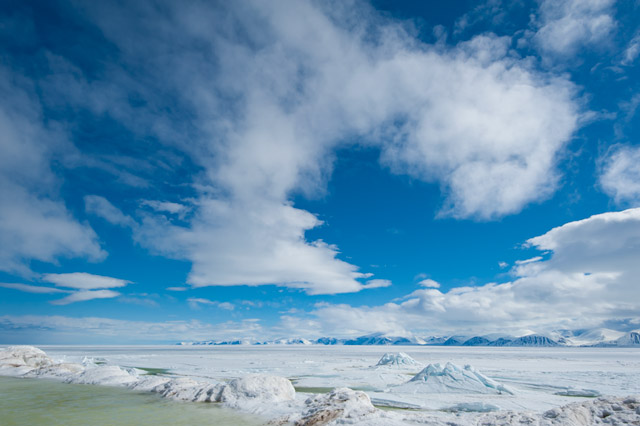
Floe Edge has to be one of the most remote places I have ever stayed. Five and a half hours’ flight north of Ottawa, followed by an overnight stay and then a three and a half hour skidoo journey to the camp, set centrally in a cavernous 25 kilometre-wide ocean inlet atop three metres of ice is no simple journey!
And the camp itself is on the edge of existence - it clings on for a mere three weeks of the year before the 24 hours of warming daylight almost miraculously breaks up the sheet ice and makes it impossible for the camp and its temporary inhabitants to stay.
 The overnight stop is in Pond Inlet, a far northern ‘hamlet’ (to use the Canadian terminology) in the territory of Nunavut, and home to only 400 people, an airport, two phenomenally expensive supermarkets,
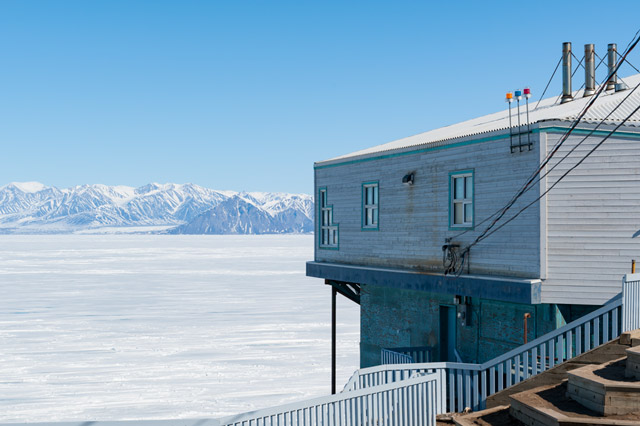 a school, a visitor centre and frankly very little else other than 4-wheel drives, skidoos and all-terrain vehicles. ‘Pond’ is a warm hearted place where the children are all smiles and full of chat and the adults all greet me warmly. It is also set in probably the most beautiful location on earth, with the best views of the most magnificent snow-covered mountains anyone could possibly dream about. This is surely the ultimate picture postcard location for any settlement, but the Inuit who live here eke out a tough subsistence existence mostly living off the land.
 I was there to see if I could see the ‘unicorns of the sea’ - narwhal in case you were wondering! - and possibly polar bears. Neither are an easy ‘catch’ since the distances the bears cover is simply huge and spotting narwhal requires extended periods of sea-watching. But I saw them alright and had far better views than I had imagined possible.
Arriving into camp in the early evening I enjoyed a gourmet meal (in itself somewhat incongruous in such a wilderness location) and then set out at 9ish by skidoo to the floe edge -
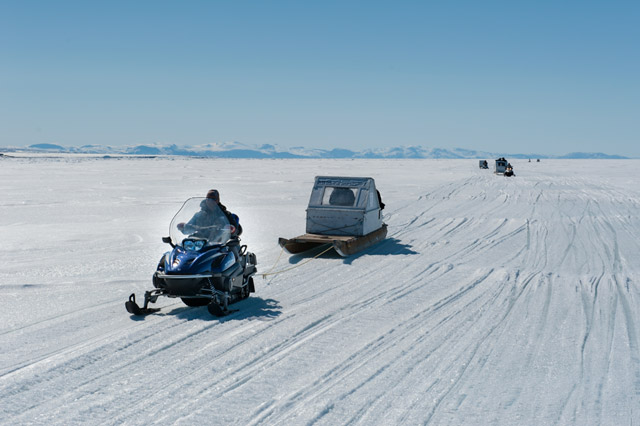 being mid June there is 24 hour daylight which is fabulous for watching wildlife! Within a few minutes the first narwhal had swum past - females with young, so no tusks - and as they were quite a long way off shore I was already itching for more. I headed back to camp with my guide at around 0030 wearing sunglasses to protect my eyes from the piercing sun. It is strange being in a 24 hour daylight environment because going to bed seems completely counter-intuitive and I didn’t feel even slightly tired.
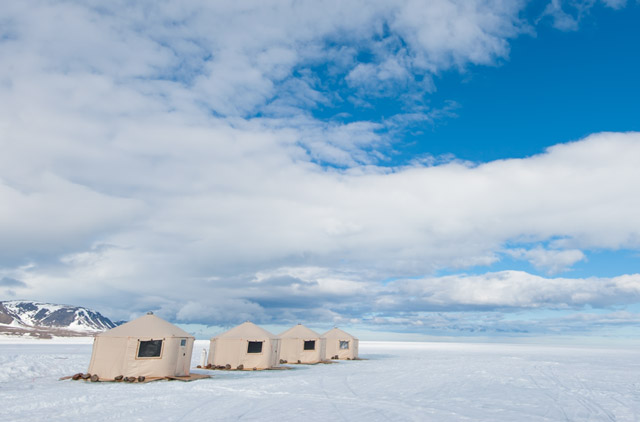 The tent I was in was large - four metres wide and three metres high - insulated, and with a propane heater to keep it warm. The bed and mattress were extremely comforting as were the two duvets and the hot water bottle… so in reality sleep came easily, but I was excited for the days ahead.
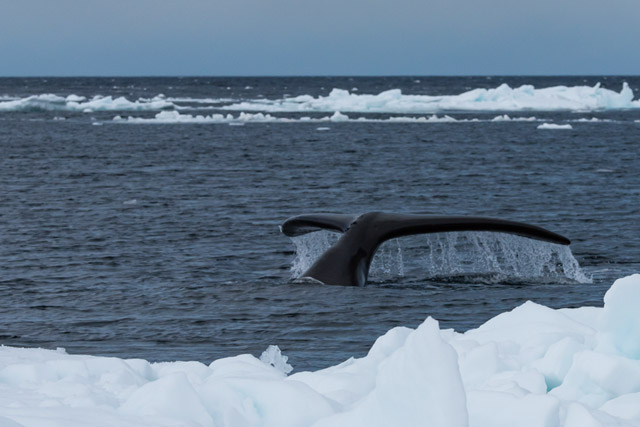
My next day was a ‘watching and waiting vigil’ at the floe edge, interspersed with kayaking amongst the breaking ice. Of course it was rewarded with narwhal, though again there were no males with tusks, but incredibly a bowhead whale fed and played only metres from the floe edge for over an hour - that was a magical moment that I had never predicted. Bowheads are true Arctic leviathans living in excess of a staggering 200 years.
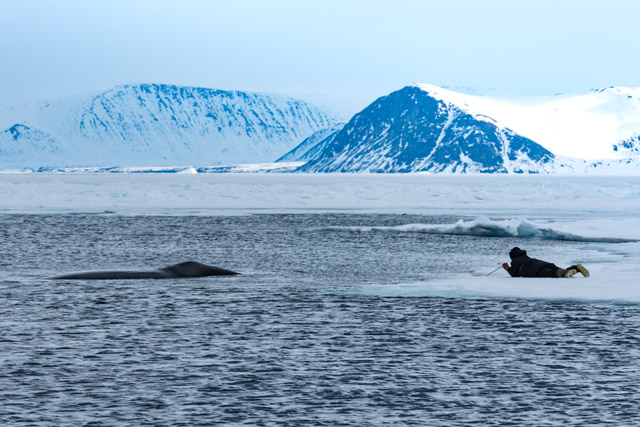
High winds overnight and almost no sleep due to the completely irrational fear of the tent blowing away (it’s simply not possible!) was followed by a beautiful sunny day and some
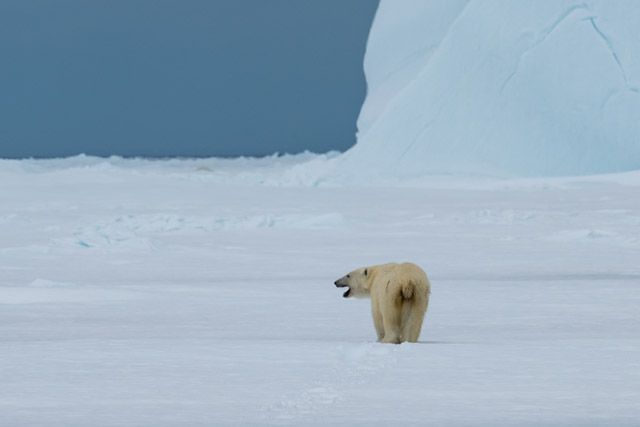 amazing sightings of polar bears - and polar bears that I suspect have never set eyes on the human species before.They are not the calmest of bears, nor easiest to photograph - they would best be described as skittish. One polar bear pacing along the floe edge caught our scent and stood up on his hind legs to get a better idea of what was approaching him. He wasn’t comfortable with us and launched himself into the sea swimming off towards the horizon. Just to see them in this vast wilderness was a real privilege and one that ranks as high as any wildlife experience I have had before.
 The day wasn’t over though as I went down to the floe edge and saw more narwhal - this time closer, in greater numbers and even better light… I left camp in the morning at around 9am and had already been out for about 12 hours. The surface of the sea was broken by the tusks of a couple of magnificent males, travelling northwards with females and young, feeding as they went and leaving a trail of mystery behind them.
This is no African safari, but for a lover of true wilderness and someone with a passion for wildlife this is a very special place to visit and a very special trip - I will definitely be going back.
Planning is under way for a trip to Nunavut; in the meantime take a look at our Ice Bears in the Canadian Arctic, or our wide range of group tours and trip ideas throughout Canada.