Dunes & Desert Wildlife in Namibia

When I got the opportunity to travel to Namibia last month, I was filled with excitement, anticipation, curiosity and a hint of uncertainty. This would be my first time visiting Namibia and, looking back, nothing could have prepared me for the epic adventure ahead.
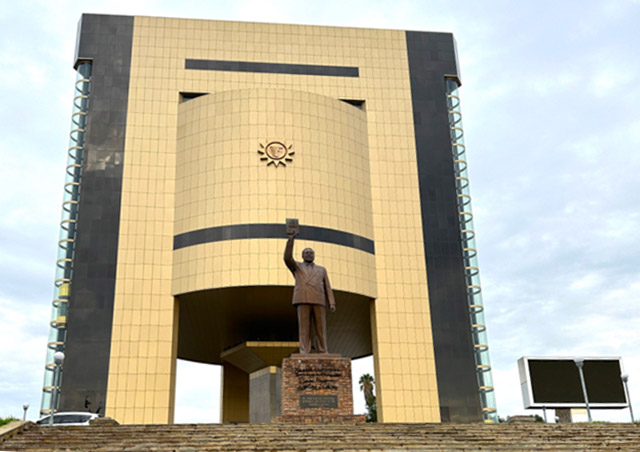
I arrived in Windhoek late in the afternoon, and after checking into the hotel, I met up with my fellow travellers and our guide. We headed out on a quick city tour, where we were shown the many sides of Windhoek, including the Independence Memorial Museum showcasing Namibia’s struggle to emancipate itself from the vice-like grip of Germanic colonialism. After our tour, it was time for a quick dinner and an early night, before our long drive the next morning.
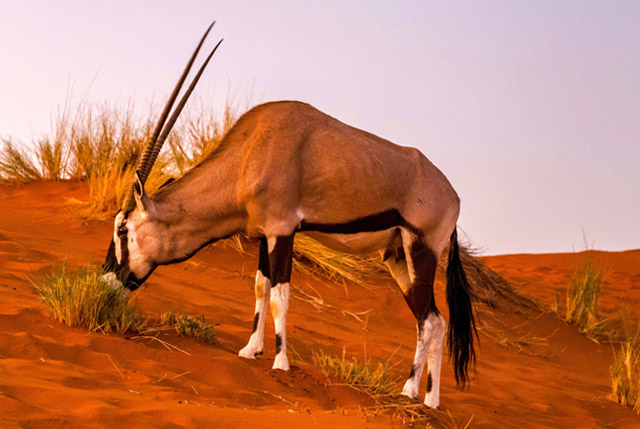
 As we drove through the dunes of Sossusvlei, I was delighted to see my first oryx. After six hours, we pulled into Dead Valley Lodge, which is one of only two lodges located within the national park. This gave us the advantage of being among the first vehicles to get into the dunes at sunrise.
During our brief visit, we had very close encounters with oryx, visited the striking landscapes of Deadvlei, walked through a small canyon - which had been carved out over millions of years by water running through its rocky crevices - and climbed the largest dune in the area.
 Our next stop was Kwessi Dunes Lodge - very fine accommodation, located in a gorgeous clearing surrounded by dunes and mountains which reaching altitudes of 2,300 m. We had just enough time for a morning quad bike ride through the dunes, before heading on to the coastal city of Swakopmund. It was there we were lucky enough to see a dune lark (Namibia’s only true endemic).
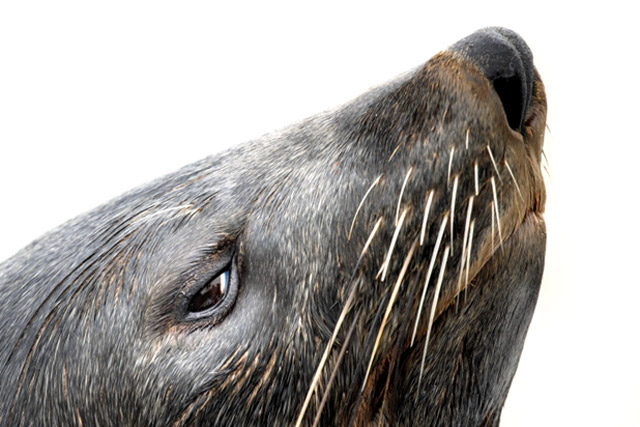
The journey to Swakopmund was a long, but beautiful one. As the landscape changed, so did the temperature. During the two days in Swakopmund we embarked on a boat tour of the bay, viewing both Cape fur seals and bottlenose dolphins, which are always a pleasure to see.
 Some of the group went into town, while others just relaxed and explored the local area around the hotel. The next day we would continue our journey, heading into the rugged desert landscapes of Damaraland.
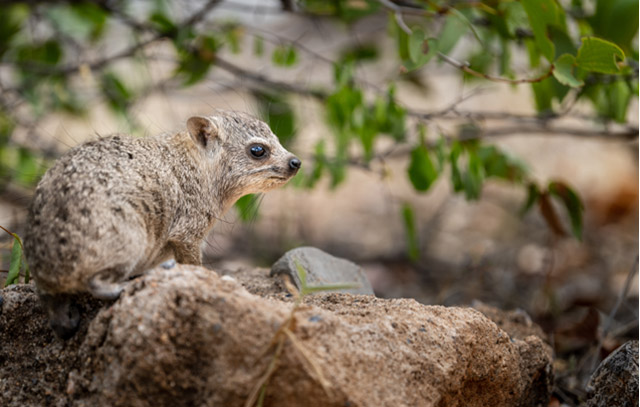
We spent the following evening at Mowani Mountain Camp, and boy was this a special place. Views upon views. Of course, me being me, I quickly found some local wildlife. Rock hyrax, or ‘dassies’ as they are locally known, are a medium-sized, rabbit-like mammal, and they kept me entertained for many hours.
 There wasn’t enough time to search Damaraland for its famed desert-adapted elephants on this visit, as Etosha National Park and the brilliant conservancies that surround it were next on the agenda. However, before we left, we did discover some of the area’s ancient petroglyphs - a must if you’re in the area.
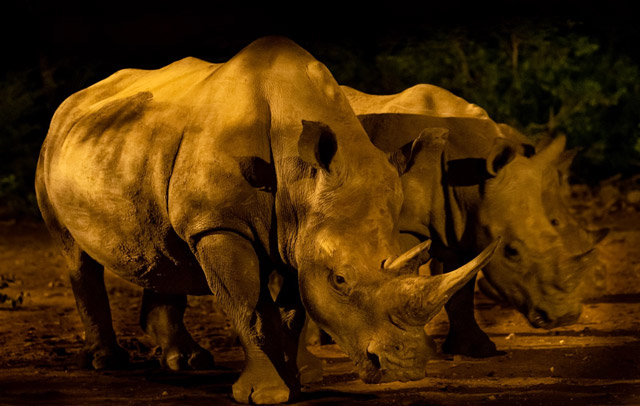
The first park we visited in Etosha – and my personal favourite – was Ongava. There was such a wild feel to the place. I went to Namibia hoping to see one, maybe two, rhino, but we ended up seeing over ten in Ongava! Most were found around the watering hole, located just outside the restaurant, which made for an intimate and relaxing wildlife watching experience.
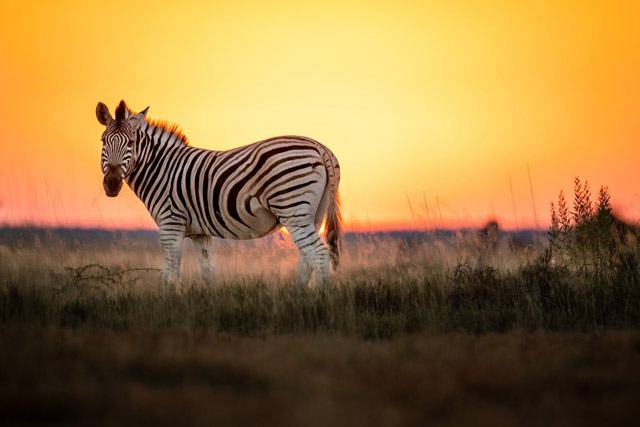
 It was a full day’s drive from Ongava to the Etosha East sanctuary. This day presented us with many wonderful sightings, including wildebeest, zebra, mating lions, Kori bustard, ostrich, impala, springbok, hartebeest, spotted hyena, and vultures.
Onguma was next up, and boy was this a beautiful conservancy. It was incredible to come out of the Etosha salt pans and, in less than 20 minutes, observe the landscape morph into beautiful grasslands and thick bush. Here we were presented with many giraffe, zebra, bustard, fork-tailed drongo, hornbill and roller sightings.
 The highlight, however, was my first wild cheetah sighting. A mother and two cubs squeezed themselves through the fence separating Etosha from Onguma and walked across the road in front of our vehicle, before disappearing into the thick bush. What a rush!
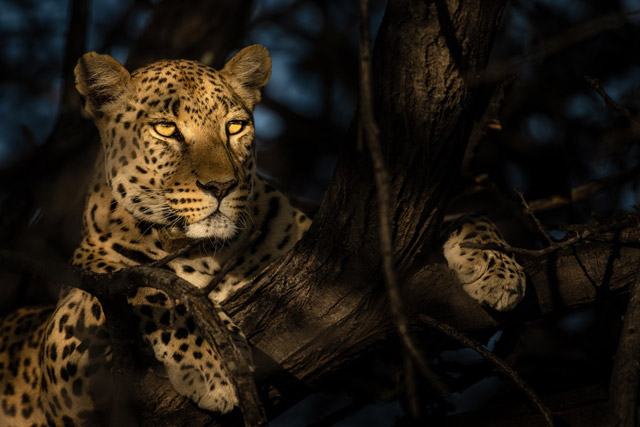
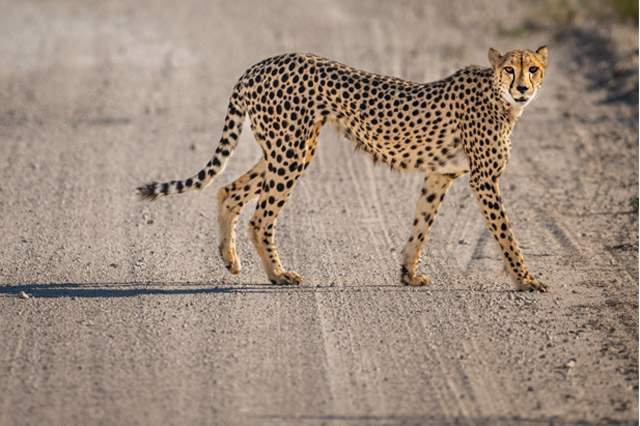 It felt as though our trip was ending almost as soon as it had begun, and it was almost time to fly back home, but not before spending a night in the spectacular Okonjima Nature Reserve. Okonjima is most famous for hosting the brilliant AfriCat foundation, which I have been a fan of for years, so it was great to view the NGO’s work first-hand. We also had incredible wild cat encounters with a beautiful young female leopard called Lila, and their resident cheetah. These animals are both orphans, and have become mascots for the foundations, since it is sadly not possible to release them.
 What a trip this was! But all good things come to an end. It was time to return to Windhoek and fly home.
Of all the places in Africa, Namibia was never near the top of my wish list, but after this incredible wildlife experience it has definitely been promoted.
I would not hesitate to recommend Namibia to anyone thinking about going there. Nor would I hesitate to go back, for that matter!
Find out more about our wildlife holidays to Namibia or to book your trip, contact a member of our team.