For this Relief Much Thanks, Doggies
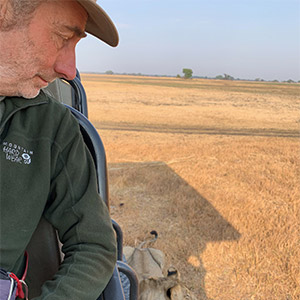
Tour leader and author Simon Barnes shares his experience in South Luangwa National Park on our Walking in the Heart of Zambia trip, the thrill of a Big Sighting safari, and his determination to see wild dogs after 20 years of visiting the park.
When you’re leading a safari trip – to be accurate I was co-leading – you want a Big Sighting and you want it early. If you do it properly, there’s a great more to a good safari than Big Sightings, but get one good and early and the pressure’s off. The pressure’s off the trip, the pressure’s off the South Luangwa National Park. It’s delivered - now we can all start to enjoy ourselves.
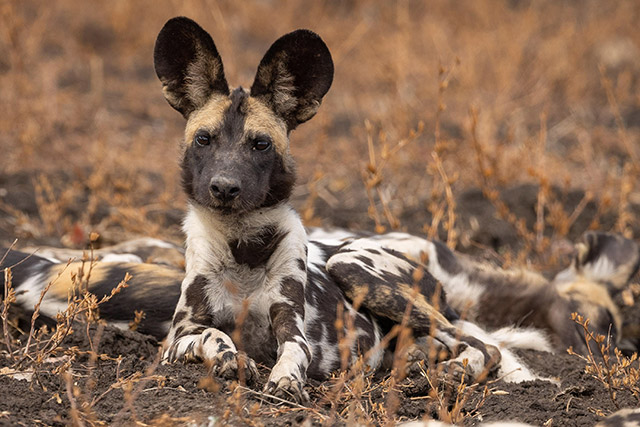
Image by Emma Healey
You know you’re going to get Big Sightings eventually, the park can’t help itself - but the sooner you get the first, the happier you are. It’s wonderful if you can cop something brilliant while everyone’s still trying to remember everybody else’s names.
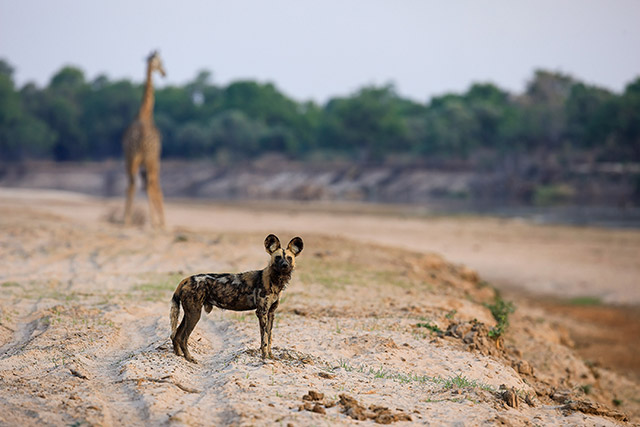
Image by Bret Charman
It took me more than 20 years to see wild dogs in the Luangwa Valley in Zambia. It took our guests a little more than 20 minutes. We arrived at Tafika, dumped bags and went straight out into the bush in vehicles: and there were the dogs. A pack of 19, eight of them pups. There have been changes in the park’s ecology and - huzzah! - dogs are now much more frequent.
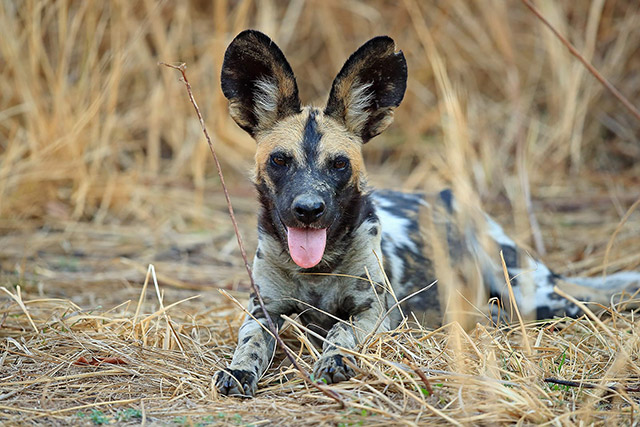
Image by Bret Charman
At first they were all crashed out in the shade: a flick of a tail, a twitch of an ear, a blinking eye. But it was late afternoon and cooling and besides, dogs, not being lions, are always looking to get restless and doggy. And, pups being pups, there’s always another game.
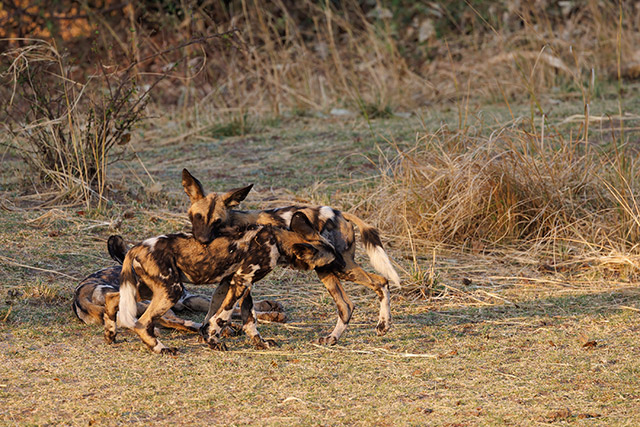
Image by Chris Breen
So one by one they were up and greeting each other: each dog fingerprint-different from any other dog ever pupped. Their tails are white flags that allow them all to keep in touch as they gallop through grass, their bodies black and tan and white, their ears startlingly undoggy, big and round like radar trackers. They’re not closely related to domestic dogs, which are all descended from wolves: they have a genus all of their own*.
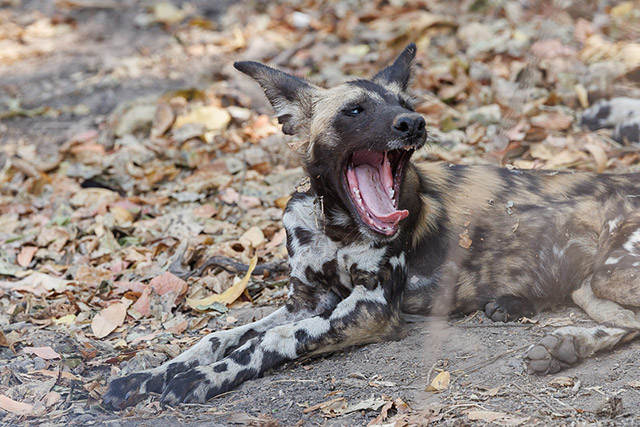
Image by Chris Breen
And then they were off, the adults at a smart trot, the pups in a gambolling canter with what looked like massive grins of enjoyment on their faces.
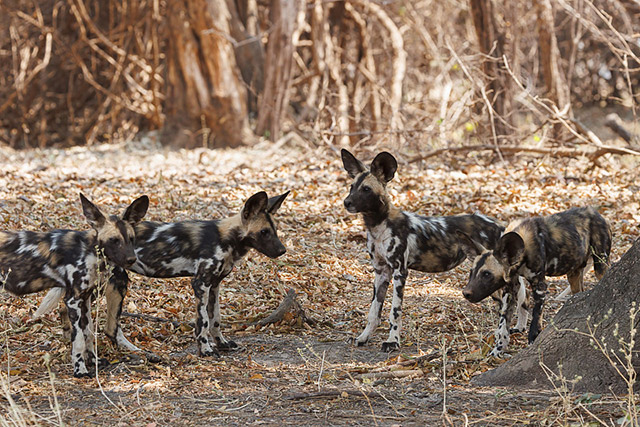
Image by Chris Breen
This was going to be good trip.
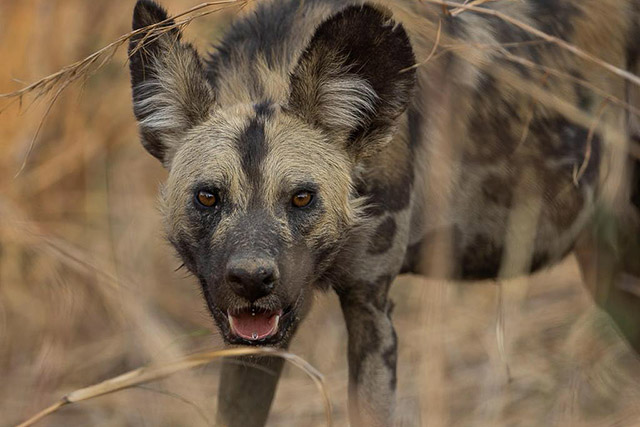
Image by Emma Healey
*Scientific name Lycaon pictus, since you ask; wolves are Canis lupus and domestic dogs Canis lupus familiaris.
Learn more about our Walking in the Heart of Zambia holiday, or contact our friendly team today.