Indian vs African Safari holiday - the Same, but Different!

I was recently lucky enough to visit India with my daughter, on a quest to immerse ourselves in the wildlife of India. Having been fortunate over the years to enjoy safaris in a number of African countries, we were looking forward to discovering the similarities and differences between the safari experience in these two iconic safari destinations.
Our adventure started in Delhi, followed by visits to two national parks in central India - Kanha and Satpura. Departing in early April, we flew direct from London to Delhi, arriving early morning which provided an opportunity for a cultural tour of Delhi to start the holiday. It was fascinating comparing this vastly different city to when I last visited 30 years ago!
 Our journey on day two started with a short flight to Raipur, followed by a 4-hour road transfer to Kanha National Park. Road transfers provided a great opportunity to see the rural life in this colourful country.
Our home for the next three days was Shergarh Camp, a small family-run tented camp located in the national park buffer zone with just eight tents, and only a 10-minute drive from the Mukki Gate. We were very impressed with the layout and accommodation in the tent — unexpectedly similar to African tented camps — with the addition of a much-needed air con unit!
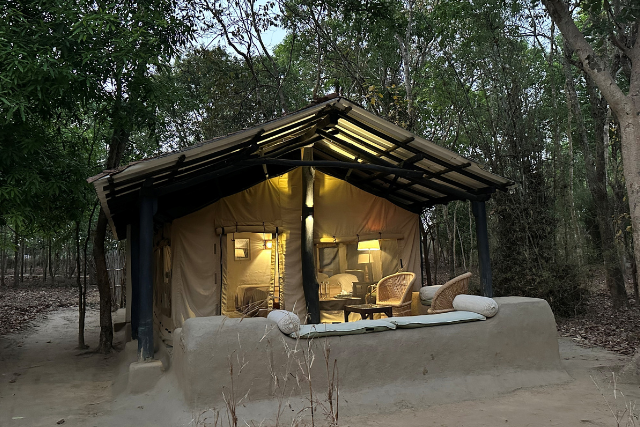 The lodge is owned by Katie and Jehan, with wonderful staff led by Ripar the camp manager, and naturalists Raj and Prianca. The food and service throughout our stay was top class, easily in line with the hospitality in Africa.
At this time of year morning drives depart at 5.30am, and are taken in open vehicles accompanied by a camp naturalist and guide assigned by the park authorities. Unlike in Africa, only park authority vehicles are allowed into the reserves, which are assigned to your guide when you begin your safari. Each day, a different guide joins your naturalist in the open top vehicle.
The standard of guiding over the next three days (five drives) with our outstanding naturalist Pinka was first class, in pursuit of the central India ‘big 5’ — tiger, sloth bear, Indian leopard, dhol, and Indian gaur. The morning game drives lasted six hours, with picnic breakfast taken in allocated rest areas in the park.
Compared with Africa, there are a few differences here — India offers a much longer morning drive, and breakfasts are restricted to specified and controlled stations in the park.
 Another difference worth noting with Kanha is that the park is divided into four zones, and once booked you're restricted to your allocated area for the game drive. This limits the number of vehicles per area, and prevents large concentrations descending on one sighting. Evening drives depart at 3.30pm (dependent on time of year), and return around 7pm.
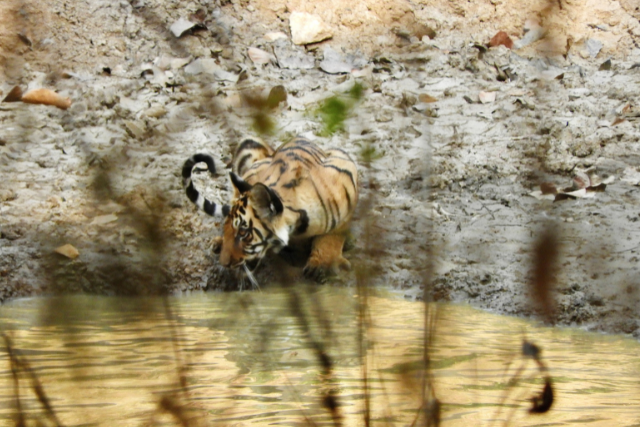
Our game drives in this stunning reserve included a wonderful encounter with a mother tiger and two cubs playing beside a waterhole, two exciting sloth bear sightings, and the chance to enjoy and photograph a range of other Indian wildlife. It was interesting to note there were fewer species of antelope and primates compared to many African parks.
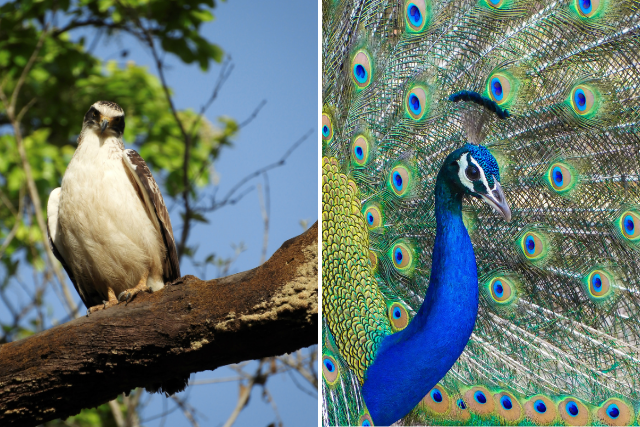
Birdlife was plentiful, and the park’s green sal trees alongside the haunting mating calls of stunning peacocks provided an exotic backdrop to every game drive. This also provided a noteworthy difference for our safari comparison with Africa!
 The second part of our trip included a day of travel from Kanha to Satpura National Park — happily we were able to enjoy one last morning game drive in Kanha before a 4-hour drive to Jabalpur, an unforgettable 4-hour train journey (you do have to experience this to truly immerse yourself in Indian culture), and a final hour drive to our next camp Reni Pani Jungle Lodge - arriving just in time for a late supper.
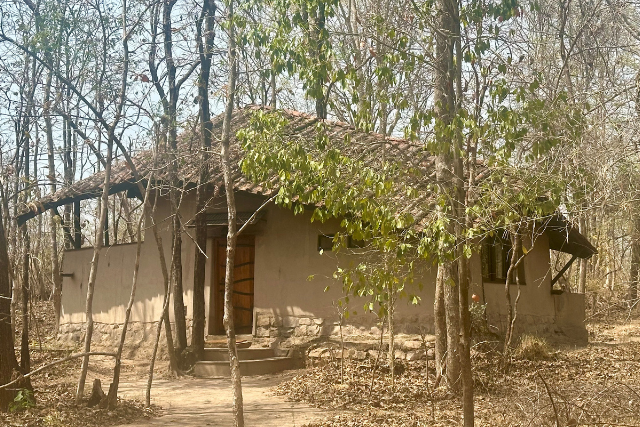 We stayed in one of 12 cottages in the forest setting, a locally-styled mud building providing a naturally climate-controlled jungle stay! The design of which compared very favourably with many African accommodations we have enjoyed.
The management of the lodge was exceptional, with highlights being the incredible and voluminous food and range of lovely dining locations, and a beautiful jungle pool – here there was no opportunity to catch up on reading due to the constant stream of wonderful visiting birds, including a paradise flycatcher.
 Once again this lodge was located in the buffer zone, with an approximately 20-minute drive providing opportunities to encounter wildlife en route (more on this later), followed by a short boat ride over the Tewa Reservoir to reach the entrance to the park – a lovely way to start your morning/evening game drive.
We were once again blown away by the quality of guiding from head guide Naman, who not only had extensive knowledge of the wildlife and ecology, but also applied incredible tracking skills and was dedicated to making our experience the very best it could be.
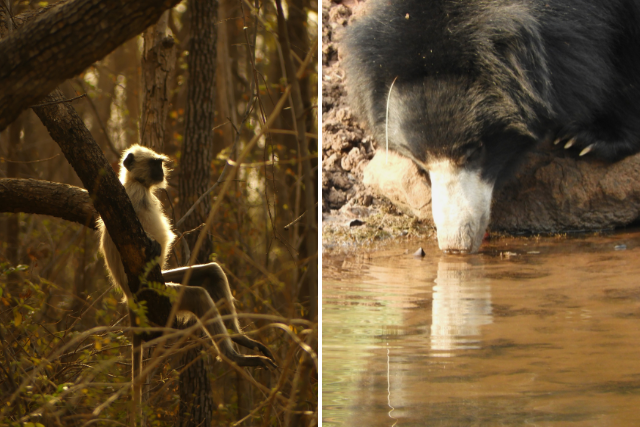 Over our 3-day stay, we were extremely lucky to experience outstanding wildlife encounters and enjoy the beauty and quietness of this park – with noticeably fewer vehicles. Our game drive highlights included:
- An encounter with a large male leopard, literally minutes outside camp in the buffer zone
- The excellent and rare sighting of an jungle cat, five minutes into our first drive
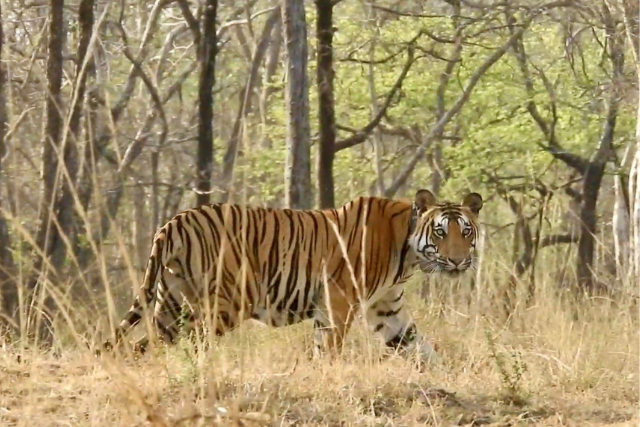
- An exciting pursuit of a large male tiger using alarm calls and pug marks on tracks – nothing can match the thrill of a close encounter with these magnificent creatures. This collared male had been released some distance away and had'nt been seen for three years (confirmed by the vet team who we alerted to this sighting), and was passing through checking out other territories
- A neck-aching half-hour spent watching the antics of the Indian giant squirrels in the trees
- An encounter with the extremely rare four-horned antelope
- Possibly my favourite sighting of an Indian scops owl
- A wonderful morning with a very active sloth bear – truly displaying all the characteristics of Baloo from the Jungle Book!
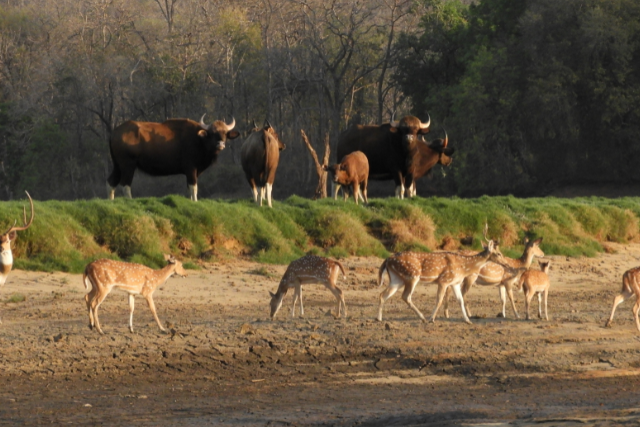 The beauty of Reni Pani is being able to include other activities alongside game drives. A very relaxing late afternoon boat safari allowed us to observe plentiful waterbirds and view plains game at the river edge. The following day we enjoyed an equally relaxing morning walk, which allowed us to spot tracks in the soft sand, including sloth bear, fox and jungle cat prints, as well as tiny tracks made by rusty-spotted cat kittens.
 Our wonderful whirlwind trip ended with a road transfer to Bhopal and onward flight back to Delhi, then finally home to London.
Just like in Africa, there are many reserves to pick from depending on your priorities. We chose Kanha and Satpura because of the lower tourist densities, but both parks still delivered epic wildlife (even if not at the density and concentration of the more popular parks) – this was the perfect balance for us!
 In conclusion, my daughter and I both agreed that on the whole, both India and Africa safari experiences were surprisingly similar. However, the fact that some of the wildlife, as well as the Indian culture and people, are so different, means that the overall experience is delightfully different — you'll need to follow in our footsteps to fully understand this reasoning!
Indian vs African Safaris: Key Takeaways
Similarities
- Tented camp accommodation
- Food and service at the camps
- Different reserves to choose from depending on your priorities
- The opportunity to go on boat safaris & walking safaris, depending on your location
- Each have their own 'Big Five'
Differences
- Air-conditioning units in Indian tented camps
- In India, only park authority vehicles are allowed into the reserves
- India offers a much longer morning drive
- Landscapes – India more dense tropical forests, while Africa offers large open plains
- Train journeys
If you'd like to experience an Indian safari like Sue, check out our fantastic collection of India wildlife holidays! For further guidance, contact our expert team today.