Kamchatka Whale Watch

“One does not discover new lands without consenting to leave sight of the shore…” Sarah Malcolm talks about her recent whale watching voyage to the wilderness of Kamchatka.
To many, Kamchatka is known only as a strategic location on a Risk board. Otherwise known as The Land of Ice and Fire, its scenery is one of unparalleled drama. This remote and rugged wilderness, east of the Ural Mountains and then even further east past the Siberian plateau, is known by some for its incredibly rich marine biodiversity. Several species in particular kept us tethered to our binoculars and scanning the horizon for blows of Baird’s beaked whale, North Pacific right whale and western grey whales, all of which we saw during our expedition through this untouched and unknown corner of the world.
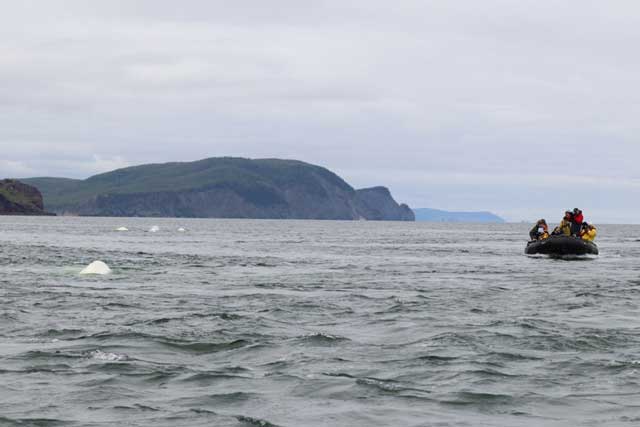
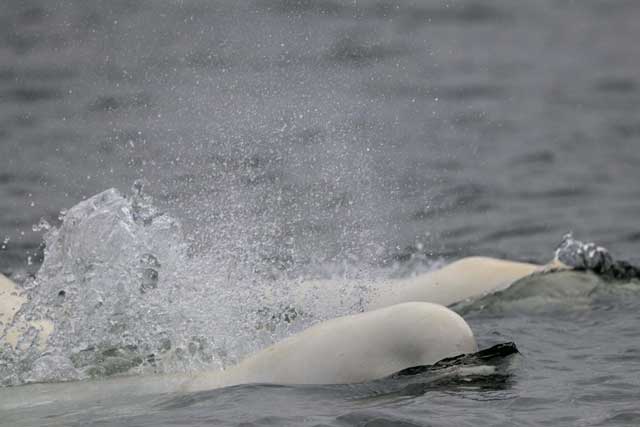
I looked straight down into the eye of a beluga whale as it swam beneath our Zodiac, turning on its side to get a good view of us. We spent three hours sharing Tugurskiy Bay with over sixty of these ethereal cetaceans, who grew more inquisitive and bold over the afternoon. Perhaps the most remarkable part of this encounter was witnessing previously unrecorded behaviour in this species. Belugas are not known to feed cooperatively, but this precisely what we observed as they hunted smelt, driving shoals into the shallows, up against rocks, to trap them. As we prepared to return to the main ship, we were treated to an unforgettable chorus of vocalisations from the whales.
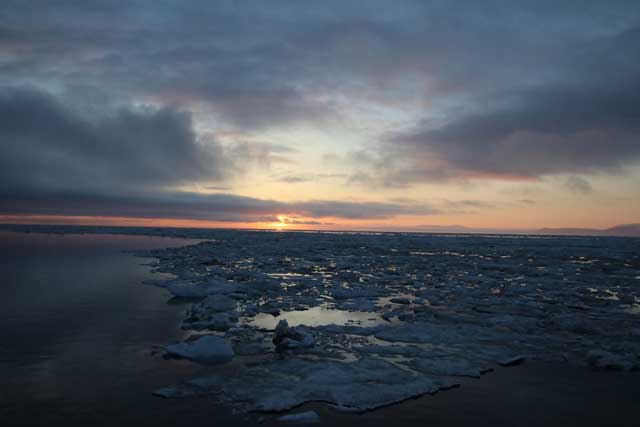
Continuing our journey, the profound silence was interrupted only by the occasional creaking of sea ice beneath the hull, or the muted splash of an unnerved seal slinking of its perch into the icy water. Sunset, at sea in June, stretched in both distance and time, and we watched as all the conceivable pinks and oranges of a Dulux chart coloured the sky and the reflecting Sea of Okhost.
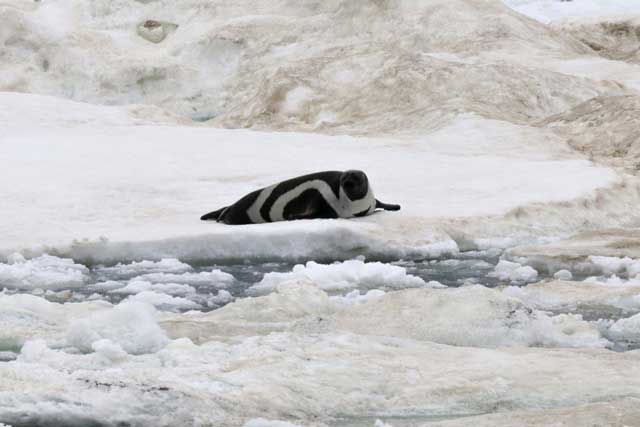
The northern Sea of Othosk held remnants of the winter sea ice, providing refuge for belugas, bowhead whales, ribbon seals and other fantastic species. Ribbon seals have a limited distribution and these striking animals must be seen to be believed. The males’ marking are particularly distinctive: white strips around their neck, tail and circular markings on each side of their body, enclosing their front flippers, contrast with their otherwise black coat. Both in Zodiacs and from the mother ship, we were privileged to have wonderful encounters with these iconic pinnipeds.
Our captain’s skilful navigation brought our ship alongside a dozen Steller’s sea eagles, which greedily devoured the remains of a seal. These mighty eagles were to be a constant throughout our journey, whenever we were close to land. Much to everyone’s joy, so were the puffins. Both horned and tufted puffins provided comedy value on an almost daily basis, and rivalled other photographic subjects such as crested auklet, Laysan albatross and pigeon guillemot.
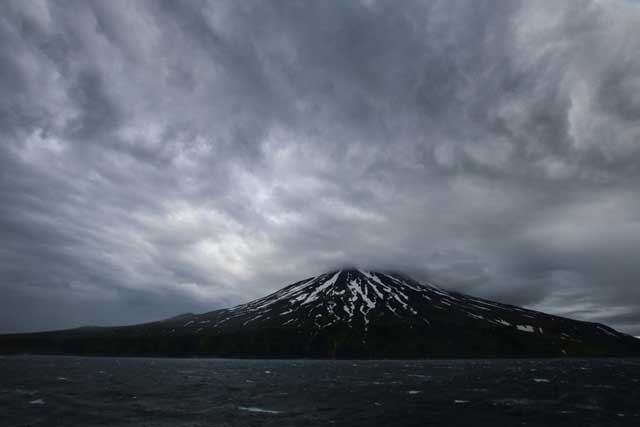
After crossing the Sea of Okhost we ventured onto the bridge at the announcement of land ahoy! Atlasov Island, the northernmost of the Kuril Island volcanic archipelago that stretches from Hokkaido to Kamchatka, jutted into the moody, ominous looking clouds above. From here we continued up the peninsula and across the Bering Sea, where eventually you can reach Alaska, another fruitful whale watching destination. Our port of call though was the Commander Islands, and we saw blue, humpback and fin whale on the way.
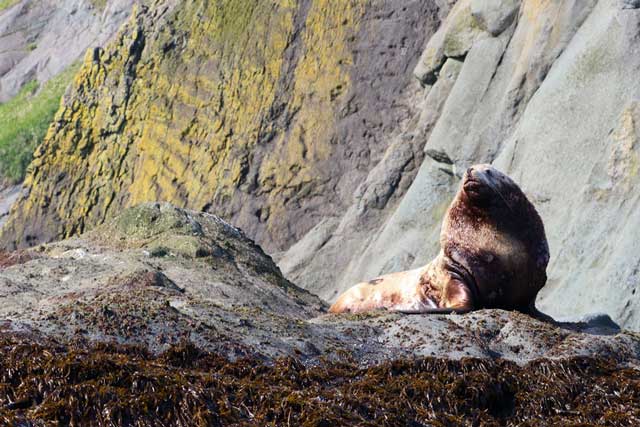
The remote Commander Islands offer absolute wilderness. On our Zodiac trips we encountered Steller’s sea lion, grizzled from battle, sea otters adoringly rafting kits on their fronts, and an abundance of sea birds. These islands are steeped not only in historic exploration, but also the history of evolution. At a small museum on Bering Island we saw the skeleton of the long extinct Steller’s Sea Cow.
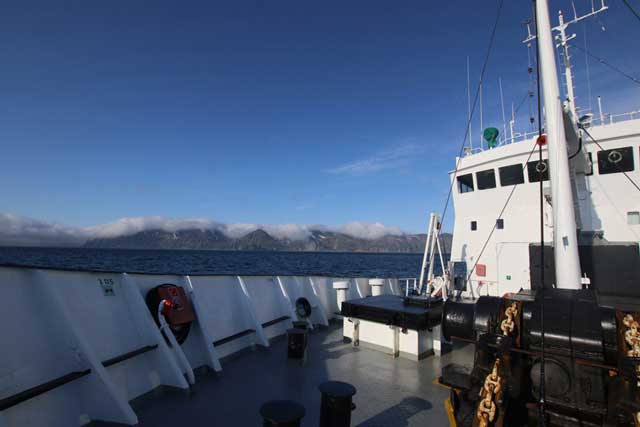
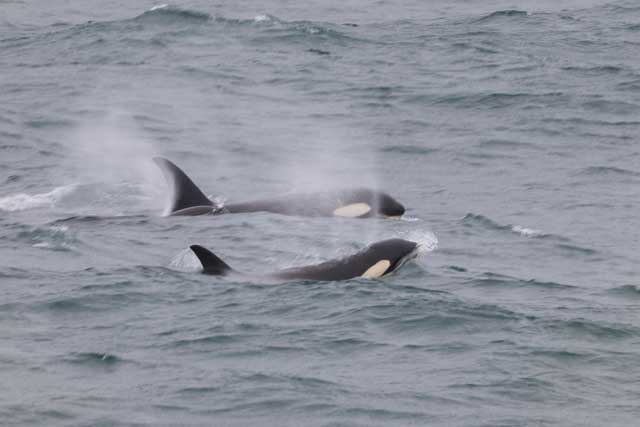
Over sixteen days aboard the Spirit of Enderby we sat adjacent to sperm whales logging, as they recovered from feeding dives. We photographed pods of killer whales as they circled the ship, displaying for us. Our tour leader, Mark Carwardine, was ever present to share his knowledge of each species we saw. On our penultimate day, leaning over the bow of the ship we had dorsal views of two young male humpback whales. After two hours, dashing from port to starboard, watching the pair we prepared to turn into the ship. As if on cue, the two also parted each other’s company. As a farewell gesture to one-another, and perhaps also to us, they proceeded to breach in perfect tandem. We followed one whale as he continued breaching for another nearly twenty minutes.
Embark on your own whale watching trip with Wildlife Worldwide! Contact us for more information.