Malawi revisited
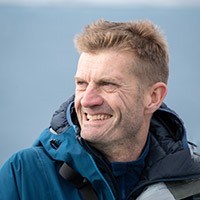
Patzi Haslimann recently travelled with us to Malawi, staying in Majete Reserve with its prolific wildlife, followed by a visit to Liwonde National Park for a memorable encounter with a family of black rhino.
The smell of Africa hits your nostrils as you climb down from the plane in Blantyre and I always feel a small sense of home coming. The sky was that impossible far away blue and the bush was green after the rains of only a few months ago.
 We drove about two hours to Mkulumadzi camp in Majete reserve. A more luxurious place than we expected especially as it was called a "camp"! My room was vast and open to the river through the trees, about thirty yards away. The rushing sound of the rapids was a constant reminder of how fast the Shire River flows here as it rushes down towards the Zambezi.
After being hunted out there is now quite a bit of reintroduced game in the reserve. We tracked the only two male lions - magnificent unscarred animals as they don't have to fight many battles for the attention of the park's single female. We picked up their spoor on the sandy road and soon came to them padding nonchalantly along like two bovver boys secure in their domination. We followed them for quite a while as they marked their territory, just in case some interloper appeared, until they sloped off into the bush for a doze in the midday heat.
We watched a herd of elephants about forty yards away from our jeep, chatting quietly while we were taking photos. One large female began to move away from the herd and
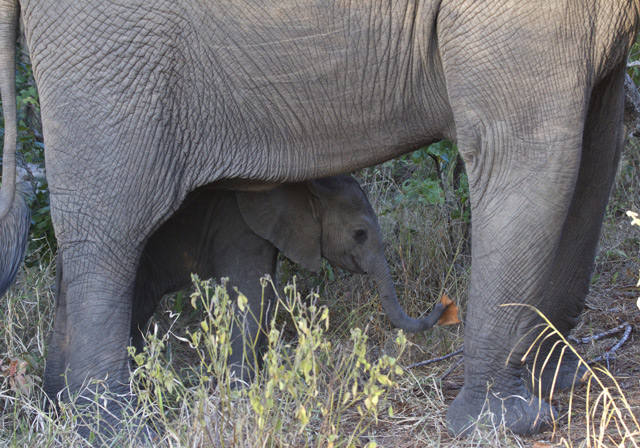 suddenly our driver did the fastest three point turn and revved the engine.It was the matriarch coming full pelt with ears forward, charging towards us. We ricocheted down the bumpy track with her in pursuit and the driver shouting "is she still coming?" She was, and gaining on us. No false charge this. After about half a mile of trumpeting, dust flying she slowed and allowed us to escape. Only then did the guide say she had already killed two people.
They are considering destroying her as she's teaching the young to chase vehicles but as she's the matriarch it would severely affect the herd. These elephants - 160 of them - were relocated from Liwonde where they had been heavily poached so who knows what the poor girl had seen and suffered? Bit of excitement though!
"I had a house in Africa - at the foot of the Zomba Mountain" (apologies to Karen Blixen). A week later on the way to Liwonde and Mvuu camp, we drove past the old town of Zomba. It looked almost the same as it did 60 years ago when I lived there with my parents. Things don't change much here in Malawi.
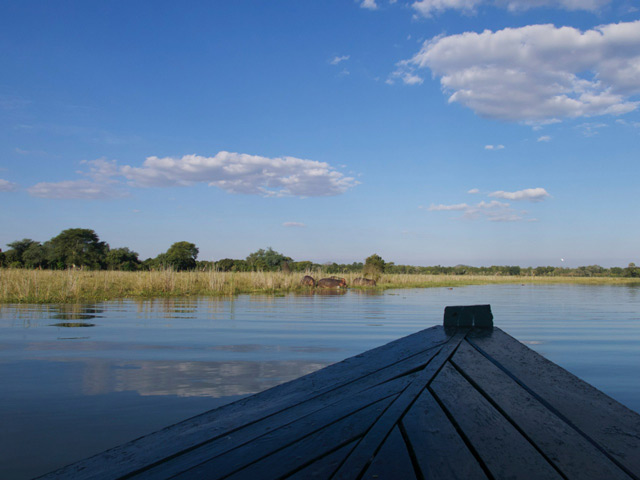 Much simpler than our previous camp, Mvuu was reached eventually by an hour's boat ride down the Shire River where it is wide and lazy. Here there were no cats but lots of elephant, various antelope species, warthogs, birds and a successful black rhino sanctuary.
We met the Hungarian PhD student who was in charge of the sanctuary - Kristian. That evening we planned a rhino tracking expedition and received our briefing on various hand signals and a warning not to run if one charged but to "step aside" as their bad eyesight meant they would charge right past you - probably!
At 5.30am we set off accompanied by two armed rangers. Kris had the electronic tracking equipment and insisted that one of the rhinos was close as we battered our way through the thick bush. After wandering round in circles for no less than six hours in the increasing noonday heat and thick undergrowth, dodging sharp thorns and vicious branches, he realised that the equipment was faulty.
A couple of days later we tried again. This time we soon located one of the transmitters attached to the horn of a very large female black rhino. Within an hour we saw them - three! The largest rhino in the park, Julia, with her two year old and another fully grown male. Kris constantly checked the changing wind with his ash bag and our silent signals came into play.
The rhinos could be heard munching away on the other side of some low branches about forty meters away. You could just see them when they moved. We were crouched down, Dawn and I near a tree that could have offered some protection and Gary with Kris a few yards away.
Cameras clicking quietly trying to get a focus through the trees we realised that Julia had clocked us! She was staring through a small gap trying to work out what we were. My heart was thumping and I checked the nearest tree and how long it would take me to "step aside".
The rhinos were huge. Taller than the top of my head at their shoulders. Suddenly they went for it, charging towards us oblivious of the tall grass, the trees and thorns. They seems to be going straight towards Gary. Kris and he leapt towards a tree and Dawn and I were somewhat transfixed as they crashed through the bush the short distance between us.
Julia stopped within ten yards of where we were and snorted before turning and disappearing with her pals. Rhinos can turn on a sixpence and although their eyesight is poor their sense of smell and hearing is acute.
We breathed again. No one took photos of the event! The sight of three gigantic black animals with huge horns tearing blindly through the undergrowth made us totally forget everything.
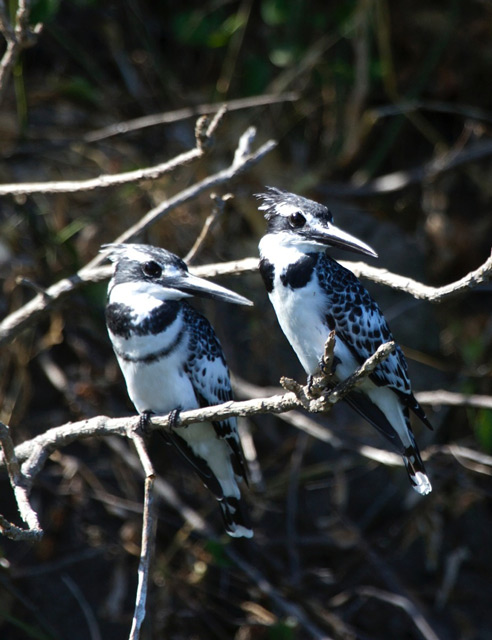
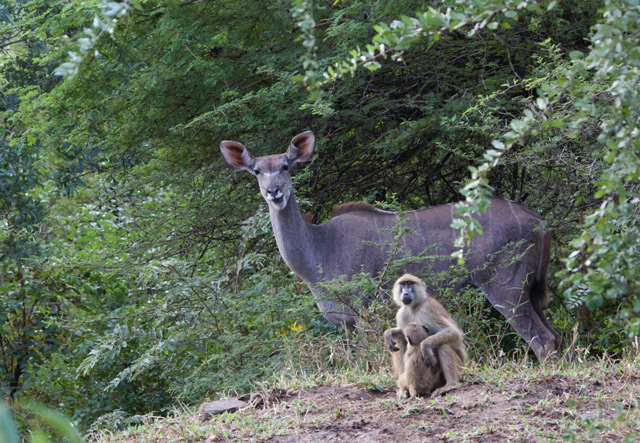 Lazy boat trips down the river and safer occasional drives gave us opportunity for some interesting but challenging photography. Elephants that co-operated and birds that didn't. Crocodiles that slid silently into the water and hippo that splashed noisily into the river as we approached. Fish eagles cried overhead and pied kingfishers hovered above waiting to dive for small fish.
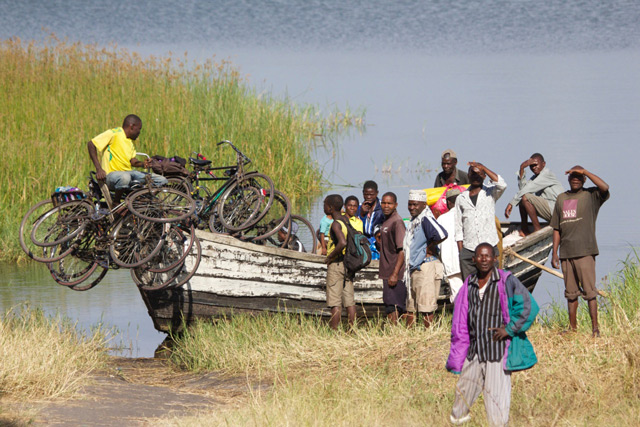
Finally, to catch our planes at Lilongwe was a four hour drive North from Mvuu and we left before sunrise, crossing the Shire River by boat and picking up a vehicle and driver on the other side. We drove by villages which still have small thatched huts and village pumps where the women go every morning for water. Children were around small fires lit outside their huts, keeping warm in the early morning chill and we could smell the woodsmoke as we flew past. Chickens scurried from under our wheels and goats perched on any high ground they could find.
 We hit the tar road after 45 minutes and flashed through villages with colourful shop fronts and names like Best Africa Supermarket and Gon Boom Investments. Stalls selling red tomato and white cassava in carefully arranged pyramids rushed by, and women with impossible plastic buckets full of water on their heads, sashaying in a graceful flowing motion with the bright containers balanced above.
The roads were busy with people walking on the dusty edges, or riding bicycles with huge sacks of maize flour, or sometimes passengers, wobbling precariously as we passed. It was all very nostalgic, Africa doesn't change.
Discover Malawi for yourself on a tailor made trip