The Brazilian Pantanal - A Wildlife Paradise

Team member Ben Sutcliffe reflects on his recent visit to the Pantanal, where in addition to jaguar watching, he enjoyed the abundance of wildlife Brazil has to offer. Leading our brand-new trip to the Pantanal & Chile next year, he can't wait to return.
The Brazilian Pantanal is comfortably one of the best wildlife locations I have ever visited – literally, everywhere you look, there is a bird or mammal of interest. From great kiskadees to jabiru storks, Yacare caiman and capybara to the king of the wetlands, the mighty jaguar – this place abounds in life!
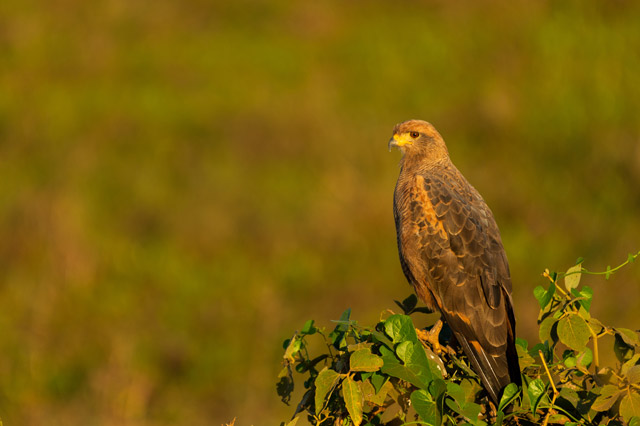
 Arriving in Cuiabá, the gateway to these magnificent wetlands, we travel the short distance to the town of Pocone, where the wildlife begins in earnest. Travelling along a raised dirt road known as the Transpantaneira, we are afforded sweeping views of the seasonally flooded grasslands, forests and permanent lakes before us. Resplendent vermilion flycatchers flit between branches, brown capuchin monkeys frolic in the shade of a palm tree and red-winged blackbirds sing beautifully from their reedbed perches. Savannah hawks litter the trees and bushes along the track, mesmerising you with their simple beauty, and roadside hawks stay true to their name, keeping us company throughout our journey. Black vultures circle the thermals above, their huge wings acting like sails, lifting them higher and higher into the sky and yet, through binoculars, you can still them see them scouring the savannahs below.
 Arriving at SouthWild Pantanal Lodge, approximately halfway down the Transpantaneira, we take to a purpose-built hide where we have an excellent chance of seeing the ever-elusive ocelot, a beautiful small-sized cat that preys on rodents, birds and even fish. But it’s not just this brilliant cat that resides here. There are regularly crab-eating foxes around the lodge itself, and boat trips on the narrow waterways of the Pixaim River offer the chance of a wealth of aquatic bird species such as striated heron, black-collared hawk, roseate spoonbill and possibly even pygmy and green-and-rufous kingfishers. This area is still in 'jaguar land' so there may be opportunities for your first jaguar sighting.
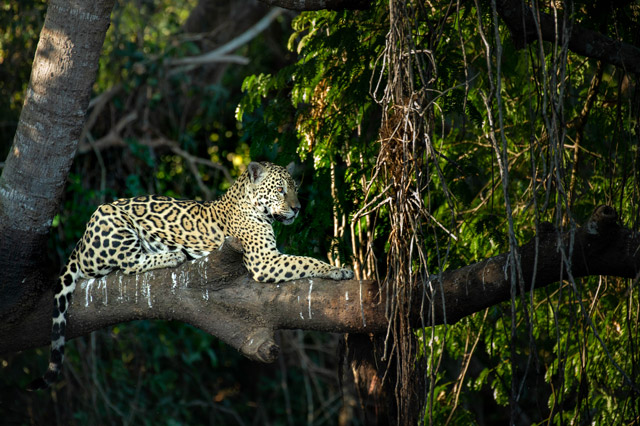 Continuing south to the end of the Transpanteira, we next take to the water and travel upriver in small boats for approximately 45 minutes to a flotel, located in the heart of 'jaguar land'. The boat trip offers yet more chances to see some of the region’s birdlife including ringed kingfishers, wood and maguari storks, rufescent tiger, cocoi, boat-billed and striated heron as well as many other wading birds including cattle, snowy and great egret, bare-faced, plumbeous and buff-necked ibis and of course, the beautiful roseate spoonbill.
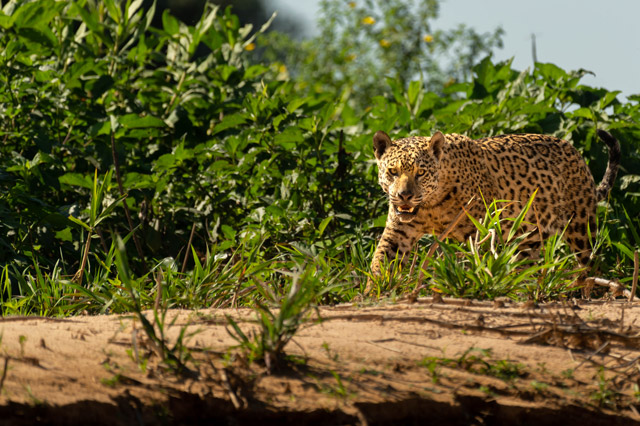
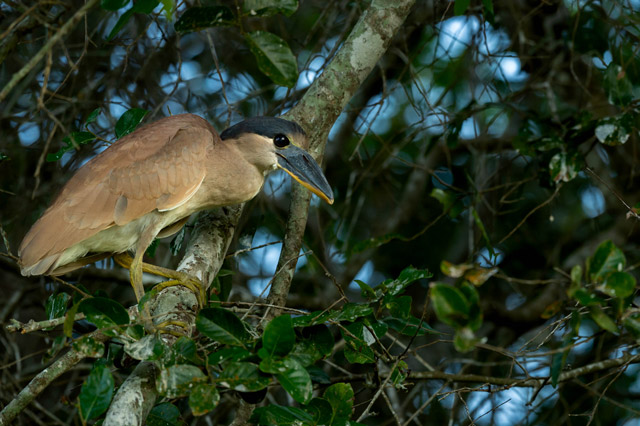 Over the next few days, you settle into a daily program of morning and afternoon boat excursions in search of jaguars. I stayed on the flotel back in July 2022, and to say that the following days blew me away would be an understatement. I ended up having not one, not two, but 12 different jaguar sightings – it was an incredible experience. The sighting that perhaps stands out most in my mind is when we came across a mum and two subadult cubs. The mum was already on one side of the river with the cubs on the other, and they were calling to each other. After a while, these two cubs swam across the width of the river and followed their mother into the undergrowth. Before they disappeared, however, I managed to grab some images of them walking straight down the bank towards us – a magical sighting that will stay with me forever.
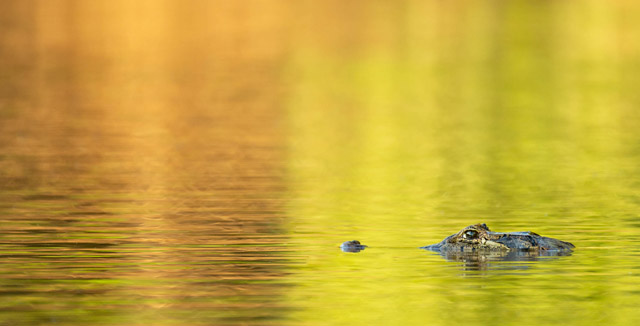
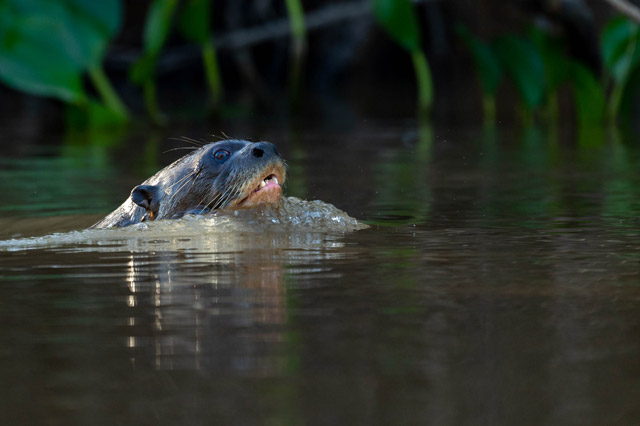
 It’s not just jaguars that you can see in this watery oasis, though. Giant river otters communicate in squeaks and whistles whilst tousling over the latest catch. Yacare caiman are also a common sight, along with the largest rodent in the world, the capybara. The jaguar’s two favourite prey items, both of which provide many opportunities for great images.
 The Brazilian Pantanal is truly one of the world's natural wonders and I can’t wait to return on our South America’s Big Cats trip when we’ll also be travelling to the breathtaking landscapes of Torres del Paine in search of South America's other big cat, the puma!
Join Ben on our South America's Big Cats Photography tour, view all our wildlife holidays to Brazil or to find out more speak to a member of our team.