The Wilderness of Liuwa Plain
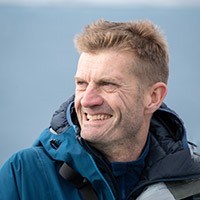
Wildlife Worldwide Founder, Chris Breen shares his experience exploring the Liuwa Plain in Zambia's Wild West. Widely considered one of the best national parks in the region, the Liuwa Plain is known for superb diversity and abundance of wildlife.
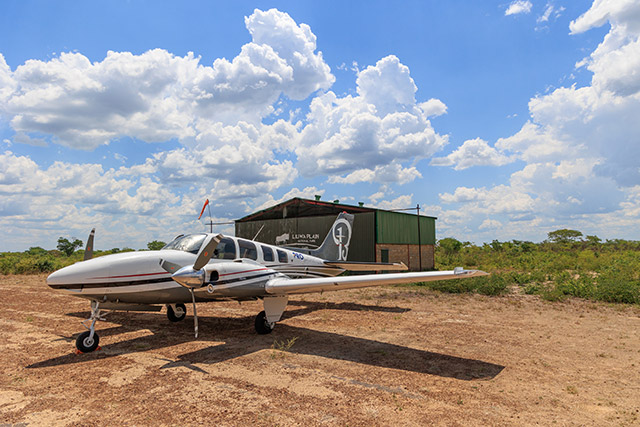
After a ‘decompression’ stop in Lusaka for a night, we went out to Lusaka international for our charter flight to Kalabo in Zambia’s Western Province. A private charter for four of us, and a two and a half hour flight had a slightly unusual beginning when, after take-off, the wheels wouldn’t retract so the pilot said we needed to land again. A low pass in front of the air traffic control tower confirmed that the wheels were stuck in the ‘down’ position and we came slowly and safely into land. After 45 minutes or so we were airborne again (in a different aircraft) and heading due west. After clearing the city and its surroundings there is very little evidence of human habitation for many miles of the journey. We passed just north of Blue Lagoon National Park and directly over Kafue National Park before overflying Mongu and coming into land at Kalabo where we were met by Byron from King Lewanika Lodge.
 We climbed aboard our game-viewing vehicle and were soon on our way. We crossed over the Luanginga River by the recently opened bridge and it was 45 minutes to the park headquarters where we stopped for a quick refreshment.
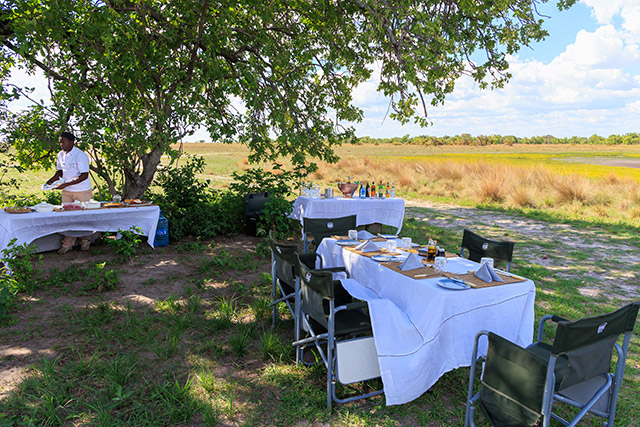
We were all getting pretty peckish having last eaten at 7ish this morning but under a tree we spotted a Land Cruiser, a few people, and a beautifully laid out table and chairs – lunch in the bush and a welcome glass of Mosi beer was all we needed to be fully refreshed and ready for the final part of our journey to King Lewanika Lodge.
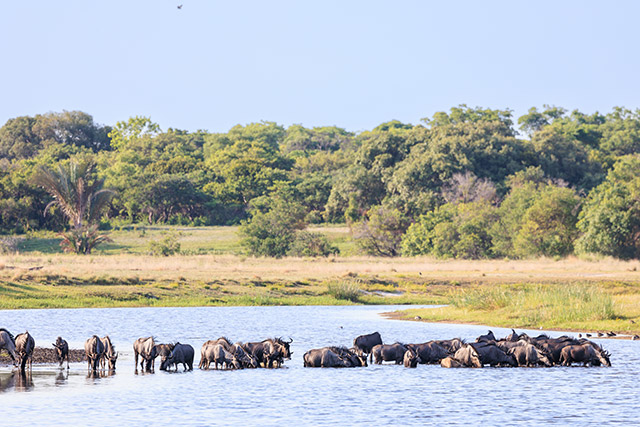
 We were greeted by Rafael (the camp manager), Godfrey our guide, and a small team of lodge staff who brought us into its magnificent bar and dining area with utterly breath-taking views out over the plain to the west. And, at the small waterhole 50 metres or so away, there was a small gathering of buffalo, a herd of wildebeest and a collection of birds including cattle and intermediate egret, hamerkop, and overhead a bateleur eagle.
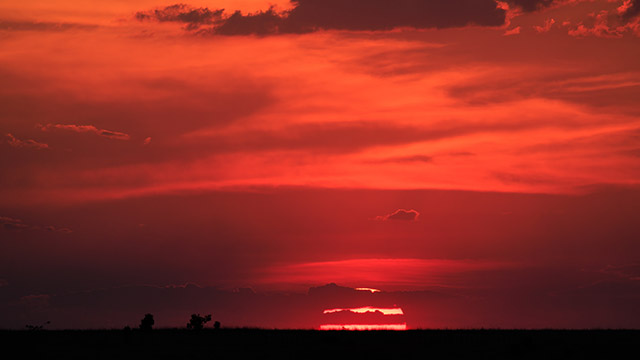
 We decided after such a long day of travelling that we would forego an afternoon activity and instead settle into our rooms and watch the sunset from the comfort of the lodge…
 At first glance the plains that we had come across were pretty dry – drier in fact than I had anticipated for this time of year. Generally, the rains begin in the last two of weeks of November and the pans that give life to all the animals around will be filling up – but not this year. The rains are late on the western side of Zambia, and whilst we had a little rain during our safari, it was not very much – it wasn’t enough. But, I don’t think I could say that it affected our game-viewing as we had some spectacular sightings.
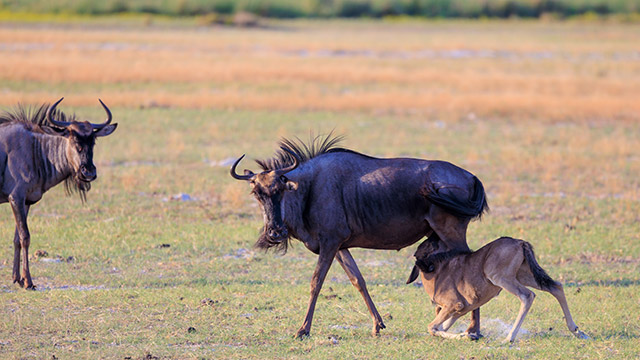
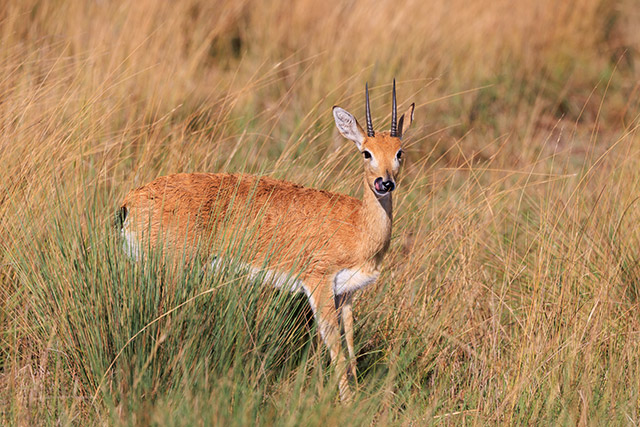
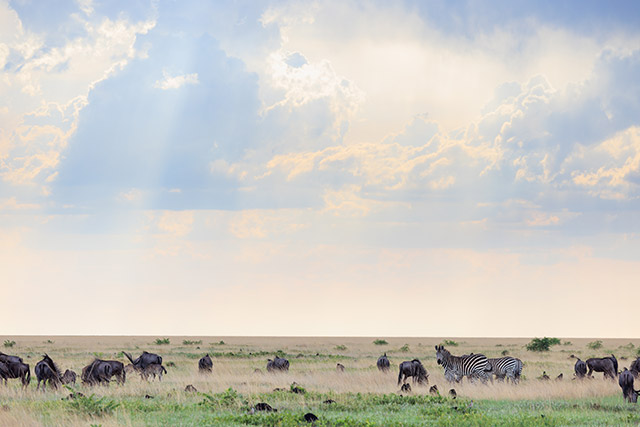 At this time of year, the wildebeest come to the southern grassy plains to give birth to their young so there are wildebeest everywhere you look, but on our first day we saw plenty of other wonders too – oribi, common duiker, red lechwe, Burchell’s zebra, reedbuck, side-striped jackal and even a fleeting glimpse of a large grey mongoose. In respect of birds, we had white-bellied and Denham’s bustard, Fülleborn’s longclaw, red-billed and hottentot teal, great spotted cuckoo, African marsh harrier, blue-cheeked bee-eater and the bird of the day…. a male long-tailed widowbird resplendent in full breeding colours with its impractically long feathery tail.
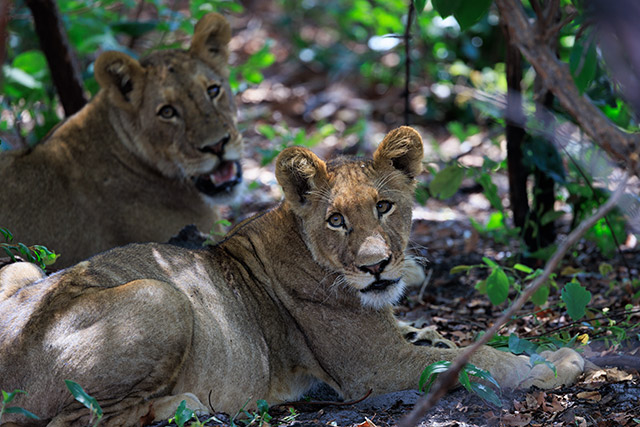
 On our second full day on the plains, we found lions. Two females and a confident year-old cub. Melting in the heat of the day, they were taking shelter in the bushes of a ‘tree island’ until the temperature cooled enough for them to come out and hunt. So, whilst they were simply ‘doing what lions do’ (enjoying a siesta!) it was great to know that they were nearby and would no doubt be hunting later.
 The massive sky was clear to the south and east, but the clouds were building and the thunder roaring like the sound of cannons to the north and west, and we weren’t spared the weather. As the rain came in thick and fast, we dropped the sides of the vehicle to protect us from the rain and waited for 20 minutes for it to pass before we paused for a sundowner drink and then headed back to camp.
 Wildlife-viewing is compulsive and somehow it is hard to be satisfied when you know there are species you haven’t yet seen. Having seen lions we were hungry for a cheetah sighting… but that was going to be harder. The vast grassy plains are perfect cheetah habitat especially with the staggering numbers of antelope that calls them home.
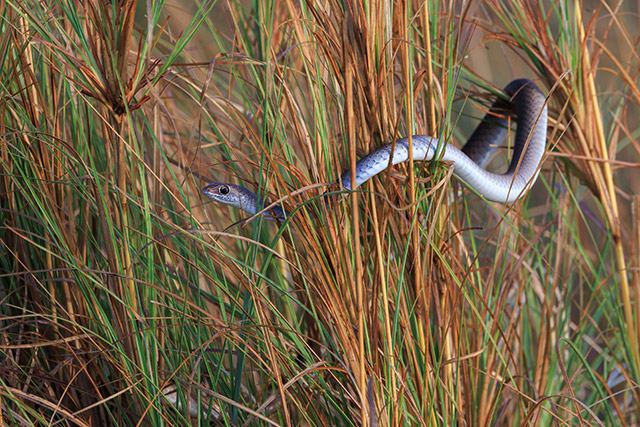
 As ever, we were out at first light, but today there was a heavy mist in the air making the good light for photography last longer. Buffalo, black-bellied bustard, a single white pelican, and then… a boomslang – one of Africa’s most notorious snakes with a fearsome reputation was warming up in the sun on top of a bush. We saw a couple of predators from a distance and for a moment thought it was cheetah, but it was a pair of adult male lions. They were patrolling the plain, looking at their subjects and looking for some respite from the heat. We positioned the vehicle on slightly lower ground so we could be at eye level as they paced towards us purposefully and then lay down in the shade.
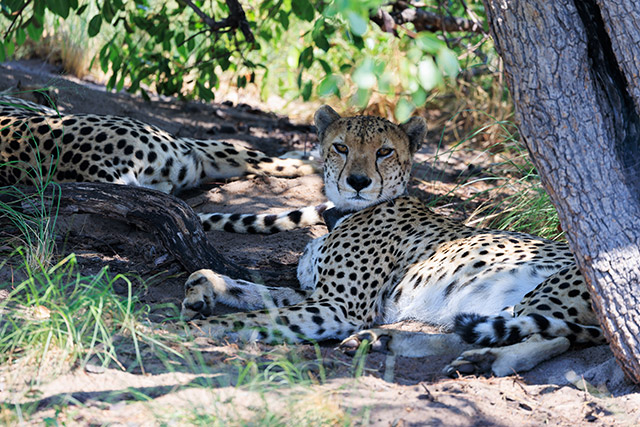
 We had turned to head for camp when 30 or more banded mongooses bounded through the grass, then blue-cheeked bee-eater appeared as did blue-breasted bee-eater (a first for the trip), and then as we had almost given up hope of seeing them, we found a pair of male cheetahs lying in the grass under a shady bush. This was the icing on the cake – we had now seen and photographed everything in Liuwa that we had hoped for. After a delicious lunch in camp, we headed out earlier than normal to spend time with the cheetahs wondering if they might get restless in the cooling air and go hunting. They got restless, but they didn’t go hunting. It didn’t matter. We sat with them for over an hour, and they were doing just what cheetahs do when they aren’t hunting - very little. It was fabulous.
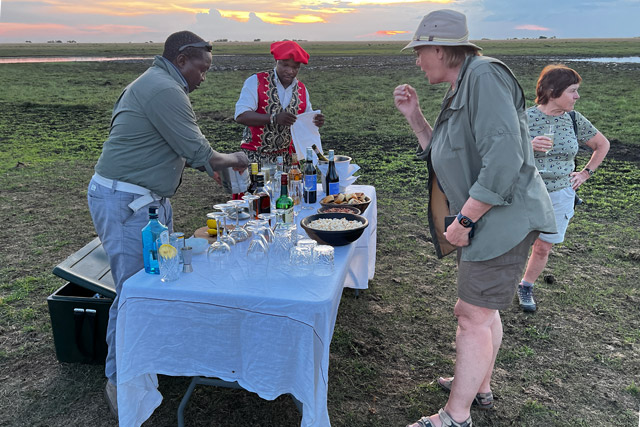
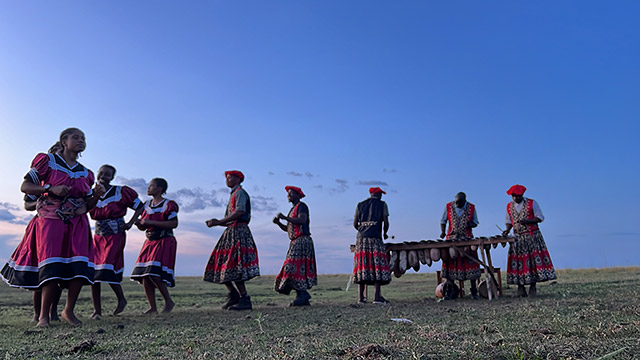
 As we headed off for sundowners at one of the pans that did have water in it, we had wonderful sightings of pallid harrier (one of the many palearctic migrants to visit Liuwa) and a pair of secretary birds. The camp team had organised special sundowners for us with a glass of bubbly, and they gave us a short performance of traditional song and dance as the sun dipped below the horizon.
 On the final morning it was a going to be a long drive back to Kalabo airstrip for a midday charter back to Lusaka so whilst we decided to go out first thing, our plan was to simply sit at a water hole and watch the world go by. But this is Zambia, and the wildlife got in the way of a relaxing morning (!) – two more lionesses. In fact, these are mothers to seven cubs, but try as we might, we couldn’t find where they had hidden them. It didn’t matter. It was a wildlife mystery that we didn’t need the answer to, but it was a good reason to plan a return visit.
If you're interested in exploring the Liuwa Plain, our friendly team are available to help - just contact them today.