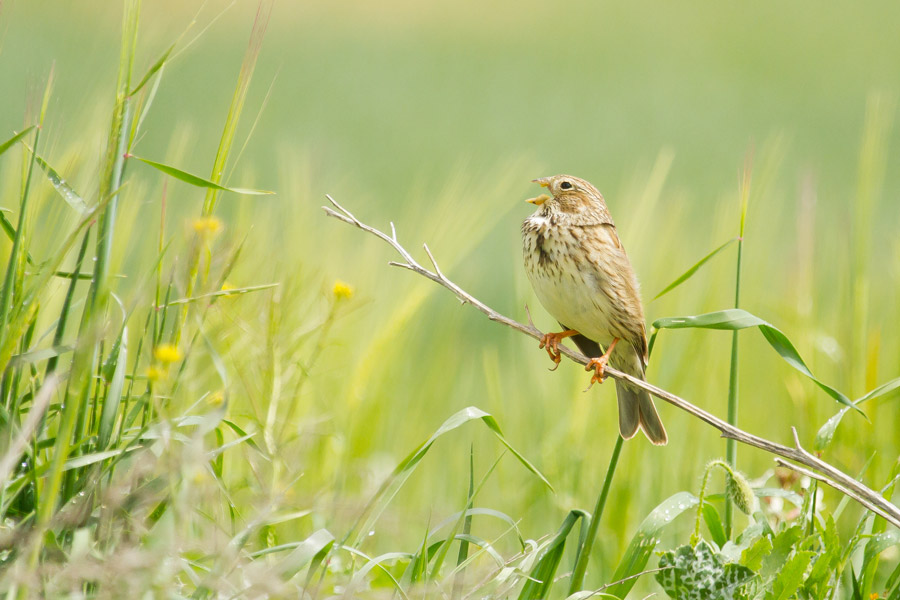
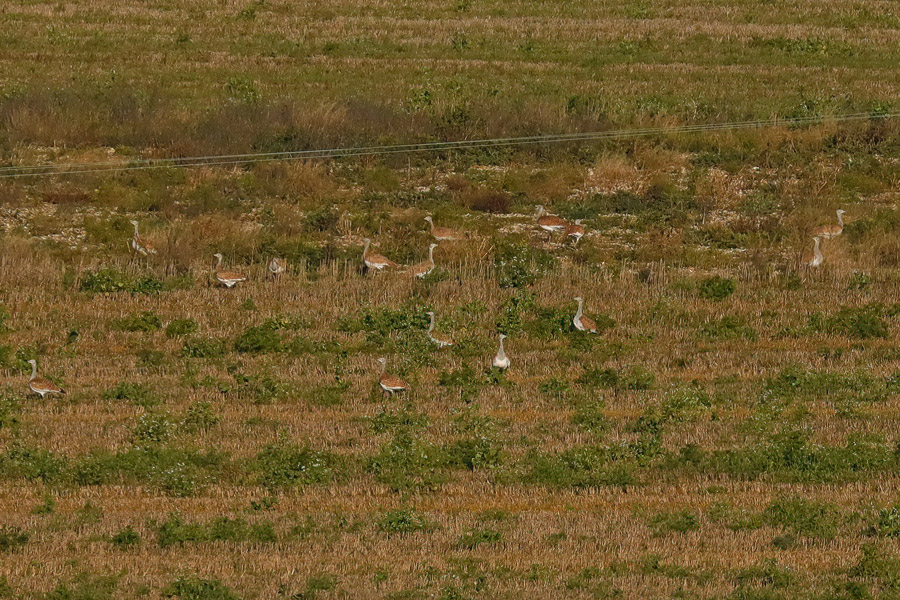
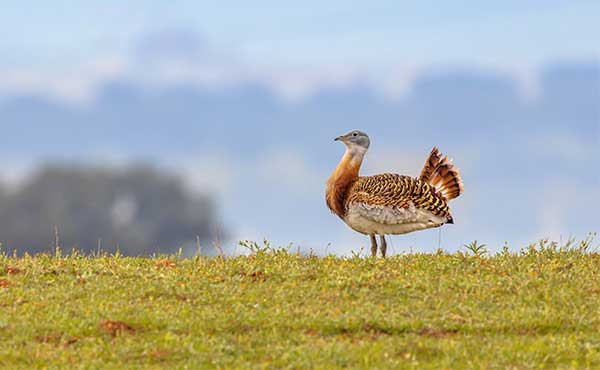
With much land inaccessible due to military activities, the wildlife of Salisbury Plain has thrived, and today it's a refuge for great bustard, stone curlew, corn bunting, marsh fritillary, Adonis blue and brown hare.
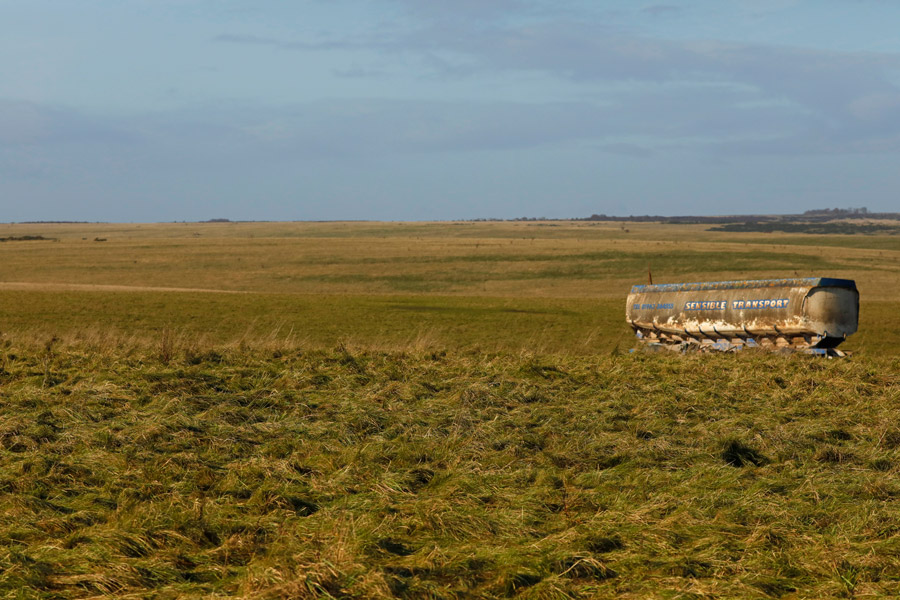
The extensive grasslands of Salisbury Plain are one of the gems of Southern England. The Iron Age Hill Forts, Roman roads and famous Stonehenge are all reminders of the long history of this landscape. Today, much of this 700 square kilometre chalk plateau remains inaccessible, remote and or lightly farmed. This escape from the intensification and disturbance of much of lowland Britain has helped it remain a haven for wildlife.
The most famous resident is the world’s second-heaviest flying bird, the impressive great bustard. Thanks to the conservation work of the Great Bustard Group, a population of over 100 of these magnificent birds can now be found here. Other rare species include stone curlew, quail, barn owl, whinchat and invertebrates such as cuckoo bee, marsh fritillary, Duke of Burgundy and Adonis blue.
View suggested itinerary