This expert-led small group tour to Chile’s Torres del Paine National Park offers a chance to see an exciting range of Patagonian mammal and bird species amidst breathtaking scenery.
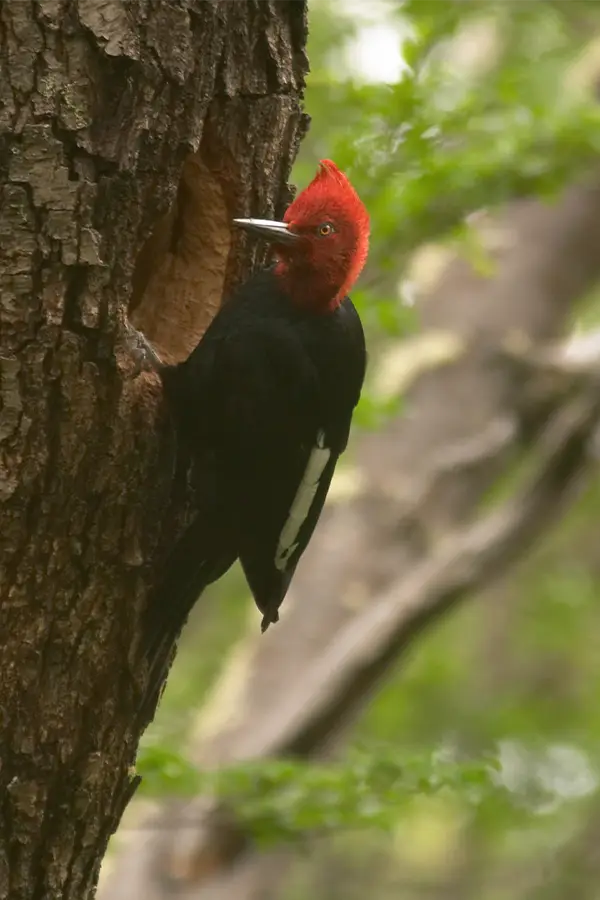
Amongst this often harsh and imposing terrain is a wealth of Andean wildlife. Andean condors soar effortlessly overhead, torrent ducks navigate the turbulent waters of the River Paine and in stands of southern beech it's possible to encounter South America’s largest woodpecker, the Magellan woodpecker, and its most southerly occurring deer species, the huemul.
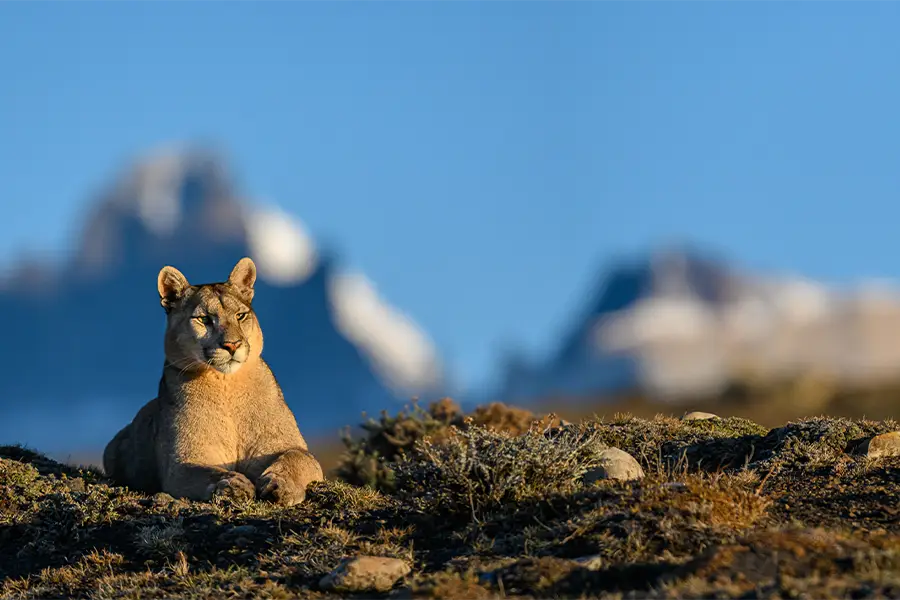
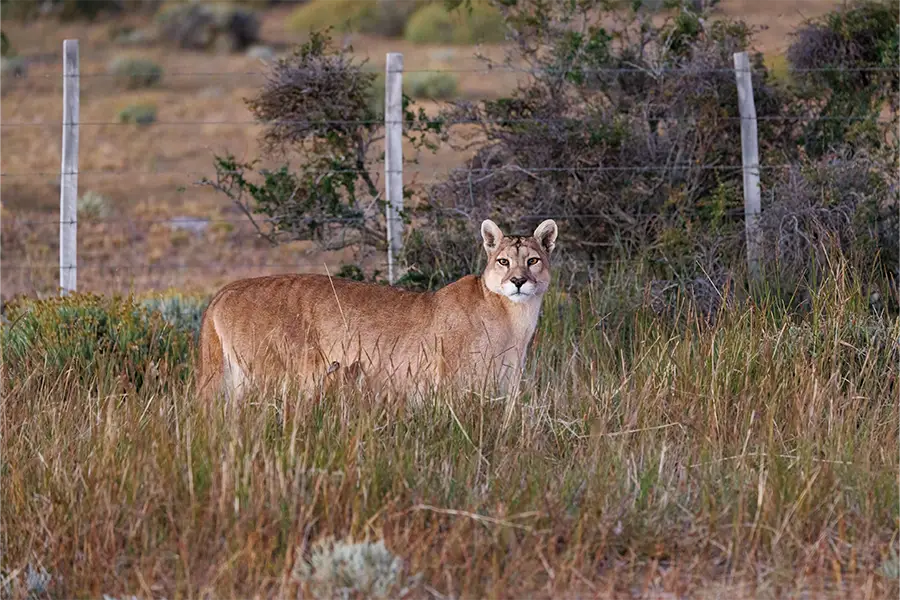
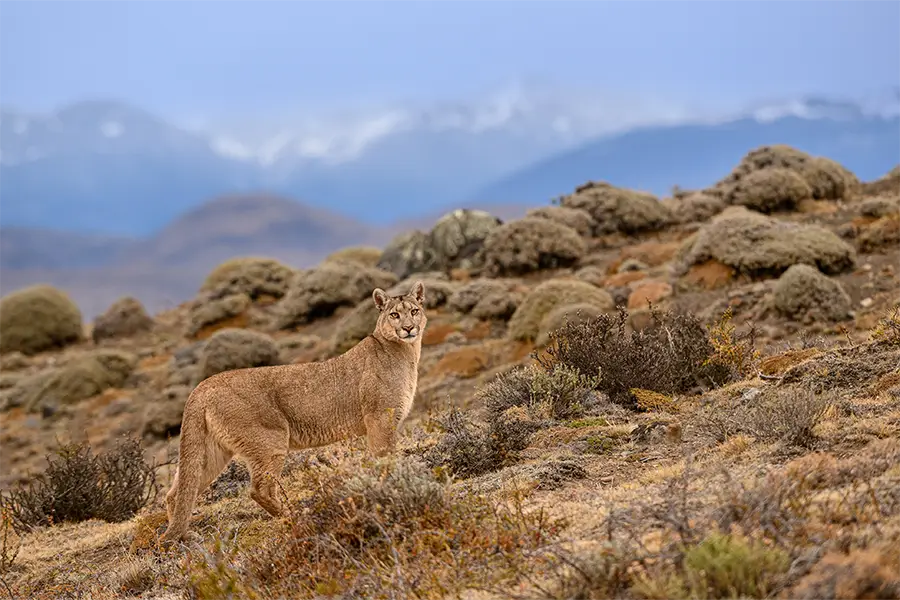
On the slopes, large herds of guanacos are on constant alert for pumas, scanning intently and letting out a bellowing alarm call if a threat is sighted. Their vigilance is more than justified, with the park and surrounding ranches believed to hold one of the highest densities of puma in the America’s.
This comprehensive new small group tour not only explores Torres del Paine National Park, but also the neighbouring ranch of Laguna Amarga. Here, with the aid of dedicated puma trackers, we're able to observe pumas on foot, a spine-tingling experience that will stay with you forever.
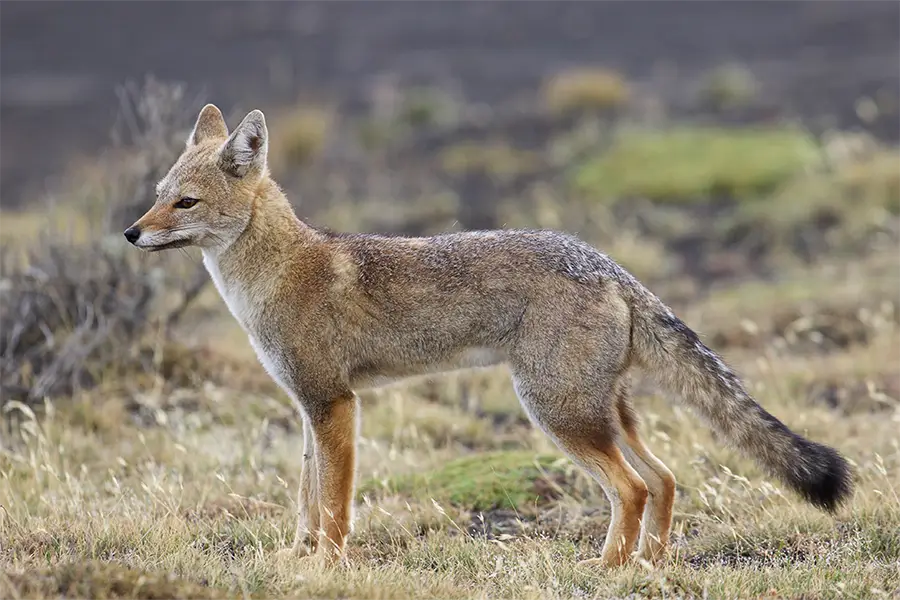
Patagonian hog-nosed skunks, South American grey foxes, fabulous hairy armadillos, and an exciting array of birdlife all contribute to the wildlife experience, as does a visit to Estancia Olga Teresa, where it's possible to obtain eye-level views of Andean condors flying in to roost. Throughout the trip, we take time to soak in the magnificent views, and a boat trip on Lago Grey allows us to observe the magnificent Grey Glacier.
Typical Itinerary
-
Day 1:
Depart UK
-
Day 2:
Arrive in Punta Arenas
On arrival in Punta Arenas, we're met and transferred to our accommodation close to the centre of town. After settling into our rooms, we meet for dinner and a welcome briefing.
Accommodation: Hotel La Yegua Loca, 1-night
-
Day 3:
Travel to Cerro Castillo
Today we begin driving northward to Puerto Natales, and then onto Cerro Castillo near Torres del Paine National Park. We pass through areas of southern beech forest en route and perhaps encountering our first guanaco or southern grey fox.
Accommodation: Estancia El Ovejero, 3-nights
-
Days 4-5
:
Puma tracking on Laguna Amarga
We devote two whole days to tracking and viewing pumas on Laguna Amarga, a private estancia of approximately 7,000 hectares bordering Torres del Paine National Park. Here we have the unique opportunity to track pumas in both vehicles and at respectful distances on foot, providing us with some unforgettable encounters.
Though this fabulous cat is more readily seen here than anywhere else in its vast geographical range, seeing it still requires patience and the skill of local trackers. The area between Laguna Amarga, Laguna Azul and the northern shore of Lago Sarmiento is known as the world’s best site for watching pumas, not least because generations of pumas here have become accustomed to being studied by park rangers and local trackers. We concentrate much of our efforts here.
Whilst in the field, we are also on the lookout for a range of other mammal and bird species, and specifically herds of guanacos’ as they often reveal the whereabouts of a puma, either with a fixed stare or the cry of an alarm call. It all makes for some incredible drama, and on occasions it’s even possible to watch pumas stalking their quarry.
-
Day 6:
Transfer to Lago Grey
Today we bid farewell to Cerro Castillo and drive east into the park 'proper'. The journey to our next lodge is approximately 90 kilometres, and we have plenty of time to stop, enjoy the views and to scan for any wildlife of interest.
Accommodation: Hotel Lago Grey, 4-nights
-
Days 7-9
:
Wildlife excursions in Torres del Paine National Park
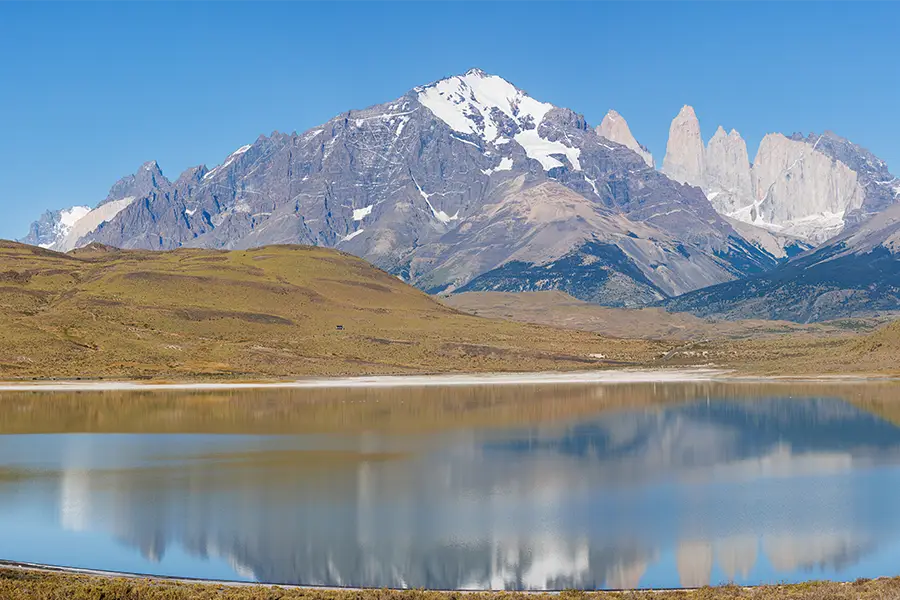
We have three full days to explore Torres del Paine National Park and to enjoy its fabulous wildlife and stunning scenery. The park is vast, covering over 181,414 hectares and includes a mosaic of habitats from pre-Andean scrubland and deciduous Magellanic forest to Patagonian steppe and Andean desert. Each supports a different cast of mammals and birds, and over the course of our visit, we hope to encounter an exciting array of Patagonian species.
Pumas can be found throughout the park but are primarily associated with the eastern sector bordering Laguna Amarga. Here the wide expanses of steppe attract large herds of guanacos, which in turn attract the attention of pumas. Unlike the ranch, in the park, we're restricted to specific tracks and trails, and therefore sightings tend to be more distant, but they're certainly possible.
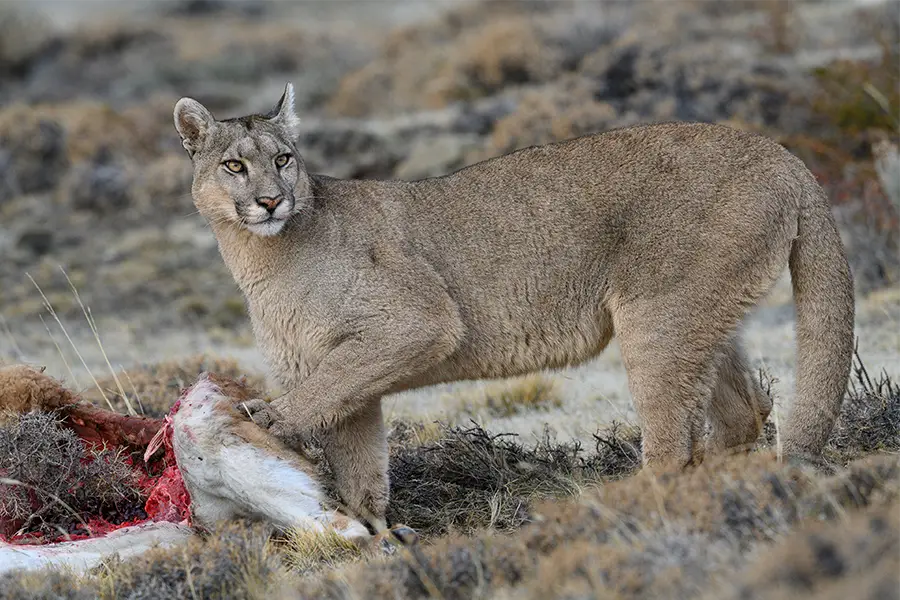
Naturally, with an apex predator present in the area, there are a variety of scavenging species that profiteer from abandoned kills. Chief amongst them is the majestic Andean condor, one of the largest flying birds in the world, but it’s also possible to find black-chested buzzard eagle, variable hawk and both southern crested and Chimango caracara in attendance. South American grey foxes will scavenge puma kills, and both hairy armadillos and Patagonian hog nosed skunks have even been recorded feeding on carcasses.
Ostrich-like lesser rhea and striking long-tailed meadowlarks are commonly encountered in the grasslands and in small freshwater pools and lakes, we find white-tufted, silvery and great grebe, yellow-billed teal and Chiloe wigeon, while the reeded margins attract coursing cinereous harriers, diminutive sedge wrens and with luck, South American painted snipe.
Where more substantial vegetation occurs in the Magellanic forests we find a different cast of species, the profusion of lenga beech allowing Magellanic woodpecker, austral parakeets and Patagonian Sierra-finch to thrive. It's in this habitat that we have our best chance of encountering South America’s most southerly occurring deer, the huemul, and possibly even a second canine species, the culpeo fox.
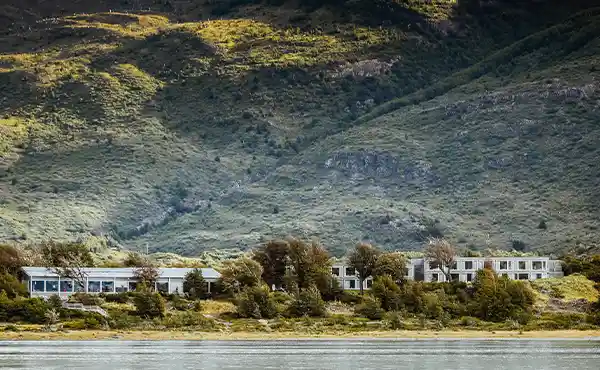
Our days typically be spent in the field, driving to areas and scanning or exploring on foot. Depending on our proximity to the hotel and the weather, we either return for lunch or take a packed lunch. Our hotel is in a privileged position overlooking Largo Grey, with views of the glacier on the far side, and on one afternoon we take a boat trip to view the glacier at a closer distance. Forming part of the Southern Patagonian Ice Field, the Grey Glacier stands 30 metres high at its peak and six kilometres wide.
-
Day 10:
Travel back to Punta Arenas via Estancia Olga Teresa
Today we must return to Punta Arenas, but not before first visiting Estancia Olga Teresa to view the Andean condor colony of Cerro Palomares. Arriving in the mid-afternoon, we use a vehicle to travel up the majority of the hillside before walking the remaining distance to the view point (around 15 minutes).
From here, it's possible to watch the condors returning to roost. Soaring past at eye-level, it's an awe-inspiring sight and allows you to fully appreciate the size and majesty of the species.
After our time with the condors, we transfer to the Punta Arenas Airport and fly to Santiago, where we spend the night.
Accommodation: Holiday Inn Santiago Airport
-
Day 11:
Departure back to the UK
This morning, we transfer back to the airport from our hotel to take our flight back to the UK, arriving the following day.
-
Day 12:
Arrive UK