An India Unknown

Tour leader Nick Acheson reflects on the fantastic and often overlooked wildlife of Gujarat and Rajasthan in India's northwest.
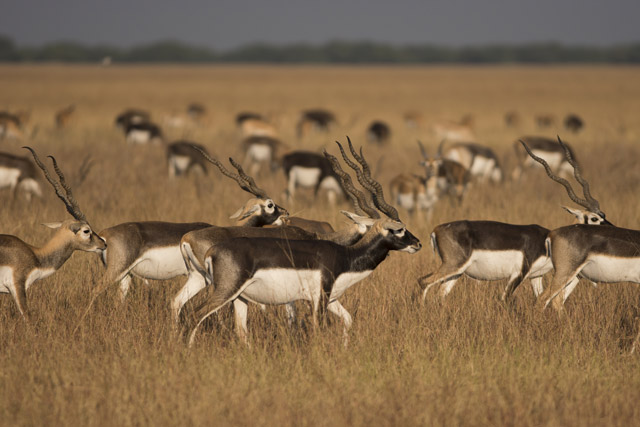
It is evening. As the day’s fierce light surrenders to the kindly glow of sunset, the golden grassland seems to ripple all around. For blackbuck, India’s iconic antelope, are drifting in their hundreds on sharp hooves across the plain. The males toss their spiral-horned heads as they go.
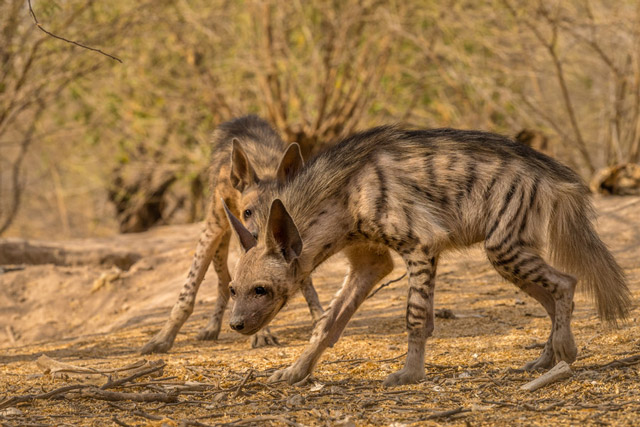
All day we have been in their company, and the company of muscular nilgai too. Close to us, as the sun fades, a pair of ears begins to twitch, huge ears appearing from a dusty burrow. Another pair joins them, and another. Striped hyena pups, denned all day and keen now to get out and smell the world. These stunning animals – all white gold and charcoal streaks – are happily still common here in the wild grassland of Gujarat in Northwest India.
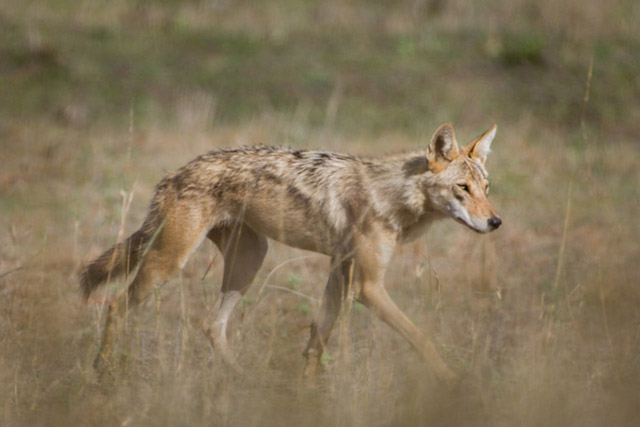
The vast saltpans, semi-deserts and grasslands of Gujarat and its neighbour Rajasthan are still home to some of India’s most enigmatic mammals. In Velavadar, where these huge herds of blackbuck roam this evening, the soft paws of the jungle cat and of the Indian fox are still felt on the grass. So too the great paws of the Indian wolf, a unique and leggy subspecies, seen more easily here than anywhere else.
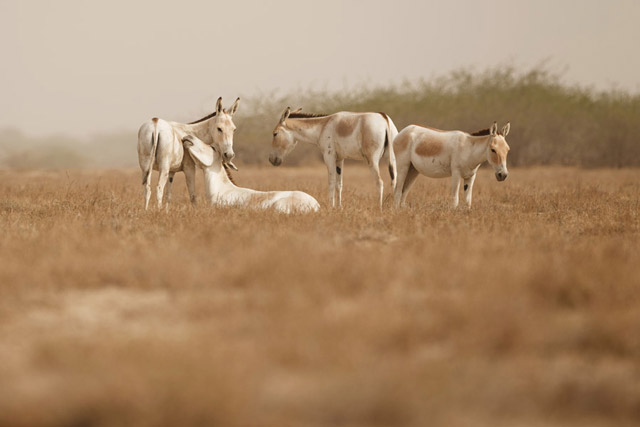
To the west, the salty desert of the Little Rann of Kutch feels the proud hooves of the khur, South Asia’s endemic subspecies of Asiatic wild ass, a powerful, dust-coloured animal now found nowhere else but here.
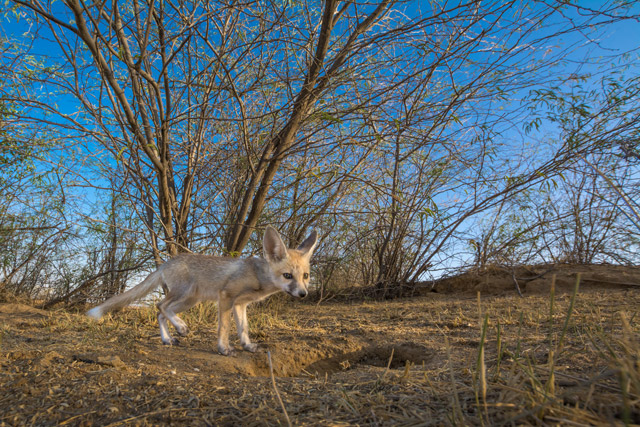 Look closely and you may see more big ears poking from desert dens in the Little Rann. Striped hyena? Yes, they are here, and Indian foxes too, but – most charming of all – this is also the home of the desert fox, an animal whose pups, poking their ears and noses from the dirt, are so Disney cute that they seem hardly to be real.
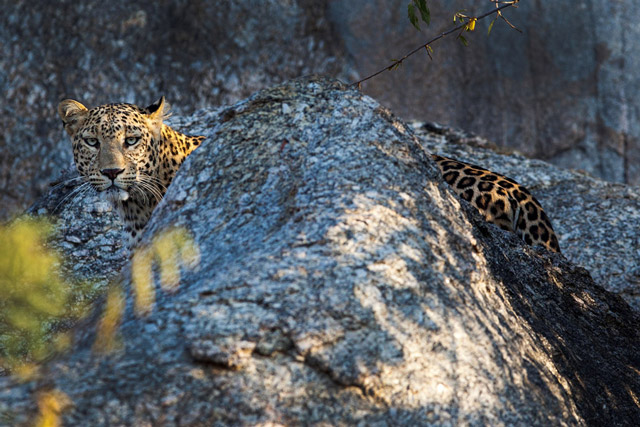
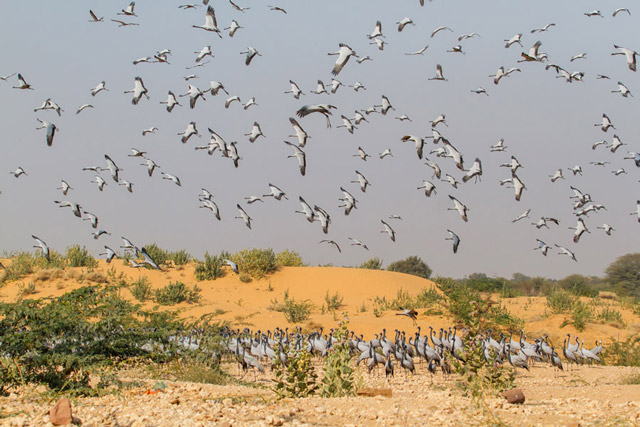
East of here, in Rajasthan, many animals flourish because it is the nature, the religion, the deeply-held conviction of traditional communities to protect them. At Jawai, the people show a fierce pride in the fierce leopards which inhabit the mighty rocks around their village, so much so that these leopards – uniquely – are bold, emerging from their caves in daylight, showing their dappled cubs the world in which one day they too will hunt. Their prize prey here is the chinkara, the delicate Indian gazelle. But following Jawai’s smaller prey – mice, bulbuls, locusts – are jungle cats and rusty-spotted cats. This last is the world’s tiniest cat, round-eyes and round-face belying a bold, confident nature and needle teeth. At Khichan, nearby, gentle-hearted Jains have fed the birds for decades. As the winter flocks of demoiselle cranes swelled at their giant bird table, so too did their generosity. Now hundreds of tons of grain attract hundreds of loudly rattling cranes each winter, all winter long.
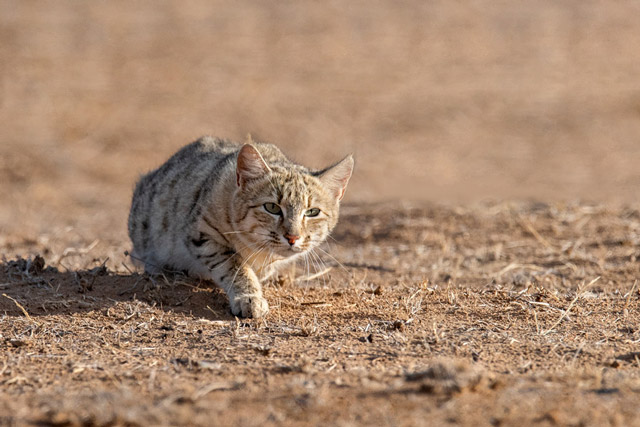
Silent by contrast is another desert dweller, to be found in the dunes and pans, the wild vastness of Desert National Park near Jaisalmer. This is the desert wildcat. Boldly dotted black, and defiant-eyed, with just a hint of lynx’s tufts at the tips of its ears, this is the least known and most sought of the northwest’s predators. Like the hyena and the foxes, but strangely for a cat, it lives in burrows, appearing in the dusk to hunt for mice and gerbils in the desert sand.
Northwest India is a land where, even in a country of a billion human mouths, the wild and people coexist. Despite this, and despite its rugged landscape, and all these rare and beautiful animals, Northwest India is little visited for wildlife, other than tigers in Ranthambore and Asiatic lions in Gir. Now though, on our Northwest India’s Rare Mammals, you can visit the semi-desert states of Gujarat and Rajasthan in comfort, and stand a real chance of seeing each of the remarkable mammals mentioned here.
Led by our good friend Ashwin HP, a wildlife cameraman who has filmed for National Geographic in the northwest, and visiting Velavadar, the Little Rann of Kutch, Jawai, Khichan and Desert National Park, Northwest India’s Rare Mammals is a comprehensive exploration of these two beautiful, culturally fascinating and biodiverse states. It offers an unrivalled introduction to their scarce and little known mammals. So, if desert wolves and desert foxes, desert wildcats and delicious food, desert wilderness and shy desert-coloured chinkara are for you, then look no further than Northwest India’s Rare Mammals for your next Wildlife Worldwide holiday.
Join us on our new Northwest India’s Rare Mammals tour in November 2020 and experience this incredible wildlife for yourself. For more information or to book, contact the Wildlife team.