Fundraising for Rhinos on the Race For Rangers
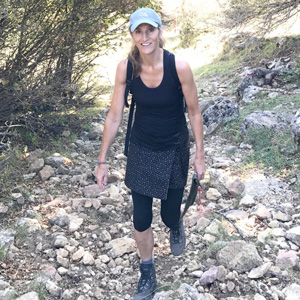
Back from her ultramarathon in Kenya, Wildlife Worldwide team member Mel describes her latest challenge, running 230km over 5 days in support of the For Rangers and Save the Rhino charities.
The chance to hand feed one of the last two remaining northern white rhinos doesn’t happen every day. This special opportunity was kindly offered to us by the race director following our completion of the gruelling Beyond the Ultimate For Rangers 230km ultramarathon in Kenya. For five days my husband Neil and I had put our bodies through miles of seemingly never-ending hills at high altitude, unbearable heat, uneven and rocky terrain and all whilst carrying the minimum of food and supplies required to sustain us each day but it was worth every blister and moan to think we had helped to raise money in the fight to protect these incredible creatures.
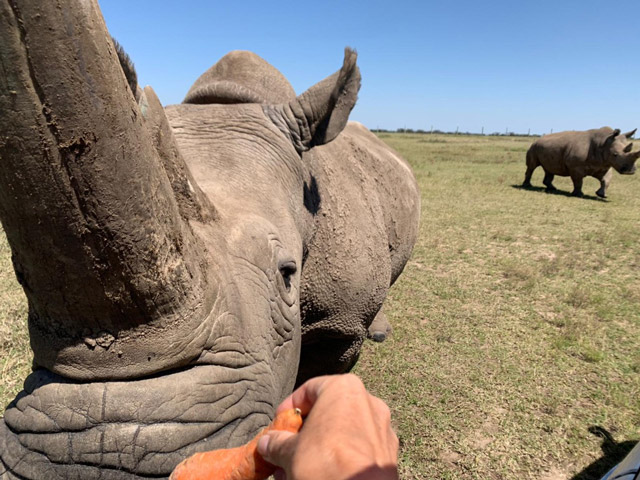
Participating in this tough challenge, raising money both for the For Rangers and Save the Rhino charities, was helping not only these critically endangered gentle giants but all the other rhinos, elephants and other species in the Kenyan conservancies of Lewa, Borana, Lolldaiga, Ol Jogi and Ol Pejeta. The northern white rhinos are on the brink of extinction and only the success of a birth from a surrogate southern white rhino, currently nursing the fertilised eggs of the northern whites will prevent the species from dying out altogether.
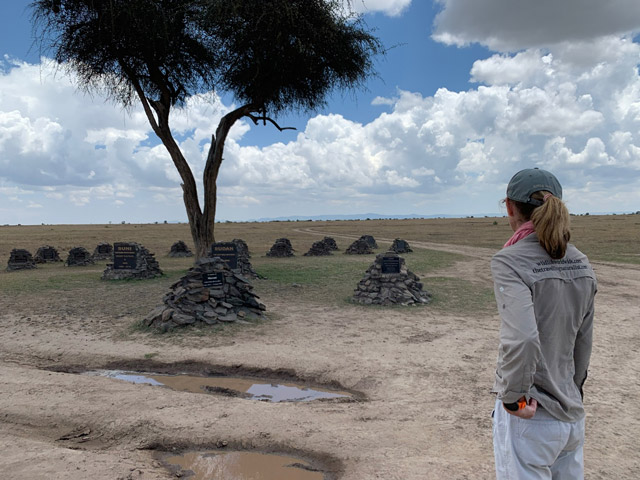
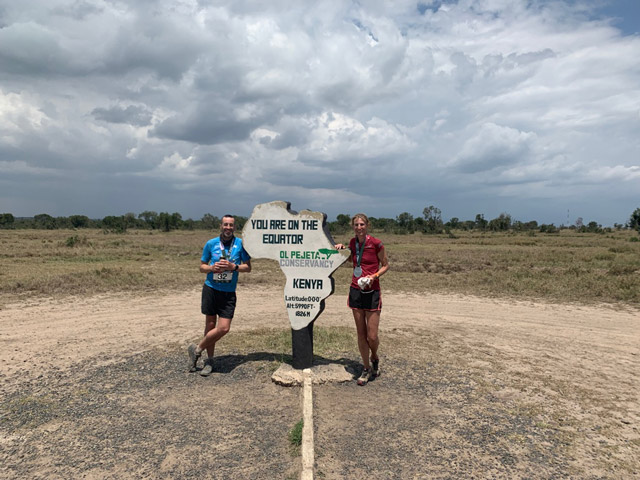
We were in Ol Pejeta, the last of the five conservancies we had run through on our ultramarathon journey. Last year, this is where Sudan, the last male northern white rhino died, leaving his daughter and only one other female of the species. There is a poignant memorial marking his and the death from poaching of over 16 black rhinos from this conservancy alone since 2004.
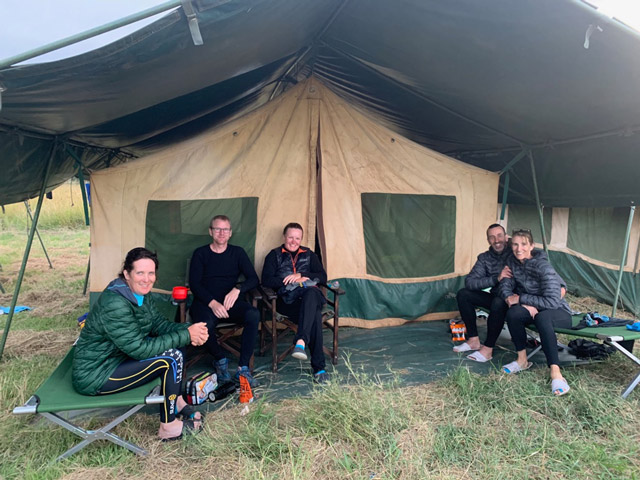
Each of the five conservancies on our running journey had been stunningly beautiful and quite different. Lewa’s arid rich-red dusty soil contrasted handsomely with the bright blue sky on day one and we were lucky enough to spot a group of four southern white rhinos, pointed out lovingly by two nearby rangers as they ensured our safety along the route. Day one was tougher than expected but we knew that things were only going to get harder. A welcome shower (the only one of the run) helped to soothe tired muscles before we tucked into our rehydrated meals and an early night in the tents.
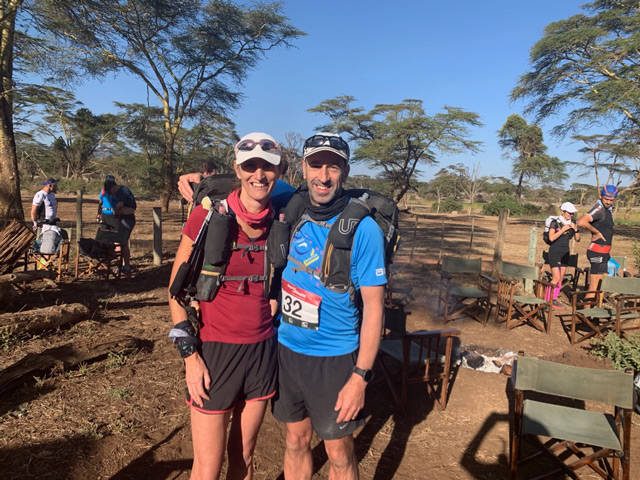
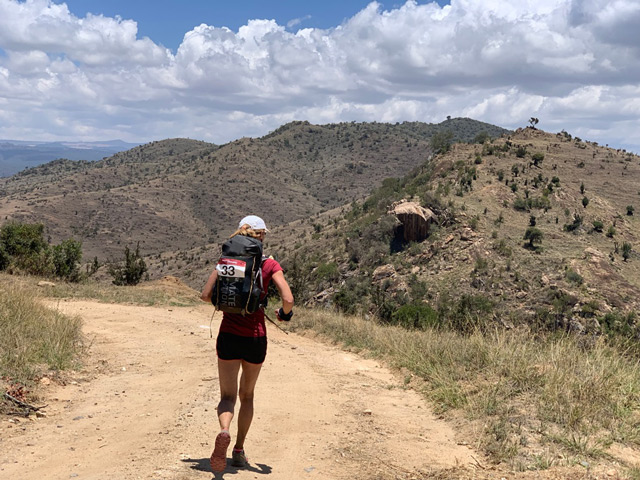
Borana’s far-reaching vistas and grassy plains were highlights intermingled with a series of at least three steep climbs, the final one which, once conquered, provided welcome views of camp three’s flags in the distance and the downhill route to get there! The occasional helicopter or light aircraft buzz overhead would remind us that the ever-watchful support crew and rangers dotted along the route were constantly making sure we were safe.
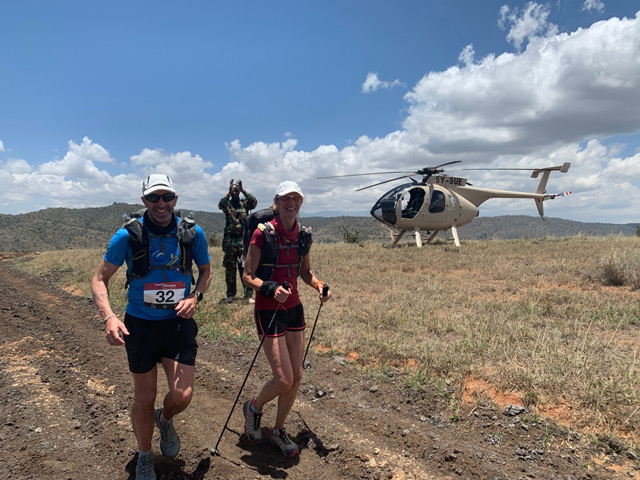

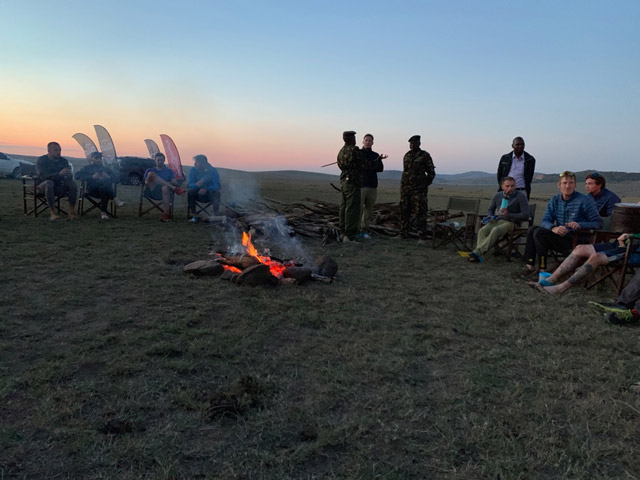
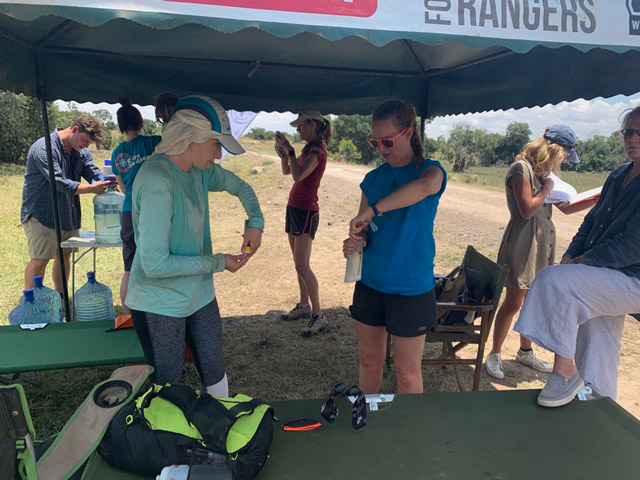
The much-anticipated day three had arrived – the longest and toughest of the week judging by the course profile and length of 48kms. And, yes, I can confirm that this did turn out to be the case! Running today with added weight in the form of extra water capacity turned out to be the right decision as the midday sun sucked away at our energy supplies in the breathtakingly beautiful but airless valley of Lolldaiga. Our momentum was briefly stopped as we waited for a herd of elephants to be diverted away from our path by the helicopter. Walks then became more frequent than the bursts of running but this was in the knowledge that the steep, almost vertical in places, climb of over 300m at the end was yet to come. Checkpoint 4 – an additional one today due to the length of the course – was a welcome chance to chat with some of the amazing medics who cheerily greet all runners along the route, patch up feet, offer water top ups and provide the much needed boost in morale we all need. We finally arrived in camp – exhausted – and even the roars of a nearby lonesome male lion couldn’t compete with snoring from runners’ sleepy heads on pillows.
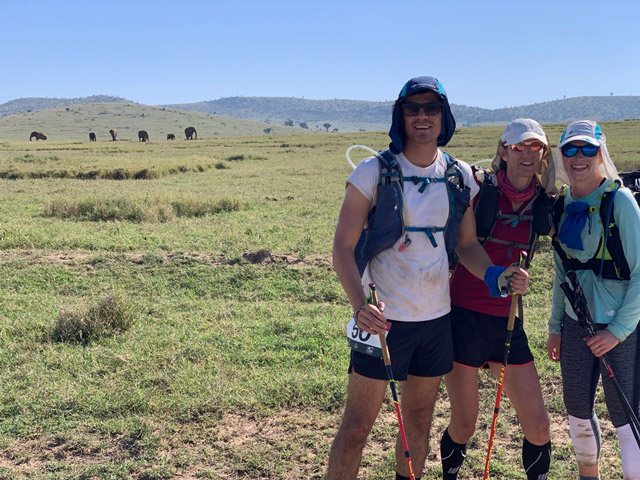
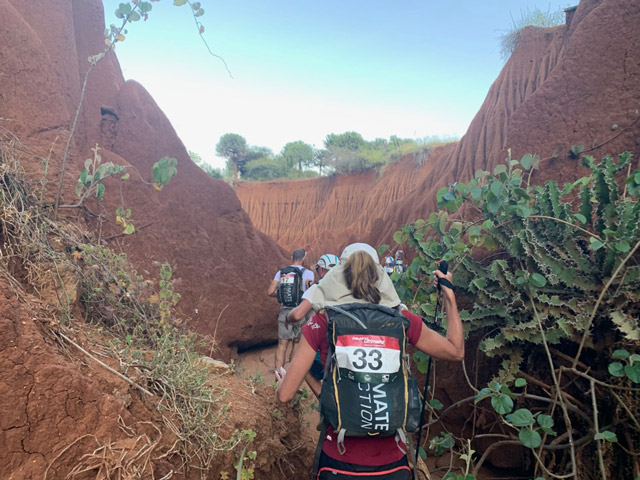
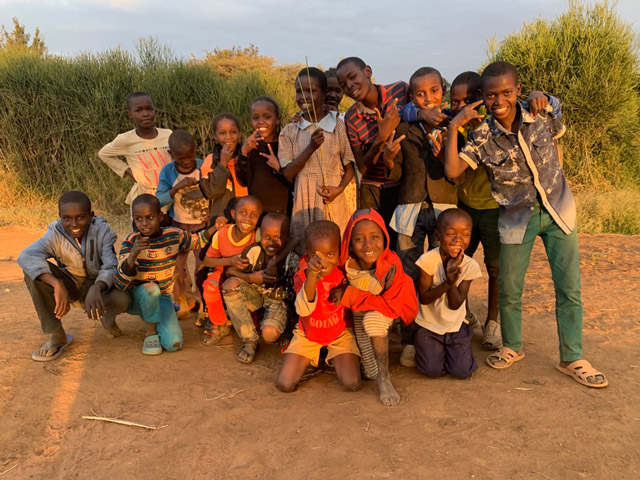
Things can only get better and Ol Jogi brought back the metaphorical sunshine. Starting with a run through a deeply eroded sandstone gully, day four was packed with variety and, joy of joys, more downhill than any previous day. Emotions were running high and turning a bend to be confronted by a tame rhino trying to flatten a bush with his bottom watched on by his guardian ranger was all it took to let the tears stream down my face. Climbing high we were rewarded with the most spectacular view of the whole race, and the downhill route to the final camp stretching out before us. A riverside track taunted with sounds of running water and the occasional shade of yellow-bark acacias or ‘fever trees’. Cheers from local schoolchildren greeted our arrival but a sombre camp mood heralded the final day and end of our multi-national joint adventure.
As a final twist on day five the top ten runners started half an hour behind the rest of us, meaning that for the first time we could see and cheer them on as they passed along the route. With plenty of flat runnable terrain I was pleased to be able to reach check point one before being caught by the first runner and checkpoint two before the fastest lady. With heat building though my energy levels rapidly declined and the final stretch to the finish line in Ol Pejeta couldn’t come soon enough. Before long we were relaxing on a comfortable hotel bed, a cold beer in hand and a handsome medal around our necks. It was all over.
But thankfully it wasn’t, and on the other side of the conservancy the marvellous Porini Rhino Camp was waiting to host us for three nights, offering the chance to recuperate whilst enjoying expertly guided game drives, delicious food and the chance to interact with their local Maasai team and other fellow travellers.
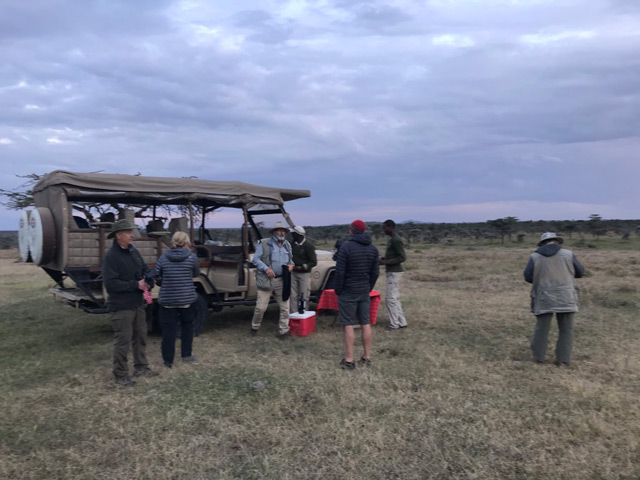
Porini is an eco-friendly tented camp nestled under acacia trees, away from other Ol Pejeta camps meaning that you many not encounter another vehicle whilst searching for the prolific wildlife including elephant, buffalo, giraffe and of course rhino and the big cats. Along with the other Porini camps in Kenya, Porini Rhino take pride in their environmental credentials of solar powered lighting, eco-friendly fuel and reinvesting into local community development. Each day brought something different for us and skipping the first early morning game drive after the final day of the run didn’t mean we missed out as we were joined by no less than four different herds of elephant at the camp’s waterhole, offering plenty of peaceful wildlife watching and photo opportunities. The camp even has its own hide for close-up wildlife encounters!
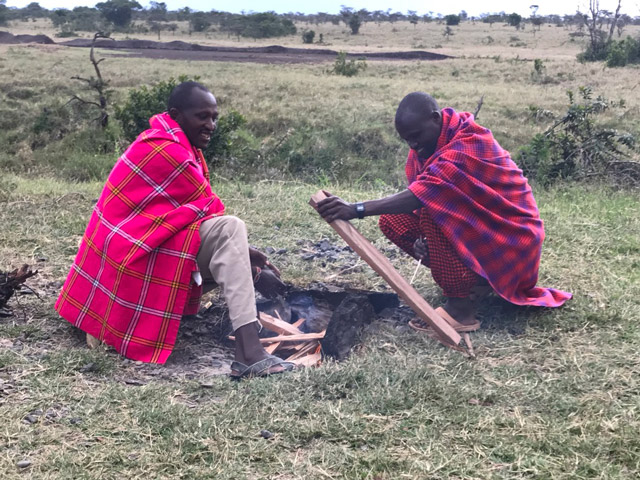
Within a couple of restful days my blisters had healed, ankles returned to normal size and already Neil and I were talking about our next running adventure…
If you would like to support Mel & Neil's fundraising for Save the Rhino please visit their dedicated donation page. Alternatively, find out more about our tailor-made and small group trips to Kenya.