Best Camera for Birding
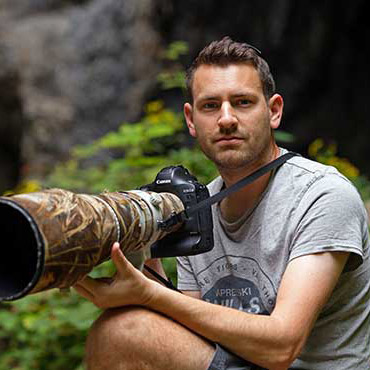
We often get asked about what the best camera for birding is, in addition to what we recommend for bird photography. With that in mind, we thought it would be best to put together this blog, helping you get the best out of your equipment, some top tips and some recommendations for new equipment if you're looking to upgrade.
Introduction to Bird Photography
Without a doubt, our holidays offer excellent opportunities for bird photographers, whether that be on a dedicated bird photography tour, more generic wildlife photography holiday or on one of our more generic wildlife holidays. The bird life across the globe is utterly remarkable, and capturing our feathered friends on 'film' can show you all the intricate details on the feathers, beaks and their fascinating eyes.
There are three main types of image that people are looking to capture when it comes to bird photography. These are portraits, birds in flight and birds in their environment. Typically, bird photography involves using long lenses on mirrorless or digital SLR cameras, but for some people, using a bridge camera is perfect as it allows for more flexibility.
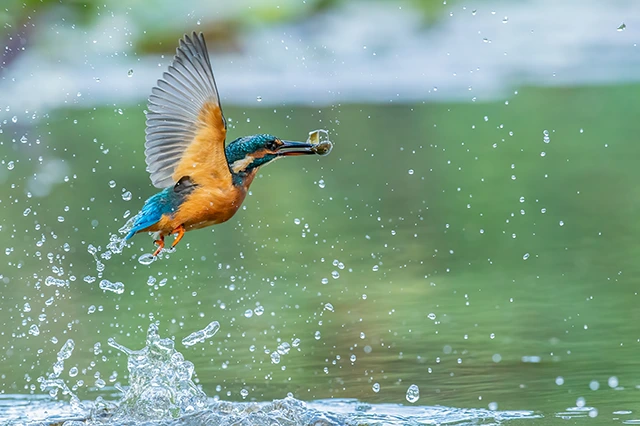 Whether you're looking to travel overseas or you're interested in photographing birds in your garden, the world of bird photography provides joy for so many people.
Types of Cameras for Bird Photography
There are three main types of cameras that are used for bird photography, and no, an iPhone doesn't really count. Ideally, you need to use long lenses to be able to capture the best images of the world's avian delights. The three types of cameras for bird photography are:
- Bridge Cameras
- Digital SLRs
- Mirrorless Cameras
Bridge Cameras
The most affordable option for those looking to get into bird photography, bridge cameras are a one-size fits all solution. The main feature of these cameras is that they come with an integrated zoom lens, giving you complete flexibility. You could use the camera for wide-able work, or use the extensive zoom range to capture intimate portraits (and everything in between). This option, has pros in terms of size and weight, ease of use and no need to buy extra lenses. However, there are also some limitations. Due to the lens needing to be small enough to fit one neat package, and the large zoom range, the aperture is typically smaller (a larger f-number) and therefore they let in less light and image quality is reduced. They're also what are known as crop sensor cameras, which limit the quality of your final image (for a myriad of reasons we don't need to cover).
Digital SLRs
Considered a slightly older technology, but an incredibly good quality option, Digital SLRs were the old workhorses for professional and amateur bird photographers alike. These cameras utilise separate lenses, which allow you to make the most of each opportunity with a lens suited to that moment.
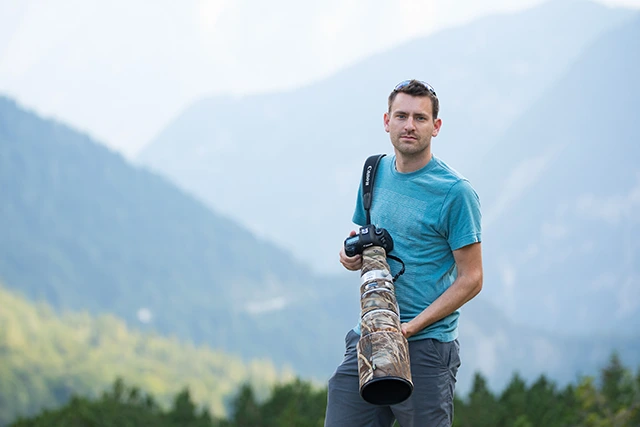 Camera Bodies
There are two main types of DSLR cameras, full-frame and crop sensor cameras. A full-frame camera has a sensor which is the equivalent size of an old piece of 35mm film, while crop sensors are smaller.
The full-frame systems have bigger pixels in their sensors, which means they perform better in low light situations and generally the picture quality is better, producing sharper and less-noisy images.
Meanwhile, crop sensors provide a plus for bird photographers in the sense that they give you a slight magnification (of around 1.6x), improving the reach of whatever lens you have attached to the camera. For bird photographers, this can be beneficial, particularly in good light. However, in lower light situations they can struggle a little and generally the image quality isn't as high.
Generally, most entry level DSLR cameras are crop sensor cameras, the perfect beginner camera so to speak, while full-frame cameras are better suited for advanced amateurs and professional photographers.
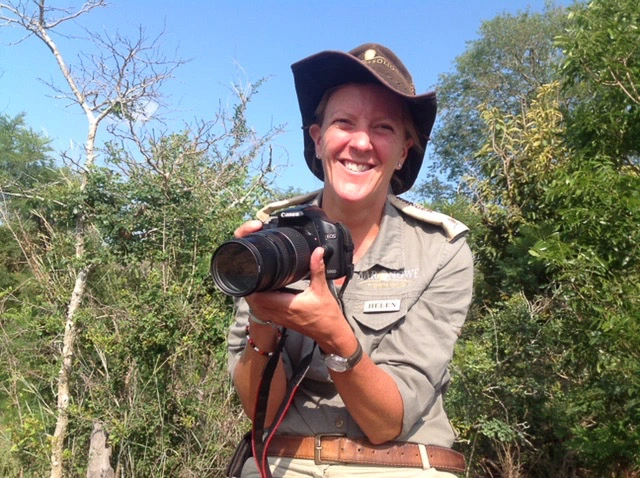 Lenses
DSLRs come with a huge range of options when it comes to the lenses available, with each manufacturer offering their own differing approach. However, when it comes to bird photography, the absolute key is to use long telephoto lenses (primarily to avoid disturbance). Lenses are measured in millimetres and for bird photography you would be looking for a lens with a maximum focal length of at least 400mm, but preferably over 500mm.
Most photographers buy zoom telephoto lenses as these are a more affordable option. Well known brands make lenses such as 150-600mm, 100-400mm and 80-400mm. These allow for excellent reach, but still give the photographer flexibility if their subjects are closer. The one draw back with these lenses (similar to the lens within a bridge camera) is that due to the large zoom range covered, they lose a little sharpness and have a smaller aperture, which can make it harder to photograph birds in low light. However, for the majority of bird photographers, their relatively small size and flexibility make them the ideal lens for bird photography in the UK and overseas, particularly when you're looking to travel light.
For the serious amateur, and for professional bird photographers, there's another option - prime lenses. These long telephoto lens are fixed in their focal length. This means that you're unable to zoom in or out with the lens, leaving you with a fixed field of view when taking a photograph. If your subject comes too close, the only way to fit it in is for the bird to fly further away, or for you to move back. This obviously has major disadvantages, but the optical quality afforded by the crystal glass is unparalleled, and these lenses are coveted within the industry. These lenses also have large apertures, making them ideally suited to low light environs. Most bird photography aficionados will have at least a 500mm lens, but the 600mm is often favoured for its extra reach. For the most hardcore bird photographers, a 800mm lens may well be used, but these are almost exclusively used on tripods or in purpose-built hides. The biggest drawback with these lenses is that they're large and heavy and really only those looking to take their bird photography to another level need to consider them.
Mirrorless Cameras
With mirrorless cameras, the clue really is in the name. DSLRs use a mirror and prism to form a picture through the viewfinder that matches what should be captured on the camera's sensor. Mirrorless has done away with this complex and fragile setup, using a digital screen, linked to the camera sensor, within the viewfinder. The image quality in modern electronic viewfinders, as they're known, is now exceptional.
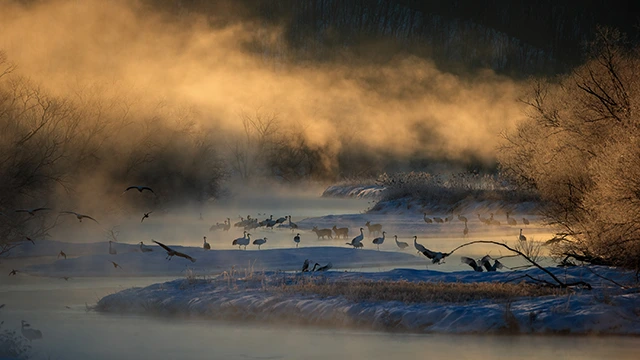 Not only does this mean there's less to go wrong with the fragile mirror, but it also means focus through the lens is more accurate as there's less movement within the internal components. This also means that what you see through the lens is exactly how your final image should appear, thanks to exposure simulation. This is a game changer, as it was all too easy with DSLRs to under or over expose images when in a hurry.
One of the big benefits of mirrorless cameras is that the frame rates that they allow are incredibly high. Without a mirror, there's no mechanical process other than the shutter opening and closing, which in turn means that extremely fast frame rates become a reality. In fact, you can choose to do away with mechanical shutter entirely and instead use an electronic shutter. This means the camera's shutter (which protects the sensor from dust), remains open throughout a shoot and instead it digitally exposes the sensor to the required frame. With electronic shutters, some mirrorless cameras offer frame rates up to a staggering 195 frames per second. When compared to the fastest DSLR, at 16 frames per second, you can see opportunities that mirrorless has opened up to anybody passionate about bird photography.
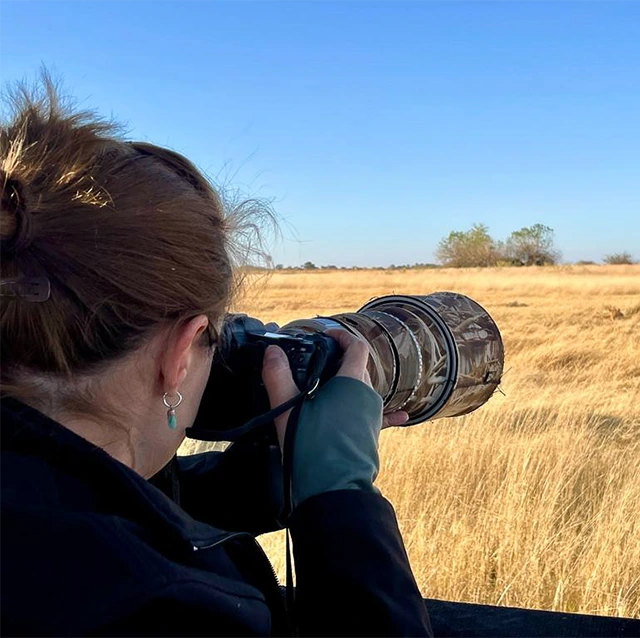 A huge addition to the latest mirrorless cameras, is that they offer pre-capture. This means that when you press the shutter button, the camera actually takes images in the build up to you taking a picture. In theory, this means you should never miss a photograph again. For example, say you were photographing a bird on a branch, and it took off before you had time to react, but you already had the camera focussed on the bird. With pre-capture, you'll have a series of images leading up to the moment you started taking pictures, and hopefully the camera will have the entire take-off sequence. This is a revolutionary piece of technology, but it does somewhat take the skill out of bird photography.
There are three types of mirrorless cameras, the same crop and full-frame cameras as with DSLRs, as well as micro four thirds. There's no need to cover the difference between crop and full-frame cameras (as they've already been covered), but it's important to highlight the difference with micro four thirds and how this affects image quality.
 As standard, the majority of cameras take pictures at a ratio of 3:2, but a micro four thirds captures images at 4:3. Instead of providing a crop factor of 2x that of a full-frame camera. This means that a 400mm lens will offer an equivalent of an 800mm, but at only half the physical size. For photographers looking to lighten the load, and the improvements in this sensor technology, many people are utilising this smaller system in the bird photography world. It's worth noting, that although the image quality produced by these cameras has improved drastically in the last few years, they're still not comparable to full-frame cameras and large prime lenses. For the majority of photographers, this difference in quality isn't worth the huge weight saving these systems offer. As technology continues to evolve, who knows what will be possible in another few years.
Key Features for Bird Photography
There are certain technical things to look for and think about when enjoying bird photography. Here we've broken down some key things to remember when out in the field.
Autofocus
All modern cameras have advanced autofocus systems. Sometimes AI assisted, including the use of deep learning, or just with programmed focus modes allow for exceptional autofocus speeds and tracking, way beyond what we could have ever achieved with traditional manual focus techniques.
Birds are able to move at high speeds, often in any direction without much warning, and they can often be quite small. This makes photographing them probably the most challenging of all the major fauna classes. Therefore, it's important to choose the right autofocus mode before heading out with your camera.
 Most camera autofocus systems have a single shot focus mode, and a tracking mode (with many different variables). Ensure that you enable the tracking option as this will ensure that each movement the bird makes (particularly across different focal planes) will be tracked and the focus adjusted accordingly. There will undoubtedly be different 'cases', which allows the camera to follow specific movement patterns. The most modern mirrorless cameras (including micro four thirds) will have advanced AI assisted autofocus systems which with the press of a button will track your subject wherever it moves in the frame. These work in a number of ways, but many of them use the eye as a tracking point, always trying to keep this in focus. This has completely revolutionised bird photography and allows photographers to have a much higher success rate.
These autofocus systems also have the felxibility to allow us to control the point on which we are focussing within the frame. So, if you want to be even more accurate, you can choose your focus point and ensure it's exactly where you want it to be. It's still possible to override the focus manually, using the focus rings on your lenses, but this is usually only done by experienced bird photographers in very specific situations.
Frames Per Second
We've already mentioned frames per second (FPS), but what's best for bird photography? Many people think that having a frame rate as fast as possible is the best option, but there are a few things to consider.
Without a doubt, the faster the frame rate, the more likely you are to capture a spectacular image of a bird in flight, or perhaps a moment where a bird is exhibiting a unique piece of behaviour. Typically, you would want to be photographing above 10 frames per second if you were looking to photograph any sort of fast movement. With the incredibly high FPS rates of modern cameras, you may be tempted to boost this up, but there's little point in going above 24 FPS. This might sound like a strange limit, but humans see at about 24 frames per second and any faster than that and your photography will look like a video. So if you want to film birds, by all means, raise the FPS and capture some incredible slow-motion footage, but for stills bird photography, 24 FPS is more than plenty.
Another thing to highlight is that if, for whatever reason, you do lose focus and you're using these extremely high frame rates, you'll end up with an awful lot of out of focus imagery. The last thing we want is to spend hours culling imagery when it isn't necessary. As with anything, I think it's all about achieving a balance. Anything between 10 and 20 FPS should be more than adequate.
Shutter Speed
One of the key things to consider when photographing birds, or any wildlife, is the shutterspeed you're using. This is obviously wholly dependent on what style of image you're looking to capture. If you want to freeze your subject, you'll need a faster subject, if you want to show motion blur, you'll need a slower shutter speed.
As a general rule of thumb, when you're using long telephoto lenses you typically want to be at twice the shutter speed of your focal length. For example if you have a 500mm lens, you would ideally try and keep your shutter speed above 1/1000th second. Of course, there's more to consider here - this will be absolutely fine for perched birds, or those stood on the ground, but for birds moving around this will need to be approached differently.
Firstly, for moving birds and birds in flight, if you want to capture the motion with blur, you'll need to vary your shutter speed accordingly. For large birds, such as pelicans and eagles, this maybe under 1/100th second, but for smaller birds this can increase to anything up to 1/800th second. It really depends on how much blur, in the movement, you're looking to capture and it may be a case of trial and error.
If you want to capture behaviours and flight shots which are pin sharp, then you'll need to use much faster shutter speeds. At the very least, you'll be looking to use a shutter speed of 1/2000th second, but ideally if you can hit 1/4000th of second or higher you should get incredibly sharp images, freezing moments of incredible action. The smaller the bird, the faster the shutter speed. while with larger, slower birds you can get away with a shutter speed towards the lower end of the range.
Low Light Performance
When it comes to bird photography, available light is always key to capturing great imagery. It allows us to capture these magnificent animals in all their glory. Thanks to improvements in sensor technology, it's now possible to photograph in lower light levels than ever before, producing stunning imagery of an exceptionally high standard.
 Ideally, whenever we're enjoying photographing birds, we want to keep our ISO (sensor sensitivity) as low as we can. The lower the ISO number the better. However, this isn't always realistic and in order to capture the image we're after with a fast enough shutter speed, it will require the photographer to increase the ISO.
Modern cameras are able to reach astounding ISO numbers, with many models offering an ISO of up to 102,400. Now, it's important to understand the higher this number, the more noise (unintended digital artefacts from pixels functioning at their extremes) you introduce into your image. And so you'll need to experiment with your camera and work out what are the acceptable limits for your bird photography. Typically, modern mirrorless cameras allow most people to work with upper ISOs of between 6400 and 12,800, while still providing useable picture quality.
Battery Life
Camera batteries and their associated charge varies drastically from model to model and depending on the shooting conditions you find yourself within. It's worth considering the variables that may affect your battery life for bird photography.
Temperature
At present, all modern cameras come with rechargeable lithium ion batteries. This may change, but for now this is the best battery technology available. Although these batteries offer excellent charge times and longevity in the field, they're susceptible to extreme temperatures. If lithium ion batteries get too hot, the camera will more than likely turn itself off to avoid any damage. Similarly, in extreme cold lithium ion batteries, due to their chemical make up, suffer. In these freezing conditions the batteries will quickly lose their charge and your battery life will drop drastically. Ideally, batteries operate in optimum conditions - usually around room temperature so try and keep them cool in hot conditions and warm in colder conditions.
 Usage
Usage
There are many different functionalities on digital cameras, but you'll find that the more features you have on, such as GPS and WiFi, the quicker your battery's charge will drain away. If you don't need these features on, it's best to turn them off. You'll notice that with mirrorless cameras a battery doesn't last as long as that on a DSLR, this is primarily due to the electronic viewfinder constantly draining charge. If you lower the brightness of your viewfinder, and restrict the amount of time you review your images, your battery life will greatly increase.
Mechanical Shutter or Electronic Shutter
This is only really relevant to modern mirrorless and bridge cameras, but it's an important consideration. The mechanical shutter, which is used to protect the sensor, can be used in a similar way to that of a DSLR and expose the sensor with the desired exposure time. However, this will limit your frame rate, but it does allow for very clean and sharp imagery.
The major benefit of using an electronic shutter, where the sensor is exposed digitally, is that frame-rate speed can be increased. This is obviously a massive benefit for bird photography as we can capture the high speeds and behaviours of our feathered friends. There can sometimes be issues with what's called rolling shutter distortion, which is where objects can be warped or distorted in the electronic exposure process - this can happen with exceptionally fast moving subjects. Therefore, there are pros and cons for both mechanical and electronic shutter modes when it comes to bird photography.
Image Quality
Digital cameras offer different options when it comes to image quality and it's important to work out what will work best for you. Out of the box, most cameras will be set to jpeg, the standard in image file type for computers, but there are usually a few different of options of different sizes and qualities. Ideally, if you want to shoot in jpeg, you're best shooting in the highest quality available as this will capture the maximum detail in your subjects. Jpeg images involve the camera helping to optimise the image alongside the settings you have used to capture the image, this means that it can be difficult to edit (as this has technically already been done for you).
For those that are more serious about their wildlife photography, then it is worth considering using RAW. These files are high-resolution, data-heavy files, that the camera does not optimise. This means that RAW files are ideal to process in the digital darkroom. It's here that it's possible to get the best out of your photography, editing as you would like and sharpening the image as necessary.
Best Cameras for Bird Photography
If you're starting out in photography and have a passion for birds, you're probably best to invest in a mirrorless camera system. This will future-proof you and allow you to upgrade as your passion, skills and budget allow.
DSLRs are now considered to be an out of date piece of technology, but can deliver superb results and if you're looking to test the water, then this could be a slightly more affordable and accessible option available to you.
The key thing with any of these camera systems is to pick a super telephoto lens as we've already mentioned. Be sure to try and get a lens with a maximum focal length of 500mm or over.
Whether you choose Canon, Nikon, Sony, Olympus or Fujifilm cameras, you'll be sure to be delighted with the stunning bird imagery you'll be able to capture.
 Tips for Bird Photography
Having already covered so much in this blog about bird photography and how to get the best from your equipment, rather than cover the same ground, we thought we would share some of our top tips for getting yourself the best opportunities to capture breathtaking imagery.
-
Learn about your subject bird.
-
Work with local guides to put yourself in the best position.
-
Ensure you have your equipment clean and your batteries are fully charged.
-
Check your settings before you find your subject bird species.
-
Watch the bird and observe any patterns of behaviour to help you capture a range of stunning images.
-
Think about capturing intimate portraits, incredible behaviours and flights shots, as well as captivating shots of the birds in the environment.
-
Use a tripod if you're in a hide or photographing birds coming to and from a specific location
Bird Photography Tours & Workshops
At Wildlife Worldwide, we offer a range of bird photography tours and workshops, both in the UK and across the globe.
Hampshire Bird Photography
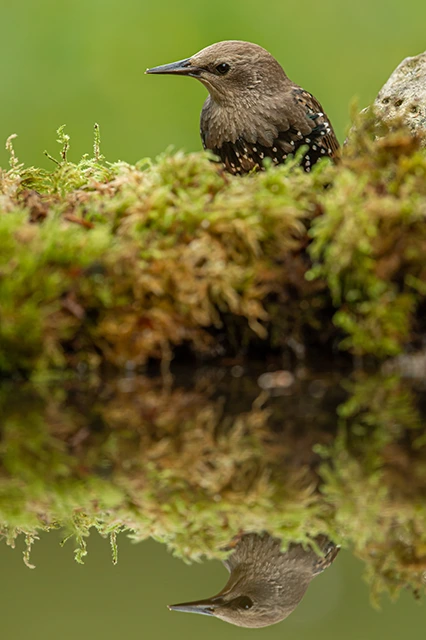
We offer a dedicated 2-day workshop in Hampshire focussing on kingfishers and woodland birds. Accompanied throughout by expert wildlife photographer Ben Sutcliffe, master both practical and editing techniques, while building a portfolio of stunning imagery of some of the UK's magnificent birdlife.
 Pelicans of Lake Kerkini
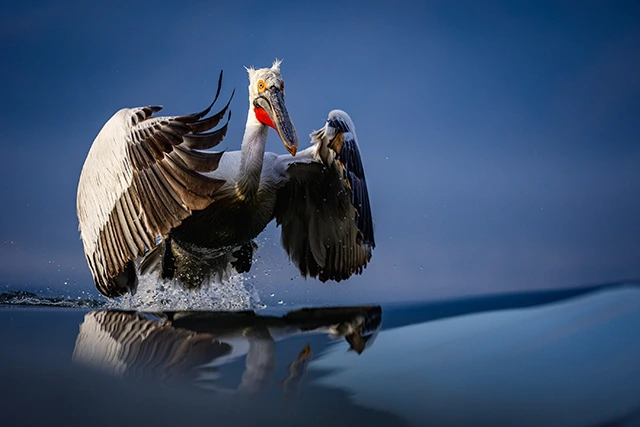
Join acclaimed photographer Sean Weekly in the stunning surrounds of Lake Kerkini, in Greece, as you have the opportunity to capture breathtaking imagery of the Dalmatian pelicans that gather here each winter. This 5-day trip has been designed to maximise photographic opportunities in beautiful wintry conditions.
 Wildlife Photography in Hungary
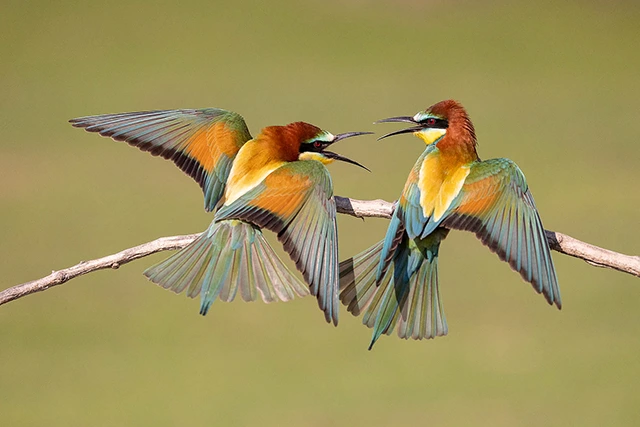
Photograph the exceptional birdlife of Hungary, using a range of purpose-built hides by leading photographer Bence Máté on this exceptional 8-day trip. This is a wildlife photographer's dream, offering world-beating photographic opportunities of some of Europe's mopst sought-after birds and mammals.
 Colombia Bird Photography
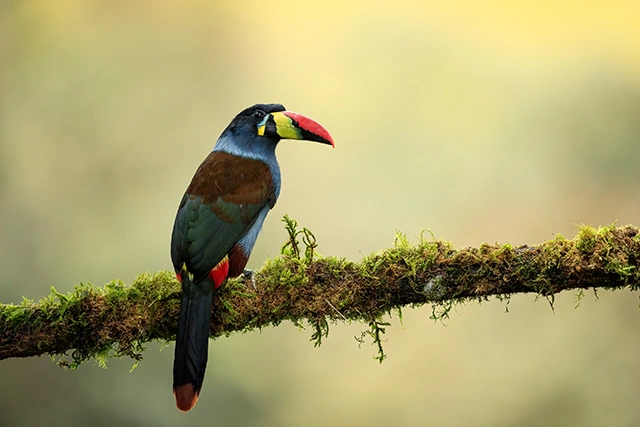
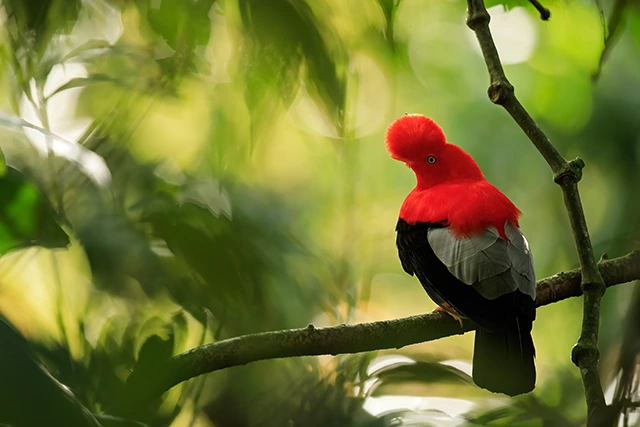
The country of Colombia is home to more species of bird than any other and is a birder's paradise. As such, it's one of the most remarkable destinations for a dedicated bird photography tour. Capture stunning imagery of some of the country's iconic birdlife, including grey-breasted mountain toucan, multi-coloured tanager, Andean cock-of-the-rock and sword-billed hummingbird.
 Japan's Winter Wildlife Photography
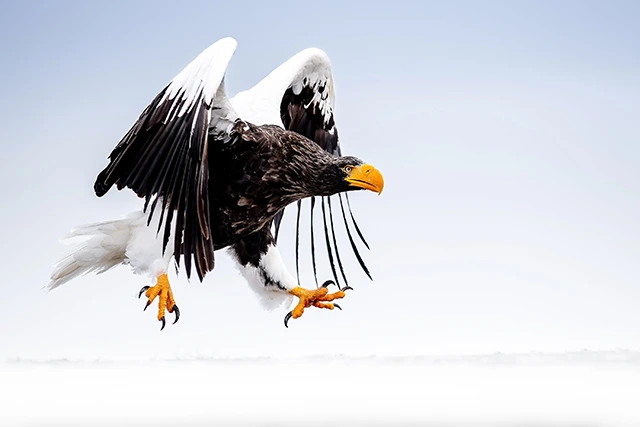
Although this isn't strictly a bird photography tour, it offers unrivalled opportunities to photograph both white-tailed and Steller's sea eagles, Japanese crane, whooper swan, Ural owl and some endemics such as the Japanese pygmy woodpecker. With tutelage from Sean Weekly, traditional cuisine and iconic vistas, this is a photography tour to remember.
 Polecats, Martens, Badgers & Bird Photography
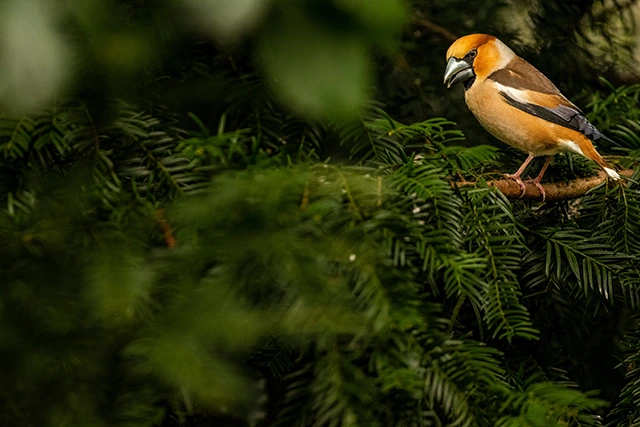
This 3-day photographic break in the Netherlands offers exceptional photographic opportunities from a fantastic hide. Capture stunning images of a variety of woodland birds (including hawfinch) as well as an impressive array of mustellids, including beech and pine marten, polecat and badger.
View all our birdwatching or photography holidays, or to find out more about camera equipment and any of our trips, contact our team today.