Birding in South Australia
South Australia offers some 440 species of Australian birds, and habitat areas comprise a mix of waterways, wetlands and mudflats, heath and hilly timbered areas, the famous semi-dry mallee, and the deserts. There are several distinct habitat types in South Australia, each with its own complement of endemic avifauna.
There are a number of good wetland sites that always carry a good range of water birds, plus in the summer months they are often loaded with migratory waders. Some of these are north of Adelaide and some south, each warranting separate day trips.
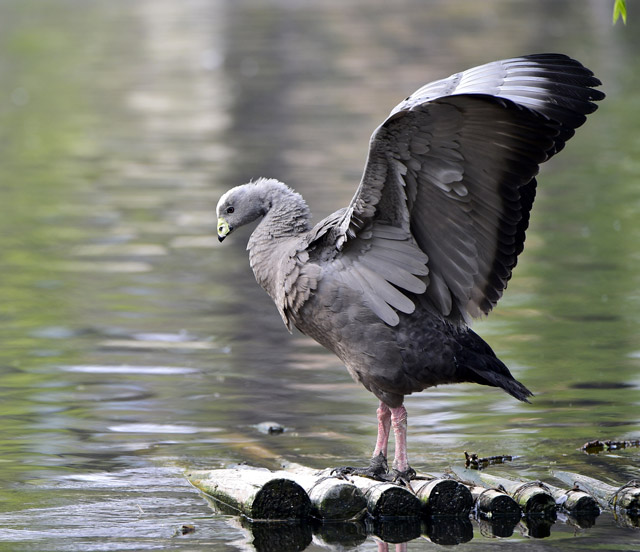
In the north is St. Kilda, Port Gawler and a number of samphire and mudflat beaches all combining into the newly established Adelaide International Bird Sanctuary. In the south are the Onkaparinga wetlands, long areas of soggy land (Cape Barren geese) along the edge of Lake Alexandrina, ending in Tolderol Game Reserve.
 Tolderol has long been recognised as a wader site, with the odd rarities such as lesser yellowlegs, yellow wagtail, and Oriental Pratincole turning up. The Coorong is further south, and there are some good wetland areas inland from the Coorong which are lessen known and need permission for access. There are huge areas of semi-dry mallee that run both sides of the Murray River and many kilometres north of it, and way out to the east to the Victorian border. Some of these have an enormous diversity of birds, obviously different to the wet areas. These areas are accessible on day trips, but are better surveyed with an overnight stay.
The Murray River system also has vast wetland areas adjacent to mallee so we get the benefit of two habitat types in close proximity. There are some excellent birding conservation parks along the river. The Adelaide Hills provide yet another range of habitat types carrying mostly bush birds. All of these are readily accessed on day trips from Adelaide, so city accommodation is convenient.
Further afield, i.e. further north and west, one can access desert and other dry areas, some of which are saltbush/gibber plains, whilst others carry mallee communities. In these more remote areas are found the real desert species such as grasswrens, whitefaces, chats, gibberbird etc. Visits to these areas involve overnight accommodation and are best seen over periods of some days or weeks.
The spectacular landscapes surrounding the opal mining community of Coober Pedy are also home to an array of birds including emu, parrots, finches and wedge-tailed eagle.
Top spots for birding
Gluepot Reserve
Birds Australia's Gluepot Reserve covers 50,000 hectares of virgin mallee scrub and contains no less than six nationally endangered bird species and a unique flora and fauna adapted to the harsh conditions. Gluepot's easy accessibility means it is one of the few areas in Australia where birdwatchers can relatively easily observe otherwise hard-to-find species. Some of the nationally significant species breeding on the Reserve are malleefowl and red-lored whistler. Regent parrot breeds along the Murray River and occupies the reserve when not breeding, and there are regular sightings of scarlet-chested parrot.
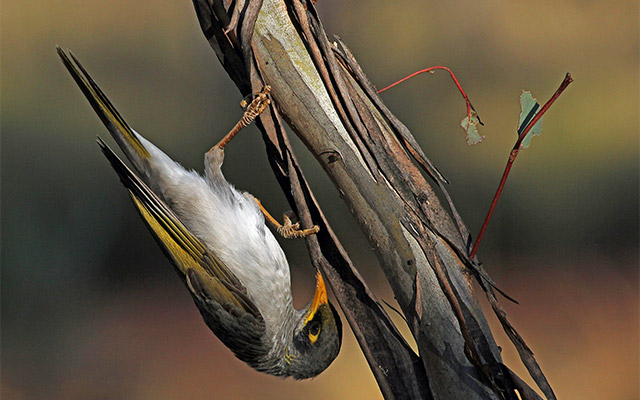 The area contains by far the largest remaining population of the endangered black-eared miner, one of Australia's rarest birds. Much of the field research and monitoring required in the species' Recovery Plan is centered on the Reserve. Black-eared miners were once considered common within their mallee habitat. By the early 1990s, there were few records in Victoria and New South Wales, and in South Australia the species was considered nearly extinct. However, following sightings of hybrid miners in the Bookmark - Gluepot area, surveys conducted in 1996 resulted in over 80 sightings of miners. Over 200 colonies are now known from this area. Although many contain hybrids, over a third of colonies contain mainly phenotypically pure black-eared miners. The black-eared miner resembles its close relative the yellow-throated miner. Gluepot Reserve is about 50 kilometres or one and a half hours' drive north of Waikerie on well-maintained dirt roads.
Saltpans and other wetlands around Adelaide
In the direct vicinity of Adelaide are some interesting wetlands. The Adelaide International Bird Sanctuary is excellent for migratory waders, between October and April. Rarities often turn up here. Nearby, the newly developed Greenfields Wetlands often have a surprise waiting for the persistent birder in the form of Australasian bittern,
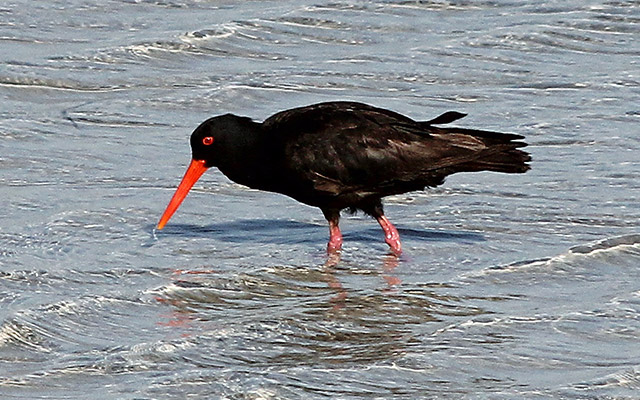 Baillon's crake, long-toed stint, pectoral sandpiper, Australian pratincole and many others. Less than an hour out of Adelaide is Laratinga or the Mount Barker Wetlands. This is an excellent site for many waterfowl and bush birds and as it is in the heart of a residential area, the relaxed nature of the birds makes for an excellent site for bird photography. Tolderol Game Reserve, on the shores of Lake Alexandrina, is an excellent little reserve containing a number of ponds with different water levels and vegetation cover. The ponds have resident populations of terns, ducks, crakes, rails, and the occasional Bittern, while migratory waders can be observed at close quarters and the odd vagrant turns up every so often.
The outback from the Flinders Ranges northwards
The two species endemic to South Australia occur here. At a number of sites (for example Willow Springs, 15 kilometres north of Wilpena Pound in the Flinders Ranges) short-tailed grasswren can be found, a recent split from the striated grasswren.
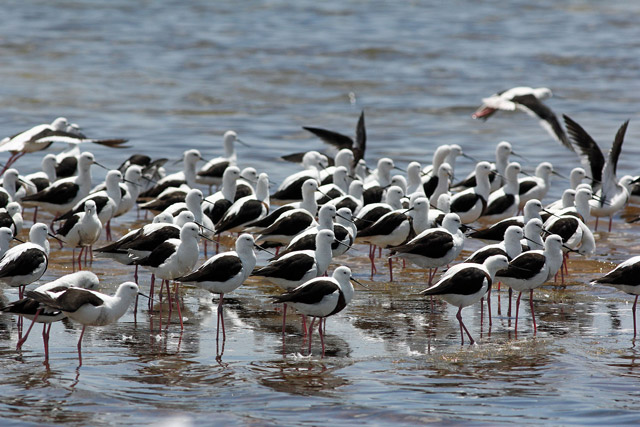 A bit further north, the southern stretch of the Strzelecki Track is where banded whiteface, letter-winged kite, gibber chat and cinnamon quail-thrush are regularly found. In the Lyndhurst-Marree area there are reliable sites for chestnut-breasted whiteface and thick-billed grasswren. Along the Birdsville Track from Marree to Birdsville look for Eyrean- and grey grasswren, gibber-, orange- and yellow chat, flock bronzewing, grey falcon, letter-winged kite, and cinnamon quail-thrush. When vast Lake Eyre irregularly fills, only a few times each century, it becomes an oasis in the desert with enormous numbers of breeding banded stilts and Australian pelicans. From South Australia, access to Lake Eyre is through Marree. For the remote outback areas, where conditions can become unbearable for the ill-prepared birdwatcher, an excellent guide is of vital importance.
Kangaroo Island
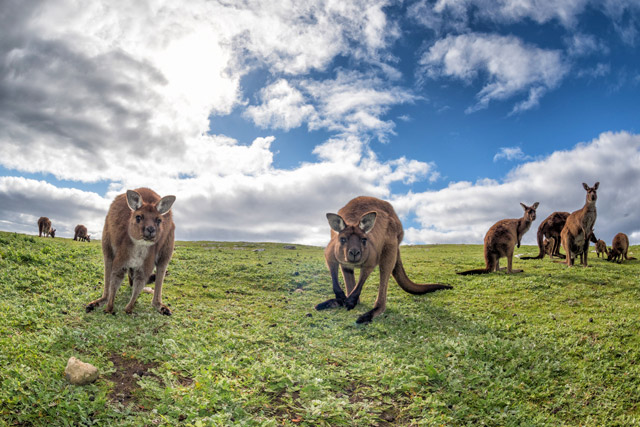 Kangaroo Island is renowned as a “zoo without fences”. The abundance of wildlife is phenomenal with kangaroo, wallaby, sealion, echidna and a vast array of birdlife all packaged into a very easily accessible environment. Only a short flight from Adelaide or a scenic drive down to the ferry, Kangaroo Island is a much sort after haven for wildlife enthusiasts. It also boasts a small number of easy to find, isolated populations of birds such as the glossy black cockatoo, western whipbird and rock parrot.
Join us on an amazing two week small group trip with birding expert Peter Waanders to explore all these fantastic birding locations. Or contact us to arrange your perfect tailor made birdwatching trip in South Australia.