Circumnavigating Svalbard: An Arctic Wildlife Adventure
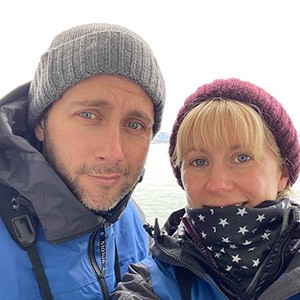
After 12 years of working in the wildlife travel industry, Dan and his wife Dani finally made it to Svalbard last month. Here they describe the wildlife encounters from their voyage around Svalbard.
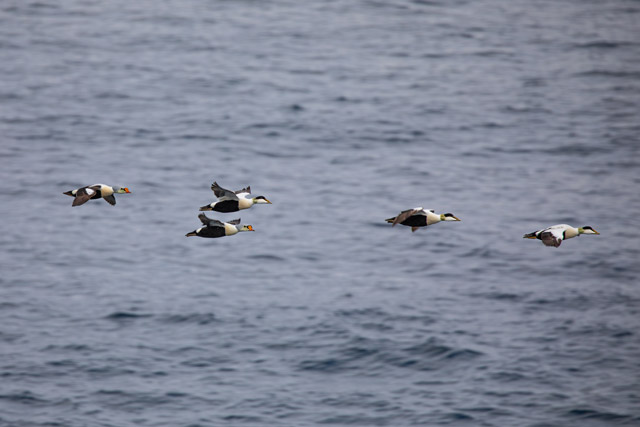
Flying to Longyearbyen via Oslo, we arrived at the world's northernmost city around 1 am, but it could just as easily have been 1 pm under a midnight sun. With a population of less than 2,500, this frontier settlement isn't anything like a city but, crucially, is the staging point for expedition voyages around the Svalbard Archipelago. It also offers some great introductory birding with snow buntings, dunlin, purple sandpiper, red phalarope, numerous eider (common and king), long-tailed ducks and marauding glaucous gulls all seen well.
 Having waited so long for this trip and keen to maximise our chances of seeing some of the region's big hitters, we opted for a 13-night Svalbard in Depth voyage onboard the fabulous Sylvia Earle. Only recently launched, it's a beautifully appointed vessel with an excellent observation lounge, restaurant, library and comfortable en suite cabins with verandahs and floor-to-ceiling windows.
Setting sail from Longyearbyen, the plan had been to head north from there and travel in a clockwise direction around the main island of Spitsbergen, but with the latest ice reports suggesting that the northern coast was still enclosed by ice, we reversed our routing and instead turned south. Over the next 14 days, we journeyed first along the south-west coast before rounding the southern tip of Spitsbergen and heading north along the eastern coast, exploring not only the numerous fjords of mainland Spitsbergen but also the islands of Edgeøya, Barents, Storøya and Nordaustlandet. With ice in the north later clearing, we could complete the circumnavigation.
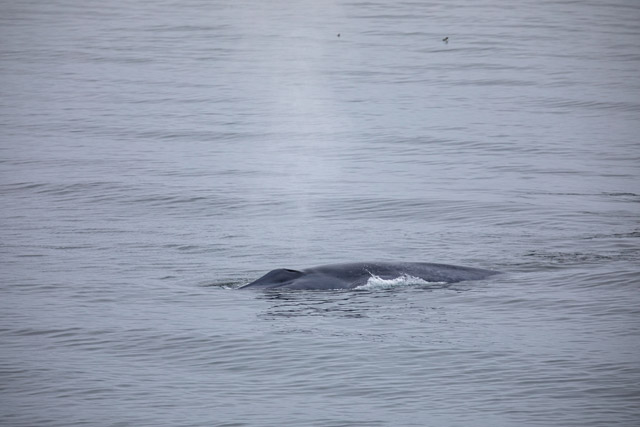
It was an epic voyage, and blessed with settled weather, we had some remarkable wildlife encounters, often amidst a dramatic frozen landscape. With mill pond-like seas, we spent an awful lot of time on deck scanning for cetaceans and were rewarded with close-up views of blue, fin, humpback and minke whales, as well as several pods of belugas. Our first full day started with belugas in the morning and concluded with two blue whales feeding off the ship's bow after dinner.
 The birdlife was fantastic, and there were always birds of interest to be seen from the deck and on excursions ashore. Brünnich's guillemots, black-legged kittiwakes and Northern fulmars were near-constant companions at sea, alongside pockets of little auks and Atlantic puffins. Onshore, Arctic terns and Arctic skuas held territories, while red-throated divers, resplendent in their summer plumage, were often found nesting on inland lagoons with rock ptarmigan on the mountain slopes.
Svalbard is famous for its seabird cliffs, with Alkefjellet arguably its most impressive. The sheer basalt cliffs and towers rise over 100 metres from the sea and provide refuge for over 60,000 pairs of guillemots. Cruising below in a Zodiac, with tens of thousands of birds soaring overhead and waterfalls cascading from the cliffs, it was a mind-blowing experience.
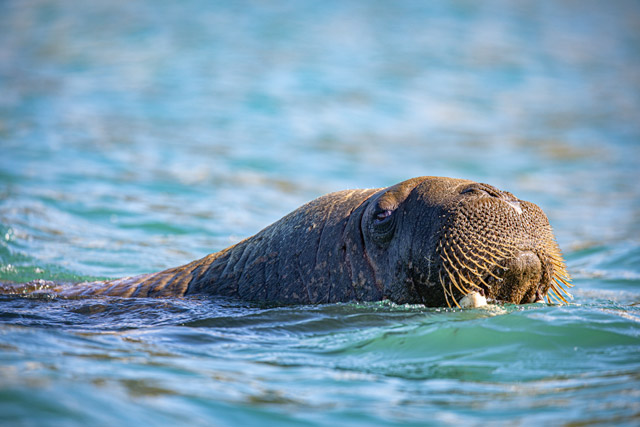
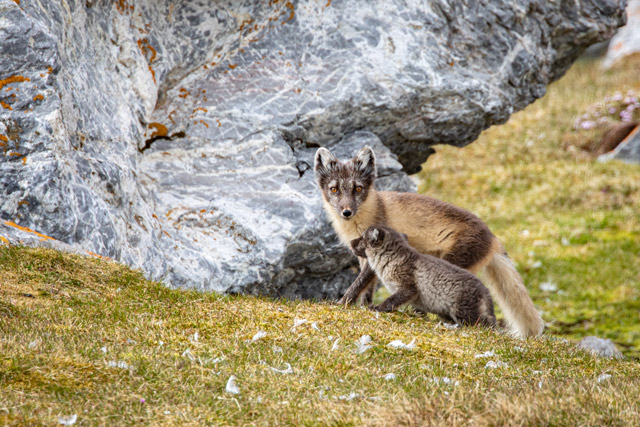 On the mammal front, Svalbard reindeer were present on most landings, and we had some fantastic sightings of Arctic fox, including a female with three cubs that proceeded to play in front of us, not 30 metres away. Bearded, ringed and harbour seals were encountered on ice floes, but it was the walrus that stole the pinniped show. We visited numerous walrus haul-outs and spent hours observing their quirky habits onshore, however, it was the sightings from the Zodiacs that I found most enjoyable, as inquisitive individuals would often approach within a few metres, allowing you to appreciate their size and form fully.
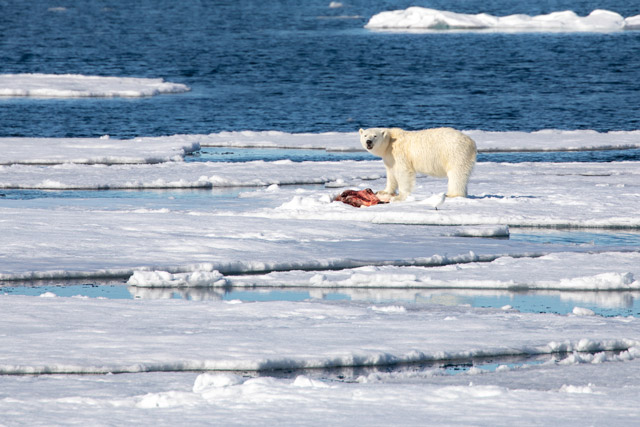
 Like many before us, seeing a polar bear was top of our wish list, and we were lucky enough to see a total of ten different bears. Some were fleeting glimpses at a distance, whilst others were prolonged, including a large male returning to the ice with a freshly caught walrus calf, a mother with cubs and an adolescent bear plundering an eider colony for eggs. When bears were found on a kill, it was possible to drop anchor and observe them from the ship for several hours as they fed, slept, and played on the ice, tossing around pieces of driftwood, much like a dog with a toy. With majestic ivory gulls often in attendance to complete the scene, these moments provided a wonderful insight into the bears' daily lives and will stay with me forever.
 See more photos from Dan & Dani's trip in our gallery.
Dan & Dani travelled on our Svalbard in Depth wildlife voyage. Browse all our holidays to the Arctic, or contact our team to find out more.