How our Wildlife Festival Fundraising Will Support Falklands Conservation
During our Festival of Wildlife voyage to the Falklands and South Georgia, we hosted an auction in support of Falklands Conservation. Thanks to the incredible generosity of our clients, we’re thrilled to have raised £50,000. Communications and Marketing Officer for Falklands Conservation, Darnell Christie, reveals how the generous proceeds will be used.
Projects include a slender-billed prion census survey on New Island; support for ongoing cetaceans surveying and telemetry research; and habitat restoration on New Island, while also providing general logistical support for Falklands Conservation. Find out more about each of these projects:
Slender-billed prion census survey on New Island
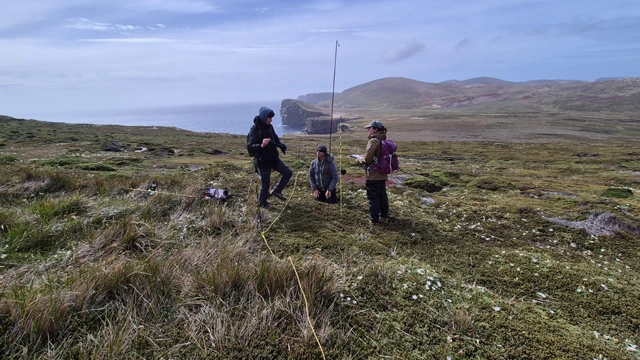
We undertook an island-wide survey of the largest known slender-billed prion colony in the world. The last census was undertaken in 2002.
The work involved a systematic island-wide survey of burrow density and burrow occupancy rates, covering a range of important habitat features. The survey was conducted by a group of 10 fieldworkers over a period of 12 days, with additional data collected throughout the months of January and February.
It allowed us to get an understanding of the population size and potential threats. These data will therefore allow us to determine the current population size and distribution of slender-billed prion at New Island and to assess the change in colony size and distribution at New Island since the previous census. Combined with annual research undertaken on slender-billed prions, an updated population estimate and distribution information will help us to better understand how threats such as erosion and invasive mammals may be impacting the colony. This understanding will help guide conservation efforts in regard to targeted habitat restoration efforts.
Cetacean surveying & telemetry research
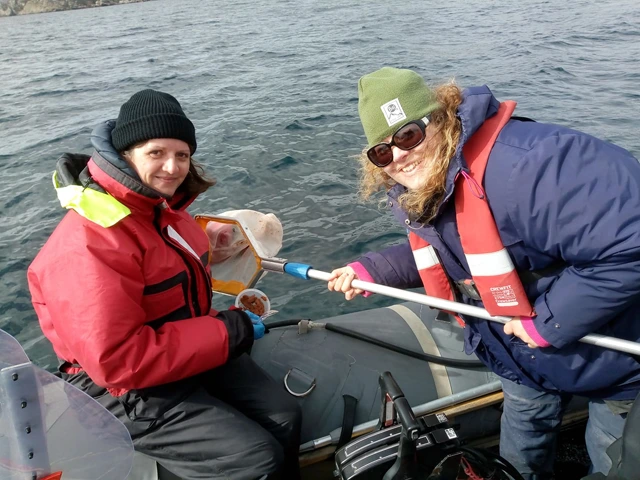
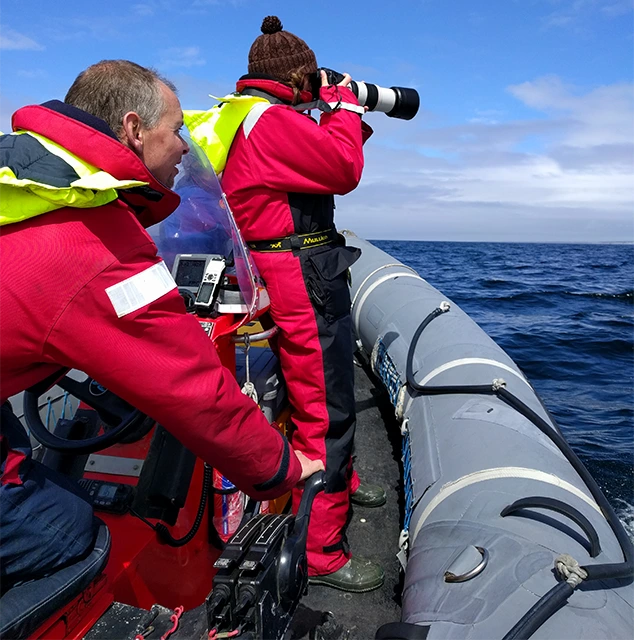
Falklands Conservation is continuing our ongoing cetacean monitoring which involves the satellite-tagging of southern right whales in Falkland Islands waters. The latest work is contributing to international research aimed at improving tagging methods, which is looking to trial new, lower-impact tags that could eventually be used on the critically endangered North Atlantic right whale.
We’re also continuing the deployments of satellite tags on whales to track their movements, habitats, and migration routes over time. It also includes follow-up studies (e.g. at key sites like Península Valdés to assess tag performance) and, crucially, to monitor any impacts on whale welfare. Comparing older and newer tag designs is a key part of refining safer research techniques.
This research provides vital data on whale behaviour, habitat use, and interactions with human activities, helping to inform protection of feeding, breeding, and migratory areas. Importantly, it supports efforts to reduce threats like entanglement and ship strikes and could directly aid conservation strategies for the endangered North Atlantic right whale. Ultimately, the work helps ensure evidence-based management to sustain recovering populations and prevent further declines not just in the Falklands but also globally.
New Island Restoration (white-chinned petrel conservation):
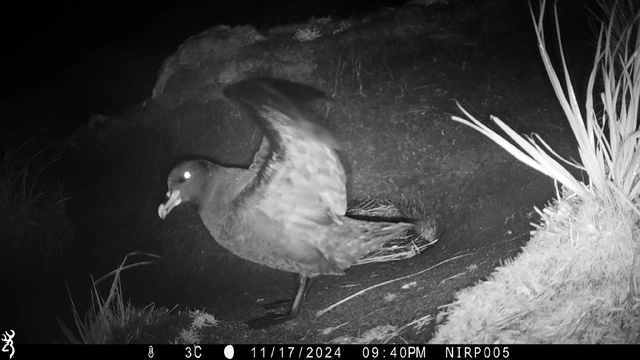
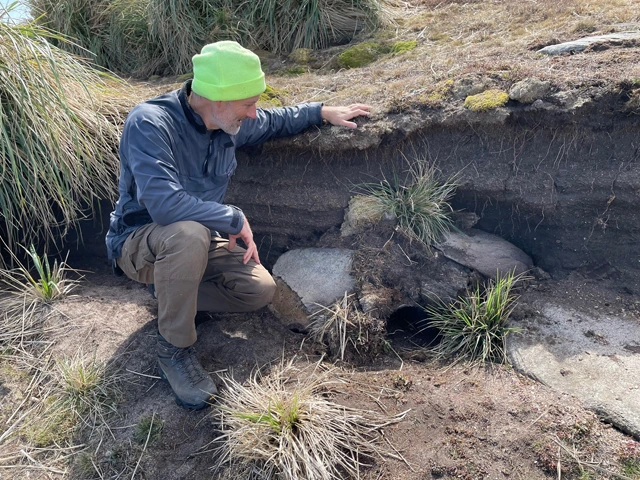
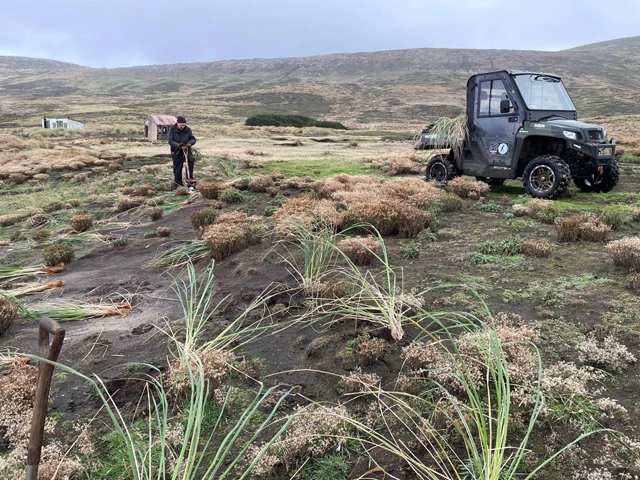
Falklands Conservation is working to restore and protect a fragile colony of white-chinned petrel on New Island. This includes habitat restoration, rebuilding damaged burrows, and actively controlling invasive predators such as rats, mice and feral cats as part of the wider New Island Restoration Programme.
The work combines practical, on-the-ground conservation actions: repairing burrows using materials like ducting, replanting tussac grass to stabilise soil and improve nesting conditions, deploying trail cameras to monitor activity, and installing smart traps to remove predators. Alongside this, the team monitors breeding attempts and uses data (e.g. camera footage and colony observations) to better understand why chicks are failing to fledge.
This work aims to prevent the local extinction of white-chinned petrels and restore New Island as a safe breeding site, contributing to global efforts under the Agreement on the Conservation of Albatrosses and Petrels. Crucially, the long-term goal of eradicating invasive mammals would benefit the entire ecosystem, including globally significant seabird populations, helping biodiversity recover and providing a model for island restoration success seen in places like South Georgia.
Ross James, Programme Manager for the New Island Restoration Programme commented:
“This is a great example of tourism giving back. Cruise visitors experience the richness of New Island’s wildlife first-hand, and through support like this, they become part of its future - helping to fund the work needed to reduce pressures on wildlife and restore the island’s natural systems. It’s a powerful example of how people can connect with a place and contribute to protecting it for the long term.”
Images by Falklands Conservation.
Find out more about our past conservation work, or read Founder Chris Breen's account of how the night of the auction unfolded. You can also join us on a future Festival of Wildlife. If you'd like to learn more, contact our expert team today.