Day 1
We awoke early, at 4.15am, for a quick breakfast in the hotel. Tea, coffee, pastries, fruit and a cooked breakfast were laid out before us. At that time, I couldn’t eat much, but appreciated the gesture.
There was time to clean our teeth, grab our bags and meet back in the hotel lobby for the short walk to the terminal. We checked-in, saying goodbye to our hold luggage, before continuing on through security and wandering to our gate. Our flight was due to leave at 8 am, but due to a slight technical issue, we were unable to take off until after 9.30 am.
We were flying from Calgary to Resolute (way up in the Canadian Arctic), stopping in the remote town of Yellowknife to refuel. The flight, with the stop, took us around 5.5 hours. It was a very smooth flight on an Avro RJ85-RJ100, with snacks and drinks provided. Very impressive!
Upon arrival in Resolute, we were able to grab our bags and then have them checked by local workers for any contraband (seemingly fireworks), before catching a bus to the bay where the ship was waiting for us. We were soon off the bus and on the shingle shoreline. Here, we were given our lifejackets, and we were whisked off by the Zodiacs to the ship – Ultramarine. Ahead of the ship, harp seals could be seen frolicking in the water.
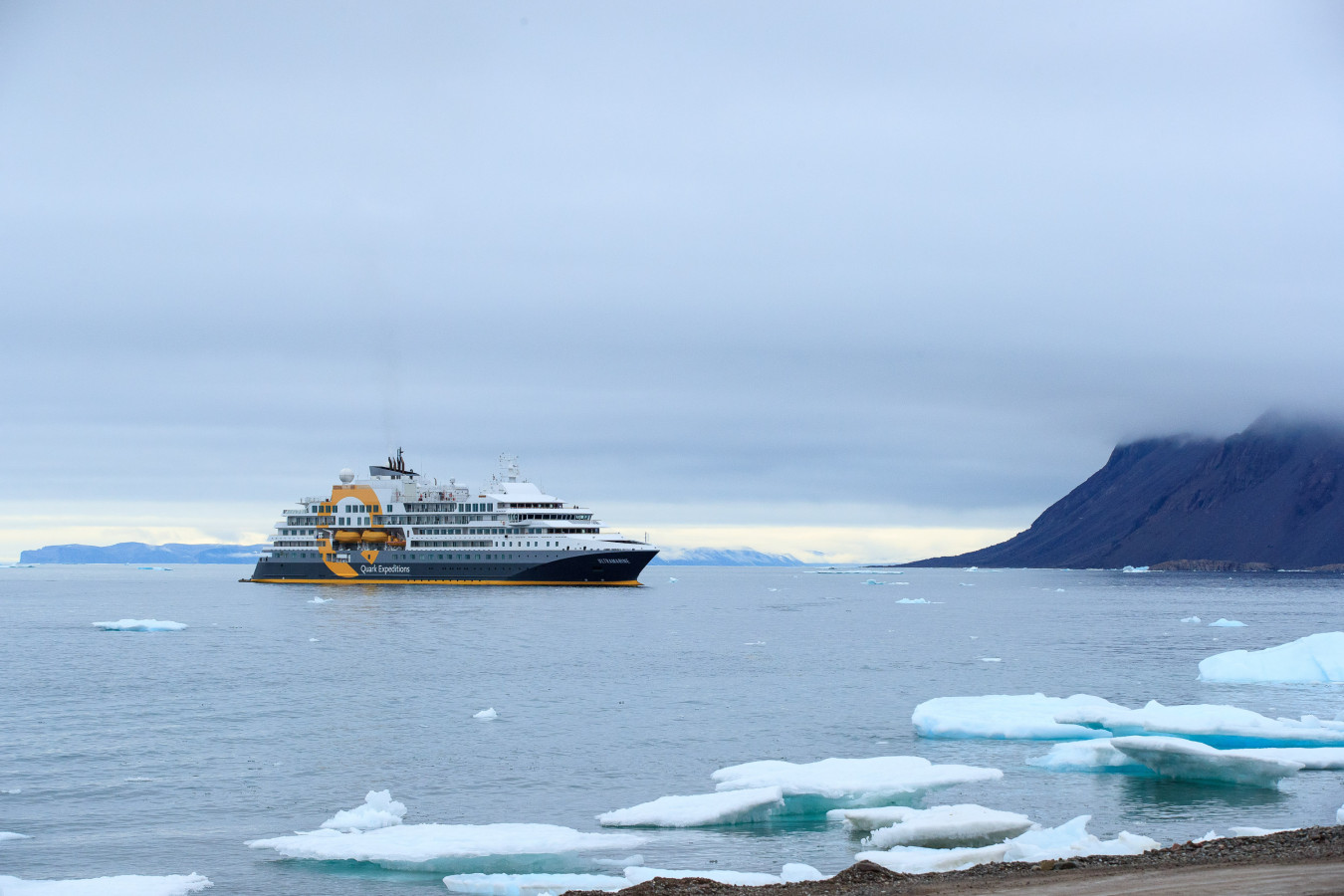 Within no time at all, we were checked into our cabin, which was exceptionally comfortable, and we were soon able to explore the ship’s different decks and familiarise ourselves with the layout of the necessary amenities. There was of course the mandatory safety drills and practice for an evacuation, learning where our muster station was, and the process for boarding the lifeboats.
The evening was spent enjoying a fabulous first dinner onboard, wined and dined with stunning views out across the Arctic desert of Devon Island.
Day 2
Waking up bright and early, we decided that we would head to the gym when it opened. However, it turned out, we were not the only ones to have that idea, and it was surprisingly busy. After a good workout, and then the chance to freshen up by having a shower, we headed to breakfast. What a fabulous spread once again – big buffet breakfast with an omelette station etc.
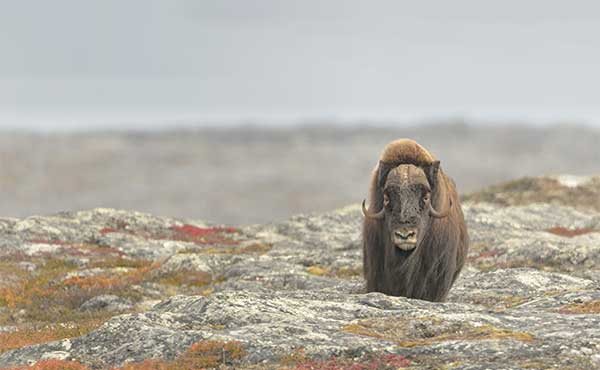
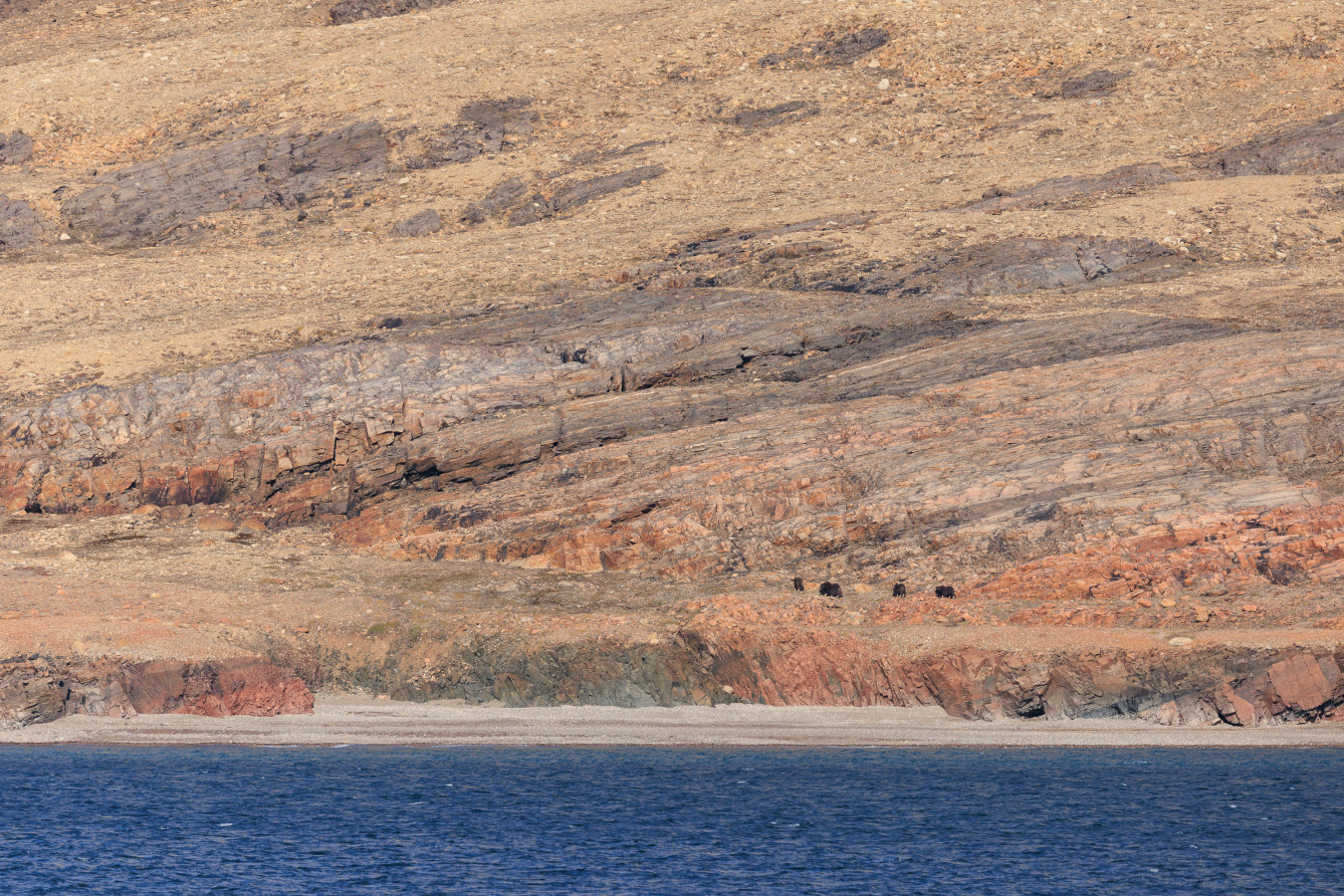
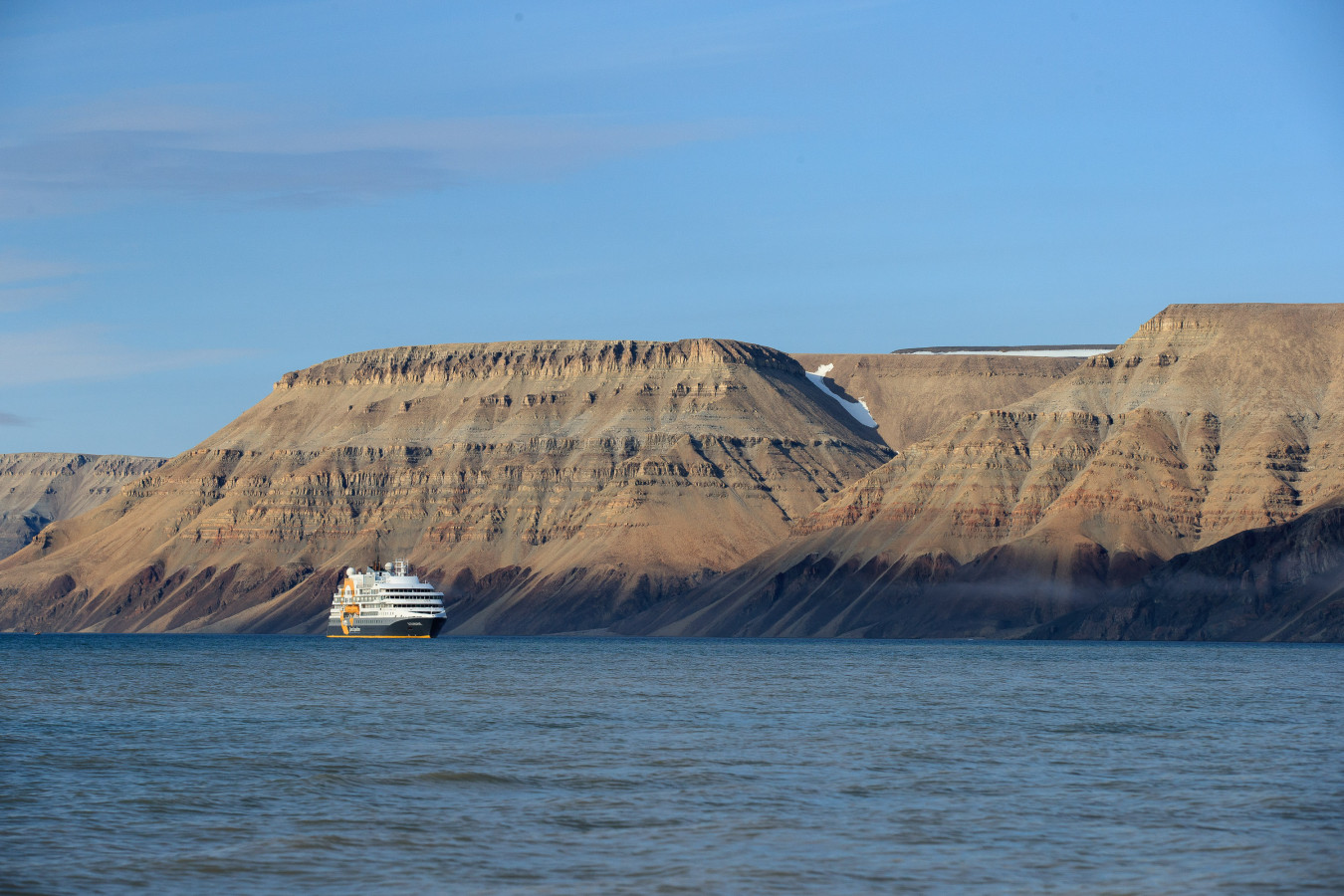
This morning, we had more essential safety lectures on Zodiac cruises and landings – what to and what not to do. All the while, we were cruising along the shores of Devon Island. This bleak and snow-less landscape looked utterly inhospitable. As we worked our way along the coastline, towards Cuming Inlet, the ship’s expedition crew spotted a small herd of musk ox working their way along the seemingly lifeless coastline. It was only a distant view, but a great way to start the trip.
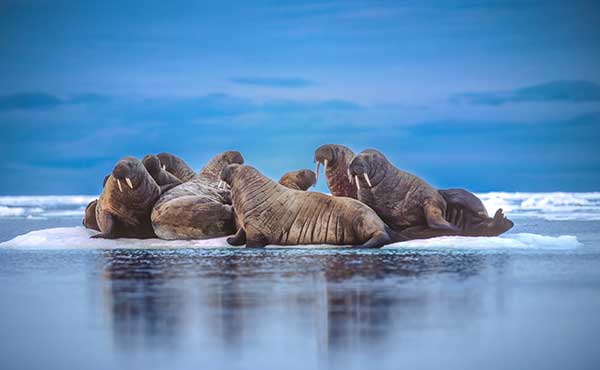
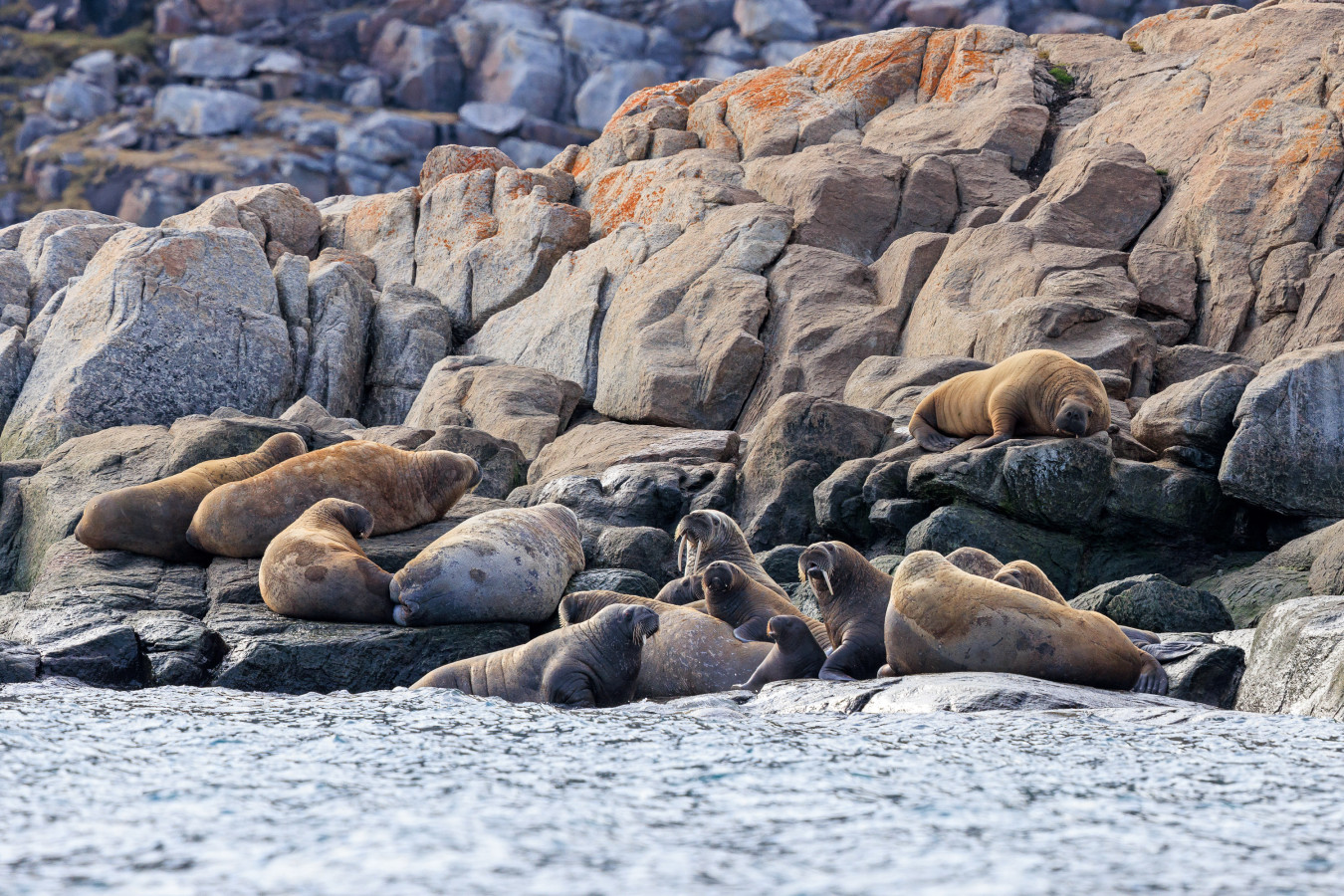
 We continued into the inlet. Here, we planned to enjoy an afternoon’s Zodiac cruise and a landing. As we sat enjoying lunch, the alarm went up for a polar bear, which had been spotted sleeping on the slopes of the fjord. As the vessel ventured further into the fjord, the bear decided it was going to move away up over a ridge and out of sight. There were also walrus feeding in the water, alongside some curious seals, and a walrus haul out on the other side of the fjord.
With full stomachs and a landing to enjoy, we headed out in the afternoon and onto the Zodiacs for the first time this voyage. We weren’t able to find another polar bear but were able to approach the walrus (within reason) and were close enough to see they had some young hauled out on the rocks with them. Making several passes, our Zodiacs did their best to get closer, but it was still too distant for photography.
 The walrus were soon left in peace as we headed back across the fjord and up along the coastline. This coastline had a few small waterfalls and a little colony of kittiwakes and gulls. With a bit of a swell picking up, we then headed back across the fjord to a glacier which we were able to climb up and even drink the melt water. What a fabulous experience.
With mileage to cover, we had to get back to the ship and set sail for our expedition further north. The following day, we hoped to visit Coburg Island, home to thousands of Brunnich’s guillemots alongside a host of other seabirds. We were briefed on the coming days’ weather, as well as our plans – which were wholly dependent on the ice and weather.
Of course, it was then time for another meal. Enjoying an a la carte menu and some excellent cuisine. With a couple of action-packed days, and plenty of travel, we headed to bed for an early night. Eager to enjoy the next day’s activities and voyage into the ice.
Day 3
Another early start, another visit to the gym and a good workout, before heading up to the restaurant for breakfast after a quick shower. The breakfast onboard is a large buffet-style affair, with omelette stations and a daily special offering too. This would be the same for the remainder of the voyage.
Overnight, we had set sail from the south of Devon Island and headed up to Coburg Island – a lonely but large island in the middle of Jone’s Sound. We arrived on a cool and drizzly morning, when our plan was to head out on the Zodiacs. The island is home to one of Arctic Canada’s largest seabird colonies and we were able to head out and enjoy this sight up-close.
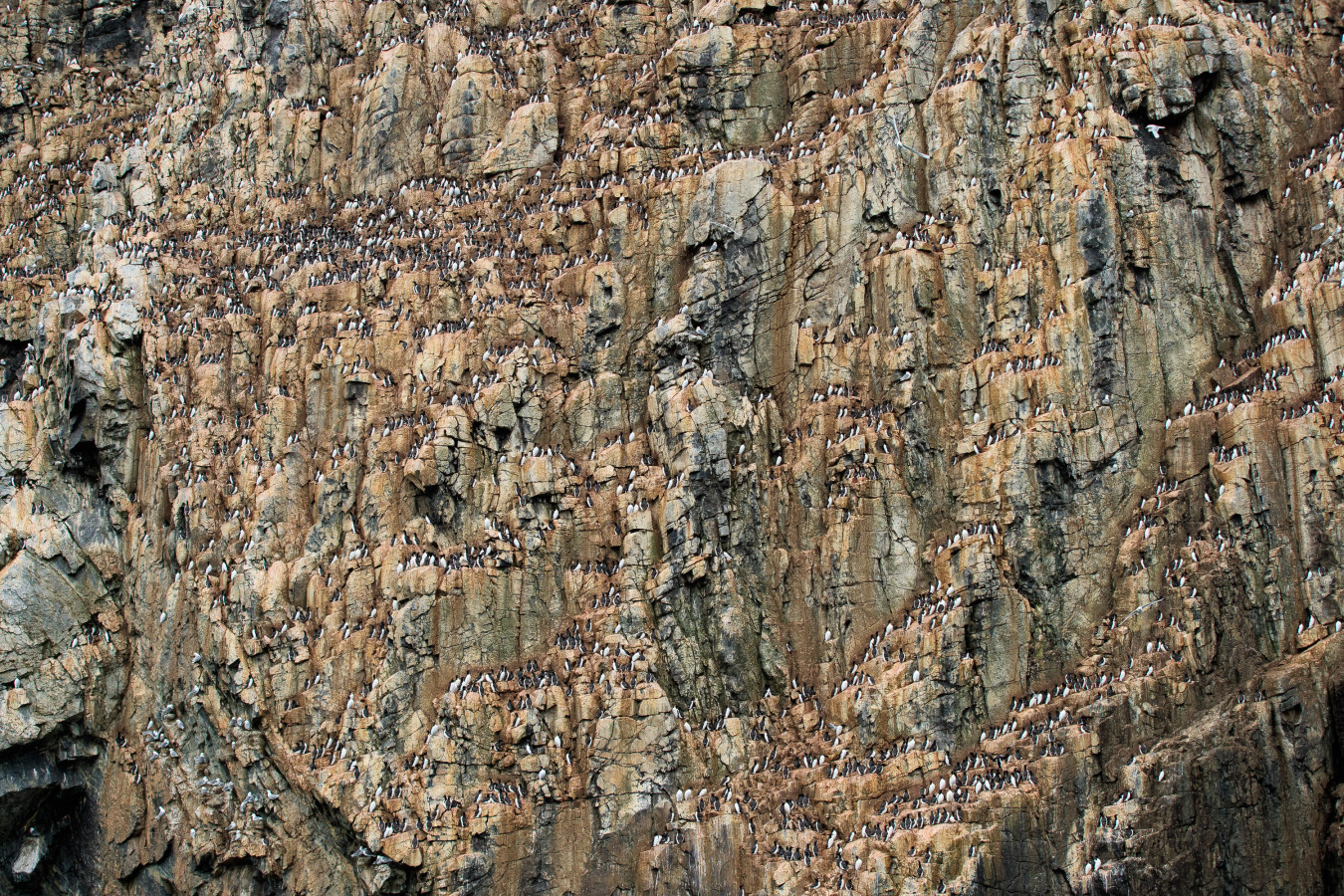
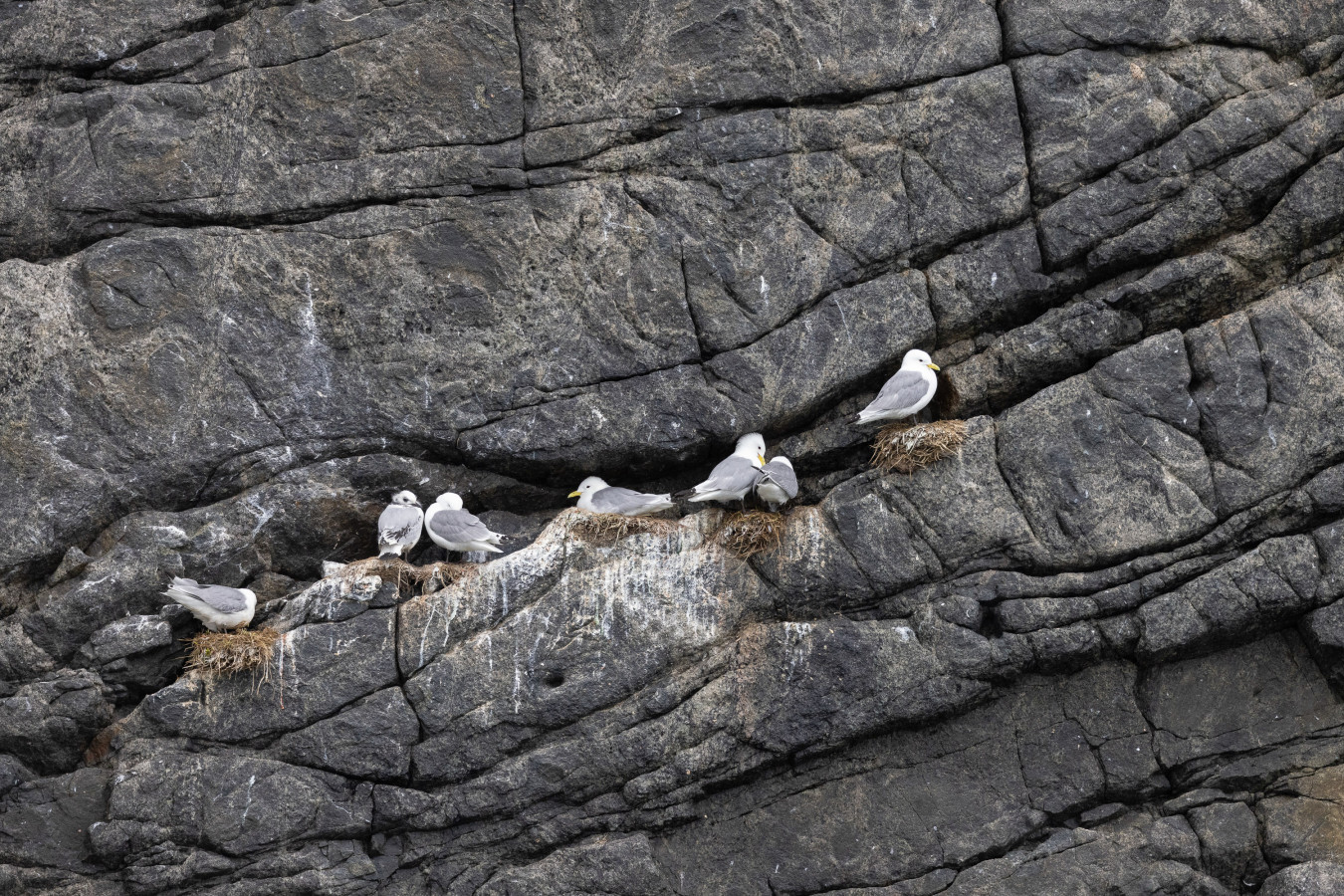 We worked our way along the near-vertical cliffs as we saw hundreds of thousands of birds nestled on the cliffs, busy raising their now rather large chicks. We were treated to fabulous views of Brunnich’s guillemot and northern fulmar. Despite our best efforts, we were unable to see any signs of Arctic fox, knowing that this would likely be our best bet for spotting them.
 With a fabulous morning behind us, and water to cover before a storm blew in, we set sail westwards into the sea-ice. We slowly manoeuvred to and fro, working our way through the ice. Unfortunately, our progress also slowed to a snail’s pace, and it was decided we would have to find another route if we were to make our way to calmer waters. This afternoon was a day working our way through an iceberg strewn world, marvelling at the vast glaciers that tumbled off Coburg Island and worked their way into the sea.
As we went to bed, we were still working our way north, looking for shelter on the eastern side of Ellesmere Island.
Day 4
We awoke to a glorious day, surrounded by icebergs and the rock-strewn slopes of Ellesmere only a few hundred yards away. I headed up to the gym again, working out with views of icebergs as they laid silently in this almost entirely silent world. Having done my daily exercise, it was time to have a shower, before heading up for a light breakfast.
Today would be an entirely new experience for me. One of the highlights of being on the Ultramarine, is that it operates two helicopters. And so, in the lee of the land, sheltered from the stormy conditions to the south of us, we would have the opportunity to head up in the air. With only six passengers on each flight – ensuring everyone enjoys a window seat – there was quite a wait before I got my chance.
Fully kitted up in a drysuit, the belt buckles fastened and the headset on, it was time to lift off the heli-deck of the ship and fly over the incredible glaciers and fjords of Ellesmere Island. We hadn’t yet set foot on this remote, almost mythical island, but here I was flying over it. What an incredible sight. Unbelievable.
I have flown in a helicopter before, but flying over such an incredible wilderness was unlike anything I had ever experienced. I would recommend it to anyone who wanted to experience something entirely new in this Arctic ecosystem.
We returned for lunch and were wondering what lay in store for us this afternoon. It was eerily quiet regarding any sort of life on this side of Ellesmere. A true polar desert.
This afternoon we would get to enjoy a Zodiac cruise, heading out to explore the icebergs and glacier front to our south.
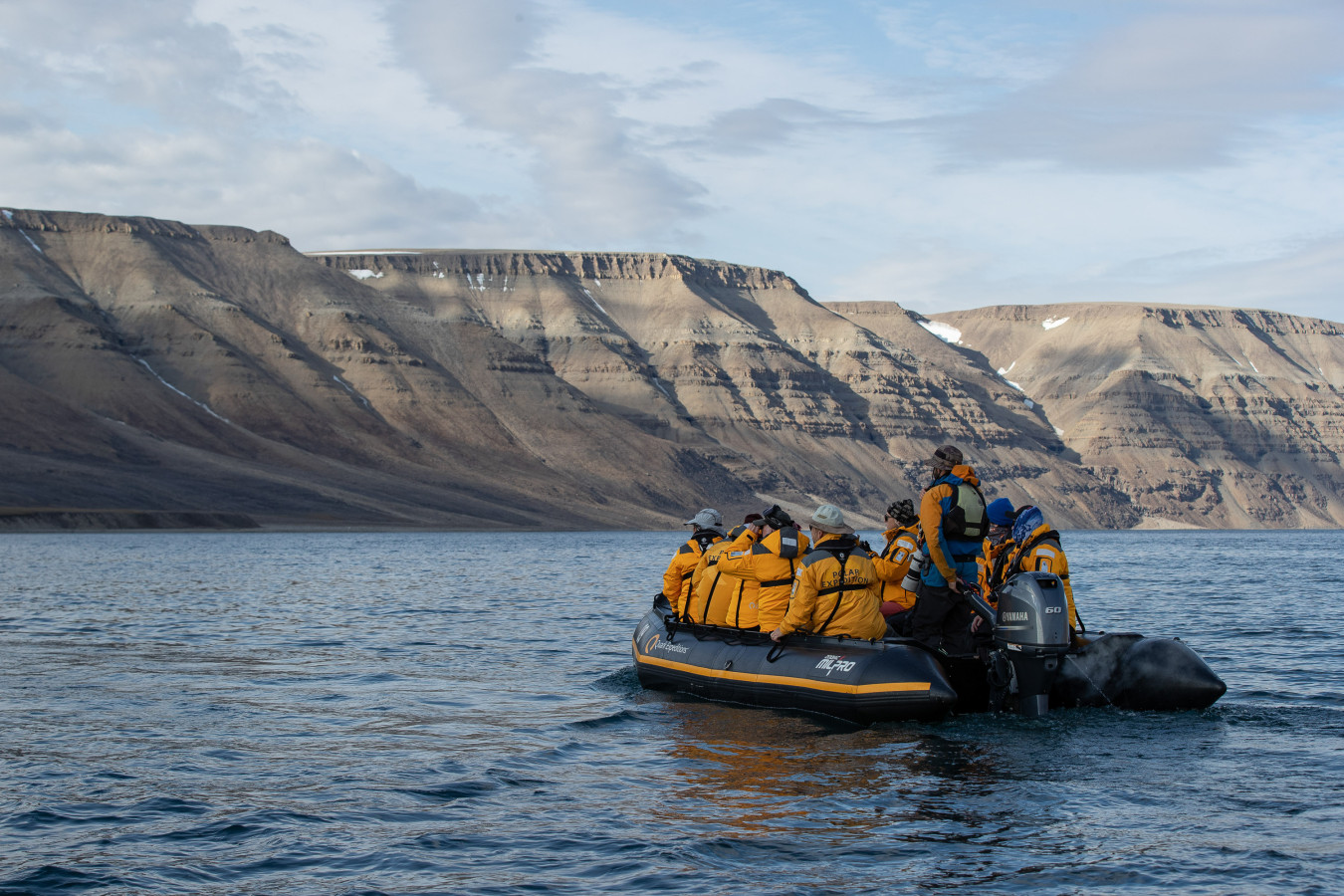 I was put on a Zodiac with a guide, Steffen, who I was familiar with from my time on Ocean Adventurer a couple of years earlier. We started to make our way through the icebergs, marvelling at their size and shapes, while always keeping our distance in case they were unstable. Many icebergs can become unstable by repeated melting and they end up turning upside down once their mass below water is less than that of above.
As we continued to explore, the wind suddenly picked up and the water became rather choppy. It wasn’t really an issue except for the fact that we started to get a lot of spray and we all got a good soaking. Trying to shelter us from the worst of the wind, Steffen took us further towards the glacier and the coast as we made our way back to the ship. It ended up being a bit of an adventurous Zodiac cruise, but that’s all part of the fun of it.
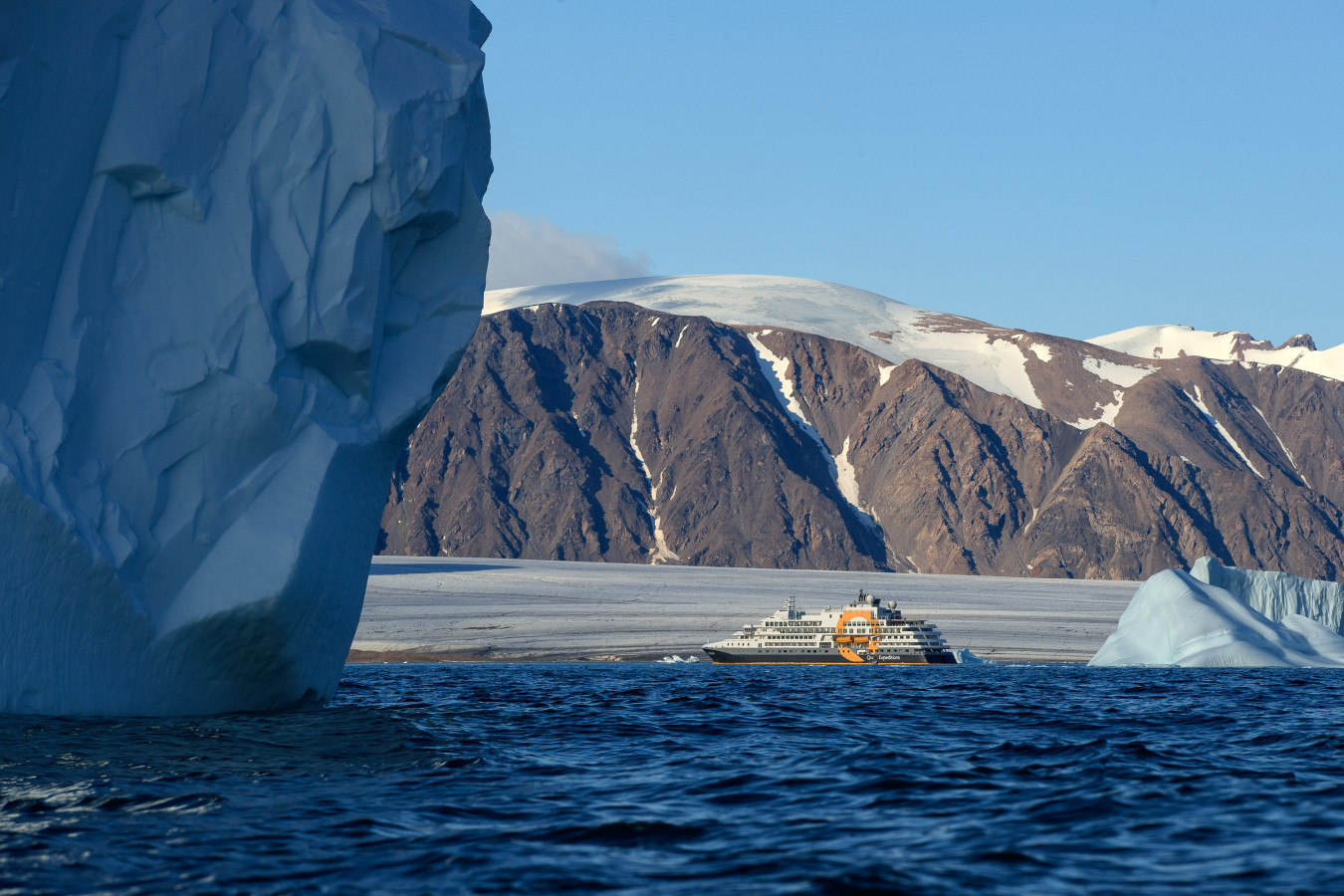 Once we were all back on board, our plan was to head west and explore the southern portion of Ellesmere Island.
During our daily recap, back onboard, we found out from Colin (our Expedition Leader), that we wouldn’t be able to make it up to Axel Heiburg Island as we simply had too much ground to cover. The sea ice was blocking the narrow channel through which we could sail, Hell’s Gate, and so we would instead spend the next few days exploring the southern reaches of Ellesmere.
Day 5
Today, we moved around from the east, passing back past Coburg Island and worked our way up into Starness Fjord. Our plan this morning was to head out on the Zodiacs once again, but this time make our first landing on this exceedingly remote Arctic island. With an earlier disembarkation time than usual, I decided to skip the gym and headed up to the restaurant for a light breakfast.
We made our way to shore, and there set about exploring this Arctic desert habitat. This summer was one of the coldest (and wettest) on record and much of the summer flora was already past its best. In fact, we later heard, that autumn had well and truly arrived – almost an entire month earlier than usual. Nonetheless, the plants were fascinating, as was the geology that was all around us. To enjoy this unique habitat, I didn’t venture far from the landing site, instead choosing to revel in this Arctic desert. Before I knew it, time was up, and we had to board the Zodiacs and head back to the ship.
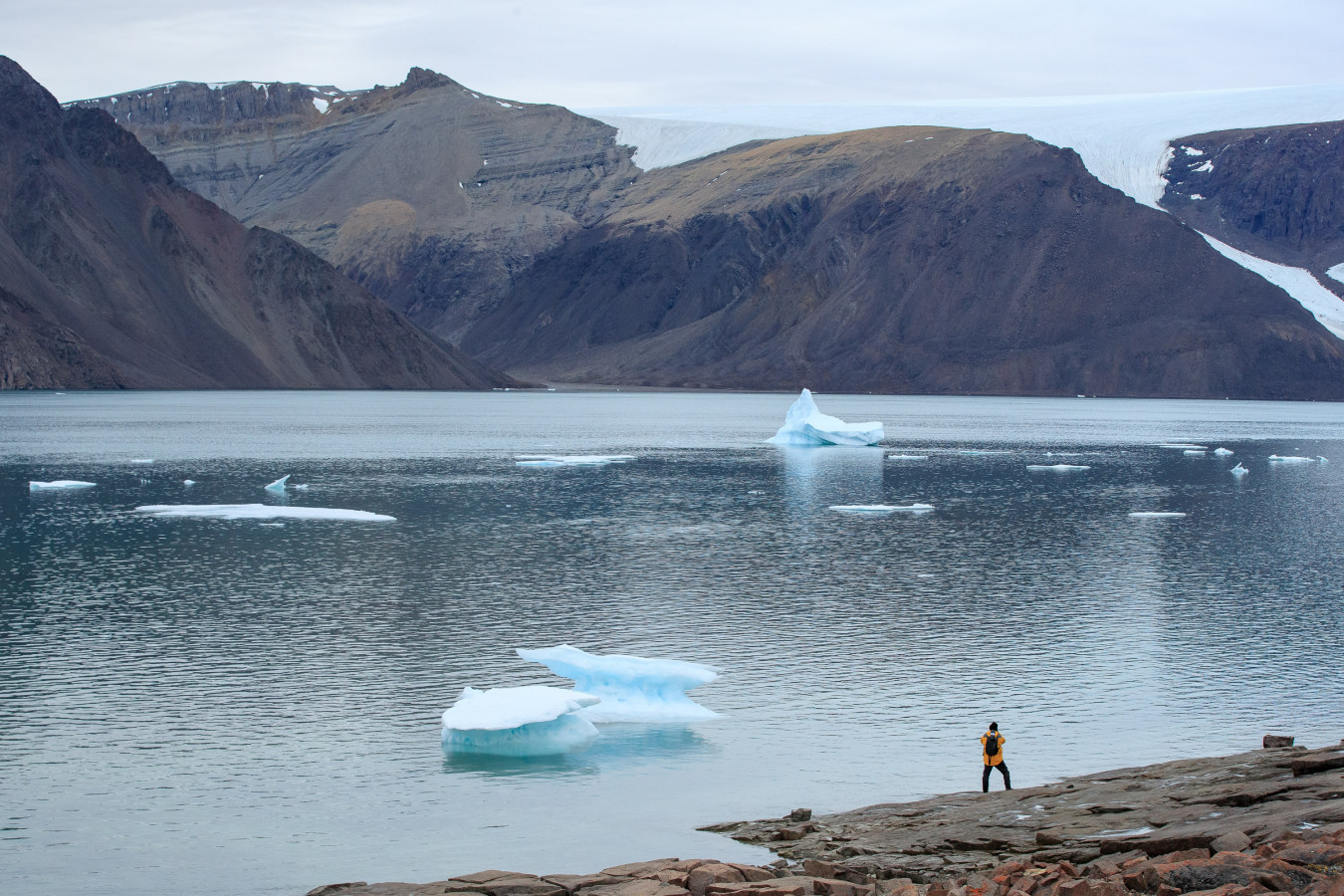 The kayakers had enjoyed excellent views of both narwhal and beluga, so we sat on the upper decks scanning. There were some distant views of both species, but only using the ship’s spotting scopes.
With a morning spent ashore, and feeling like I was warmed up, I decided to head to the gym for my daily workout. As I was sat there, I heard the tell-tale sounds of them preparing the helicopters up on the heli-decks above and awaited an announcement as to what our afternoon schedule would be. We would be flying again.
So, after a healthy salad at lunch, we would be the first group to be called up for our flight on one of the ship’s helicopters. As soon as we got the call, we headed up to be assigned our group. We would be on the third flight of the day, flying with ex-RAF pilot Jonny. I was incredibly privileged to be able to sit in the co-pilot’s seat and as we lifted off the deck, we immediately proceeded up the fjord. Within a few moments we were able to see a pod of belugas and even narwhal, but to avoid disturbing the whales, we had to be above 457 metres. This meant views were distant, but the experience was quite magical. We worked our way back the way we had flow, before darting off down a spectacular valley.
I spotted a herd of musk ox far below, which unfortunately we spooked, and they went galloping off up the hill. So as not to disturb them anymore, we turned away and gained altitude. As we put distance between the helicopter and the musk ox, we flew out over the main fjord and were treated to one of the most incredible sights I have ever experienced.
There, far beneath us, must have been over 100 narwhal. Everywhere you looked, you could see movement in the water. As well as several family groups of narwhal, there were small groups of males, several groups of belugas (numbering around 50 in total) and even seals. This really was an experience of a lifetime. Something I'll never forget.
We landed after around 15 minutes of flight time (the usual for flightseeing from Ultramarine) and we then had the afternoon to sit back and relax. Sat on the upper viewing deck, I watched and photographed as countless flights took off and landed only from, the back of the ship. We could also see beluga and narwhal feeding around 500 metres away. They were just about visible through binoculars but were better using the ship’s spotting scopes.
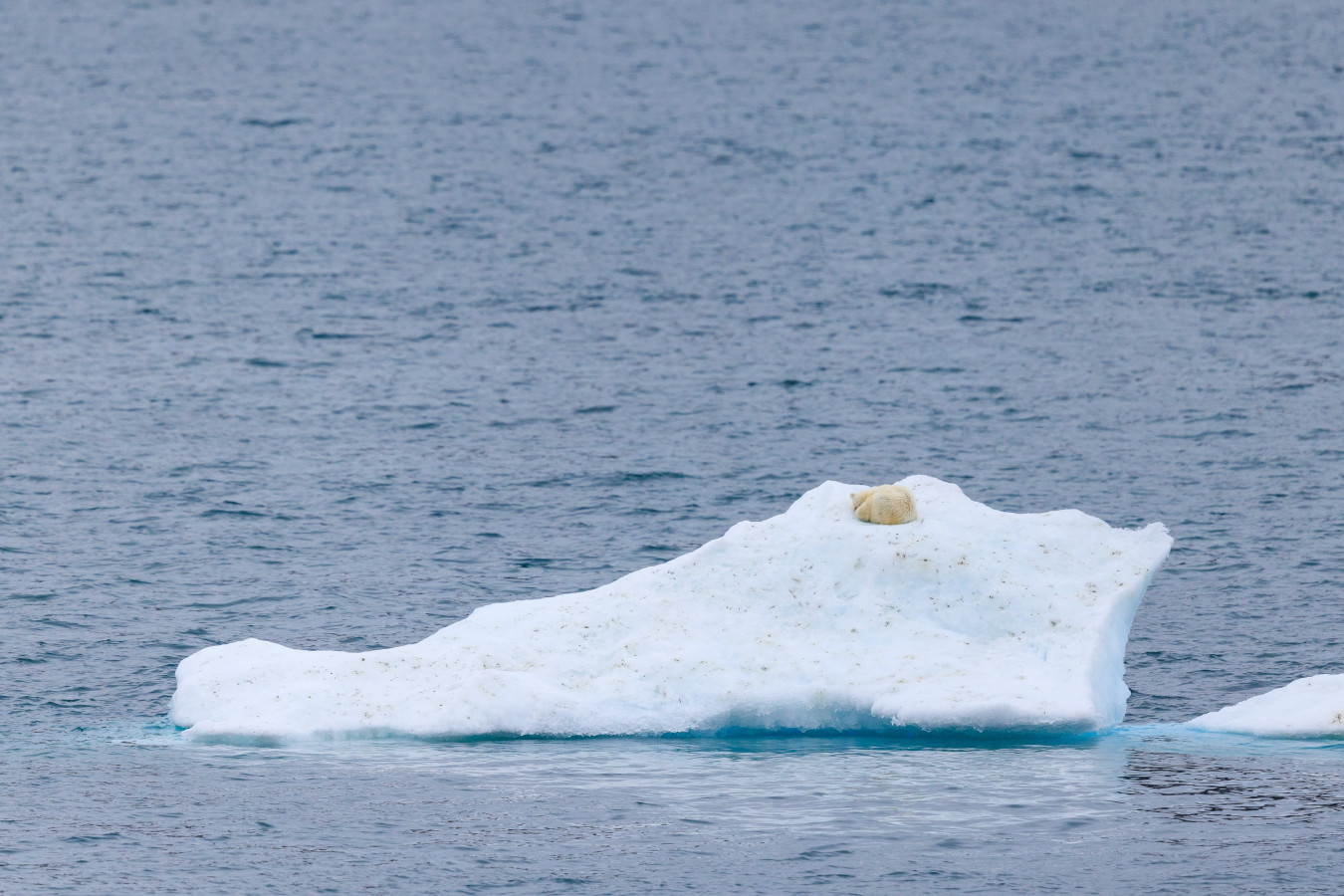
With ground to cover and changing winds, we set sail into the middle of the main fjord, with flights still coming to and fro. It was then, as a helicopter sat on the deck waiting to take off, that a young polar bear was spotted asleep on an iceberg. With helicopter operations still in full swing, we were unable to make an approach and had to sail by the snoozing beauty. Flights continued well into the evening, while we enjoyed another delicious dinner before enjoying a talk by the ship’s resident photographer about a canoe trip across the Yukon and into Alaska.
Day 6
Overnight, we had sailed west to Musk Ox Fjord. This was yet another unique landscape, quite different from the other spots we had visited so far. There was a lot more vegetation here, albeit well past its best, and you could imagine herds of musk ox would descend here in the summer months for a veritable feast.
Alas, when we headed out on our morning Zodiac cruise, we were unable to spot any musk ox, instead having to settle for views of nesting Thayer’s gull (a sub-species of Iceland gull) and some old quad bikes that had been abandoned long ago. We assumed these had been left here for hunting trips, probably after the elusive musk ox (no surprise they were elusive), and had been stripped for parts over the years as they fell into disrepair. We headed back to the ship, having enjoyed morning in the stunning scenery.
Back onboard Ultramarine, we were spoiled with more food than you could ever eat at the buffet lunch. That was just a nice interlude though, as we would be heading on shore later today, enjoying a landing on the spectacular shores of this remote fjord.
As our group was called, we made our way down to the mud room, kitting up and putting on our lifejackets. We were soon ready to board our Zodiac. Within five minutes, our Zodiac was offloading us onto the shingle beach. This afternoon, a perimeter landing had been set up, allowing us to wander freely with our guides forming a protective arc around the group. At the furthest point was a spectacular gorge and waterfall.
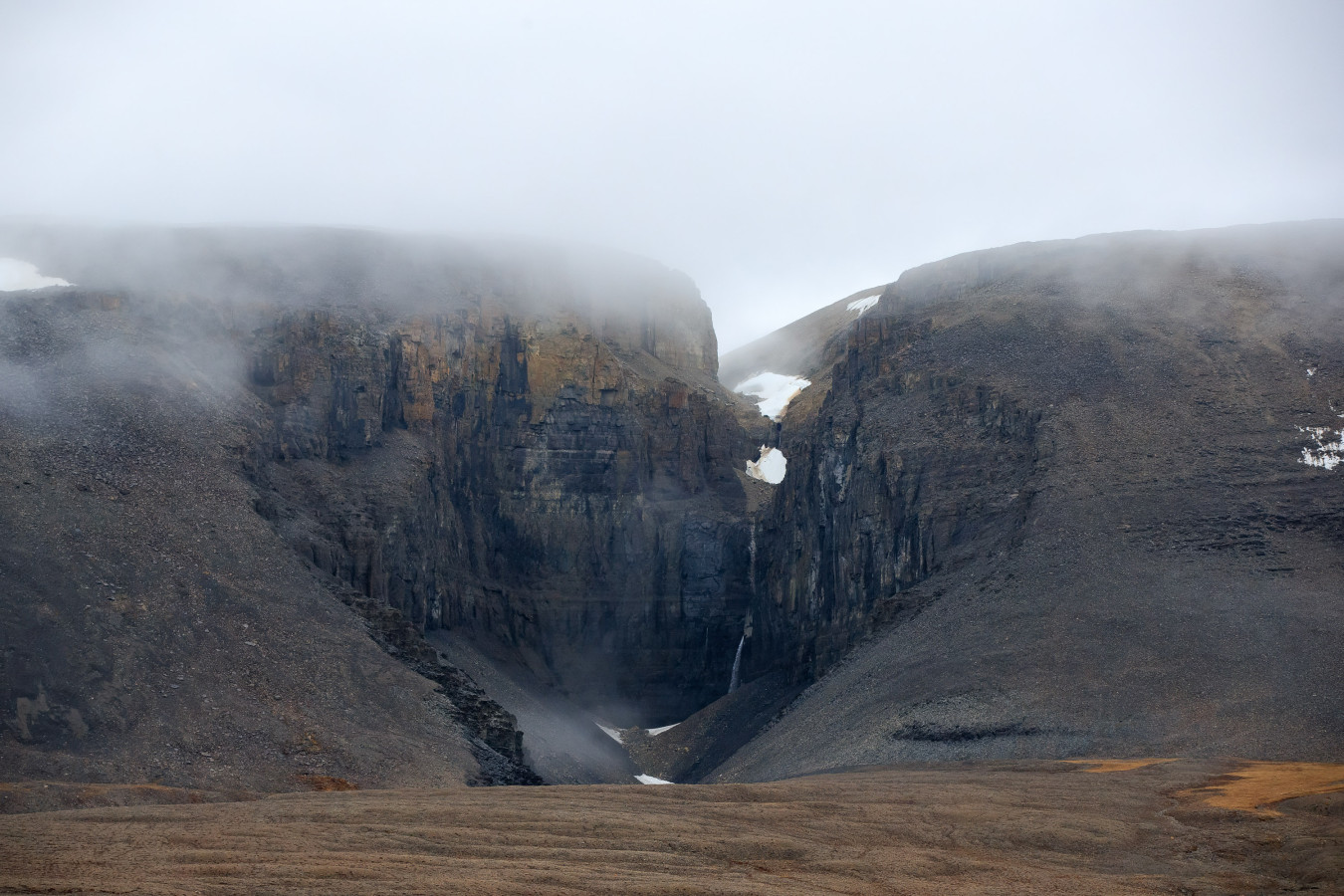 There was some interesting vegetation here (although it was already past its best and now starting to fade away). There was plenty of signs of musk ox, which had obviously been grazing here very recently, but alas, they had moved on by the time we were in the fjord. The area was also strewn with incredible fossils and the views through the mist were pretty spectacular too. Spending an entire afternoon off of the ship, enjoying an expanse of wilderness and stunning views was most welcome.
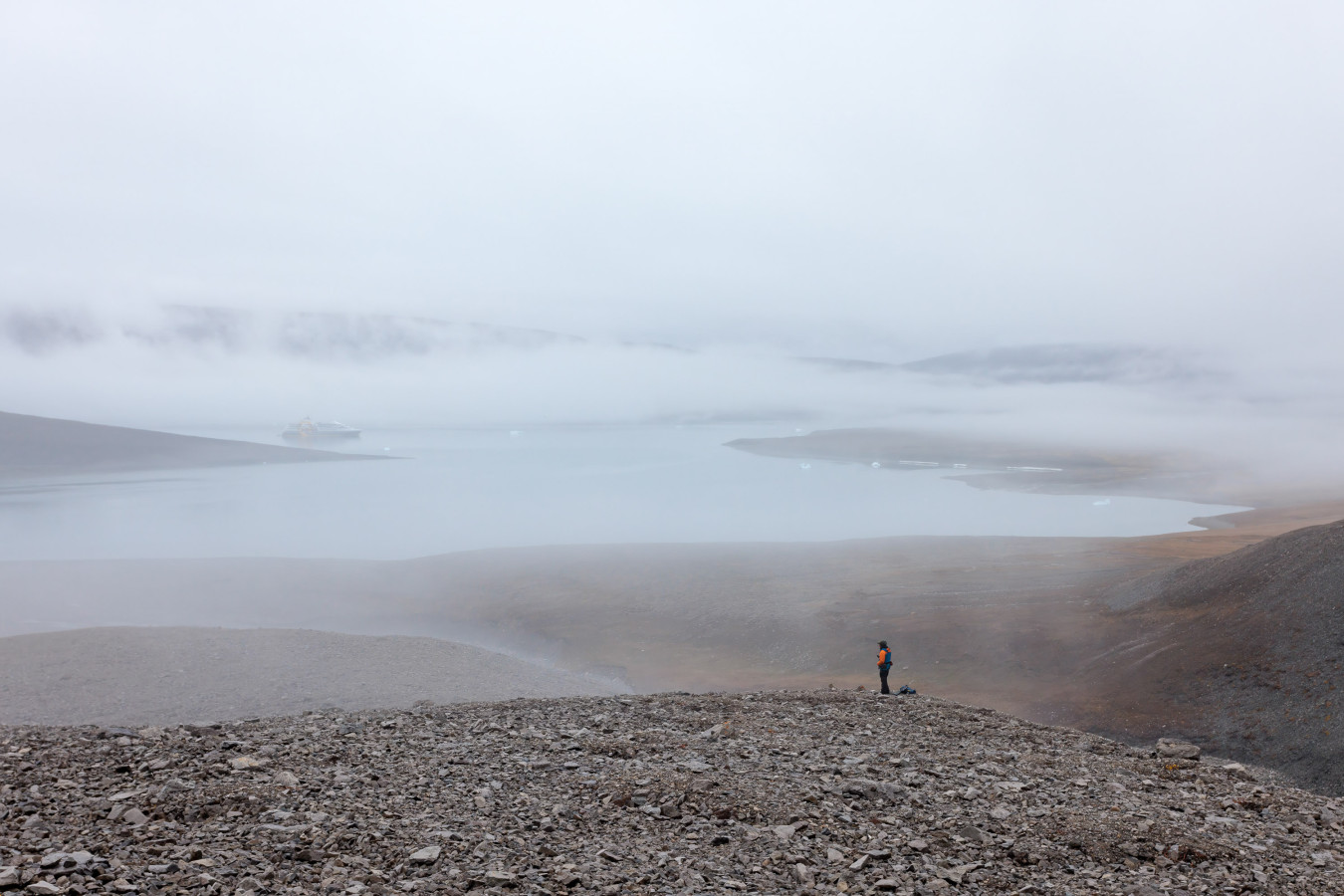 After a long day of exploring the natural beauty of Musk Ox fjord, it was time to head back onboard and freshen up before our daily recap and briefing for the day ahead. Of course there was another feast prepared for dinner, before settling down for a very well-earned rest.
Day 7
From the shelter of Musk Ox Fjord, today we had headed east to some islets known as the Skerries, here we planned to head out on the Zodiacs and see what wildlife was about. These rocky outcrops were surrounded by ice floes and icebergs, so we were hopeful that we might enjoy some quality sightings.
Setting out, we went out around the ice-strewn rocks, enjoying chunks of ice of all different shapes and sizes. Some was clearly sea ice, while other bits were remnants from glacier calvings. As we worked our way around, we heard that there was bearded seal hauled out on an ice floe. As we hadn’t yet enjoyed a good view of a bearded seal, we slowly worked our way through the ice, trying to get close enough to photograph it.
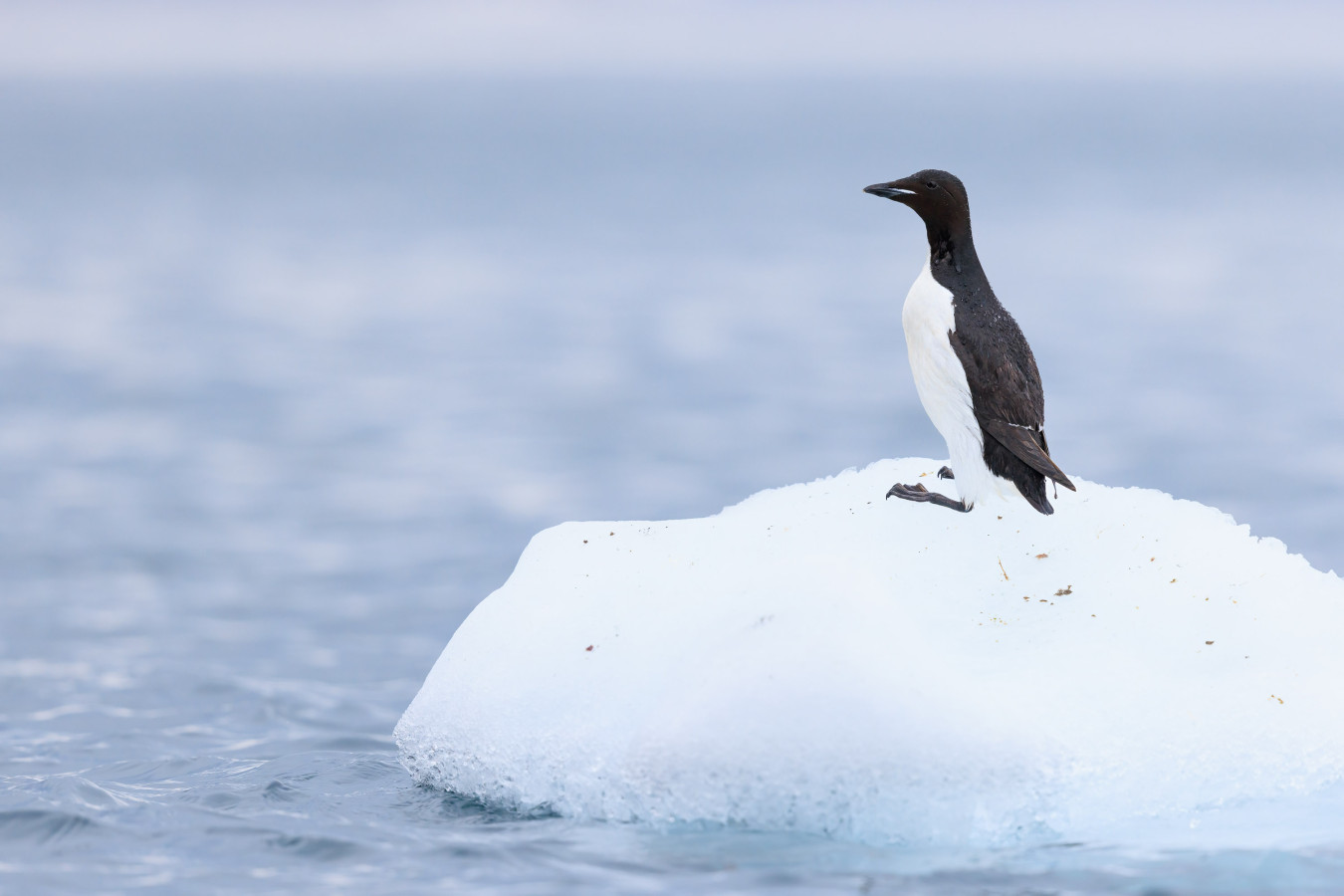
With several Zodiacs about, we didn’t want to get too close and parked up in the ice, capturing some photos of it in its icy realm. There were also good opportunities to see several Brunnich’s guillemots as they came up from feeding dives – one of which surfaced with a surprisingly large Arctic cod.
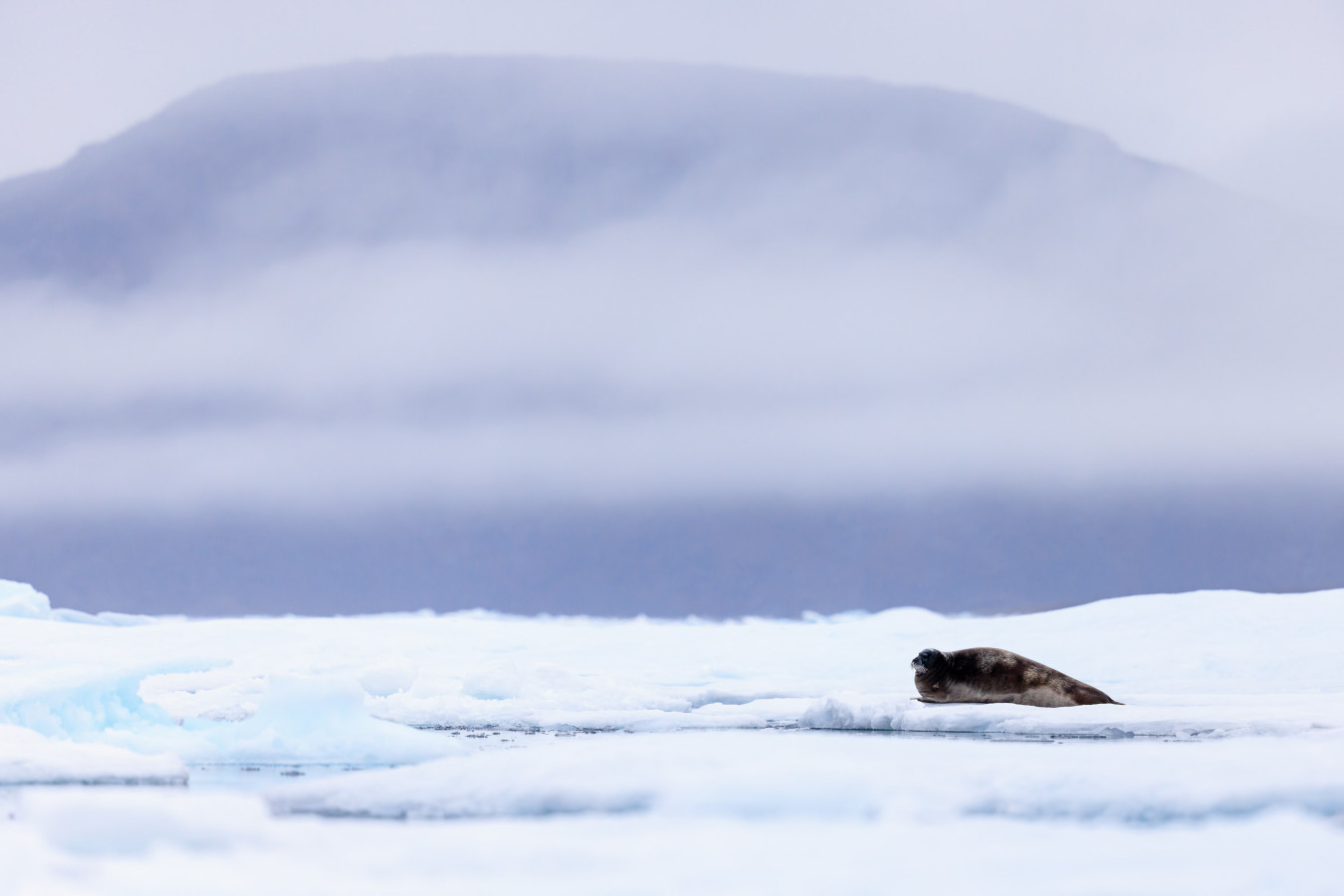 As we sat watching the seal, we heard over the radio that another Zodiac had spotted a polar bear and her cub. Immediately setting off in the direction it had been spotted, we heard that it had gone into the water, and we were all told to stand down. Unfortunately, that was that and we had to return to the ship. It was this morning that, for those who were brave (mad) enough, there would be the opportunity to enjoy the polar plunge. I felt it was essential I tested the waters of the Canadian Arctic, seeing how they compared to the waters of Svalbard – it turns out that the waters here are colder!
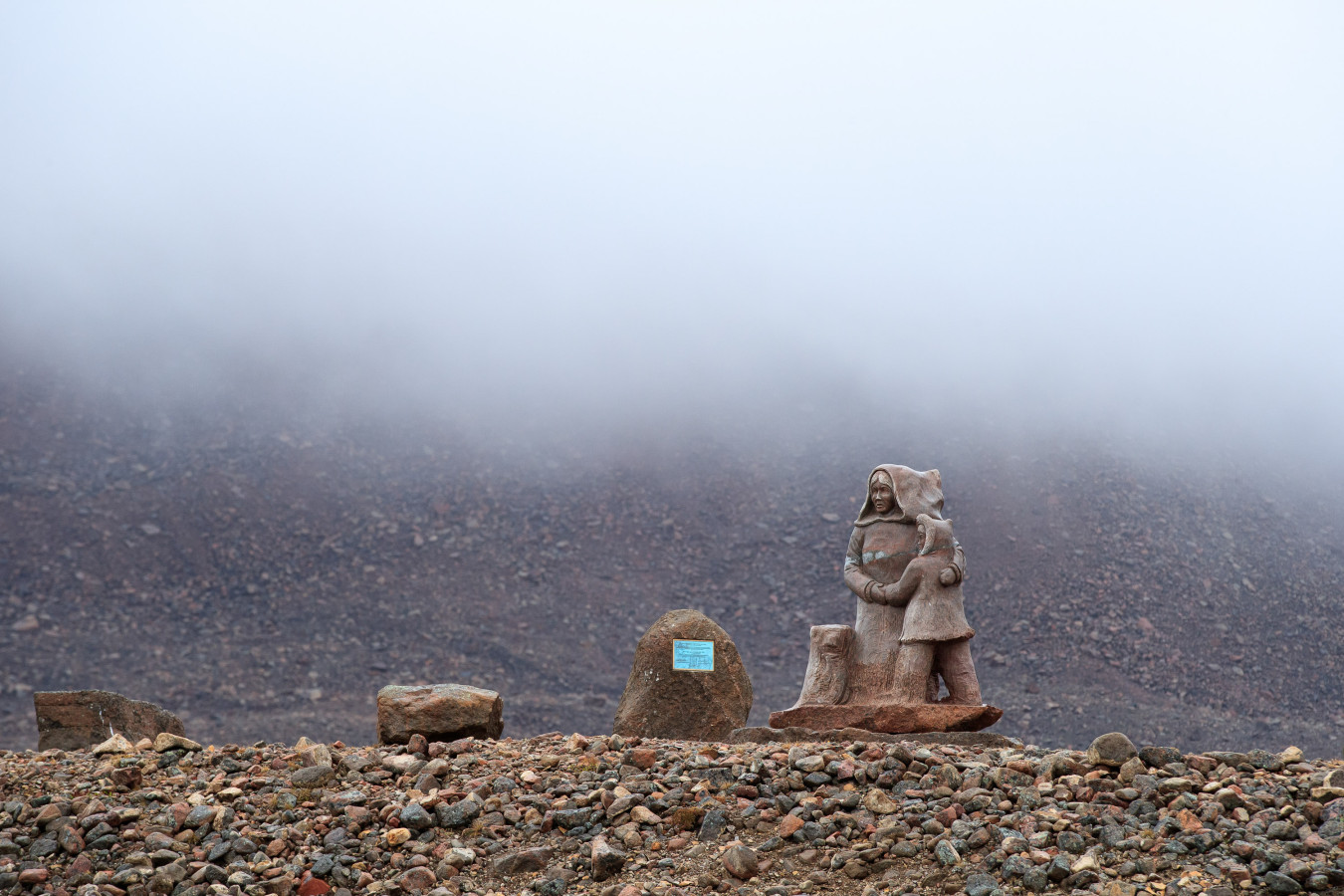
 With the polar plunge out of the way, it was time to head to the east and visit the community of Grise Fiord. This ‘hamlet’ is the most northerly civilian settlement in Canada, home to around only 140 people, and has a pretty tragic story. We were met with one of the elders of the community, a wonderful man called Larry. He was one of the people that was relocated here (supposedly as a volunteer) against his will. Split up from much of his family, he has managed to eke out a living here since the 1950s and told his harrowing tale of heartbreak and abandonment by the Canadian government.
Against all the odds, the community is still going and the people have adapted admirably to this incredibly tough outpost on the southern coastline of Ellesmere Island. We were able to wander briefly through the community, before convening at the newly-built community centre for performances by the school children and ladies who demonstrated the incredible throat-singing for which the Inuit are famous for.
 After another action-packed day, we were whisked back to the ship for a relaxed evening. Another excellent meal was served, before the chance to join the expedition team in the bar.
Day 8
Sadly, we had a lot of water to cover in order to get back to Resolute on time for our flight. Therefore, today was a day at sea and to keep us all entertained, the expedition team put on a series of talks about geology, wildlife and ice. The whole journey was in thick fog, so there wasn’t even any opportunity to enjoy the scenery or any wildlife.
Day 9
This morning, we arrived at one of the most iconic locations in polar exploration history – Beechey Island. This is the first site discovered for the lost, infamous Northwest Passage expedition of Sir Thomas Franklin and his ships, the HMS Erebus and Terror. After breakfast, we were able to disembark via the Zodiacs and land on the shore for another perimeter landing.
This meant we had a couple of hours to enjoy walking around this incredibly historic site. We were able to see the three graves of three crew members who were the first to perish on the expedition – likely due to TB. Saving this particular site until the end of the landing, I covered as much ground as I could, exploring this barren Arctic desert in search of any signs of life.
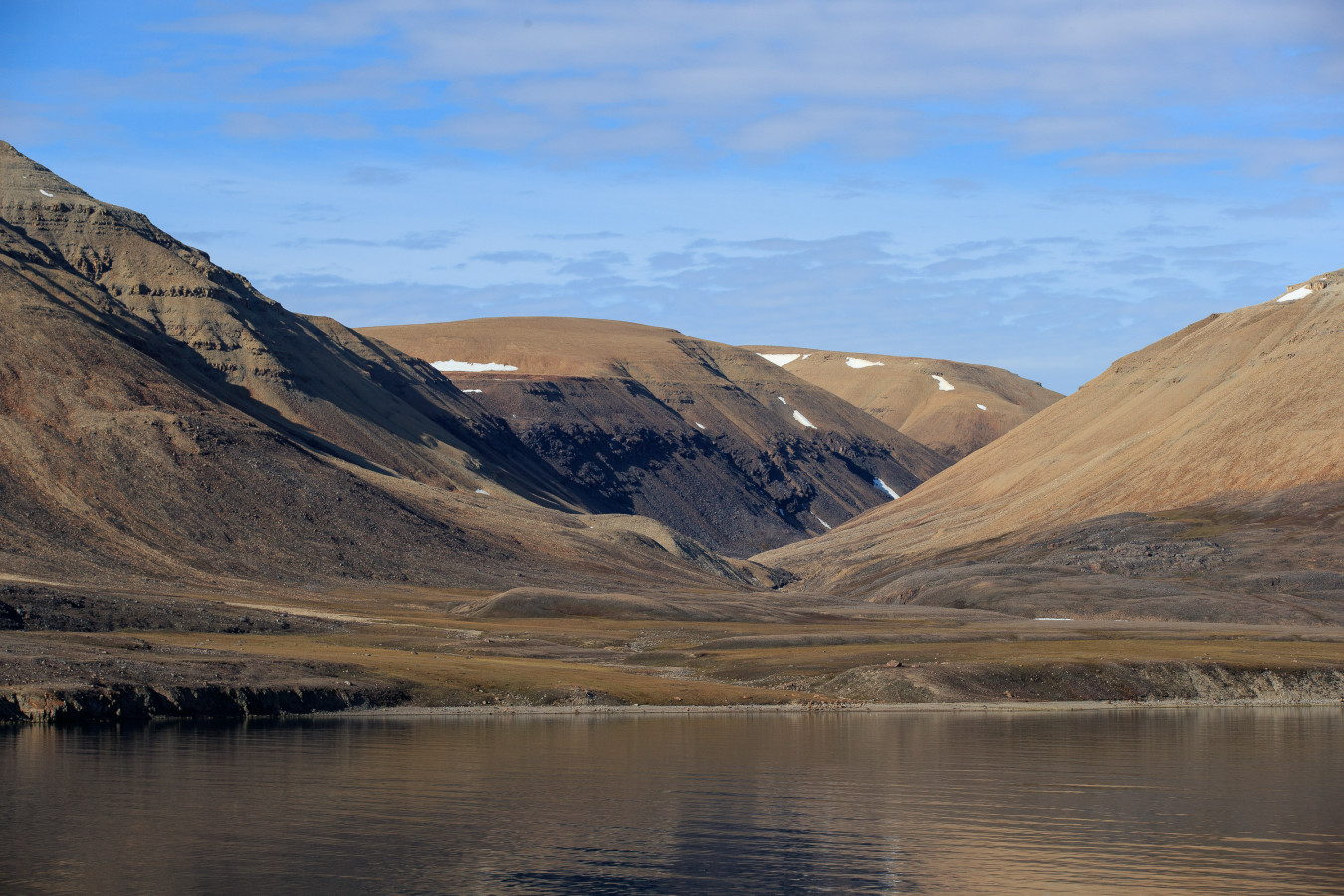 I was at the graves of the ill-fated explorers, only to be told I needed to return to the Zodiacs as we were heading back to the ship. It turns out, only finding out once we were onboard, this was because a polar bear and her cub had come ashore on the other side of the island. And so, we managed to catch a distant view of the bear, from the ship, as she walked along a beach around a kilometre away.
Our last afternoon was to be spent on the main ship, having an incredibly in-depth set of lectures on the doomed expedition of Franklin and his men. Not for the faint hearted. It had turned into the most beautiful afternoon and as everyone was heading up to the heli-deck – three polar bears were spotted resting at the base of a cliff (conveniently underneath a colony of kittiwakes). They were distant views, but nobody passes up the chance to see polar bears. We saw another six bears in the same fjord that afternoon. It wasn’t suitable to for photography, but it was incredible to see so many in such a small area.
As it was our last night on board, we were treated to farewell drinks with champagne and final round up of the trip. The crew got to say their goodbyes and we enjoyed our final dinner onboard.
Day 10 – Disembarkation Day
With a long day of travel ahead, it was important to make the most of breakfast. We had to have our bags ready before heading up for the usual buffet. We then had a little time to relax in our cabins, but had to be out of them an hour before we were due to disembark for the final time.
 When we did board the Zodiacs and make our way to shore, we were then whisked up to the ‘inn’ where there was food available and we were able to take a wander around town. Resolute is certainly not the most attractive of communities and after around an hour there really isn’t any more ground to cover. It was fascinating to wander and see how the local people lived, their dogs always on the lookout for intruders and of course it was fun photographing them.
We soon headed to the airport, where we had to endure an incredibly slow check-in process, before waiting another 2.5 hours for the planes to arrive. Then it was another 45-minutes to board. Once aboard, we found out we still had to refuel before starting the 2.15 hour journey back to Yellowknife where we would refuel once again.
We landed in Yellowknife a couple of hours late. It was a beautiful day here with magnificent views as we flew in over this isolated city. We were on the ground for another 40 minutes or so before we were able to take off and head yet further south to Calgary. We arrived much later than scheduled, but our luggage arrived too and with only a short walk to the hotel, we were soon checked in. A quick visit to the bar for drinks and a light dinner were enjoyed before bed.
Day 11 – Flight home
My flight wasn’t until after 8pm, so I had a leisurely morning enjoying breakfast and then relaxed in the room until check-out. I caught the bus into Calgary to have a wander around before heading back to the airport in the afternoon, checking in and catching my overnight flight back to the UK.
If you'd like to embark on a Northwest Passage expedition, check out our 'In the Footsteps of Explorers: Northwest Passage Voyage' today, or alternatively contact our expert team for further information and advice.