Kayaking with Whales
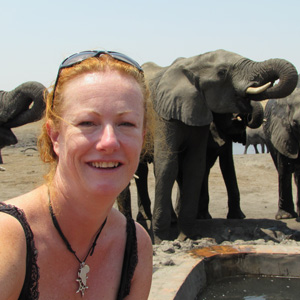
I’ve always loved being on water, but the kayaking in British Columbia is truly amazing. I was privileged to see not only humpback whales and a pod of orcas cruising past, but also porpoises, dolphins, seals, sealions and deer in the camp itself, and more bald eagles than ever before - as well as enjoying a day trip up Glendale Cove for some of the world’s best grizzly bear watching.
My heart was pounding as I paddled through the narrow channel that led into the choppy waters of a staggeringly beautiful stretch of coastal scenery - Blackfish Sound. Ignoring the distant misty-green mountains of the Great Bear Rainforest, over the slap of water against the fibreglass hulls of our sea-kayaks I heard the sudden exhalation of air and water that indicated we were close to a whale.
Our knowledgeable and reassuringly calm guide, Andrew, requested silence as we scoured the surface, then a dorsal fin broke the water just metres in front of us. Andrew motioned to us to back-paddle swiftly to the lee of the nearest islet (a manoeuvre we had practised before leaving camp), as the bus-sized behemoth might be passing silently beneath us at this very moment. I felt a sudden surge of adrenalin at knowing I was just metres away from a humpback whale, one of the largest, and most powerful and intelligent creatures on earth. The whale, however, was seemingly unconcerned by our presence, and intent on fishing in the maze of narrow channels in the myriad of emerald-green islands that lie between mainland BC and Vancouver Island.
Andrew explained how humpbacks use powerful currents as walls, against which they trap huge shoals of herring, or employ a technique known as bait-balling, which involves herding the fish into a large ball that they bring to the surface,
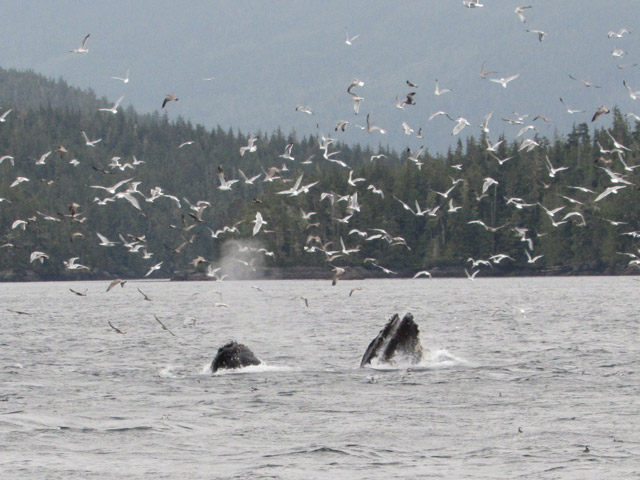 although some researchers now think that the whales may rely on diving seabirds to concentrate the herring for them. Whatever the method, I have often watched humpbacks here, and time and again have witnessed whales bursting up through the bait balls. Although we couldn’t see the action below the surface, even from a distance it was easy to tell once it had begun, as seabirds would gather en masse to feast on the vast fishy buffet - a sure sign that whales would appear before long. Sometimes this happened in three or four different spots simultaneously: the birds exploding screeching into the air, as the whales lunged upward, mouths agape, baleen on show, to gulp down the herring. Occasionally the birds were too slow to escape and the whales got a mouthful of feathers too - a minor inconvenience!
Tired, but thrilled by our encounter, we paddled back to our secluded island camp for a tasty home-cooked supper.
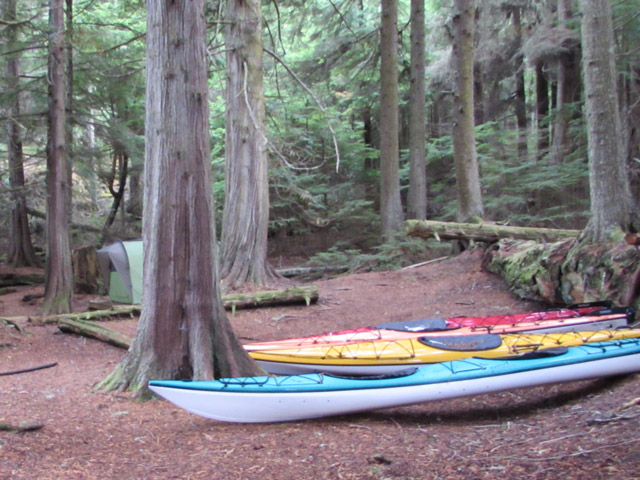 As we sat around the campfire, surrounded by ancient redwood trees with waves splashing on the shoreline, Andrew recounted that he had seen and heard many whales pass through the narrow channel where we launched our sea-kayaks - a short cut between the Johnstone Strait and Blackfish Sound. Some visitors had even been kept awake all night by boisterous whale antics! Many land animals also swim between the islands of the archipelago, and black bear are regularly spotted foraging for clams along the foreshore.
Whether you’re a novice or an experienced paddler, as long as you’re reasonably fit, love wildlife and have a sense of adventure, you can’t fail to enjoy it!
Speak to Amanda to plan your very own Kayaking with Whales & Grizzlies trip in British Columbia