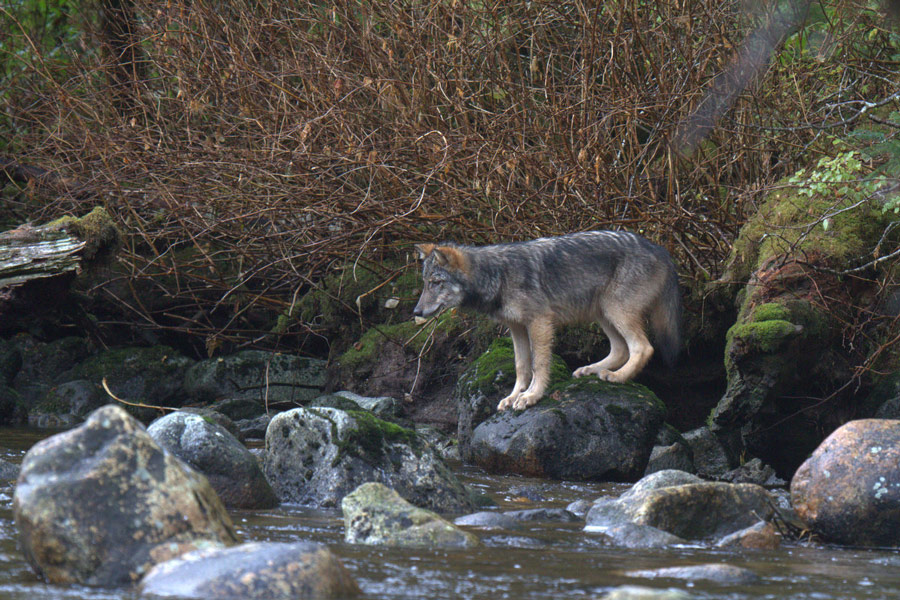
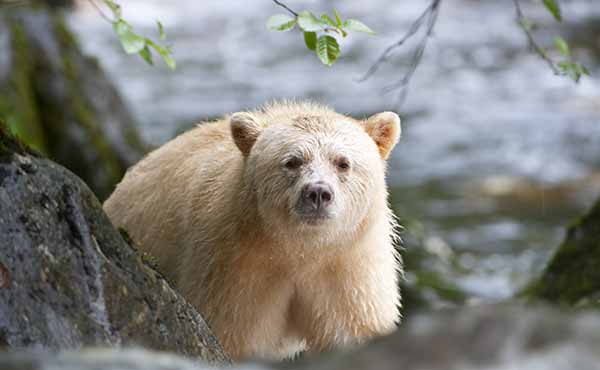
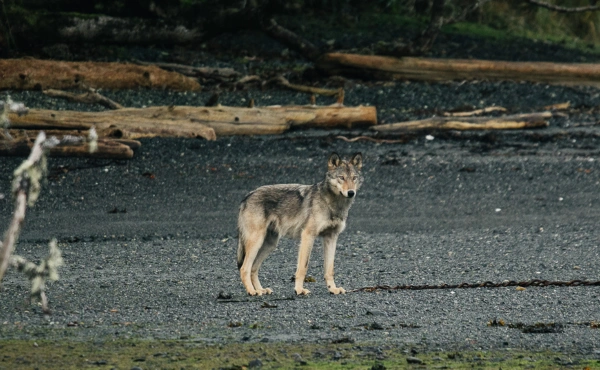
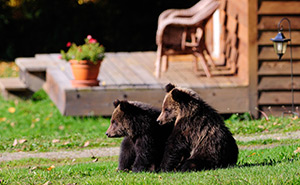
The dense forest of the Great Bear Rainforest offers sanctuary to large numbers of black bear, brown (grizzly) bear, cougar, wolf, deer and beaver. The area is also home to the rare spirit bear - almost white in colour, this is a rare genetic mutation of the black bear.
This is one of the largest remaining tracts of unspoiled temperate rainforest left in the world, with one thousand year old western red cedars and 90-metre-high Sitka spruces. The forest’s unique nature is a result of its proximity to both the Pacific Ocean and the mountains of the interior, and no other mainland location offers such intimate wildlife encounters amidst such breathtaking natural splendour. Logging has now been banned in 33% of Great Bear Forest and the area now supports one of the world’s last sustainable populations of brown bear.
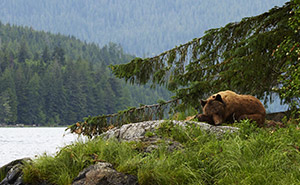
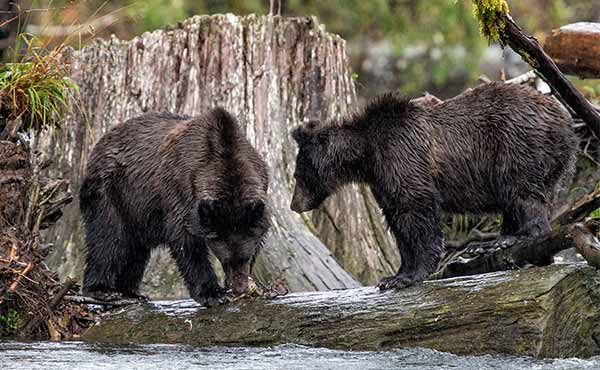
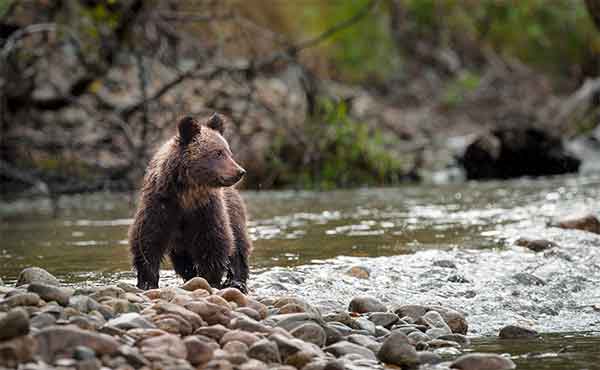
The magnificent brown, or grizzly, bear is a threatened species that requires large areas of habitat undisturbed by human activity. The massive grizzly definteiy sits at the top of the natural food chain and is essential for the balance of the ecosystem. As you explore remote fjords you can expect to see these impressive creatures, they will congregate at the estuaries of large rivers and feed on salmon, returning upriver to spawn. The primeval forests of Princess Royal Island are the habitat of the rare Kermode or ‘spirit’ bear – a unique subspecies of black bear with a recessive gene that produces white fur. Only some ten per cent of the bears are white, so although you can expect to see black bears, it requires luck and perseverance to spot a spirit bear.
The humpback whale is a common sighting here in the summer season, and you will spot its large blow, which sends a plume severalms high before the whale dives deep to feed on the plentiful shrimp and krill located on the sandy ocean bed. During a visit you’ll see various species of marine mammals, but Campania Sound and Whale Channel offer the best opportunities to watch humpbacks. Here you may see spectacular examples of behaviour such as breaching and a cooperative feeding technique known as bubble-net feeding.
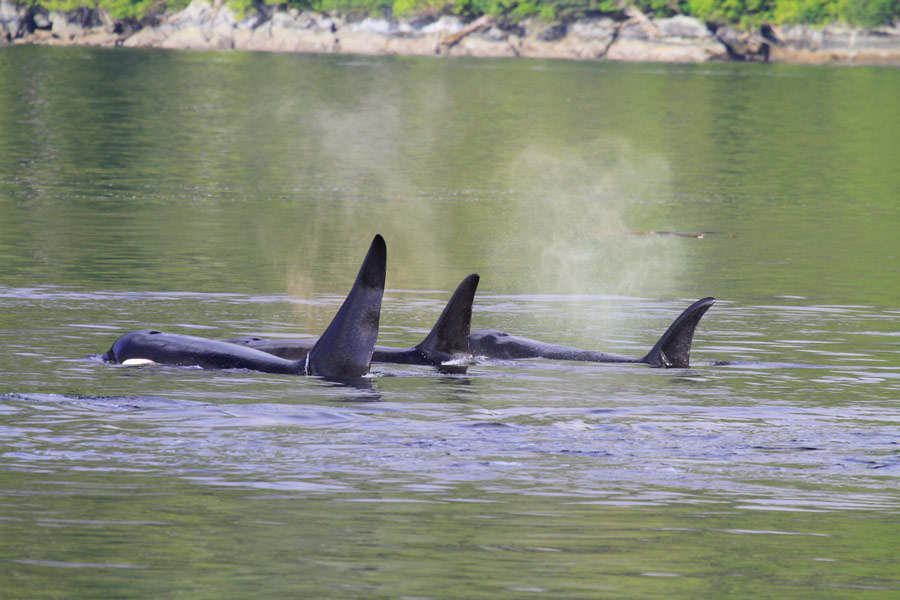
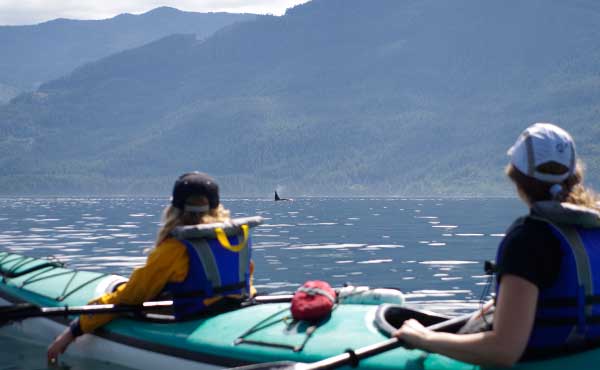
You may also encounter the infamous orca, also known as killer whale, an extraordinary sight! Despite their name, orcas are in fact a member of the dolphin family. Orcas will eat pretty much anything that swims in front of them: seabirds, salmon, seals, squid, other whales etc – but not humans. The Pacific white-sided dolphin is a powerful and acrobatic swimmer and you will often see these beautiful mammals riding the bow waves of the vessels that ply these coastal waters. If fortunate you may even see a super pod, which can contain more than a hundred individuals.
You can also experience native culture, with permission from the local Gitga’at, Kitasoo/Xai’Xais, and Haisla First Nations peoples, and spend a day with local Gitga’at guides who will share their culture and history as they guide you to their favourite locations for bear watching.
The Great Bear Rainforest covers roughly 70,000 square kilometres of British Columbia's forested coastline, extending from the Discovery Islands in the south, north to the Alaskan border, and including the offshore islands.
View suggested itineraries





 EXPEDITION VESSEL
 EXPEDITION VESSEL
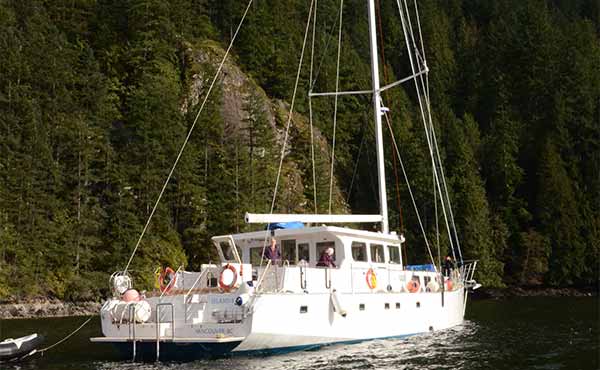 EXPEDITION VESSEL