Meeting the Kings of the Kinabatangan River

Recently returned from a trip to Borneo’s Sabah region, team member Lizzie Walker-Arnott recounts a particularly memorable boat outing on which she was lucky enough to spot the Borneo ‘Big Five’ – orangutan, proboscis monkey, rhinoceros hornbill, saltwater crocodile and pygmy elephant – in just two days.
Setting off in a small boat from the jetty below Sukau Rainforest Lodge, the breeze is an instant and welcome relief to the warm air. In the distance, however, the sky is turning a darker and more threatening shade by the second.
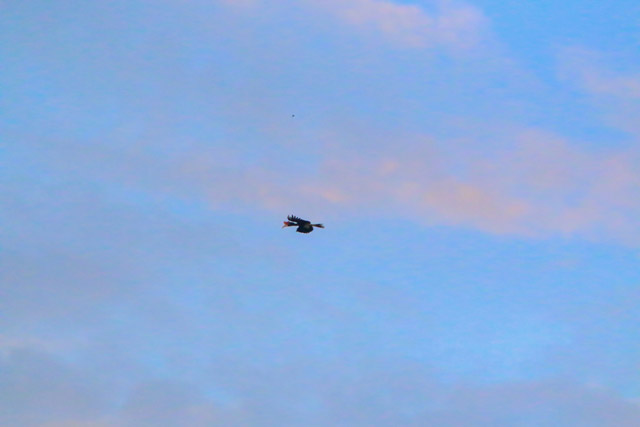
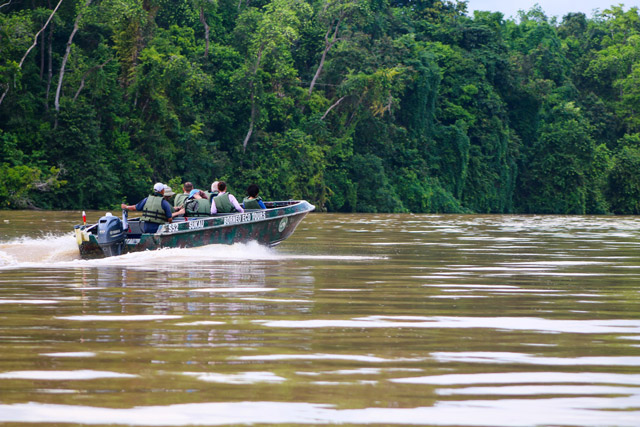 The Kinabatangan River is Sabah’s longest, winding through lowlands for over 500 kilometres until it reaches the Sulu Sea and sustaining one of the world’s richest ecosystems. The river is lined by rainforest, home to a fantastic array of wildlife from mammals and birds to insects and much more. As we travel downstream, we pass local river people as they wash their clothes and themselves at the river’s edge, while an assortment of birds fly overhead including the iconic rhinoceros hornbill, its call echoing around the rainforest. Suddenly the black clouds surround us completely and the rain begins with its full tropical force.
 As quickly as it begins, however, the rain subsides. As the warm breeze begins to dry us off, the wildlife also begins to emerge, perhaps hoping to dry out by the river as well. A troop of proboscis monkeys cling to a nearby tree and we pause to watch them interact. A large male makes a heavy jump, loudly snapping branches as he lands to show how strong and intimidating he is. This show of strength and power is met with another jump from a different male and loud crack of branches as the monkeys decide between them who is in charge.
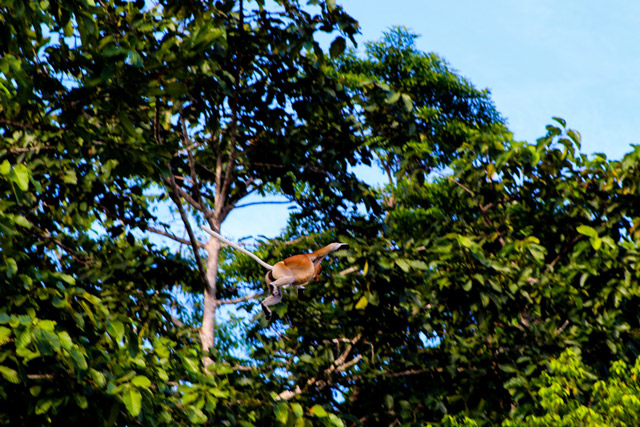 After watching the family dynamics of these proboscis monkeys for a while we head off further down river, passing long-tailed macaque, silver langur and even the sinister eyes of a saltwater crocodile, barely visible above the surface of the water. The boat slows and I know my guide must have spotted something, although as much as I scan the trees in the direction he’s looking, I can’t see anything at all.
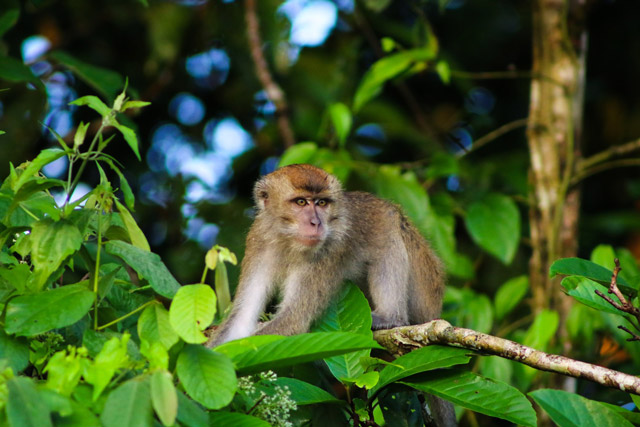 He directs my gaze to a slightly darker section of tree… and then I spot it. A large orangutan is lounging comfortably, high up in a tree on the riverbank. This is my first wild orangutan sighting, and I can’t stop a broad smile from spreading across my face. My guide informs me that the orang is a female, about 20-30 years old, and that she has a baby. It doesn’t take us long to spot the baby orangutan in a nearby tree. He is much brighter in colour and more active than his mother. The young orangutan is about 6 or 7 years old, and therefore at an age when his mother will typically leave him to find his own way, but always staying nearby to keep an eye on him.
 We watch as he carefully and purposefully swings between branches searching for the perfect spot. He chooses his perch at the top of a tree and we watch, fascinated, as he starts making his nest for the night – a process that he will repeat each night for the rest of his life. Carefully selecting leaves and branches he makes himself a platform to sleep on, testing it frequently by lying back with his arms and legs in the air to check if it’s suitably comfortable. He then proceeds to make a cover with more leaves and branches to use in case of rain in the night.
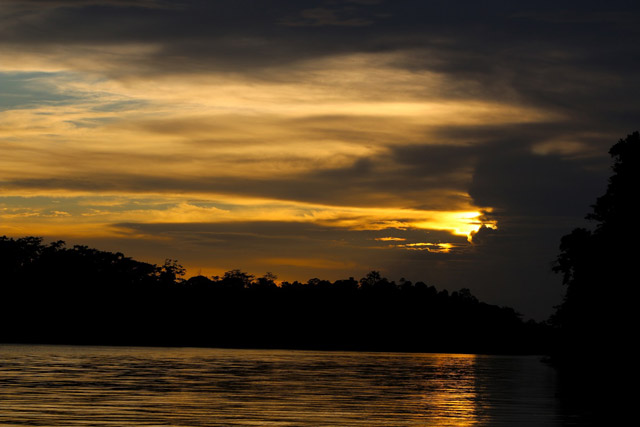 After 10 minutes of careful construction and with the sun setting into a beautiful orange sky behind him, the young male orangutan tucks himself into bed for the night in a way that is startlingly human. We head off back to the lodge as the last of the light drains out of the sky and I feel truly blessed to have witnessed such a beautiful and intimate moment with a species I’ve long dreamed of seeing in the wild.
To enjoy your very own Borneo wildlife adventure on either a tailor-made itinerary or as part of a group trip, speak to a member of our friendly team today.