Seven Worlds One Planet – South America

Where do you start when trying to plan a programme highlighting the behaviour of just a few species among the many thousands within the diverse landscapes of South America?
As mentioned in Sunday’s episode of Seven Worlds, One Planet, the Amazon rainforest alone is home to over two million species – more than all the other continents on Earth put together. Wildlife watching on this continent is beyond compare.
In today’s world it is unfortunately an increasingly rare occurrence to hear about a conservation success story, but this week’s programme highlighted one such success. Numbers of puma, which live further south than any other big cat, are on the rise in Chile due to having been given protection status. The film crew followed a particular female and her three cubs as she struggled to feed her large family. Puma feed on guanaco, a relative of the camel, which can weigh over three times their own body weight.
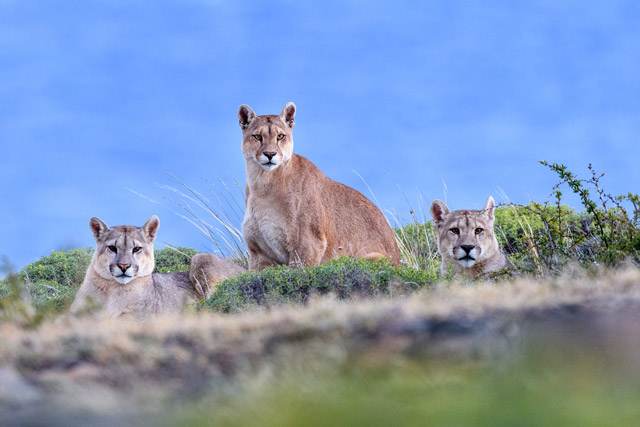
Attempts by the stealthy mother puma to get close to a herd of guanaco were invariably thwarted by the distinctive alarm call given by one of the group. Finally, after repeatedly being thrown from and injured by different prey, she successfully made a kill but had to use all her strength to drag the weighty carcass back to her waiting cubs, over a mile away.
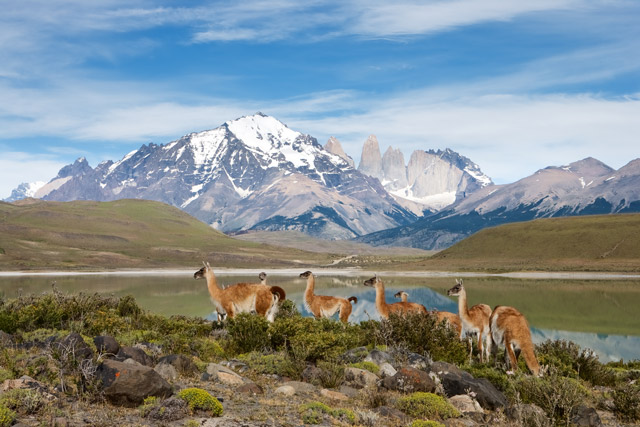
The camera crew were obviously thrilled by the number of puma sightings they had witnessed during the process of filming, but this is not a one off. We offer a selection of trips to this outstandingly beautiful region of Torres del Paine National Park to see and photograph these powerful big cats and other species for yourself. Choose from Puma-tracking in Southern Chile, a photographic small group adventure led by a renowned Chilean photographer, or our small group Pumas, Condors & Landscapes in Winter holiday led by top wildlife photographer Nick Garbutt.
If you would like to see the Patagonia region on a tailor-made adventure have a look at our Wild Patagonia itinerary.
Birdlife – including birds of truly exquisite plumage and colouring – was also beautifully captured in this week’s footage. The male blue manakin in Brazil – which enlisted the help of a team of less experienced males to help impress the female through a lively courtship dance – was a delight to watch. As were the Piraputanga fish, which live in crystal-clear waters and are able to detect the ripe berries on branches above their water by observing the local brown Capuchin monkeys picking them out. The fish watch the monkeys, and then leap out of the water to take a mouthful of berries from low-hanging branches.
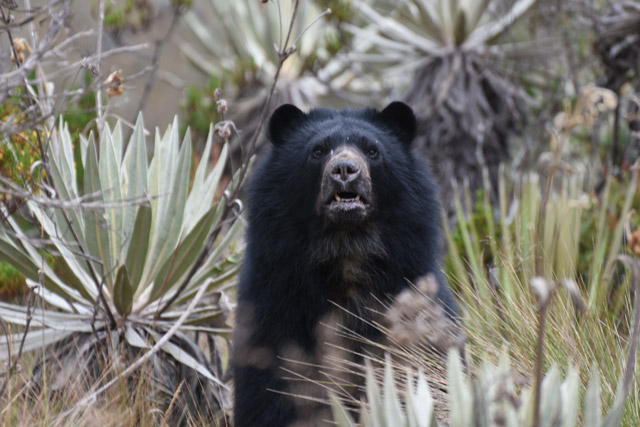
In Ecuador and Colombia, the rare Andean (or spectacled) bear’s (of which only 1,000 remain) favourite meal is a small ‘avocado-like’ fruit – this time, located in the highest canopy rainforest branches. The bears climb to about 30 metres to find this delicacy and are able to reach even the berries on the furthest branches by biting and bending them, thus making it easier to reach the fruit.
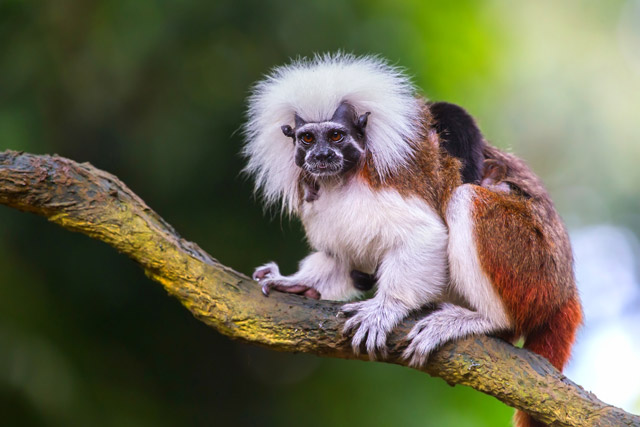
Look out for spectacled bear, mountain tapir and the fabulous cotton-top tamarin (also featured in the programme) on our Colombia’s Rare Mammals trip.
A trip to the incredible Iguazú Falls on our Argentina’s Wild North trip may reward you with the sight of swifts with ‘super powers’. These tiny birds were filmed flying through the falling water of the immense falls to build nests behind the ‘wall’ of water, where their young will be protected from predators.

Explore our full range of trips to South America. To book or find out more, contact our wildlife experts. Don’t miss next week’s episode of Seven Worlds, One Planet which focuses on Australia.