One of the world’s most remote wilderness areas, the vast system of the Chilean fjords is arguably one of the most spectacular places in the world to explore by ship. I was privileged to be given the opportunity to join an expedition voyage aboard the Magellan Explorer. Sailing from the city of Puerto Montt, we journeyed through the maze of fjords, passing huge glaciers and towering peaks, continuing all the way to the Argentinian city of Ushuaia.
 This part of the world was entirely new to me. I’d heard tales of historic naval expeditions and knew the fjords here were among the most beautiful in the world. Largely uninhabited, except for a few remote communities, the Patagonian fjords are home to a wealth of magnificent landscapes and some of the most spectacular glaciers found anywhere on Earth.
 The Magellan Explorer itself is an incredible base for exploring these remote corners of Patagonia. Comfort, style and an exceptional crew made this voyage among the very best I’ve been lucky enough to experience.
 For me, a lasting memory was visiting the largest glacier in the Southern Hemisphere (outside of Antarctica). The Pio XI Glacier is a huge wall of blue ice. In fact, the ice has such a rich hue that it looks entirely artificial in photographs. The blue colour is so intense, I had to reduce the saturation levels just to make it look believable. It’s one of the most spectacular sights in this vast wilderness and a real highlight of any voyage through the Chilean fjords.
 The flora and fauna here are exceptional, with many plant species being regionally endemic, while the marine life and bird life are equally fascinating. For those lucky enough, San Rafael Lagoon with its calving glaciers offers the chance to see a population of isolated leopard seals, while cetaceans are plentiful in the autumn. Sea lions are also common in these rich waters, while marine otters are a little more elusive.
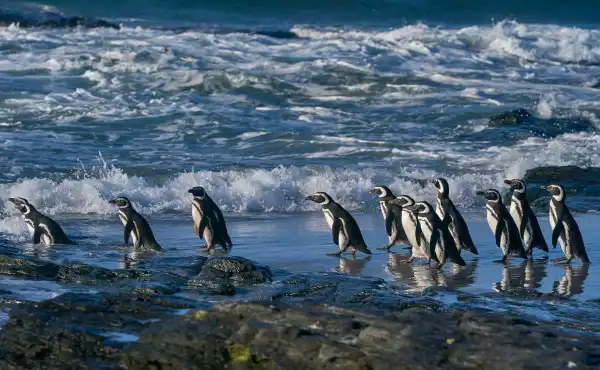
 Great seabirds can be seen throughout the voyage with black-browed albatross, white-chinned petrel and both northern and southern giant petrels being a sight to behold. We were nearly always accompanied by southern fulmar, and flightless steamer ducks were often seen flapping across the water’s surface.
 Among the many other highlights of the voyage were the unique geological formations of Isla Madre de Dios and the incredible landscapes around the Bernal Glacier. To be able to land in areas where so few people ever tread (far fewer than the number of people that visit Antarctica each year), was a real privilege and the landscape photography opportunities were exceptional.
 As a final treat, as we cruised through what is affectionately known as Glacier Alley, the landscape turned to white and green. Winter hadn’t quite let go, and spring was temporarily on hold. This magical wintry world unfolded before us just as the sun was setting over these southern reaches of the fjords.
This is a voyage that’s about so much more than the wildlife. It’s among the most beautiful places on Earth, barely touched by mankind – a true wilderness filled with towering mountain peaks, epic cliffs and bluffs, and stunning forests. It’s a place of pure natural beauty.

If you'd like to discover the awe-inspiring Chilean Fjords like Bret, check out our Ultimate Patagonia Wildlife Cruise today, or contact our expert team for further guidance on exploring Chile.