Seven Worlds, One Planet - Asia

With the hottest deserts, highest mountains and tallest jungles on the planet, Asia is home to a bewildering array of landscapes and wildlife. The second episode of BBC 1’s new series explores this vast continent, from its frozen north to the jungles of Sumatra and the strange, yeti-like creatures of China’s remote forested mountains…
It’s not often you watch something that has the potential to be life-changing, but the new Seven Worlds, One Planet series certainly does… and we’re only two episodes in! Having kicked off with a stunning first episode on Antarctica, the focus of this Sunday’s programme was how wildlife on the largest continent, Asia, copes with living in such vast (and extreme) landscapes.
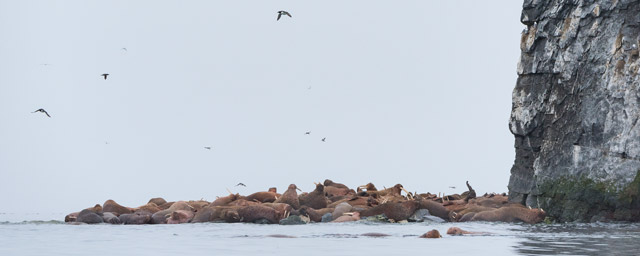
Beginning in Arctic Russia, we watched as almost the entire world population of Pacific walrus congregated on rocky coastline during the short summer. The animals jostled for space, engaged in mating, feeding and territorial disputes. But don’t imagine this is going to be cosy Sunday evening viewing. First one polar bear enters the scene, then two, causing panic amongst the mass of tusk and blubber. Forced to spend more time ashore due to dwindling ice, the polar bears are there to hunt, and with over 100,000 walrus crammed into a narrow rim of shoreline, there is insufficient space for them all to find sanctuary from the bears. Some walrus climb the rocky cliffs in an attempt to escape – a decision with lethal consequences for many as they fall to their deaths, panicked by the hungry bears in pursuit. Hard to watch? Get used to it, there’s more to come.
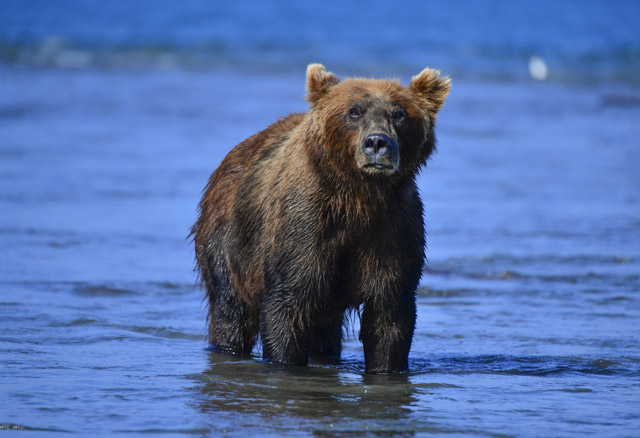
 Next, Kamchatka. And some shots of bears emerging from hibernation – finding food and a rare opportunity to enjoy the company of other bears around some of the scolding hot volcanic pools in this remote and wildlife-rich region known as the Pacific ‘Ring of Fire’. The sequence of two bears playing, rolling over and lolling about in this oasis of the frozen north was heart-warming, and just a taste of the incredible wealth of wildlife found in Russia’s far east.
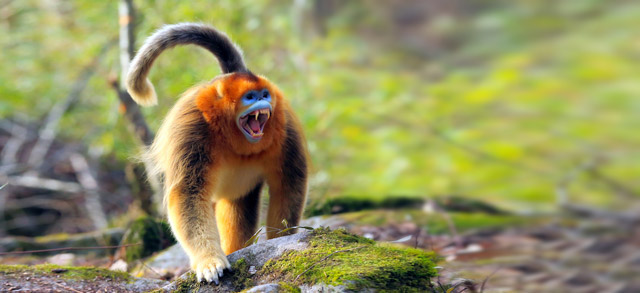
 The geography of Asia is as fascinating as the natural history it is home to. Eighty-nine million years ago, the ‘island’ of India collided with mainland Asia to form the tallest mountain range in the world – the Himalayas. Still rising, and over 5 miles high in places, today they stretch in a vast swathe across Asia, from Afghanistan to central China and the programme turns its attention next to the forested mountains of China’s Tien Shan range. Until recently few people had any idea what was living in these frozen forests. There were rumours of yetis, of fur-covered human-like creatures which left nothing but footprints. The rumours proved unfounded. Instead, a far more interesting and endearing mammal inhabits this harsh environment – the golden snub-nosed monkey. This is amongst the heaviest species of monkey, which makes sense in such a cold climate, as larger body mass helps conserve heat. Survival depends on the group keeping together. Indeed, temperatures are so low in winter that the monkeys must huddle together to prevent freezing to death. They eke out a living in this sparse landscape, finding patches of lichen, moss and grass to eat. Any food is precious; members of a troop share resources peacefully, but when the troop is challenged by a rival group, a fight breaks out. We watch as one of the youngsters gets separated from her group in the ensuing scuffle. First the males go head to head, exchanging punches like prize fighters, and then both the troops’ females join the fray. The youngster watches on, pulling a variety of incredibly familiar and unmistakable facial expressions – anxiety, anticipation and worry. Shivering and badly chilled, the youngster calls to the adults in her troop from an isolated branch in the forest. The fight won, her group gathers again and she continues calling, eventually finding her father who gathers her in to join the group huddle. They have survived another day in this hostile landscape.
 The programme takes us on a journey to the dry plains of northern India, where male sarada lizards display throat pouches every bit as dazzling as Joseph’s technicolour dream coat as they fight for the chance to impress females and mate. In the seas of Palau, Indonesia, we see fishermen who have made the choice to feed whale sharks and live peacefully alongside this endangered giant. The sight of eight whale sharks (almost 20 metres long apiece!) hanging vertically in the water column, waiting for their daily fix of fish is quite extraordinary. And it goes to show what can be done by even a small community making a positive choice to live in harmony with wildlife – it comes as a welcome ray of hope, and an inspiring message to us all about how we can make a difference.
 Elsewhere in Indonesia, on the island of Sumatra, we listen to the strange and beguiling whistle of a female Sumatran rhino. Once widespread across southern Asia, there are now only 70 or so Sumatran rhinos left. Quite unlike any other animal vocalisation, there is a poignancy to her unanswered calls – an eloquent symbol of the fragility of life in these dense forests, and the pressure the wildlife that lives there is under from human impact.
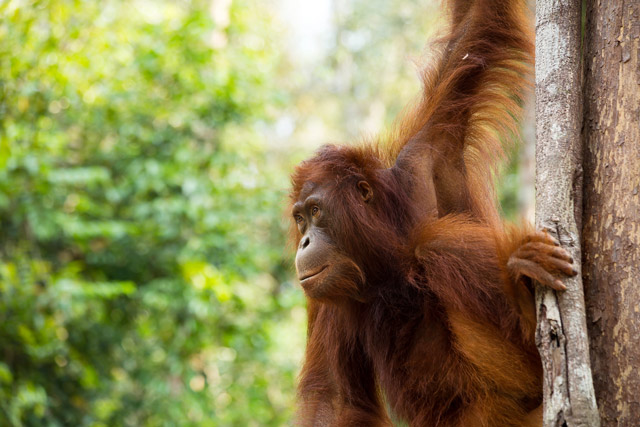
Perhaps most captivating of all, were the orangutans of Borneo. The largest tree-dwelling species in the world, we follow a young orang and his mother on an outing to reach ripe mangos in the rainforest canopy. We watch as the young orang practises catching termites and winces at the taste – or perhaps their bites! His mother watches patiently – allowing him to climb through the branches, ever higher –as he finds his grip, learning what to eat, and what not to; which branches are safe and will bear his weight, and which will not. It’s a delightful bit of filming, an intimate glimpse into this, the longest childhood of any animal apart from our own. It’s impossible not to empathise with the young orang as he finally flops down on a branch, exhausted, and has to be helped to the top of the fruiting mango tree by his ever-attentive mother. But more facts bring home a sobering reality – the number of Bornean orangs has halved in just 60 years due to deforestation: one third of the forests of South-east Asia destroyed for timber, and the increasing spread of palm oil plantations. This monoculture crop has had a devastating effect on biodiversity here. We see a lone orang making its way through a patch of recently cut forest. It’s being dart-gunned and moved to another area, but it’s impossible to watch unmoved. Impossible not to want to help in some way.
 The programme ends with footage of a young David Attenborough visiting Borneo in 1956. He is travelling through some of the same areas which only 60 years ago were covered in dense rainforest, and which now are reduced to stubble or palm oil trees. He has a salutary message: ‘I never imagined that in the space of my lifetime these creatures and forests would be placed under such dire threat. The balance between conservation and our needs is hard. Their futures will be determined by the choices we make.’
The programme does not shy away from the harsh reality of daily life for much of the planet’s wildlife. But as David Attenborough says, we have to find a way to balance between our needs and that of the natural world, and the reality is that our actions can make a difference towards preserving some of these landscapes and help provide sustainable incomes for the people who live there. In parts of India and Borneo, for example, ecotourism is vital for providing the income to support conservation initiatives and for encouraging the protection of ancient forests and the fantastic diversity of life they sustain. Without the income provided by visitors, remaining pristine tracts of rainforest such as the Danum Valley and Tabin would be under more threat.
South America, the most diverse continent on the planet, is the subject of next week’s programme. It’s not easy viewing, but the topics and issues the series raises aren’t something any of us can really afford to ignore.
Explore all of our trips to Asia, or speak to a member of our team to find out more.