Floating on the surface of an intensely sapphire-blue sea, with outstanding visibility in the clear water, the sound of a singing male humpback whale reverberated in my chest and stole my heart. The enormous whale hovered stationary in the depths, apart from a few lazy strokes with his fore fins, and sang an incredibly haunting and varied serenade.
Often whoops like gibbons, sometimes low-pitched rumbles, then plaintive little squeaks that made me giggle into my snorkel – it was so funny to hear emanating from such a giant animal.
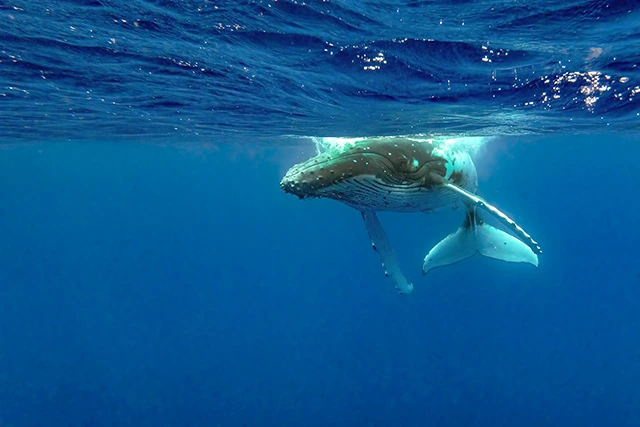 He would then go silent, float to the surface for a noisy breath, before descending and continuing his song. I hope the lady whales were as impressed as I was. It’s such a surreal and beautiful experience to share the water with a massive creature, in that intimate-feeling moment. The sound was so loud that it was even possible to hear it on board the boat. Magical.
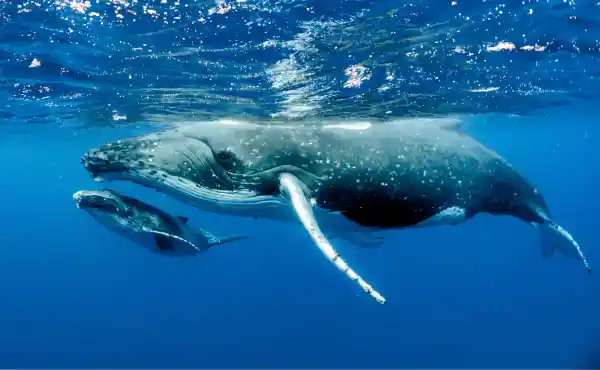
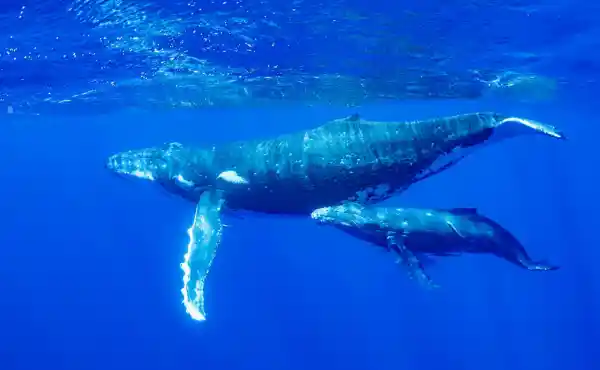
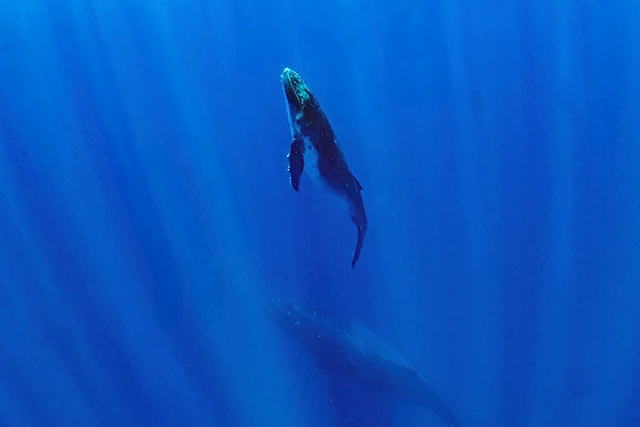 Not long after, our experienced crew found mother and calf humpbacks. We slid into the water and the trusting mother allowed us to spend time watching her and her three-week-old baby suckling. Once it had had its fill, the calf looked up from its mother’s belly at us, curiously.
There's something quite extraordinarily connecting when a whale looks you in the eye. It’s an intensively emotional experience and I admit to shedding a tear or three into my mask as the calf rose towards me, seemingly inspecting me with its big eye before taking a breath and sinking back down to its mother again.
 Whale snorkelling in Tonga is highly regulated (and rightly so), with only four snorkellers plus a guide permitted to be in the water at a whale sighting, keeping a respectful distance to ensure no disturbance. In return, the income generated helps to protect the whales here, and supports local people, so it's a win-win.
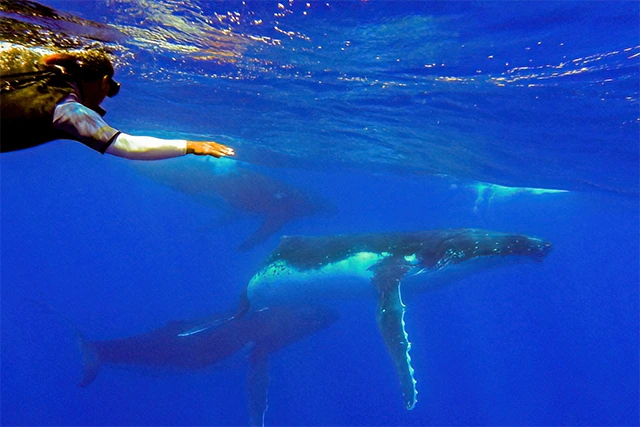 I was fortunate to have several encounters with the humpback whales during my time in Tonga, in addition to snorkelling with a pod of pilot whales and over reefs with a great variety of brightly coloured fish. It’s also possible to encounter sperm whales and false killer whales here occasionally.
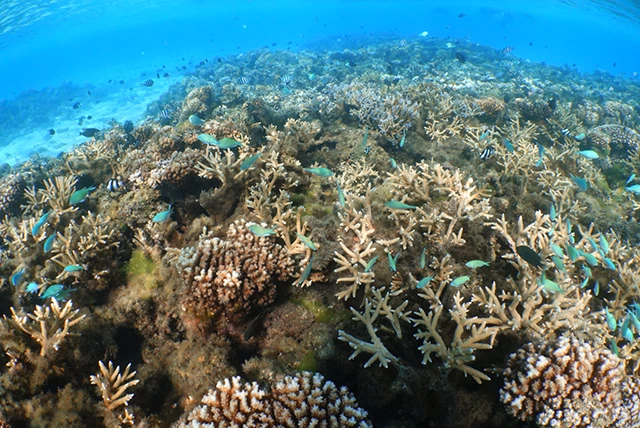 I stayed at the comfortable Reef Resort on Kapa Island in Vava’u, with five bungalows overlooking palm trees to an idyllic beach, and turquoise shallows. Hosted by the ever-smiling Herwig and his lovely family and staff members, the food is superb, and it’s a wonderful place to relax, snorkel, kayak or SUP when not out with the whales.
The whales head north from Antarctica to the South Pacific, arriving in Tonga around June or July time. They stay to mate, calve and nurse their young before migrating back to their feeding grounds in Antarctica around October time. August and September tend to be the best months for snorkelling with humpbacks here, when calves have grown in both size and curiosity, and can be more playful.
Mothers also tend to be more settled in September after the drama of being pursued by lustful males earlier in the season. Calm whales make for longer and more intimate encounters!
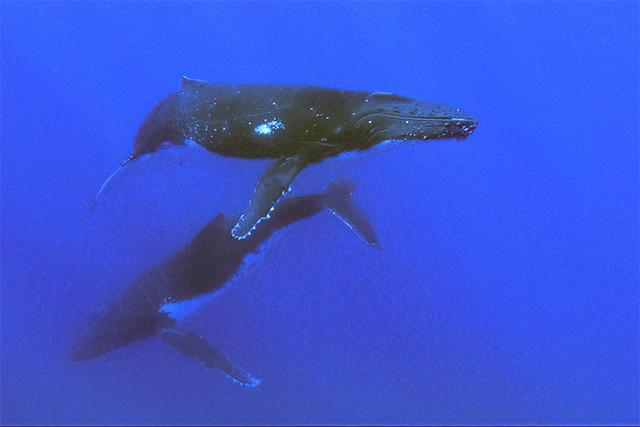 To spend time with the whales, sensing their intelligence as they look into your soul, admire their power and grace, and feel their vulnerability is hugely moving. It’s an experience that’s hard to process, but certainly leaves you wanting to protect these magnificent cetaceans even more.
If Helen's experience snorkelling with whales has got you eager to visit Tonga, discover our 'Echoes of the Deep - Swimming with Humpbacks' trip today, or alternatively contact our expert team for further information on whale watching holidays.