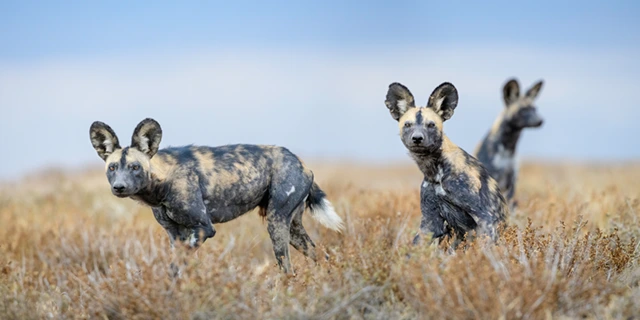
The African wild dog (Lycaon pictus) has many different names, including painted wolf, African painted dog and Cape hunting dog. They're listed as Endangered by IUCN and their population is spread across much of sub-Saharan Africa, excluding the Congo and rainforest areas.
 African wild dogs are a medium-sized predator which are incredibly social. They spend their lives in a pack with remarkably strong social bonds and this is the key to their success.
They're one of the most sought-after species for our clients on a safari and they're fascinating to watch. With around 6,000 dogs found across Africa, they're not necessarily the easiest species to see, but certain areas are a stronghold and key to their long-term survival.
Are There Any Other Wild Dogs in Africa?
There are many species of canid in Africa, but there are no other species related to the wild dogs.
Other sought-after canids include the Ethiopian wolf, golden wolf and fennec fox. It's important to state that hyenas are not related and are the only member of their evolutionary group. Their closest living relative is the dhole, or Asiatic wild dog, found in India and South-east Asia.
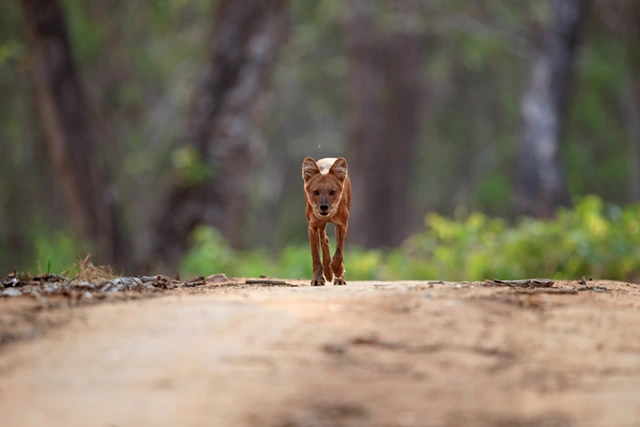 Dhole in Nagarhole National Park, India
Wild Dog Distribution
There are African wild dog packs across a number of African countries. In recent years, their range has decreased, but there are some fantastic conservation projects helping to give the species a long term species.
 West Africa has two isolated populations, while Central Africa has a few populations in Chad and Central African Republic. East African populations of wild dogs are scattered from the montane forests of Ethiopia, expansive grasslands of South Sudan, while the Great Rift Valley in Kenya and Tanzania also have their own populations.
 It used be thought that these populations were genetically distinct, but recent studies suggest that throughout history dogs have moved over great distances and genetics are widespread.
The final and core population live in central southern Africa. Zambia, Zimbabwe, Botswana and South Africa support the largest populations of these enigmatic mammals. While there are smaller populations in Angola, Namibia and Mozambique. It was thought that African wild dog dispersal, when they leave an existing pack to start a new one, extended to around 600 kilometres. However, a Zambian wild dog was recently observed travelling a total of 1,610 kilometres to Mozambique, before returning to Lower Zambezi National Park in Zambia. What makes this particularly impressive, was that much of this movement was through unprotected landscapes (although most of this was wilderness).
 African Wild Dog Characteristics
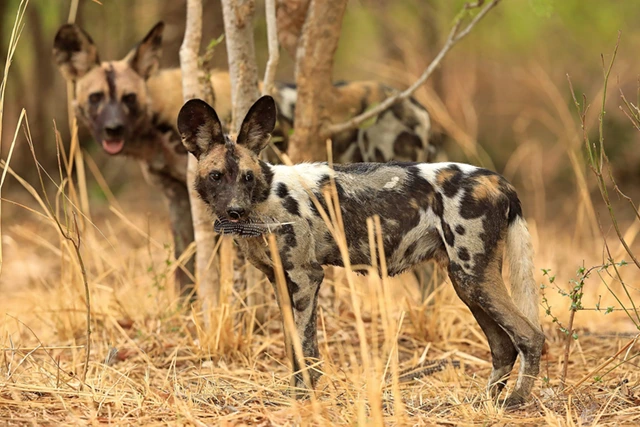
African wild dogs are a medium-sized predator which can weigh up to 35 kilogrammes, although their size varies depending on the habitat and geographical distribution. The only species of canid larger in the world is the grey wolf.
One of the species defining physiological characteristics is the lack of dewclaw (they have only four toes) and its unique dental structure. Although these features aren't immediately apparent upon seeing an African painted dog, they're important distinguishing features from an evolutionary perspective.
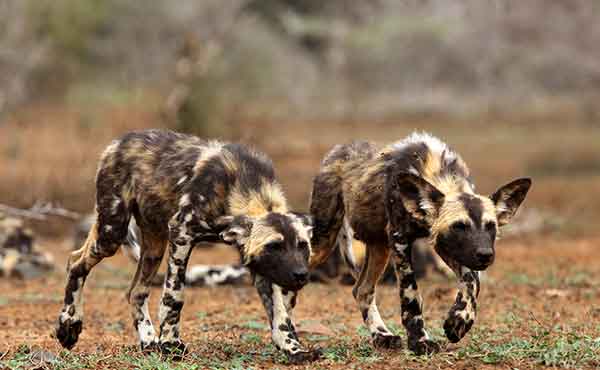
 More obvious features include their unique coat pattern. These mottled coats are the inspiration for their scientific name, which literally means painted wolf. Their colour and pelage patterns vary according to their geographic distribution, with differing amounts of tan, black and white. One of the fascinating facts about wild dogs, is that they have no undercoat and just a stiff-haired outer coat. Again, not a visible feature, but this is another unique feature of the species. Each of the painted dogs have their own unique coat pattern.
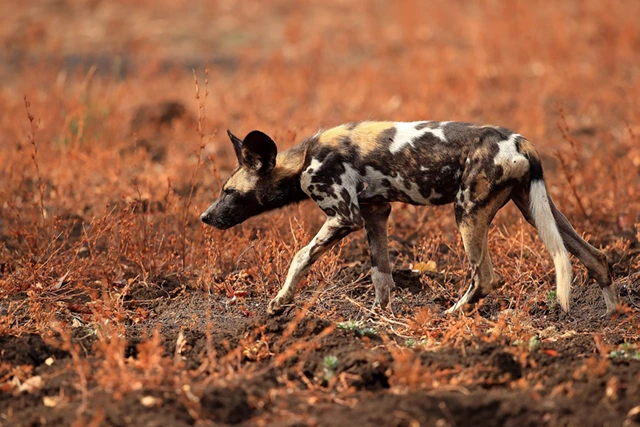 They're well known for their large, 'satellite dish' ears. Although the dogs do have exceptional hearing, the large rounded ears are perfect for helping them to cool down. African wild dogs don't sweat, but do pant (like all other canids) to help them cool. But due to the extreme temperatures they may face, the dogs need every adaptation possible to regulate their body temperature. With a range of blood vessels just beneath the ear's skin, the wild dog can use their large surface area to help cool the blood, in turn lowering its body temperature.
 Behaviour of African Wild Dogs
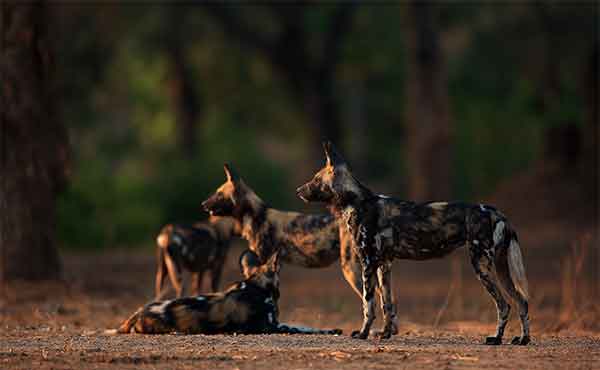
African wild dog packs are at the centre of a complex social structure. Typically a new pack is formed by young adults (usually females) who have broken away from their pack, looking to join an existing pack or even starting their own. They often break off in small groups, often painted dogs from the same litter, and they meet other nomadic individuals or small groups and form a new pack.
This is key to the genetic diversity and long-term survival of African painted dogs. By leaving the pack, the dogs' genetics are likely to be more resilient to potential disease and survival rates among litters is often higher. African wild dog packs are made up of an alpha male and female, who typically, are the breeding pair. The rest of the pack members are either siblings or offspring who have reached adulthood.
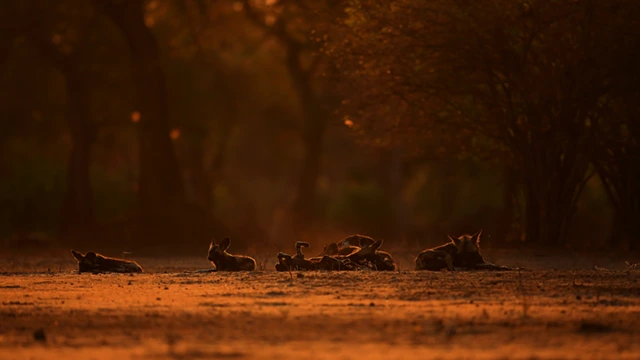 Except for the breeding rights, the dogs' day to day activities are not dominated by the alpha pair. They often take it in turns to initiate play (bonding) or hunts and all work seamlessly together. In fact, the pack's survival depends on every individual member sticking together - teamwork and their personal bonds are the key to their success. Even if a dog is severely injured or unwell, other members of the pack will allow it to feed. It isn't uncommon to see dogs with severe injuries survive because of this close-knit mentality.
 Breeding
Although the alpha pair (which are a monogamous breeding pair) rarely assert their dominance over other members of the pack, during denning season the pack comes together and focuses its efforts on raising the pups. The alpha female gives birth in a den (up to 16 pups have been recorded), which has typically been excavated from an old aardvark or warthog burrow. The pups stay in and around the den for three months. The mother stays with the pups until they're weaned, entirely reliant on other pack members to bring back food. In larger African wild dog packs, it's common for several adults to stay in the vicinity of the den, helping to protect the pups from potential threats such as hyena and lion.
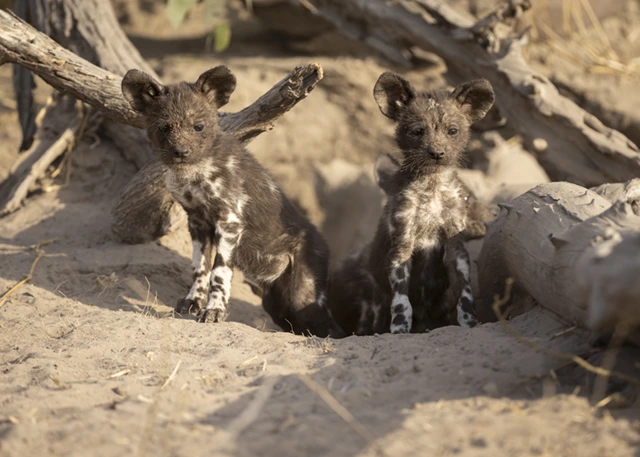 Once the pups are weaned and more mobile, they start to follow the pack on hunts. Due to their size, they're unable to keep up with the adults, and so a number of dogs stay behind to babysit. When the pups catch up with the pack, they're allowed to feed first, with the adults often killing again to satisfy their hunger.
 African Wild Dog Packs Hunting
African wild dogs live in several different habitats but their communal hunting technique, as already mentioned, is the key to their success. In fact, they're thought to be one of Africa's most successful predators, with some packs making successful kills between 60% and 80% of the time. Only hyenas are comparable on the continent.
Their prey species are surprisingly varied with animals as large as buffalo being on the menu, while more typical species include impala and other medium-sized antelope - depending on the habitat and part of Africa. The pack hunt using endurance as their primary weapon, exhausting their prey, before quickly dispatching it upon pulling it down. Despite their fearsome and brutal reputation for their killing technique, their prey is usually dead very quickly.
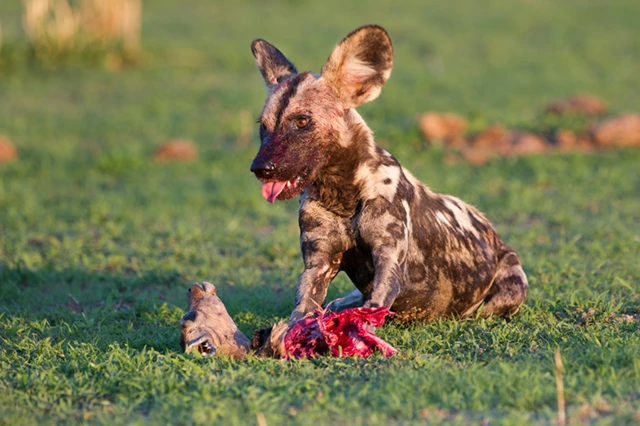 The carcass is stripped clean within a few minutes, which minimises chances of other predators finding them, particularly hyenas. This means that they avoid conflict with potential competitors, but it also minimises the risk to more vulnerable members of the pack, such as the pups or weaker adults.
Communication
Pack members of painted dogs are known for their large array of different communicative sounds and behaviours. This is most apparent when the dogs are playing, greeting one another or after successful hunts. Typically they make high pitch yaps and whines when they're excited, but they're also known for whistling when separated from one another. When tempers flare, which is very rarely, they often emit deeper growls and grunts.
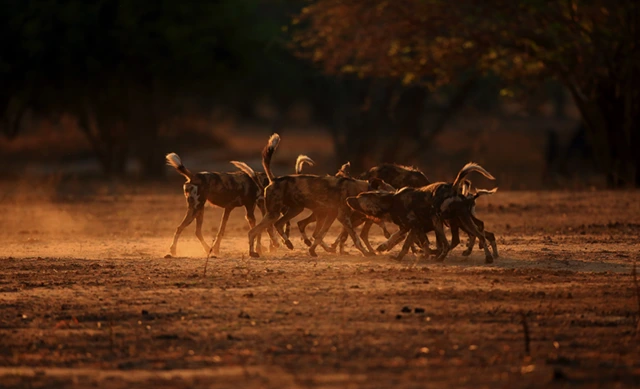 There have also been observations that dogs communicate by 'sneezing'. This is apparently a way of initiating a hunt within the pack. It seems that this theory is still yet to be confirmed by its peers, but nonetheless, it suggests a level of communication among African wild dogs that perhaps we don't have a full understanding of.
Threats to Painted Dogs
The African wild dog is now listed as endangered by the IUCN and unfortunately, its population dropped dramatically in the 20th century. There are many reasons that are thought to have contributed to this decline, but thanks to concerted conservation efforts, there's real hope that the species will recolonise much of its former range.
There are three primary issues facing the species. African wild dogs face habitat fragmentation and destruction, human wildlife conflict and diseases such as canine distemper. The habitat fragmentation is arguably the biggest risk as many populations are isolated and therefore genetic diversity is limited. Human conflict typically involves snares and poisoning events, but predation on livestock isn't too common. It's the accidental events that have the most impact on these sensitive predators.
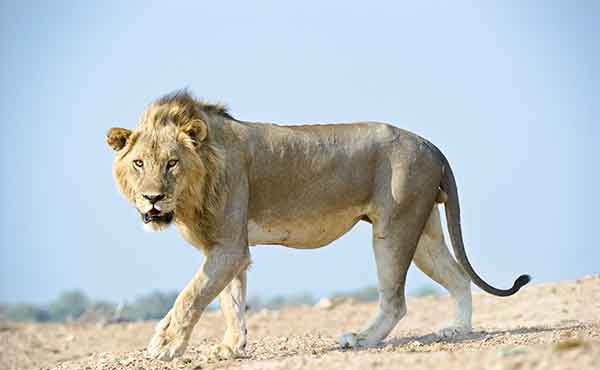
In some areas, where lion and spotted hyena populations are particularly high, it's thought they have a negative impact on the breeding success of African wild dogs. This is because African wild dog pups are particular susceptible to being picked off by rival predators. It's not unheard of for hyenas and even lions to dig young pups out of a den, or killing young dogs when they're out and about.
Our Best Trips to See Wild Dogs
We run a number of tailor-made and small group tours across sub-Saharan Africa but there are a few destinations that are particularly reliable for encountering dogs.
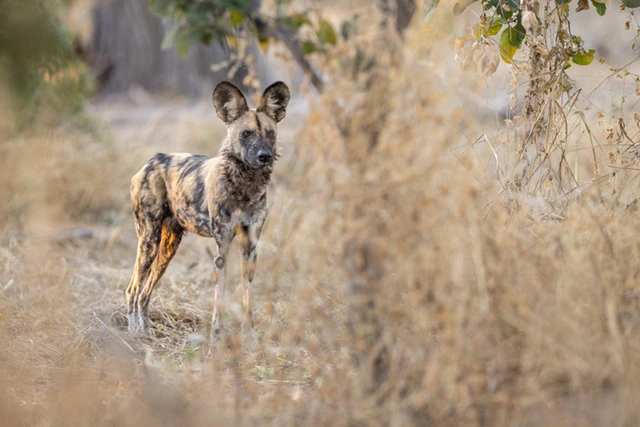 African wild dogs live across Botswana with the areas surrounding the Okavango Delta particularly reliable and well-known for their populations. Many of the packs are habituated to people and many of their denning sights are well-known to local guides.
We run a dedicated Botswana's wild dogs safari, focussing our efforts on this charismatic predators.
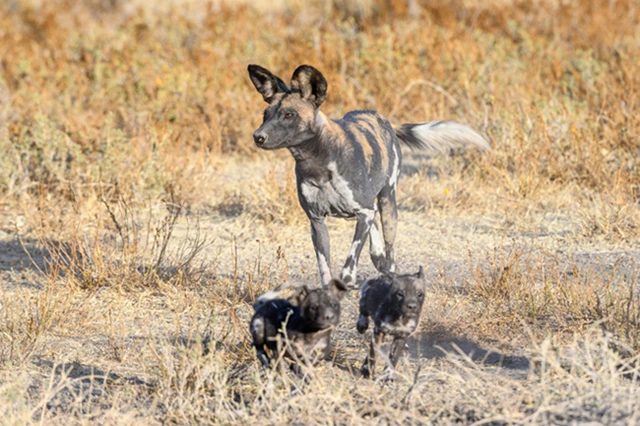 There are a number of parks in Tanzania which are known for their populations of African wild dogs. Nyerere National Park (formerly Selous) is thought to be one of the last strongholds and provides a wild experience in the heart of this vast country.
If you're interested in a tailor-made Tanzania safari, why not consider our Best of the South trip idea.
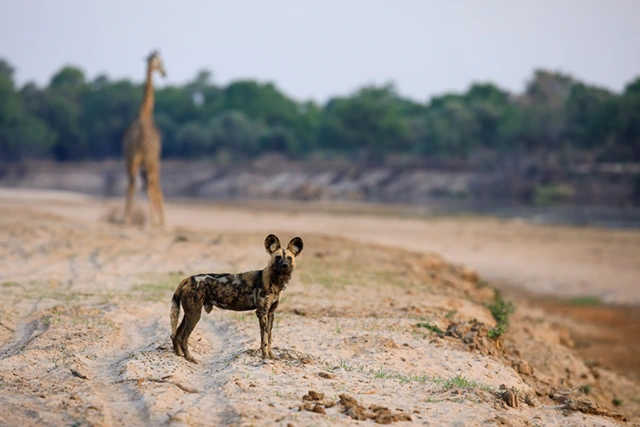 Over the past few years Zambia's South Luangwa and Lower Zambezi National Parks have become incredibly reliable for the dogs.
Our Classic South Luangwa Safari, a small group tour is the perfect introduction to Africa and offers good chances of seeing this once elusive species.
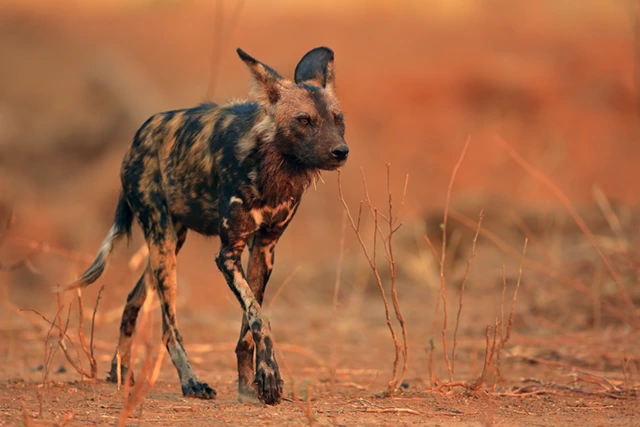 One of our favourite destinations for African wild dogs is Mana Pools National Park in Zimbabwe. Here it's possible to watch and photograph the dogs while on foot, getting unrivalled views and photographic opportunities.
Our Mana Pools: Wild Dogs & Elephants Photography tour, guided by Bret Charman, offers the perfect itinerary to capture stunning images of these charismatic dogs.
Best Time to See Wild Dogs
The dry season in southern Africa is the best time to find and see African wild dogs in the wild. As the dogs den around June and July, if a den site is known, then sightings can be incredibly reliable as they're likely to stick to the surrounding area.
After the denning season has ended, from August through to October, the pups are mobile but they can't cover huge distances. This means that once a pack has been sighted, they can often be tracked over multiple days and you can enjoy excellent sightings.
Images by our tour leaders Bret Charman, Nick Garbutt & Emma Healey, all taken on Wildlife Worldwide holidays
Discover all our African safari holidays, many of which are perfect for seeing wild dogs. For further ideas, speak to our team today.