Through the Terai

Sarah Malcolm travelled to Nepal’s Terai lowlands to explore the wildlife of this unique and unspoilt environment.
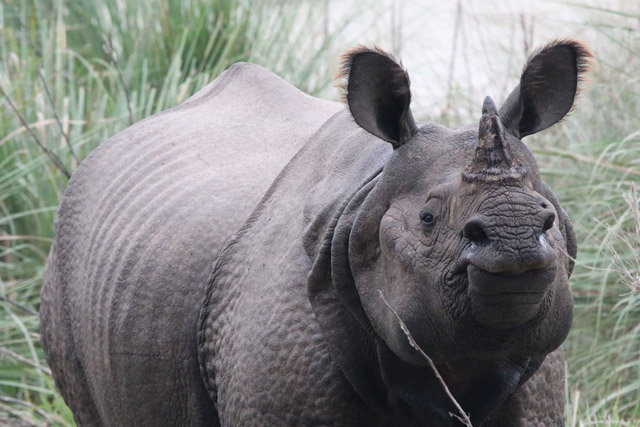
Thick folds of skin form the armoured plating that encases the one-horned rhino. Transfixed by their bizarre, mythical appearance, we watched mother and calf contentedly chomp at the edge of the forest, where the grasslands began. Chitwan, in southern central Nepal, is the country’s best-known wildlife park, and where I began my journey through the Terai (lowlands) – a rolling alluvial belt, north of the Gangetic plains and beneath the Himalayas, which extends from Uttarakhand through Nepal and northwest Bengal to Assam. Here in Chitwan, the riverine forests, grasslands and dense sal forests have provided the ideal habitat for the rhinos to recover, after their numbers were decimated by hunting in the 19th century.
 Further to the west of Chitwan lies the less-visited Bardia National Park. I stayed at Tiger Tops Karnali Lodge, at the heart of which is a traditional Tharu building with a central fire pit. We spent evenings beside its glow, sharing my own eager anticipation for the next day’s sightings with that of other guests staying at the lodge. Each dawn, our eyes were drawn down the lodge’s pathway to the adjacent jungle, enticing us with its proximity and promise of wildlife. Bardia is a remote wilderness which eludes the bustle that is synonymous with most tiger parks – here you are afforded a rare and invaluable freedom to explore. Like Everest, Nepal’s wildlife is witnessed by few yet is magnificent and fulfilling to those lucky enough to experience it.
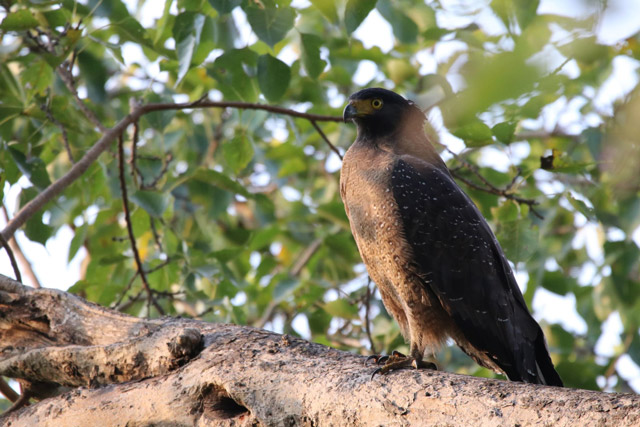 Ethereal mists cloak the sal forests of Bardia National Park, casting an unexpected quiet. As the sun pushes through, sending a dappled light through the canopy, warming the birds into song. By the time the sun’s rays had penetrated the forest, we found ourselves deep within, welcoming the beams of warmth, as our guide gestured to a patch of flattened grass: a tiger’s bed from the previous night. Enthralled to be standing at the site where a tiger had so recently slept, breathing in its scent, we were brought to our senses as a barking deer sent an alarm reverberating both through the forest and our chests. True to John Muir’s belief that ‘In every walk with nature one receives far more than he seeks’, the freedom to wander in forests that belong to tiger, sloth bear and rhino rewards and exhilarates in equal measure.
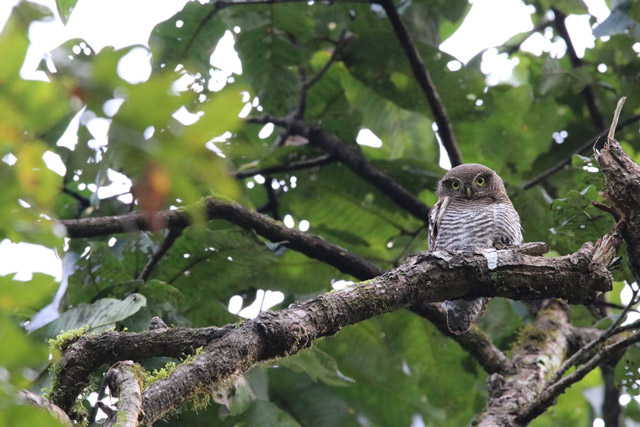 Far west Nepal is undoubtedly wild. Some might consider a remote unexplored wilderness daunting, but to others, this is their yearned for off-the-beaten-track experience. We followed animal paths to the banks of the Karnali River where turquoise, jewel-like, white-throated kingfishers adorn the river-loving trees that escort Nepal’s largest river and her tributaries. Yellow flashes of black-headed oriole danced above the bush lunch that awaited us.
Like the river, my journey continued across the border into Nepal’s southern neighbour, India. Countless bicycles, horse-drawn carts and street dogs navigate the roads, while relentlessly beeping mopeds weave between nonchalant cattle, affirming our arrival in India! A juxtaposition of harriers and drongos patiently watch from telephone wires above. The hullabaloo of rural village life dissipated into fields of sugar cane, mustard and wheat until we reached the brick path road which winds through the lychee grove to reach the idyllic bougainvillea-draped Jaagir Manor.
 Jaagir Lodge is the ideal base from which to explore Dudhwa Forest Reserve which encompasses several parks and is home to a fantastic diversity of wildlife. As the pink hue of sunset extends across the sky, parakeets noisily announce their return to their tree roosts. Following their lead, in daily ritual, several hundred egrets cloud the air as they descend from all directions onto the tall grass of a lake island to roost.
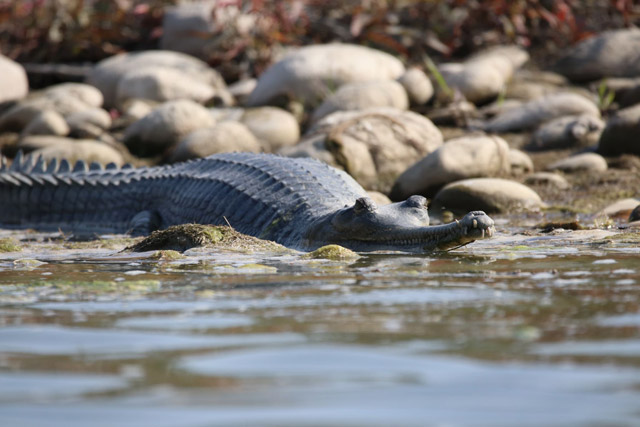
Water governs all in the Terai, including Katarniaghat Wildlife Sanctuary, where we watched a wild bull elephant, unmistakeably in musth, emerge from the grass to quench his thirst at the river. Highly endangered gharial ominously slipped into the water when our boat passed the banks, as we followed Gangetic river dolphins, discretely breaking the surface during their sightless hunt for fish.
 The forests of Dudhwa and Kishpansur have a spectral quality which lures you in and heightens your senses as you navigate the network of roads which permeate their interiors. The excessively flamboyant tail feathers of racket-tailed drongos hang from the branches as you search for sloth bear, tiger, leopard and elephant.
With a world more discovered, we can find ourselves searching for a feeling of remoteness and wilderness unspoilt. The terai offers you this, increasingly hard to find, unbeaten track to explore. A path literally established by the wildlife rather than the throngs of tourists.
Contact a member of our team to plan your bespoke itinerary to the Terai.