Watching my First Polar Bear

I’ve recently discovered the name ‘Arctic’ originates from the Greek word 'arktos', meaning ‘bear’ (conversely Antarctica means ‘no bear’). My voyage to Spitsbergen was in search of the region’s namesake, the apex predator, the polar bear.
On a day at the end of July, I awoke in my cabin on board M/V Ortelius, hurriedly dressed and made my way out on deck to see where our ship had arrived overnight. I gazed out at an island of beautifully coloured rock, with large boulders tumbled to rest on steep hillsides, a few small patches of ice remaining on flatter areas and fog shrouding the hilltops.
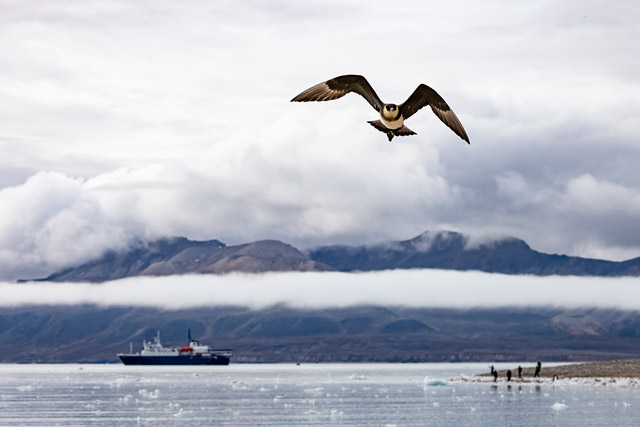
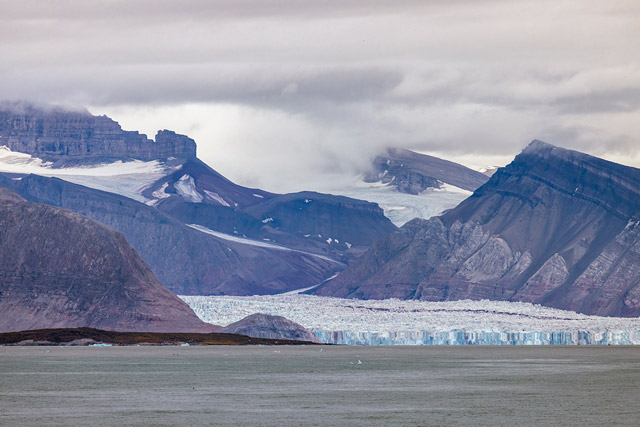 The expedition team headed out on their Zodiacs to scout our intended landing site, to check it for safety before the planned morning’s walking excursion. The fog layer descended and the team felt they would not be able to see a polar bear from sufficient distance to keep us safe, so the walk was substituted for ‘Plan B’, a very enjoyable Zodiac cruise where we encountered birds such as little auk, kittiwake, black guillemot, eider duck, Arctic tern, Arctic skua as well as swimming herds of walruses which popped their heads up to look at us curiously, with bulging red eyes, wet whiskers and impressive tusks of various lengths.
 Back to Ortelius for lunch, and an announcement that a polar bear had just been spotted right where we would have been walking! As much as it may have been exciting to encounter my first polar bear on foot, it could also be very dangerous, so it was a good decision! We watched the bear from the ship as it walked along the icy patches, sniffing at what may be hiding underneath. Then we re-boarded the Zodiacs to take a closer look. We all kept quiet to ensure the bear wasn’t disturbed. It was very relaxed, walking easily over the boulder-strewn shoreline, exploring crevices from time to time, with a nose that can reportedly detect a seal from 32 kilometres away. Of course, it could smell us too, but we kept a respectful distance and its behaviour wasn’t affected at all.
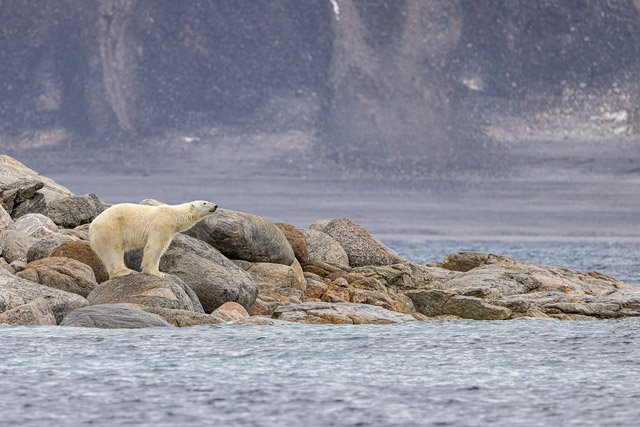 This was a male – huge and healthy-looking – with his mayonnaise-coloured fur, enormous paws and scars on his face and flank that gave a hint to his age and the battles he had seen. We could only speculate, but the injuries could have been from fights with other males over females, or perhaps a run-in with an angry walrus.
The pack ice had retreated very far north – much higher than normal at this time of year – and this bear had decided to stay on land, or was stranded here on the island, away from its ice-loving prey of ringed, harp and bearded seals. He may have had to run the risk of taking walrus calves to eat instead – a very dangerous quarry when they are protected by such heavily armed mothers who are not afraid of using their tusks in defence.
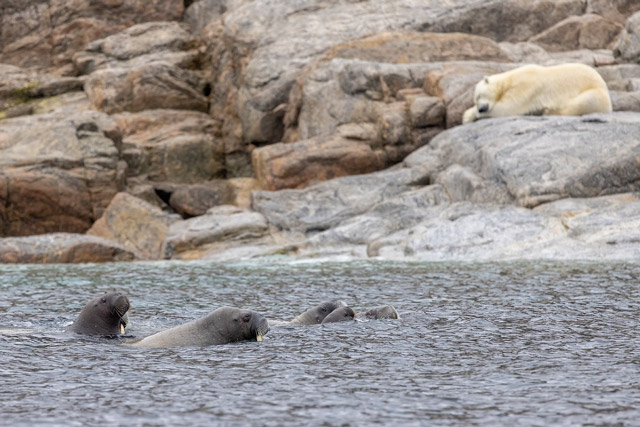
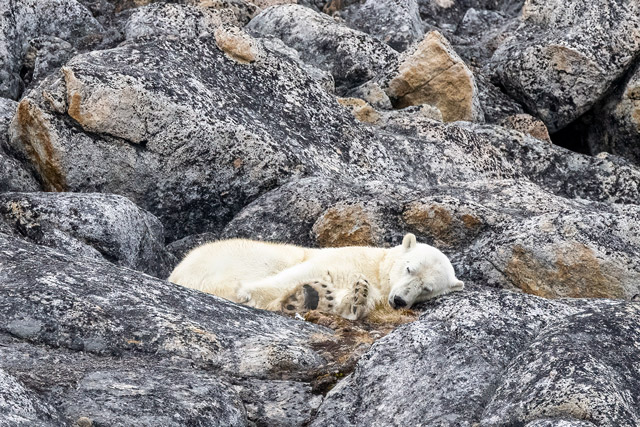
 Indeed, the bear lay in a gully close to the sea, hidden from an approaching family group of swimming walruses. He seemed to be poised to pounce, and we wondered if we were about to witness an attack! While we waited silently, holding our breath, the walruses seemed none the wiser and swam right underneath the bear but, by the time they were there, the bear’s head had reached his forepaws and his eyelids were closing to fall into a very contented-looking sleep. I suppose he wasn’t that hungry, and any time is a good time to take a nap when daylight lasts 24 hours! From a distance, he looked like a pale yellow rock or patch of ice. We left him there to relax, having spent around two wonderful hours observing a glimpse into the life of this king of the Arctic. What a privilege.
 Altogether, I saw nine polar bears on the voyage, including mothers and cubs and more amazing close encounters. With the warming climate causing them such challenges, I hope these seemingly ingenious animals can adapt and find a new balance to survive in this incredible Arctic wilderness.
 Other sightings added to the magic of travelling around Spitsbergen, just some of them including haul outs of several pungent-smelling walruses - their enormous bodies piled together, jostling each other with those incredible tusks; kittiwakes and fulmars our constant companions as we cruised. Then there was the diminutive Arctic fox scavenging at the base of busy bird cliffs; singing beluga whales, their white bodies glowing as they hunted underwater; Arctic terns at the northernmost extreme of their record-breaking migration.
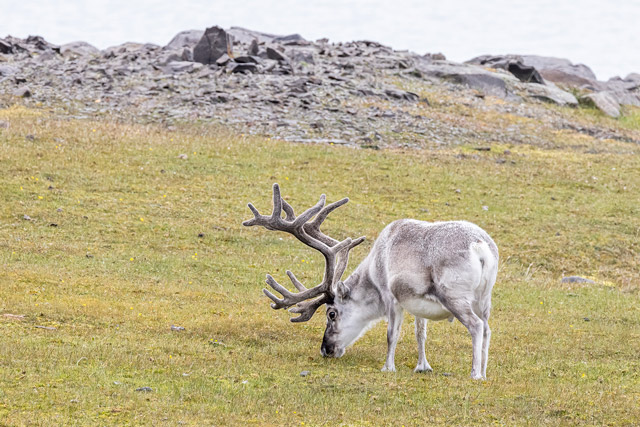
Of course, I can't forget the reindeer adorned with impressive velvet-covered antlers, with feet making a clicking sound as they walk; humpback and blue whales, cruising along, with enormous plumes of exhaled wet breath, feasting on the bounties of upwellings from the edge of the continental shelf. I also saw huge colonies of seabirds nesting on dramatic cliffs, and enjoyed the antics of adorable Atlantic puffins; being surrounded by pack ice – a seascape like no other - at 82.10 degrees north, 474 nautical miles from the North Pole. I felt on top of a vulnerable melting world in a habitat so vital for many species.
 A visit to Spitsbergen and the pack ice environment is eye-opening, edifying and offers the opportunity to view, first-hand, the precious Arctic wildlife and inspires support for all efforts to preserve the habitats of this unique region.
Find out more or about all our polar voyages to Spitsbergen where you can watch polar bears for yourself, or contact us to book.