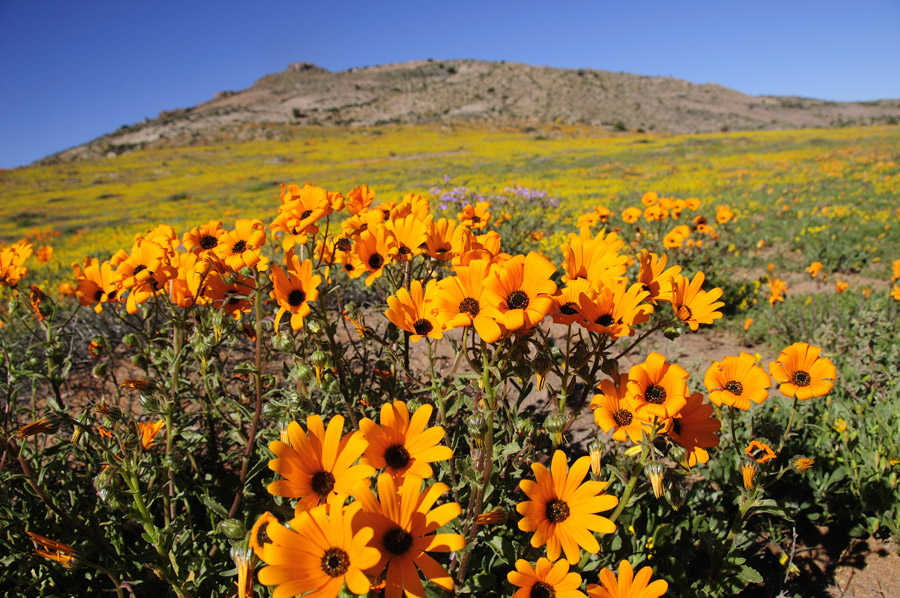
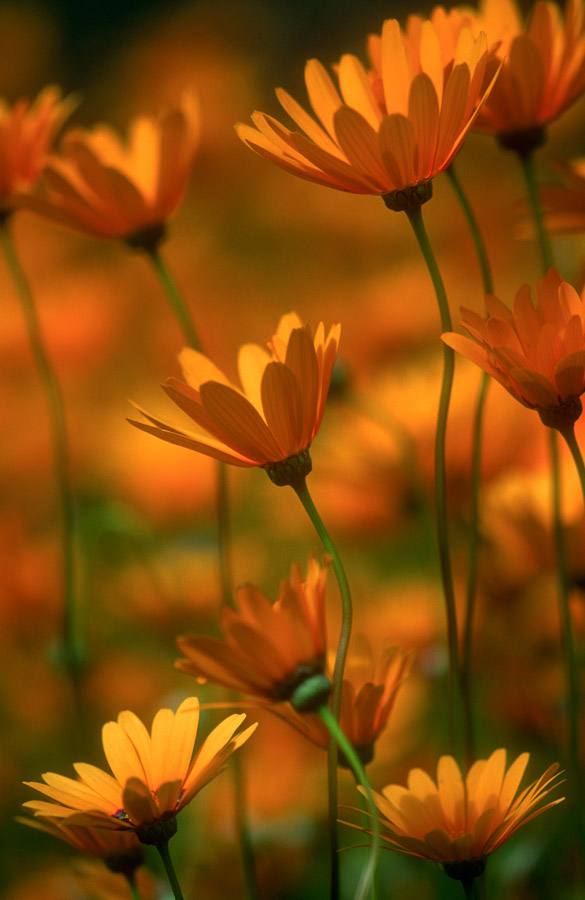
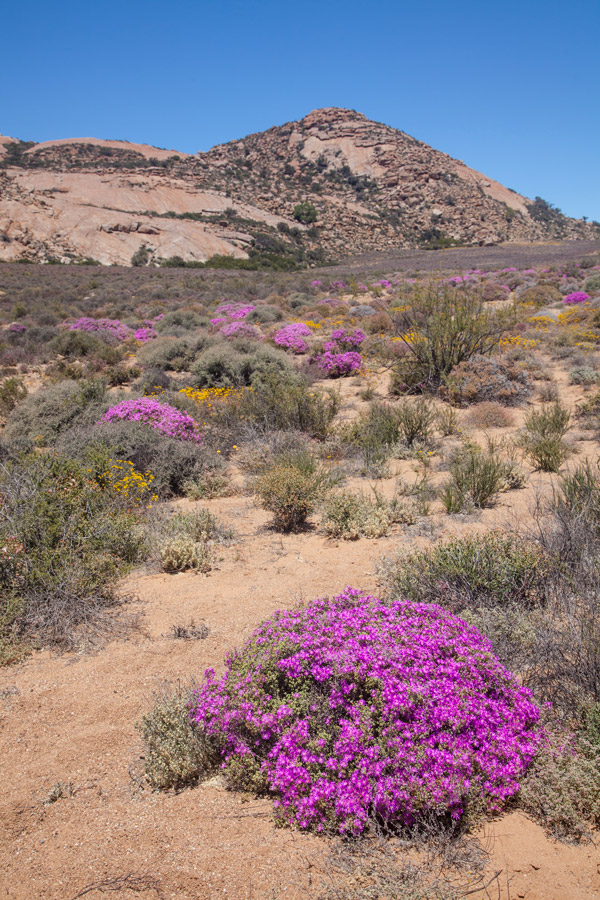
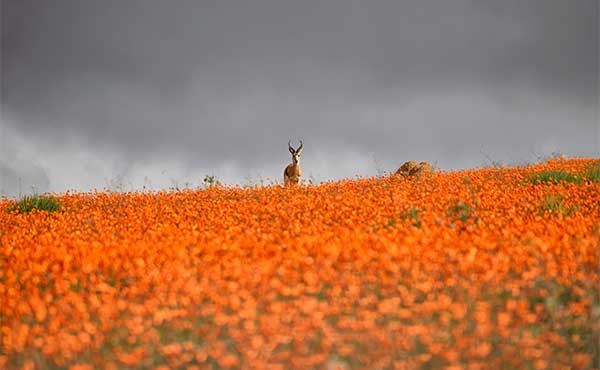
Following the west coast of South Africa across to Namibia, Namaqualand is known for its spring flowers blossoming in August and September in an explosion of colour, which would make any impressionist envious.
Namaqualand - or the Namaqua region - covers an area of 400,000 square kilometres. The 1,000-hectare Skilpad Wild Flower Reserve (part of the Namaqua National Park) west of Kamieskroon is a prime location, close to the coast.
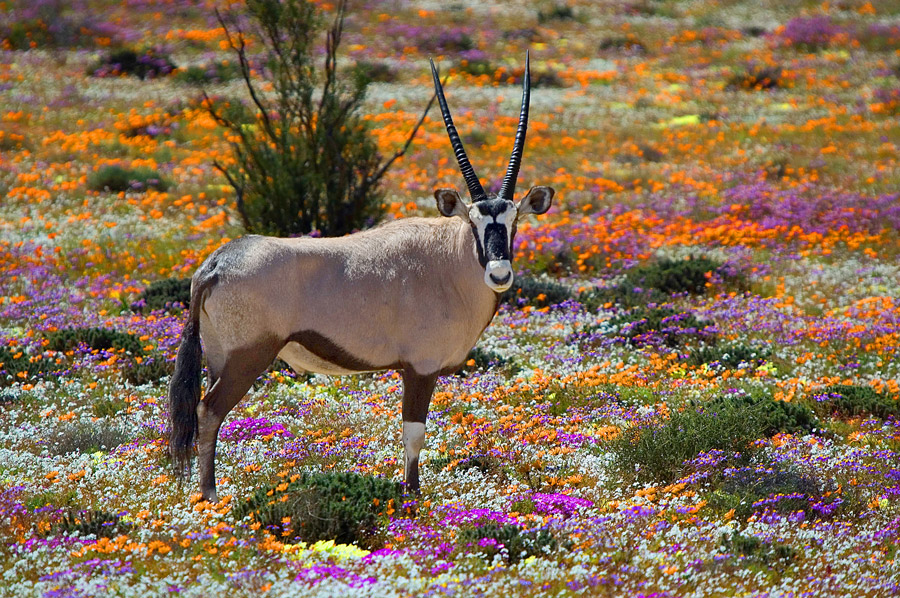
Goegap Nature Reserve is a bird haven with 92 bird species, including majestic black eagle, Cape eagle owl, marsh harrier and the cinnamon-breasted warbler. The reserve also offers the best wildlife from the Northern Cape, with over 45 species of mammals, including the endangered Hartmann’s zebra, aardwolf, honey badger, as well as a wide variety of antelope.
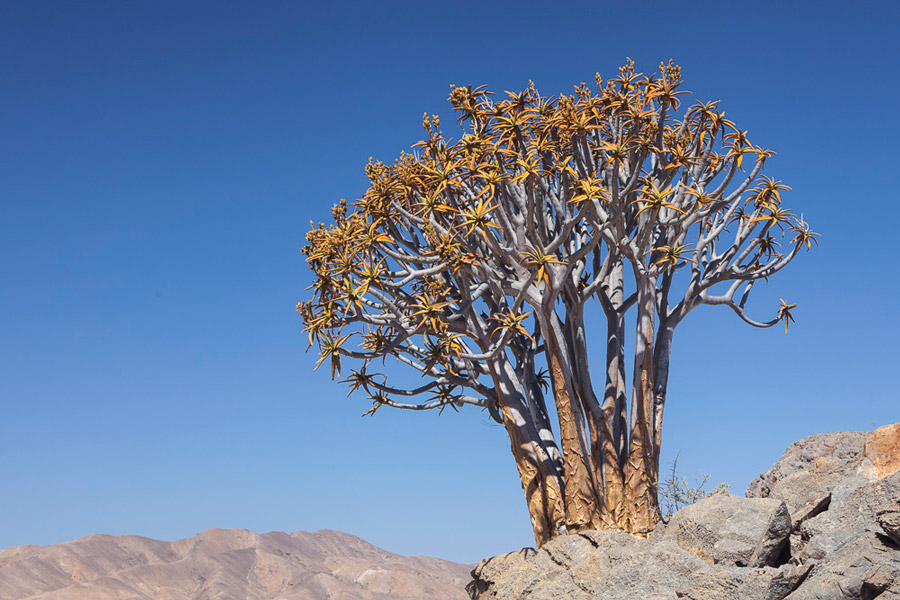
Richtersveld National Park is a World Heritage Site inside Little Namaqualand, which also hosts numerous animal, bird and plant species, including the uncanny halfmens succulent, named after its resemblance to a human silhouette.
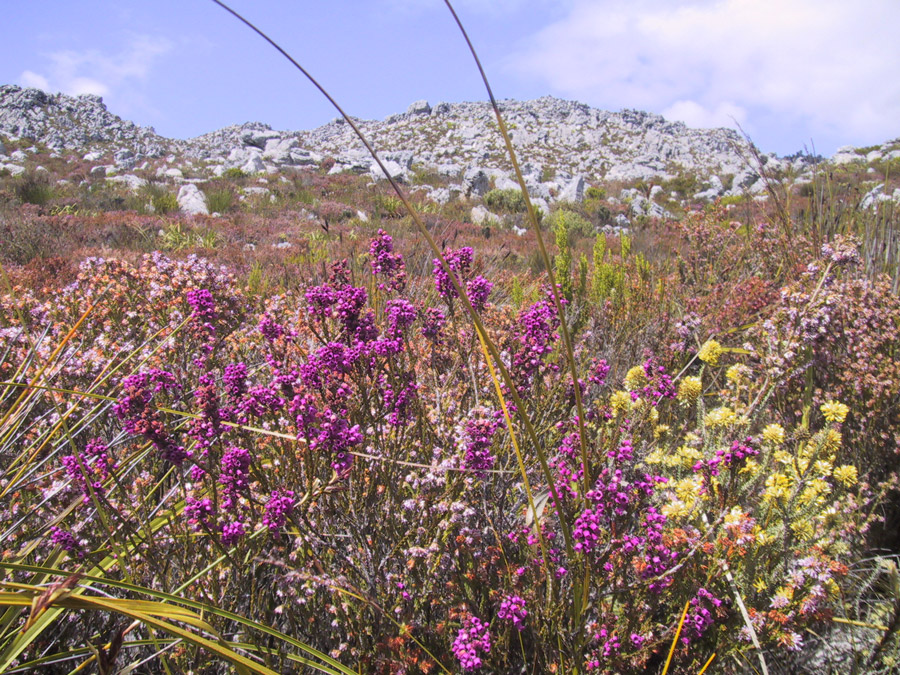
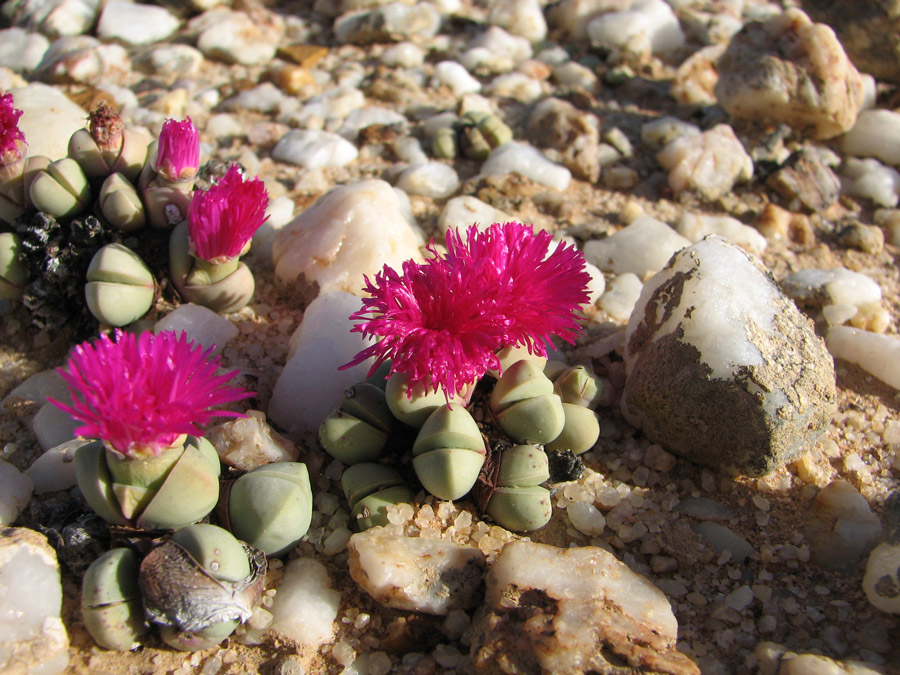
Namaqua National Park is an area covering 55,000 square kilometres located within the semi-desert Succulent Karoo Biome. This biome has a unique biodiversity with the largest concentration of succulent plants in the world, 40% of which are endemic and 18% threatened. These many-coloured flowers include daisies, lilies, aloes, and perennial herbs. Many pollinator insect and bird species are attracted to the flower’s nectar and pollen. The speckled padloper, the smallest tortoise in the world, can also be found in the park, and the biome also has diverse invertebrate and reptile species, some of which are endemic.
View suggested itinerary