Serengeti National Park is one of the world’s last great wildlife refuges. The name comes from the Masai ‘Siringet’, meaning ‘endless plains’ and the seasonal migration which occurs here attracts lions, cheetahs, leopards and other predators, which attend to the constantly moving mass.
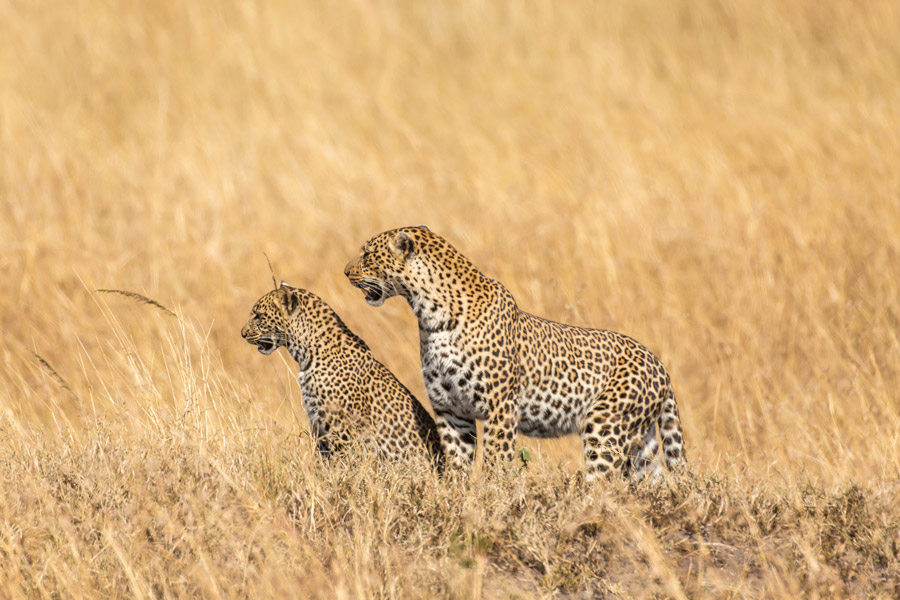
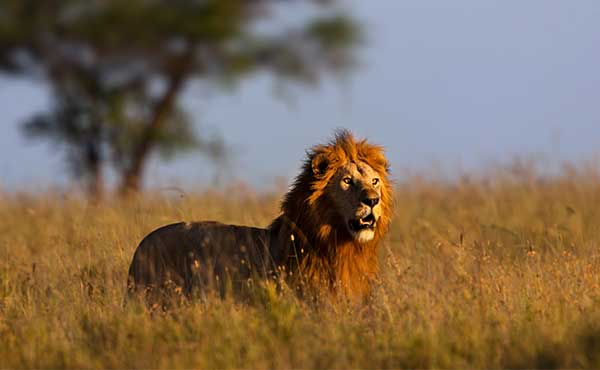
Equal in size to Northern Ireland, vegetation in the Serengeti ranges from the short and long grass plains in the south, to the acacia savannah in the centre and the wooded grassland concentrated around tributaries of the Grumeti and Mara Rivers in the north. The Seronera Valley in the central Serengeti is famous for the abundance of lion and leopard that can usually be seen quite easily.
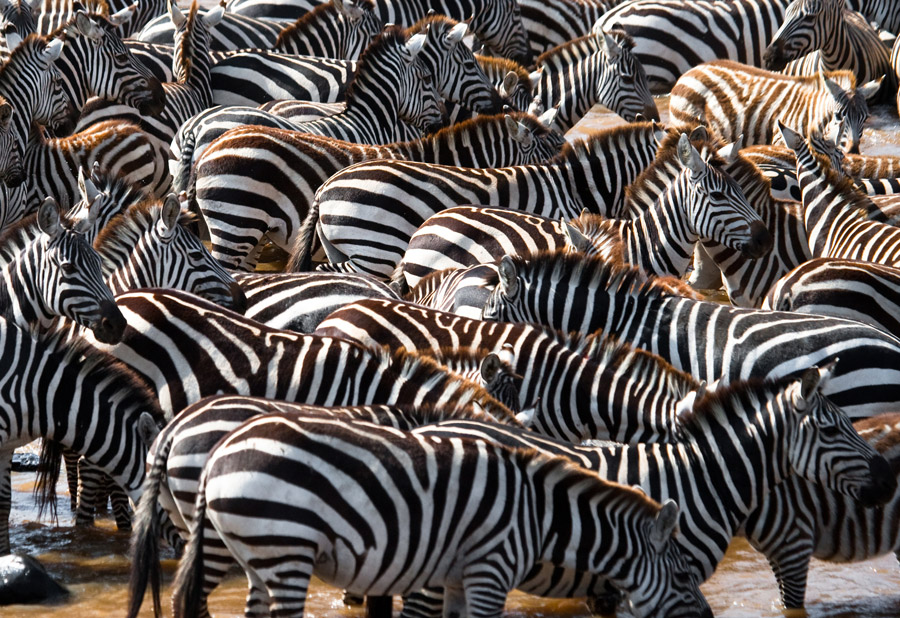
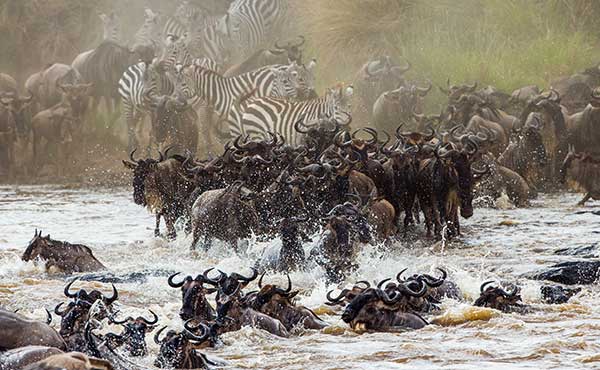
Serengeti Migration - November to June. This breathtaking annual migration of more than two million blue wildebeest, together with a quarter of a million Burchell’s zebra and half a million Thompson’s gazelles, is triggered by the rains. The wet season provides a tremendous attraction for the massing herds, as the first downpour will rejuvenate the parched grasses overnight. Their movement is a continual search for grass and water. The cycle of migration movement begins with the herds moving down the eastern corridor of the Serengeti after leaving the Masai Mara sometime around late October, early November. The animals head for the short grass plains of the southern Serengeti, below the Ngorongoro Highlands which come alive in December not only with gazing mammals, but with a carpet of fresh green grass shoots and colourful wildflowers.
Believing that there is safety in numbers, the blue wildebeest all calve within a three-week period during the course of February. In fact young are born all over the plains – cheetah cubs, bat-eared fox pups, and tiny Thompson’s gazelles all appear at around this time. With the onset of the dry season, the grazing herds all begin to move northwest in June until – come July and early August – they are in the western Kirawira reaches of the Serengeti. From here they continue northwards over the artificial man-made border from Tanzania into Kenya and into the Serengeti’s extension there, better known as the Masai Mara. The survivors will spend September and October here until the grazing is exhausted before the relentless cycle begins again and they head south once more.
The wildebeest migration occurs approximately the same time every year, however there are unpredictable natural factors that may alter the pattern by a few weeks each way. Our Serengeti Migration Photographic trip takes place at the best time to capture this natural wonder.
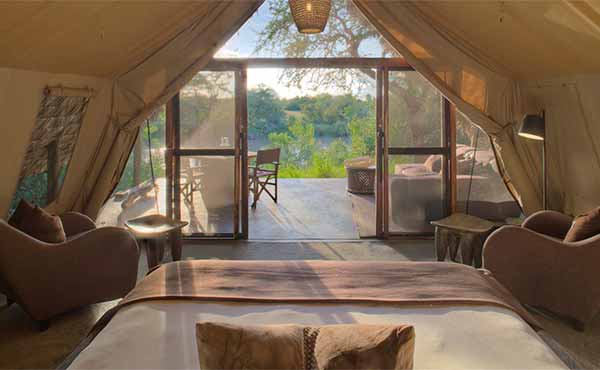
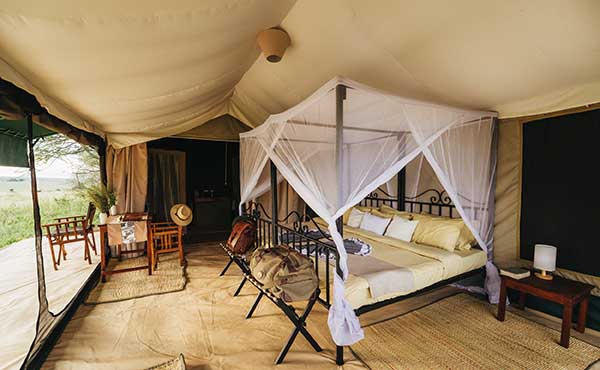
During the annual migration space in the lodges and tented camps is at a premium, often being booked up over a year in advance. However, it should be remembered that the Serengeti makes a superb wildlife and safari destination at any time of year with many animals not choosing to follow the migration and outside the peak times you will have vast areas of wilderness to yourself.
View suggested itineraries