
A Guide to Garden Invertebrates

This has not been the most straightforward of springs. There can hardly be a human on earth whose family life, livelihood, and plans have not been affected by Covid-19. Certainly at Wildlife Worldwide our — quite literal — world has been turned upside down.
As I write these sober words, my eye is distracted by a ginger bobble zipping frenetically between flowers in my garden. A dark-edge bee-fly! One of the earliest of our charismatic spring insects, the bee-fly has a gruesome life cycle. A gravid female hovers outside a solitary bee nest and flicks her own eggs inside. There her larvae grow by eating the solitary bee’s own larvae. Though this is the sort of story which tested Darwin’s belief in divine benevolence, this attractive insect darting between my windflowers is comforting proof that, in spite of the human turmoil all around, nature is simply getting on with the twofold Darwinian imperatives of surviving and breeding.
 Next to my bee-fly, and moving much more slowly, is a fatter insect, also ginger and furry. This is a queen common carder bee. So far this year I’ve seen five species of bumblebee, including this common carder, and more will be on the way soon. All the bumblebees you see in early spring in the UK are queens. In late summer colonies disband, their workers, drone males and old queens slowly dying. The young queens, having mated, fatten themselves on the bounty of flowers in late summer and autumn before finding a quiet spot — a mouse’s hole perhaps — in which to hibernate. As soon as temperatures begin to rise, even as early as late January, the first queens begin to wake from hibernation.
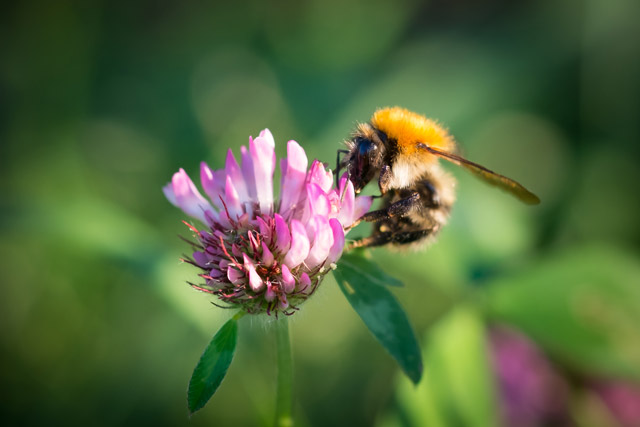
Common carder bee
By March white-tailed and buff-tailed queens are on the go, with red-tailed, common carder and tree bumblebees following fast. Their job is to found a colony, so as soon they find a suitable spot and have gathered a ball of pollen — a homeowner deposit if you like — they lay a first clutch of eggs. In cold spells a queen will even physically incubate these first eggs which, once hatched and raised, will form her first cohort of worker-daughters. By late summer the whole cycle will again be complete and only this year’s young mated queens will go into hibernation, as their mothers did before them.

White-tailed bumblebee
Now, especially with this spell of fine weather, is also an excellent time for watching butterflies. The first species which appeared in our lockdown gardens were those which overwintered as last autumn’s freshly-hatched adults: peacocks, commas, small tortoiseshells and brimstones. They too sometimes emerge very early in the year and by now are commonly seen in good weather, both searching for the nectar they need as fuel and, in the case of females, for the foodplants on which they will lay eggs, to keep their genes flowing into future generations.

Small tortoiseshell
The species which overwinter as adults are quickly followed by those which overwinter as pupae. Among the first to appear are the dazzling orange-tip and the rather more muted green-veined white. The former lays its eggs principally on lady’s smock (or cuckooflower) and garlic mustard, two members of the cabbage family.

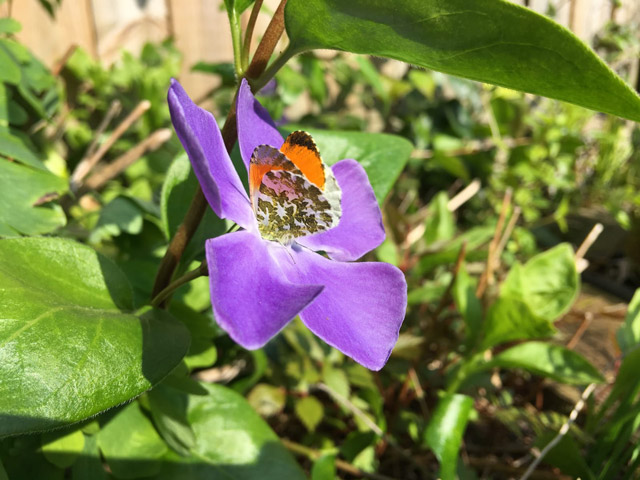
Orange-tip
The green-veined white likewise lays on a range of wild cabbages. As for the large and small whites which follow closely behind, they are less popular with gardeners as they will happily lay on domestic cabbages too. The last two of our early spring crop of butterflies are exquisite members of the blue family.
The charming holly blue, with its silvery undersides dotted with black, is a butterfly of woodland edge and likes gardens with trees and old shrubs. Its spring generation tends to lay eggs on the buds of holly trees, whereas the late summer generation often favours ivy. The splendid little green hairstreak, by contrast, is a butterfly of waste ground, old commons and railway lines, often to be found around the headily-scented spring flowers of European gorse.
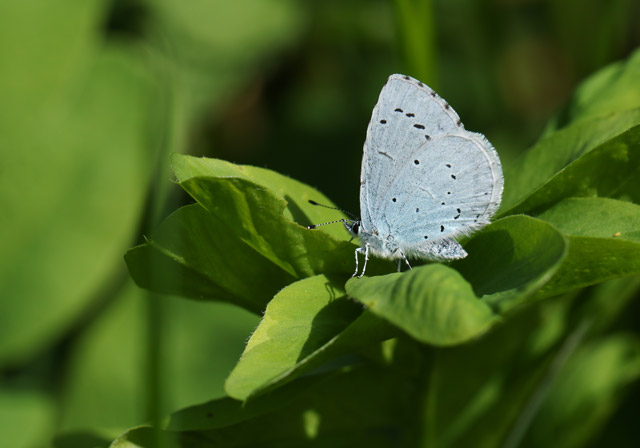
Holly blue
As I’ve written these words, sitting in self-isolation in my garden, a dronefly (a furry hoverfly which wants you to think it’s a honey bee) has been darting back and forth and a cranefly has bumbled by, its long legs dangling. I want to know about them all, to write about them here. The problem with insects is that they are too diverse and too fascinating. But in these strange, unsettling times this is no problem at all: the insects around us are a reminder that life is getting on with her business, that the wild will still be there for us when restrictions are lifted, and that, if we open our hearts and minds to the wild beings which live alongside us, our lives are inestimably richer.

Cranefly
What insects have you seen this spring?