Sensational Seabirds of Northumberland & the Farnes

There is something astonishing about seabirds, wherever they are seen. These are beings which spend just a fraction of their lives on land, devoting the rest of their time to the wild oceans. Many of them undertake extraordinary migrations, taking them hundreds of thousands of miles over their long lives. If our own British Isles have global importance for the conservation of just one group of birds, it is seabirds. Our coast and offshore islands are seasonally home to huge colonies of many species of these magnificent creatures.
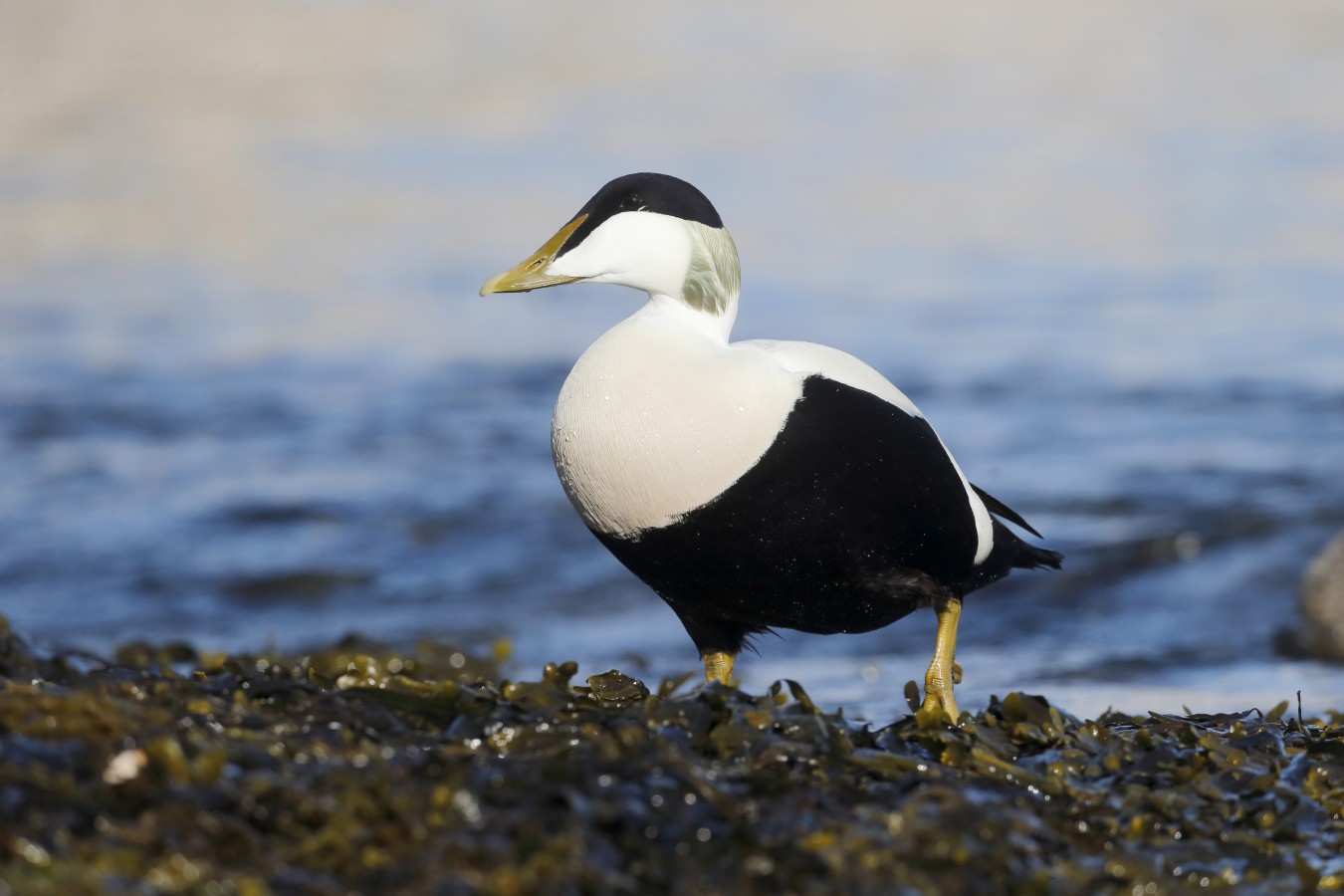
In England there is no finer county for watching breeding seabirds than Northumberland. Indeed, the Farne Islands, offshore from Seahouses, have a deserved place among the greatest seabird sites anywhere on the planet. For a few short months in spring and early summer, this handful of islands is a heady bustle of life. By far the most numerous breeders here are common guillemots and Atlantic puffins. For reasons of their nesting biology, guillemots are censused as individuals, generally numbering around 50,000 birds each summer, whereas puffins are censused as pairs, of which 40,000 can be expected most years. Smaller numbers of eiders, fulmars, shags, black-headed, herring, greater and lesser black-backed gulls, kittiwakes, Sandwich, common and arctic terns, and razorbills all nest too.
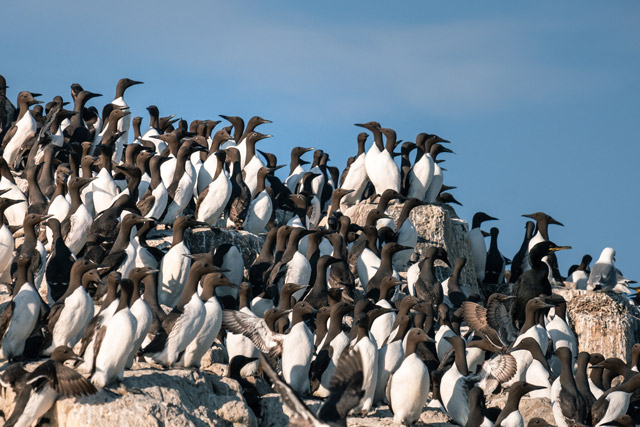 But the numbers do nothing to capture the experience of visiting the Farnes in early summer, when these birds are breeding. Indeed nothing captures the experience except visiting the Farnes and living it yourself. There is an urgency, a clamour, to this great seabird colony, as each pair of birds jostles for physical space, fends off neighbours and predators, and frantically tries to raise a chick (or chicks) and get back to the sea – away from land – as quickly as it can.
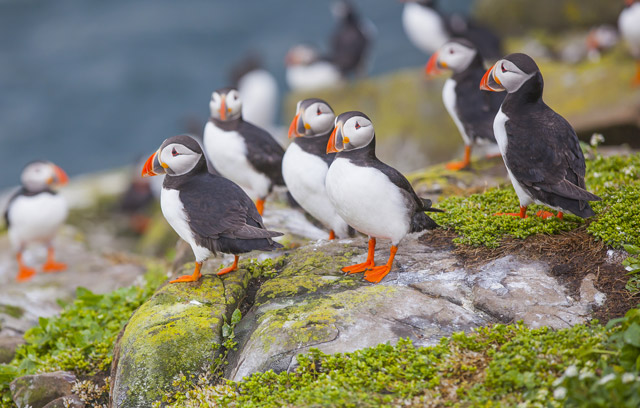
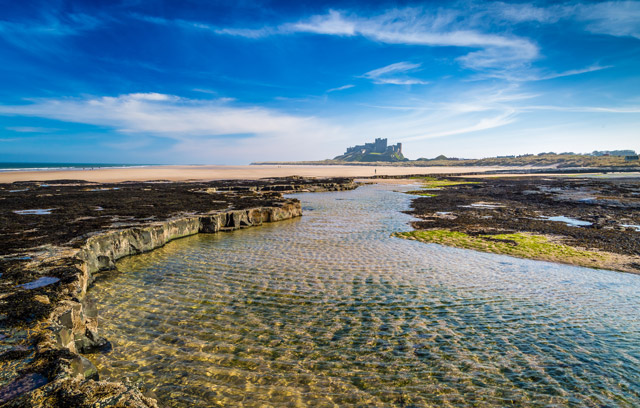 Despite this frenetic energy, a visit to the Farnes always involves many tender, even humorous moments too. It is impossible to watch puffins land next to you, their bills laden with sand-eels, and waddle to their burrows on their improbable orange feet, without breaking into a giant smile. In the same way, sitting by a huge colony of guillemots, you cannot help but be drawn into their individual lives, their squabbles, and the remarkable care they lavish on their single chicks.
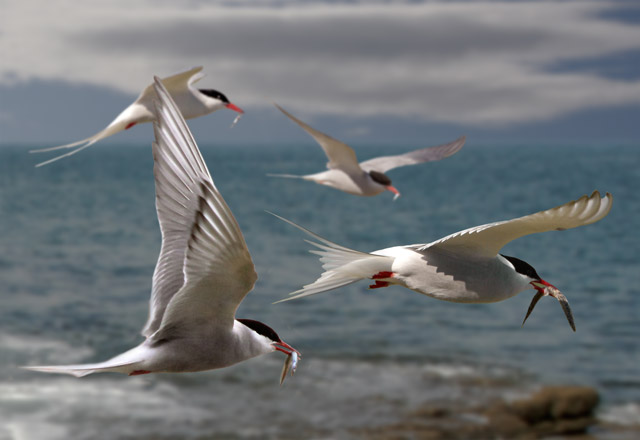
 The most intimate experience of all, however, is being pecked on the head by an arctic tern. It beggars belief that this ice-winged bird should fly in a giant curve through the Atlantic to reach Antarctica for the winter – surely the wildest place on earth – but return to breed as close as possible to a path used daily by hundreds of humans. Yet in the Farnes this is just what happens. Arctic terns which nest closest to the islands’ paths often enjoy better success fledging their chicks, as a result of reduced predation from gulls, so sites next to humans are, counter-intuitively, the most desirable property. Passing humans pay for the privilege of these remarkable views, however, as the terns regularly attack them with sharp pecks to the head. A hat is an essential piece of kit for a visit to the magical Farne Islands.
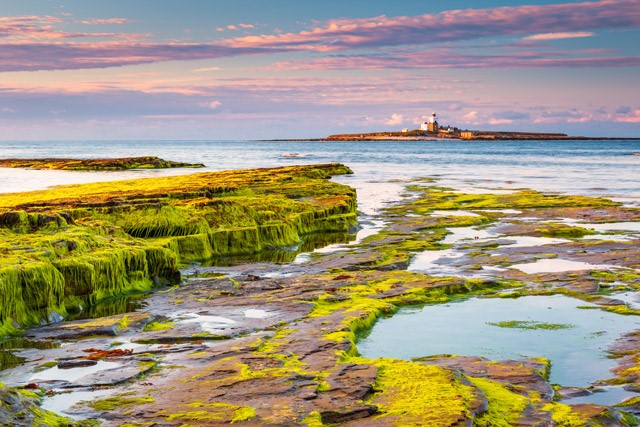
 You could be forgiven thinking that the Farnes were all that Northumberland had to offer in early summer, by way of wildlife spectacles. Far from it! There is hugely more to see in this wonderful county in June. The UK’s only colony of the stunning roseate tern can be found just a short distance south along the coast on Coquet Island. Even pearlier in colour than the lovely arctic tern, with startling scarlet legs and a bill the blackish red of dried blood, the roseate is by far our rarest tern. Its fortunes on Coquet Island have recently been helped by the provision of nest boxes which have proved hugely popular with these exquisite birds.
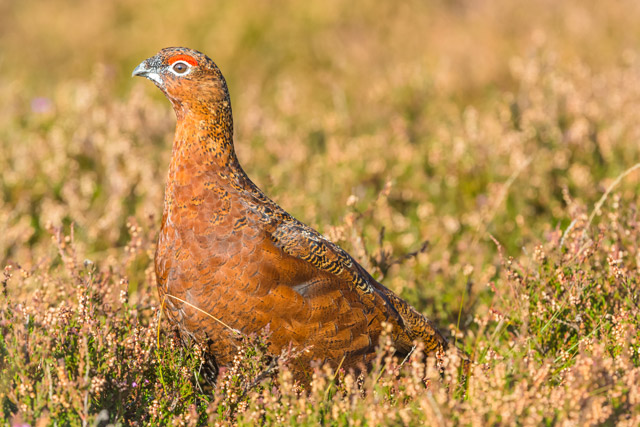
 Northumberland in early summer is more even than its bird-rich coastline and islands. Inland, the county’s woods, streams and moors are home in June to many special birds including cuckoo, tree pipit, spotted flycatcher, redstart, red grouse, goosander, dipper and grey wagtail.
 Our new five-night Farnes and Northumberland in Early Summer tour takes you to see all of these wonders, plus others including Holy Island, from a charming base in the historic village of Seahouses. As we launch a fantastic range of new tours in the British Isles for 2021, we are reminded – though we knew it already! – just how amazing the wildlife of our islands is: truly the equal of any in the world. We invite you to share our wildlife heritage with us, in the Farnes and Northumberland in June 2021, and in a range of other wonderful sites across the country throughout the year.
Join Nick Acheson & new tour leader Tom Cadwallender on our Farnes and Northumberland in Early Summer tour. To find out more, contact our expert team.