All Creatures Great & Small in the Azores

Wildlife Travel Consultant Helen Bryon describes what to expect on our whale watching holiday to the Azores. Timed to coincide with a peak in sightings of migrating giants such as blue and fin whale in the spring months, they will be supported by a fabulous cast of dolphins, pelagic birds, turtles and of course, the spectacular islands themselves.
Is there a season more magical than spring? A time of re-birth, re-awakening of snowdrops, blossom, and later, the return of summer migrants. Thank goodness for the earth tilting on its axis in our favour as the North Pole is drawn towards the sun bringing a sense of expectation, anticipation, hope, and of course, a dusting off of flipflops, barbecues and bottles of Pimms!
For us humans, the changing of the seasons requires little thought, but I have long been fascinated by the response from the natural world. How a subtle change in day length, in the sun’s position in the sky, in temperature and precipitation, can signal to all manner of earth’s creatures that it’s time to move. How incredible it is to me, that nature wins over nurture, as brood parasitic chicks (e.g. cuckoos) respond to an urge so strong, that they follow their instincts to migrate rather than following learned behaviour from their host parents.
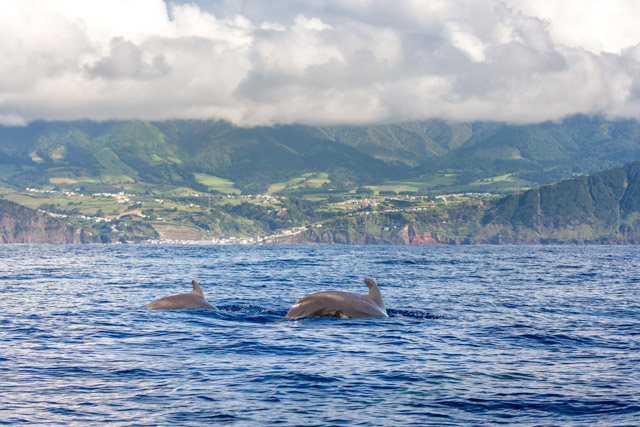 Whales, of course, are the kings and queens of migration, wandering the oceans, with (generally speaking) calves following their mothers from warm, subtropical waters, where they overwinter, breed and give birth, before returning to summer feeding grounds in the poles. Navigating obstacles and predators en route, they undertake some of the longest journeys on the planet so stopover points where they can feed and recuperate a little, before continuing on their way, must be very welcome. And that, in a nutshell, is how we find ourselves in the Azores in May!
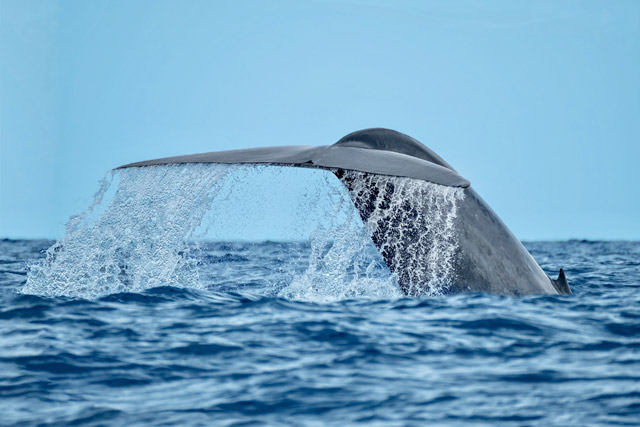
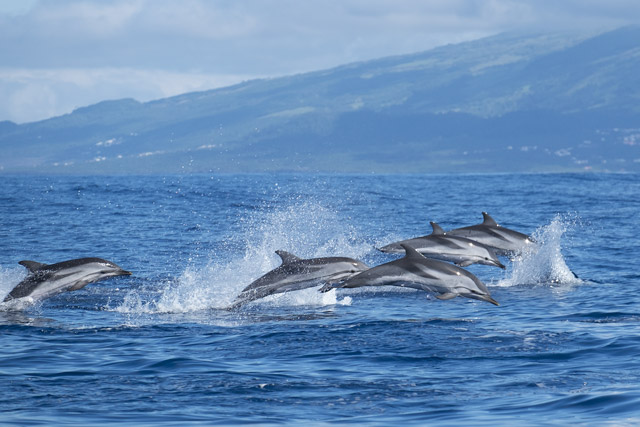 A tantalising 28 species of cetaceans have been recorded here and it’s fast becoming known as ‘the’ whale watching hotspot in Europe. Blue whales (being just shy of the length of a Boeing 737, you’ll know it when one of these surfaces in the vicinity!), sleek fin whales (the second largest creature on the planet) and shy sei whales all migrate through these nutrient rich waters en route to Iceland, Greenland, Labrador and beyond. Residents, on the other hand (they know a good thing when they see it!) include mighty sperm whales and bottlenose, short-beaked common and Risso’s dolphins. Plenty of other whale species have been recorded in these waters and sublime striped dolphins, depicted by the ancient Greeks due to their beautiful flowing markings, may also be seen.
 Basing ourselves on the largest island, São Miguel, our stunning cliffside accommodation offers incredible views out over clear, indigo waters, but for a closer look at what lies beneath, we’ll be setting out to sea every morning in our private vessel, binoculars and cameras in hand. Afterwards, a hearty lunch, perhaps a little local wine, and then time to explore the islands themselves.
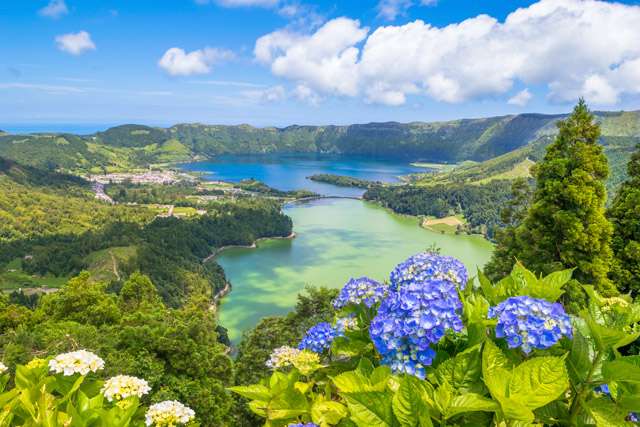 Rising from the depths of the Atlantic, where the Eurasian, North American and African tectonic plates meet, the nine islands of this archipelago are all tips of submerged volcanoes. Hot springs and calderas are reached via hydrangea-lined roads, their heads as blue as the sky above, contrasting beautifully with the lush, fertile, green interiors. Tea plantations sit alongside small villages, and all this is only a few hours away from Blighty!
Join us as we watch blue, fin and sei whales plus bottlenose, Risso’s and common dolphin on our Whales & Dolphins of the Azores holiday. To find out more or to book your place contact us.