Brilliant Beavers & Beautiful Buntings

Ian Loyd, Product Manager, develops our exciting holidays across the globe, but here introduces us to his home county and our trip to Devon in search of beavers, buntings and so much more.
By midsummer, the westerly county of Devon is full of life from colourful blooms of wildflowers to migrant birds busily feeding insects to their growing chicks, while on quiet waterways, our most charismatic rodent, the Eurasian beaver will also be at its most active, drifting silently along tranquil rivers.
 A sighting of a beaver in its natural habitat can be an electrifying experience and for me, it has to be one of the top wildlife encounters you can now enjoy again in Britain. It's not every day that you get to see a wild mammal in England, and normally nocturnal and elusive species such as beavers are even more special to observe.
 For me, there are several reasons that make beavers so enjoyable to watch. Firstly, if you're patient, they often reward you with demonstrations of a variety of behaviours as they go about their daily business of grooming, feeding, and collecting food or material for their lodges or dams. There's also the possibility that you will be treated to seeing them in both the river as they effortlessly swim up a quiet stretch of water, as well as on land, where their impressive size and distinctive features such as their scaly tail can really be appreciated.
 Another wonder of beaver watching is the story that comes with this iconic animal. When we think of the term 'keystone species', animals such as elephants, sea otters and wolves often come to mind as examples that have a disproportionately significant impact on their environment and typically hold together a complex ecosystem. When it comes to wetlands, there can be few other species that have quite such an impact on creating and maintaining wetlands for other species, keeping water within the environment during droughts, reducing extreme flooding and purifying water as beavers. This background makes these wonderful mammals even more intriguing to observe as they discreetly impact on their surroundings right in front of you.
 On our new Wild Devon tour, we spend time looking for beavers on the River Otter, the site of the first official reintroduction of the species back to the wild in England, and now home to over 20 beaver territories. We also go in search of them at the Coombeshead Reserve in West Devon. Here their habitat creation is most evident, along with a variety of nationally declining wildlife that's slowly returning to the habitats they are creating.
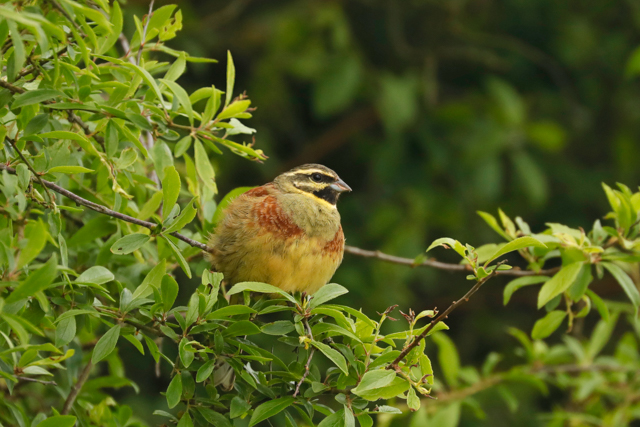 Perhaps Devon's most eye-catching resident bird species is the cirl bunting, one of the most beautiful of all our songbirds. The story of these stunning yellow, black, and buff buntings is one of hope and a conservation success story, as although their population still remains limited to South Devon, it has bounced back significantly over recent decades thanks to sensitive farming practices. The sight and sound of these delightful birds perched atop a hedge to the backdrop of stunning coastal scenery is one of the highlights of a visit to this idyllic corner of England.
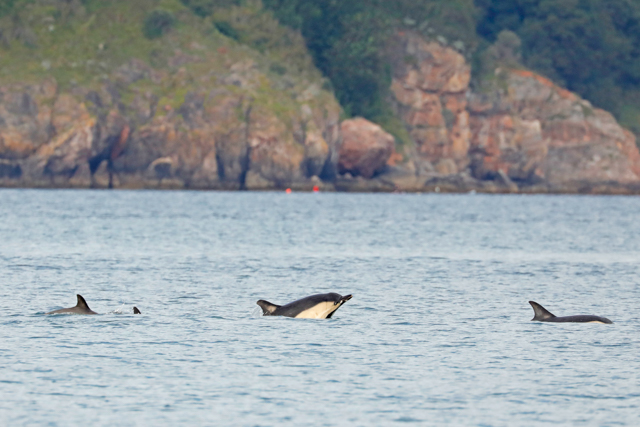 Devon's varied habitats are home to plenty of other wildlife treasures too, from dolphins and seals along the coast to butterflies and birds on Dartmoor, and midsummer is one of the very best times of year to experience it all.
Speak to our team to find out more or to book your place on our short wildlife holiday to Devon.