Costa Rica: Quetzals, Hummingbirds & Harpy Eagles

Product Manager Brian Wood describes Costa Rica’s key wildlife sites, and why this tiny country punches well above its weight in terms of biodiversity and conservation.
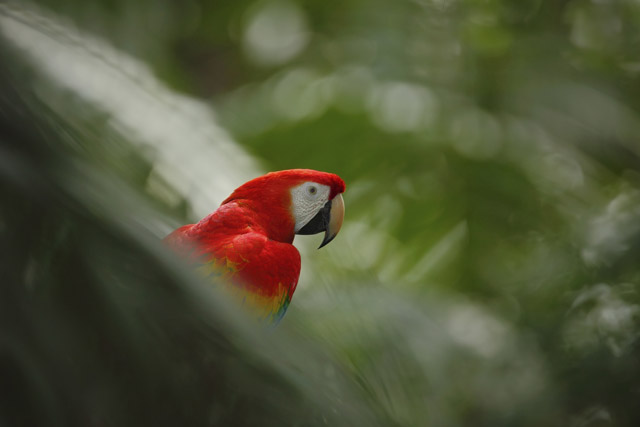
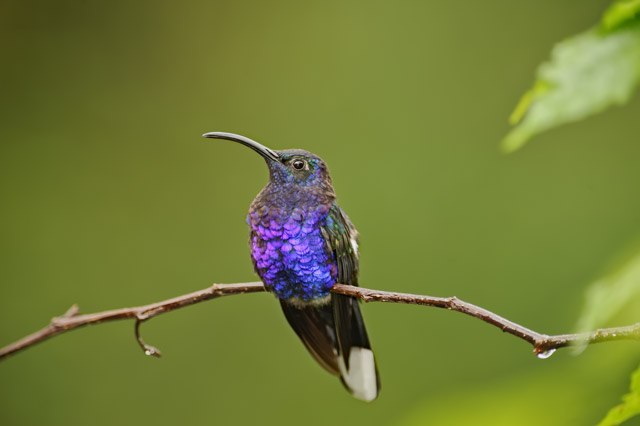
Costa Rica has long been a major destination for avid birders in search of exotic avifauna. The mainland and territorial waters together are home to over 840 species – some 10% of the entire world population. This riot of birdlife includes about 600 residents and eight endemics; there are 54 species of hummingbird, and 16 species of parrot.
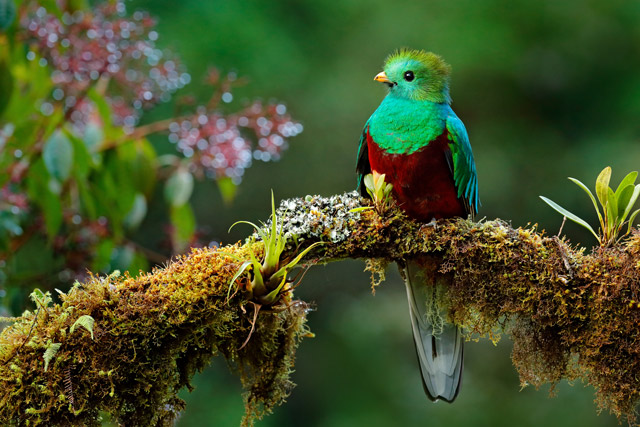
Such diversity is due, in part, to the nature of Costa Rica’s formation. After millions of years of earthquakes and volcanic eruptions, the once separate continents of North and South America became connected, and the land-bridge that linked them – Central America – was populated by species from both, such as jays from the north and hummingbirds from the south. In addition, Costa Rica’s tropical climate ensures that it is blessed with an abundance of fruit and flowers. Birds that specialise in feeding mainly on fruit or flower nectar become progressively rarer the further away you get from the equator. But in Costa Rica, where trees fruit all year round, birds such as the resplendent quetzal can live on a diet that consists virtually of a single fruit.
For a tiny country (with an area smaller than Scotland), Costa Rica punches well above its weight in both biodiversity and conservation. Established in 1976, the National Protected Areas System includes more than 190 areas in seven categories, giving Costa Rica one of the highest percentages (26%) of protected land in the world. With both Pacific and Caribbean coastlines, and nowhere more than 130 kilometres wide, the country’s spine is dominated by a 400-kilometre-long chain of mountains, with a maximum elevation of 3,820 metres. The net result is a patchwork of different habitats, and a dream destination for the wildlife enthusiast – birders, in particular.
On the Caribbean side, Tortuguero National Park comprises natural lagoons and creeks linked by canals created for the export of bananas. The area’s heavy rainfall combined with a lack of human habitation, ensure that the park is a haven for wildlife. The vegetation that lines the waterways teems with herons and kingfishers, tree frogs, sloths and bats, while beaches of dark volcanic sand provide a nesting ground for four species of sea turtle –: green, leatherback, hawksbill and loggerhead.

By contrast, the small town of San Gerardo de Dota in the foothills of the Talamanca Mountains sits amidst high-altitude rainforest. Here, the upper slopes of a steep-sided valley are shrouded with cloud forest, home to many species of bird, including the resplendent quetzal, regarded by some as the most beautiful bird in the world. (Surprisingly, this stunning species is not Costa Rica’s national bird. That distinction is reserved for the widespread, but rather more nondescript-looking, clay-coloured robin.)
However, in my opinion, the jewel in Costa Rica’s wildlife crown is the remote Osa Peninsula, which lies in the south-west of the country near the Panama border. This bastion of biodiversity – Central America’s last major tract of Pacific rainforest – shelters its largest remaining population of jaguars and tapirs. Occupying some 40% of the Osa Peninsula, Corcovado National Park is home to half of Costa Rica’s species, with its largest population of scarlet macaws and many other endangered animals that include Baird’s tapir, giant anteater and the magnificent harpy eagle, the world’s largest bird of prey.

A combination of social conscience, political will, unusual economics and sheer effort ensure that, in Costa Rica, a larger percentage of land remains as natural habitat than in any other country in the world. It offers a valuable way forward to every country on the planet … as well as remarkably rewarding destination for the keen naturalist.
Contact us to find out how you can discover the wonders of Costa Rica’s wildlife for yourself.