
Nature's Song

Wherever you live in the UK, even in the centre of a city, there will be birdsong. As attractive as it sounds to us, birdsong has two meanings to birds. It is almost exclusively male birds which sing in spring in the UK, and one purpose of their songs is to attract a mate. Beyond courtship, which happens quite early in the season, male birds sing to defend their territories, to maintain enough space in which to forage to feed their young.
Since a completely natural UK would largely be cloaked in woodland and scrub, most the familiar birds we see in gardens and parks are naturally birds of woodland and woodland edge. Spring, as they defend territory and prepare to breed, is absolutely the best time to learn their distinctive songs. Without doubt the best way to learn them is simply to spend time watching and listening, but here are some pointers:
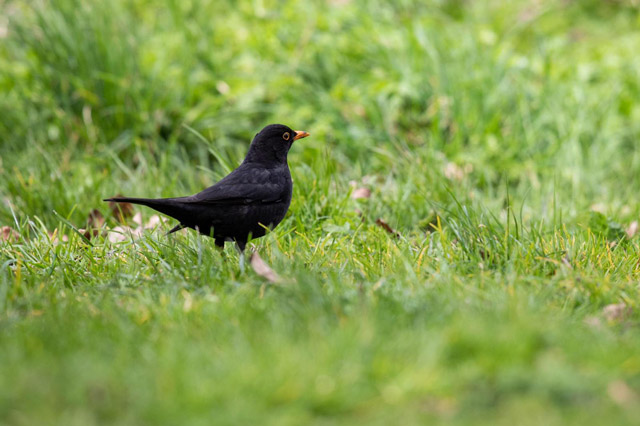 In almost everyone’s street, garden or local park there will be blackbirds. Among our best-loved birds, blackbirds have a beautiful song, composed of a languid series of fluty notes, often heard from very early in the morning. Blackbird song ends abruptly, which is a handy pointer.
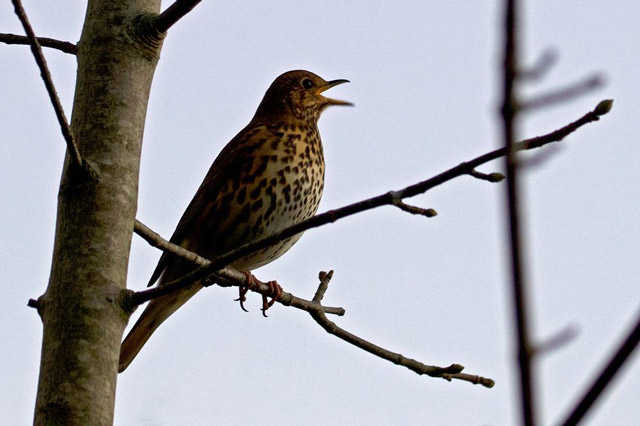 The closely related song thrush sounds entirely different. It repeats a short, shrill phrase several times before moving on to repeat another shrill phrase a few times. Often there are quieter chattering noises between phrases, though it is the shrill parts which give a song thrush away.
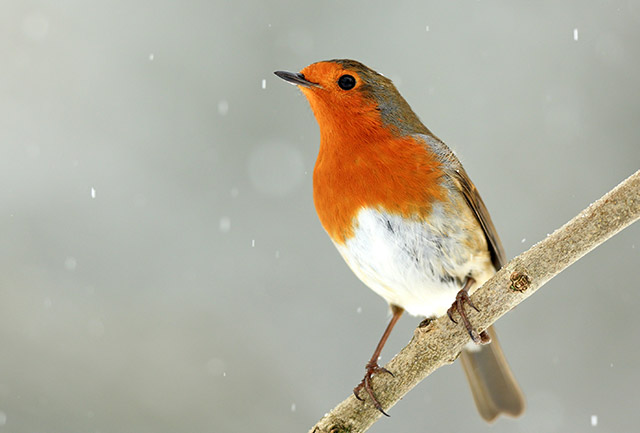 The robin is also common in gardens, parks and streets and sometimes, where there are street lights, can be heard singing all night. In contrast to the song thrush, robin song is fluid and melancholy, often starting with a long, sad squeak before tumbling into a descending trickle.
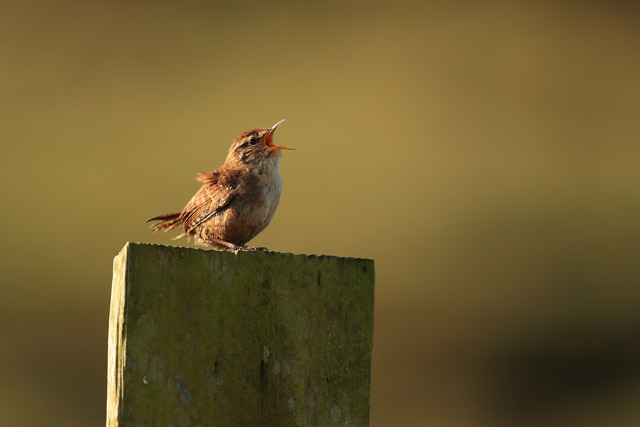 Wrens, for their tiny size, are amazingly loud. Their song is a fast, busy, whirring jumble which usually includes a characteristic loud trill.
Great tits are loud and repetitive, like song thrushes, though less shrill. Their typical song is a cheerful, often rather fast, rocking backwards and forwards between two notes, with an almost electronic tone.
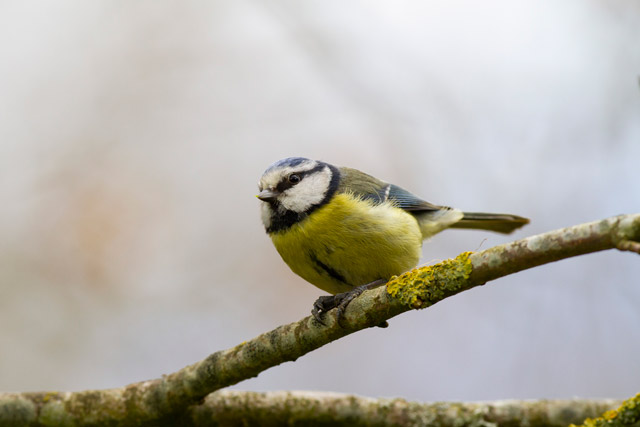 Blue tits, by contrast, have a lovely silvery tone. Though their calls are generally quite harsh, their attractive songs tend to be a series of long chiming notes followed by a quick, bright trill.
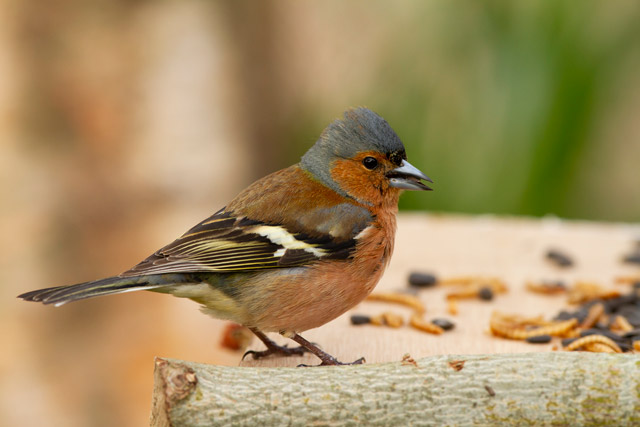 The chaffinch is common wherever there are trees, including quite small gardens. Its unmistakable song has a toppling quality, as though something were clattering down the stairs before hitting the bottom with a loud crash.
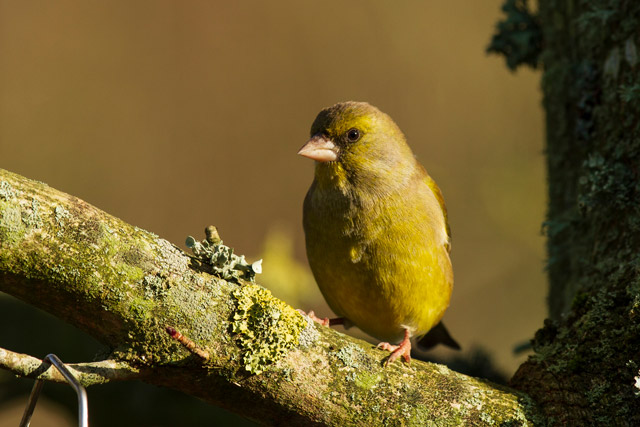 Greenfinches are also common, though they have declined significantly in recent years. They often sing from conifers, giving a rough, scraping note, which is followed by an attractive liquid trill. Unlike most garden birds, greenfinches frequently sing in flight, doing loops from a song perch at the top of a tall conifer and coming back to the same spot.
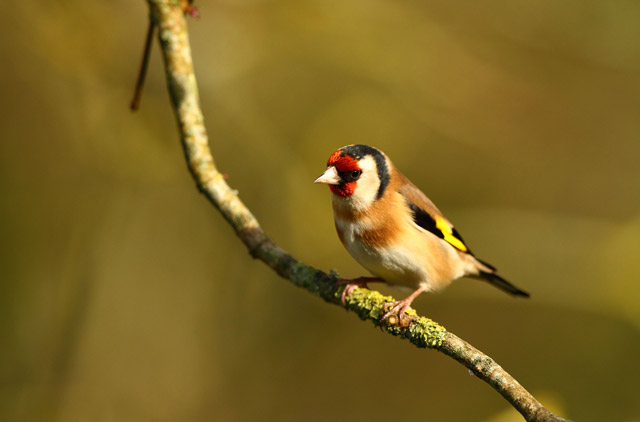 The goldfinch has become much more common in gardens in the past 20 years. It gives an aimless but lovely series of bright tinkling notes, often interspersed with the occasional harsh, nasal note, worthy of a greenfinch.
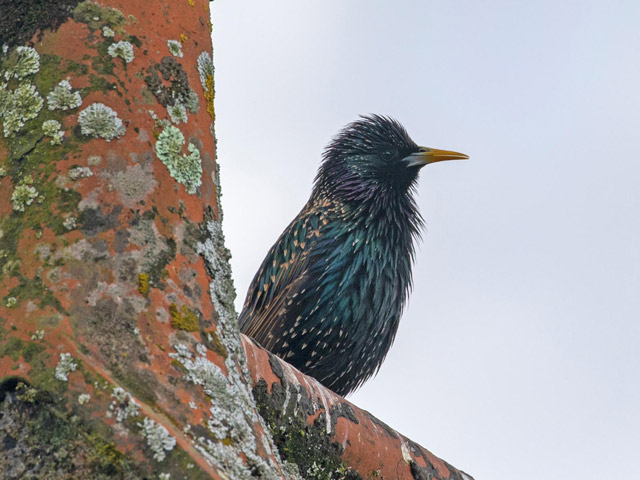 Though their numbers have plummeted in the UK in recent decades, starlings remain common birds in our towns, gardens and parks. Starling song is very varied, frequently including clicks, whistles and guttural trills, giving it a Sci Fi quality. Starlings are known for incorporating many other sounds into their songs, including both songs and calls of other birds and sounds of human origin such as engines and phones.
To identify and find out more about the species in your local area and beyond, RSPB have some comprehensive resources on their website:
www.rspb.org.uk/birds-and-wildlife/wildlife-guides/identify-a-bird/
www.rspb.org.uk/birds-and-wildlife/wildlife-guides/bird-a-z/
So why not take this time to explore the sounds in your own garden and let us know what songs you have heard?