One of the most magical wilderness areas on Earth, Svalbard is a land of remarkable Arctic landscapes and out of this world wildlife sightings. The Svalbard archipelago is an autonomous part of Norway and can be accessed on daily flights from Oslo and Tromso.
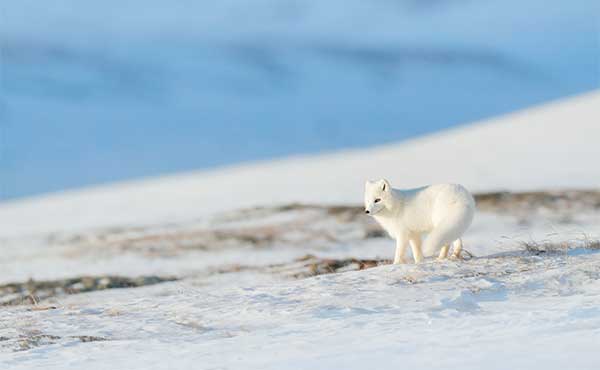
We run a range of wildlife holidays to Svalbard, using a range of exceptional expedition vessels to explore and enjoy wildlife encounters with a wealth of sought-after species. Arguably, the most famous resident here is the polar bear, while other species include Arctic fox, Svalbard reindeer, walrus and a wealth of different bird species.
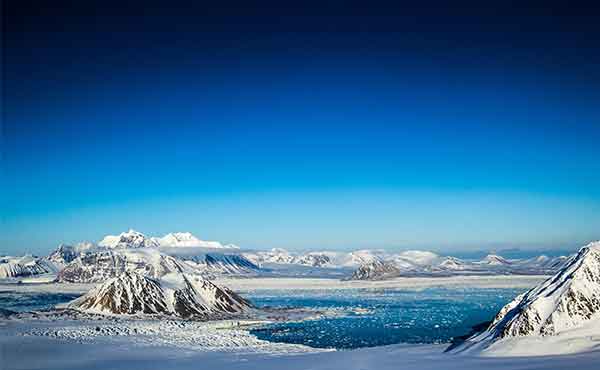
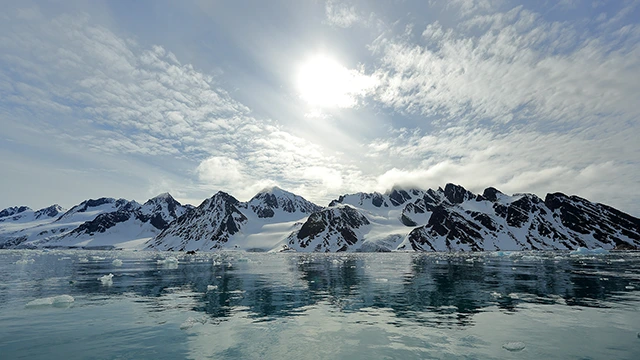
 It isn't just the wildlife that make this part of the polar regions such a popular destination, the stunning scenery and experience to be in the High Arctic is a big draw.
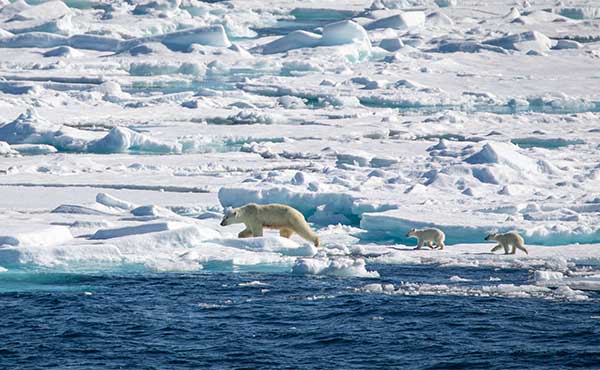
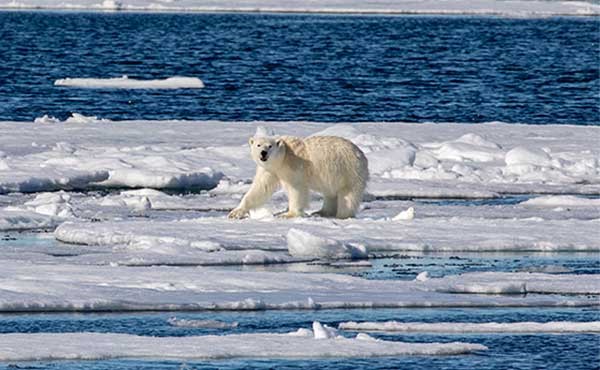
 Polar bears in Svalbard
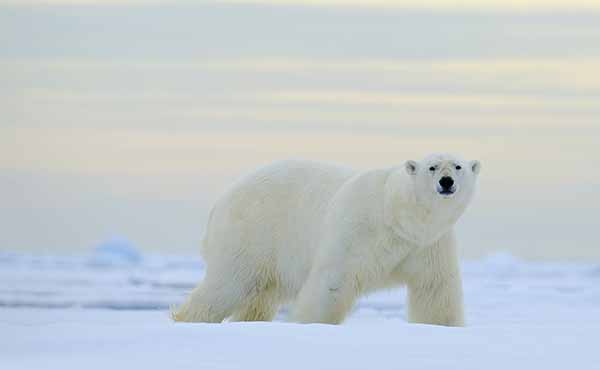
The polar bear population here is stable, for the time being, and polar bear sightings are at the top of many visitors' lists. It's thought that there are currently around 3,000 polar bears in Svalbard and the surrounding seas.
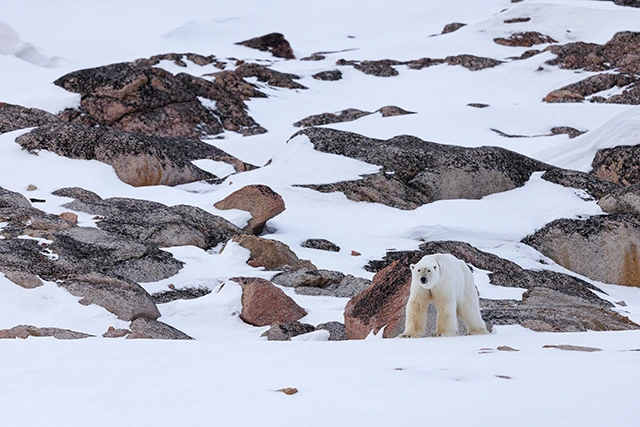 A female polar bear will spend much of the winter on land, raising her young in a snow den, before heading out on the sea ice in spring. Male polar bears are a lot more transient and can cover huge distances in search of a potential mate and food. A male polar bear can weigh up to a staggering 700 kilogrammes, while a female polar bear can weigh up to 350 kilogrammes.
A polar bear diet consists mainly of seals, but they're opportunists and are known to kill small cetaceans, walrus and even reindeer. If there's no food to hunt, their exceptional sense of smell helps them to locate carcasses and even bird eggs, which they'll hoover up.
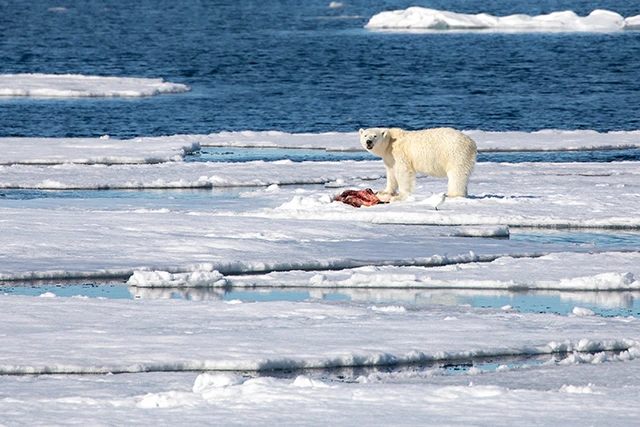 It's important to note that there are polar bear viewing regulations in Svalbard which all operators must adhere to. Wildlife enthusiasts will revel in the staggering natural beauty when they visit Svalbard, which is protected and enhanced by having these regulations in place.
Am I likely to see a polar bear in Svalbard?
As with any wild animal, the polar bear does not follow a script. They live in a huge, mostly pristine wilderness and can choose to show themselves, but equally they can keep themselves hidden. If you join on a polar expedition in Svalbard, you'll be putting yourself in the right place at the right time. All that's then needed is a bit of luck.
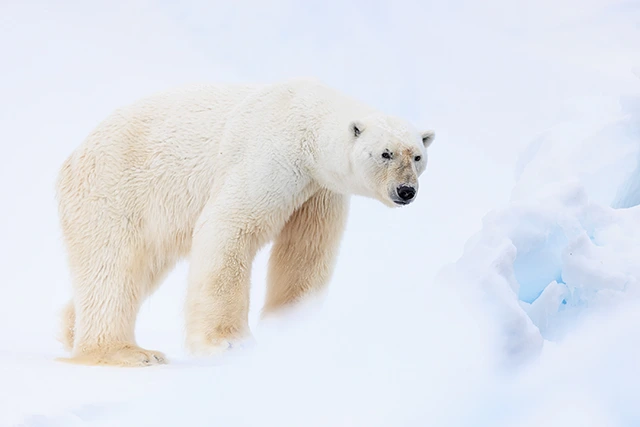 Some expedition voyages see multiple polar bears, some see only one or two, while others unfortunately don't see any. It's impossible to predict. Rest assured, though, the expedition leader, and their team, will do everything they can to deliver the best wildlife encounters possible.
Where & when can I see polar bears in Svalbard?
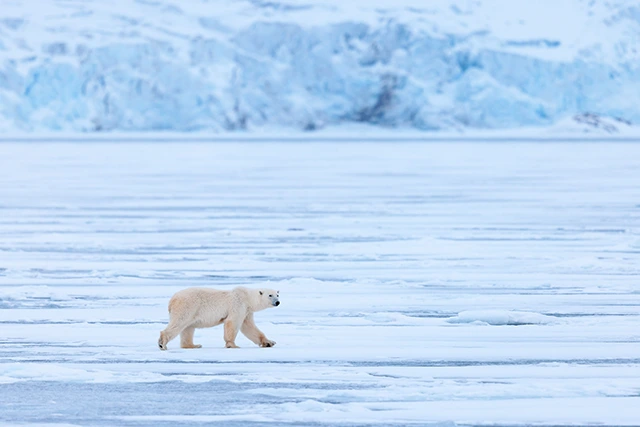
Quite simply, you can see a polar bear anywhere in Svalbard. Although many depend on the sea ice to hunt seals, many bears now spend the summer on land and are adapting their behaviours by finding other sources of food.
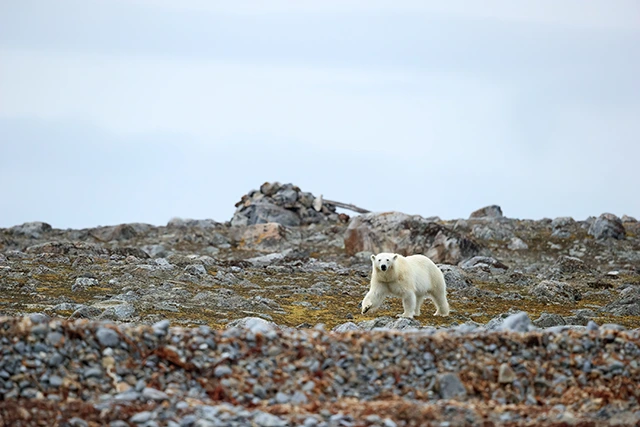 This means that although there's less snow and ice in summer, it can be possible to see bears. Polar bears are found from north to south, east to west, and you'll be amazed at just how well they can disappear.
We run tours early in the expedition season, including a dedicated photography charter in May (Svalbard Photo Expedition) and a small vessel charter in June (Svalbard Wildlife Expedition), when the landscape is still covered in snow and ice, while we also offer expeditions that will focus on the north of the archipelago (North Spitsbergen), or even circumnavigate the island of Spitsbergen (the largest island in Svalbard, on our Around Spitsbergen tour). Of course, all of our itineraries are wholly dependent on sea ice and weather conditions.
If you're looking for bears on ice, the earlier in the season probably gives you the best chances (May and June), whereas if you're looking to enjoy other wildlife encounters alongside the polar bears, perhaps travelling in July or even August would be more suitable.
 The later in the summer season that you travel, the better chance you would have of circumnavigating Spitsbergen.
Typically, most sightings of polar bears are fairly distant and from the main expedition vessel, but occasionally, if possible and in accordance with legislation, there may be the opportunity to undertake a Zodiac cruise and hopefully enjoy closer views.
Weather & Light in Svalbard
If you travel earlier in the season, particularly before mid-June, you're more likely to experience the end of the Arctic winter. Although there will be 24 hour daylight (as there will be on all of our Arctic expeditions in Svalbard), the expeditions earlier in the season will likely enjoy colder temperatures and therefore, more snow and ice.
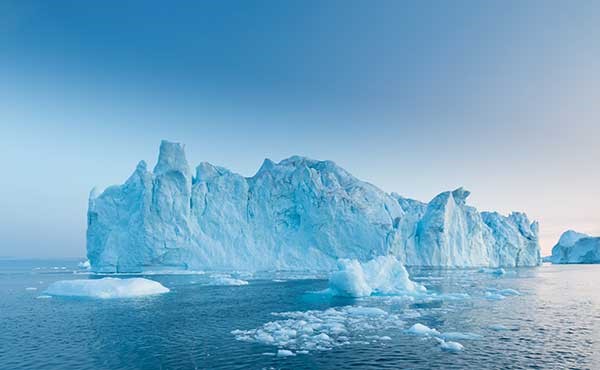
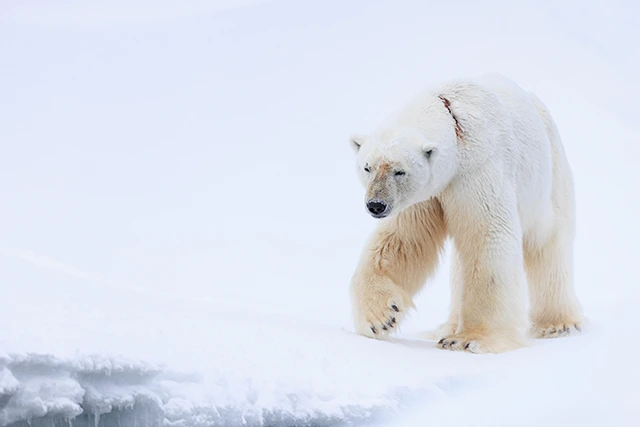 The pack ice will likely still be within sight of the north coast, while large areas of fast ice should still be intact. This is another excellent area to search for polar bears.
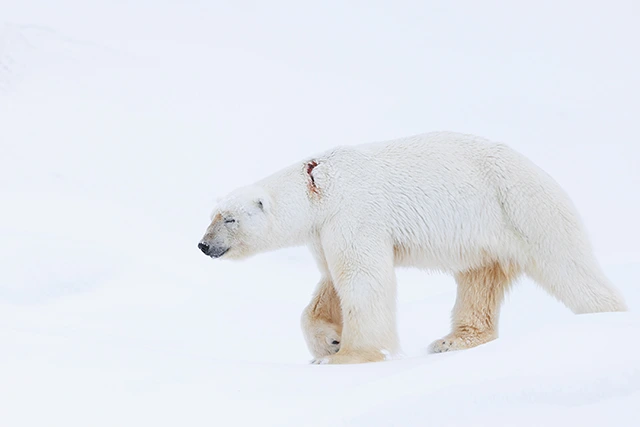 Summer departures in July and August can be surprisingly mild, depending on the prevailing winds and weather systems, but you can expect maximum daytime temperatures of between five and ten degrees Celsius.
Although there might not be as much ice around in the summer months, and much of the landscape will be green and brown, there's plenty of life to enjoy and polar bear sightings can be good.
How to get to Svalbard
The majority of people that visit Svalbard do so for tourism reasons - many of them hoping to see a polar bear. There are a couple of different ways someone can get to Svalbard, but most people will choose to fly.
Svalbard is an self-governing territory of Norway and there are daily flights from the mainland. You can either fly direct from Oslo or via Tromso with Scandinavian Airlines (SAS). With SAS flying from multiple airports in the UK, it's very easy for us to organise connecting flights that suit you and your chosen expedition.
Alternatively, from time to time, there are expeditions that leave mainland Norway, while some even leave from Scotland.
What Other Wildlife can you see in Svalbard?
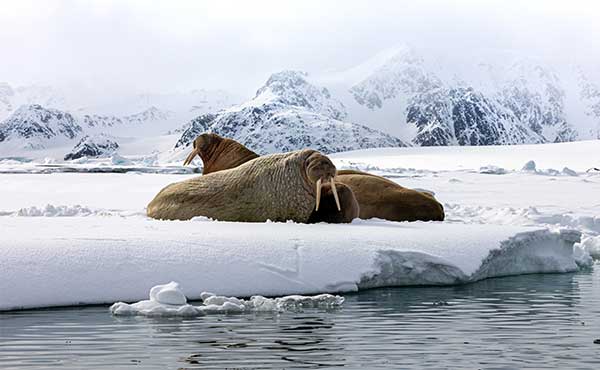
The Svalbard archipelago supports a surprising array of Arctic species. With large swathes of natural habitat, typically untouched by man, this Arctic wilderness is surprisingly rich in mammal life, such as the endemic Svalbard reindeer and Arctic fox on land, while pinnipeds include Atlantic walrus, as well as bearded, common and ringed seals.
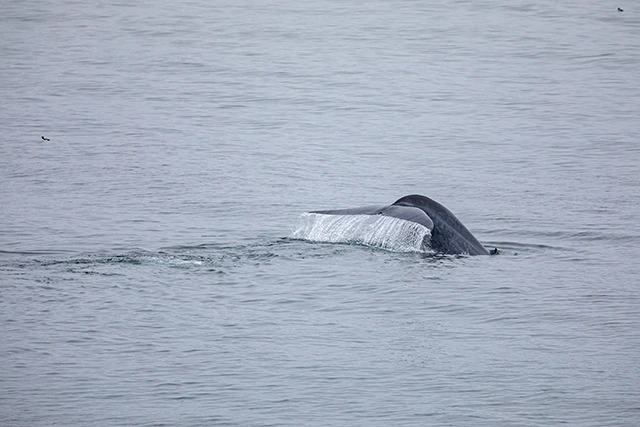
 A number of cetaceans inhabit the waters around the coastline of the Norwegian archipelago, although different are species are present at different times throughout the year. Notable species include beluga, humpback, minke, blue and bowhead whales. Bowheads are particularly rare and a sighting that should be cherished. Occasionally, orca (killer whales) are spotted off Svalbard's coastline, but it's rare and little is known about these predatory cetaceans.
 The birdlife is incredibly rich, particularly in the summer months. In fact, it's amazing how many individual birds make the journey to this remote archipelago.
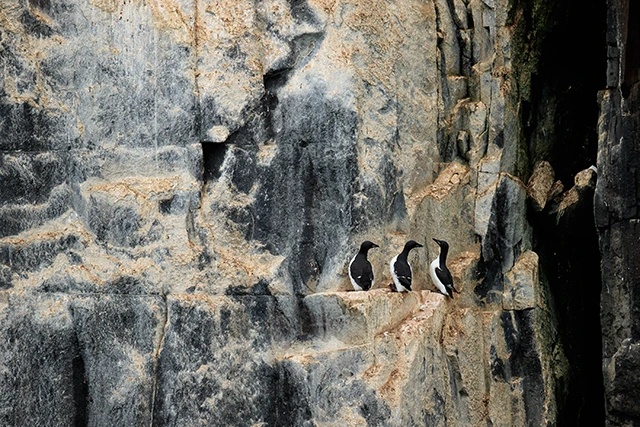
Firstly, there are the seabirds which include members of the auk family, such as Brunnich's guillemot, Atlantic puffin and little auk. Then there are the gulls, including some real specialities including Sabine's and ivory gulls, while more common species include glaucous gull and black-legged kittiwake. Of course, you can't forget the three species of skua found in Svalbard, which are Arctic, pomarine and long-tailed.
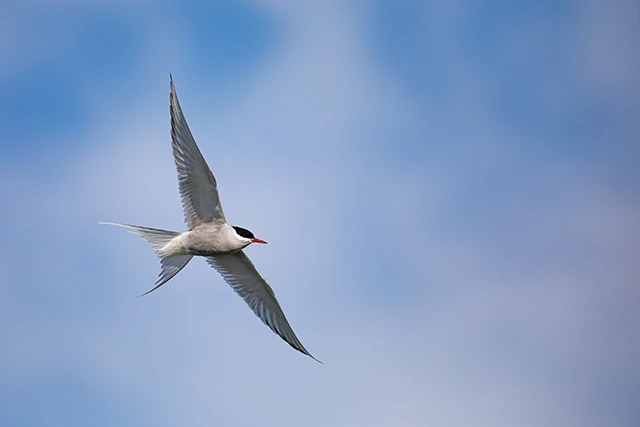
 Arguably the most impressive migrant that comes to the Arctic each year is the Arctic tern. Not because of its elegance or beauty, but because it has travelled up from Antarctic just to breed.
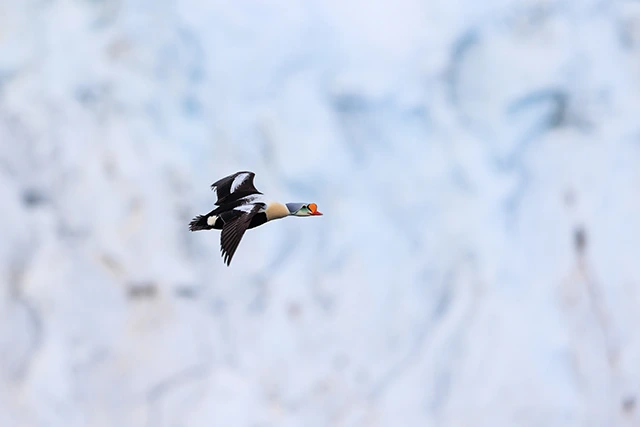
 On land and on the shore, you can expect to see purple sandpiper, rock ptarmigan and snow bunting (the only Arctic songbird). Then there are the ducks and the geese, some of the most beautiful species visit the Norwegian archipelago. Common eider and the rare, but spectacular, king eider, alongside long-tailed duck are all present here, while bean, greylag and barnacle geese all breed here each summer.
 Types of Expedition Voyages in Svalbard
All of the expeditions we operate or sell in Svalbard are operated onboard purpose-built ships. We use vessels that range from a maximum of 12 passengers to ships that carry up to 150 people. All of these vessel are operated in conjunction with strict wildlife and environmental policies.
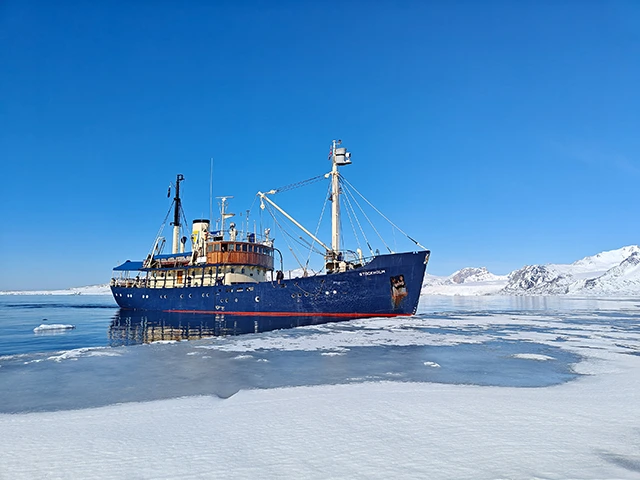 Itineraries range from eight days focussing on the wildlife to more generic expeditions enjoying geology and history, which can last up to 16 days. It's important to note that many of these other Svalbard itineraries also visit Greenland.
All of the ships have a dedicated expedition leader and team aboard, as well as the dedicated crew. The teams aboard all of the ships work seamlessly, trying to ensure that all passengers enjoy the finest wildlife sightings and exceptional hospitality.
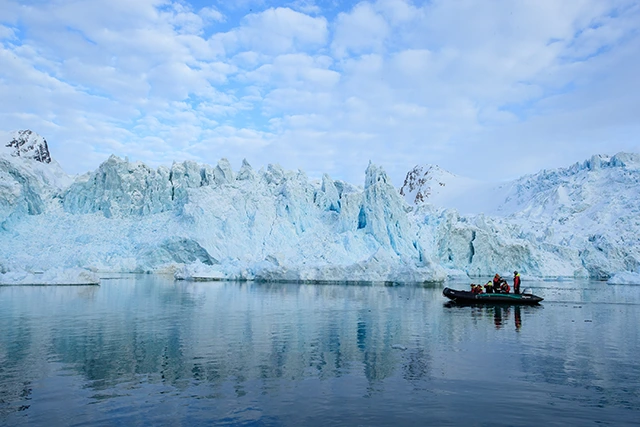
Each ship is equipped with Zodiacs, which allow every onboard the opportunity to explore deeper into fjords and bays, make shore landings on beaches and approach some species a little closer (closely following Norway's legislation).
 Photographing a Svalbard Polar Bear
First things first, polar bears are not white. Imagine a pale cream colour in a white world and you have a polar bear. For photography, this means that you're not photographing a white subject in a white world. However, it's important to consider how your camera will expose for such a scene.
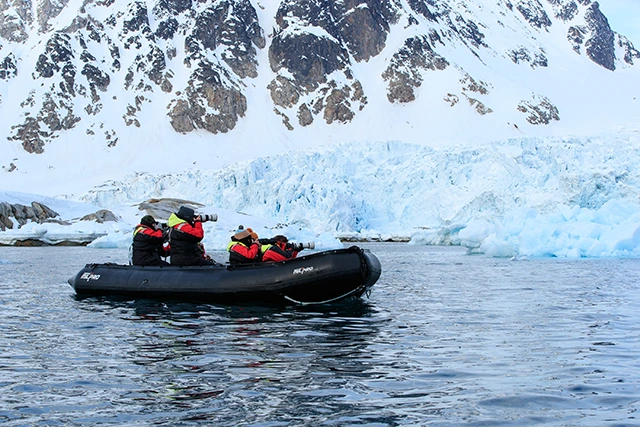 Cameras want to create an image with midtones, this means that they want to turn those whites to greys. So be sure to shoot in manual or aperture priority, overexposing your image by at least one stop, probably closer to two stops (maybe more depending on the lighting and your camera's sensor - every camera is different).
If a polar bear, or any other species for that matter, is in habitat with plenty of highlights, midtones and shadows, you probably won't need to over expose in the same way. If you're passionate about photography, have a look at our dedicated photographic voyage in Svalbard.
If you're feeling inspired to see polar bears in their natural habitat or perhaps to visit Svalbard, view all our polar bear watching tours, or contact our team to start planning your next wildlife holiday.