
Here at Wildlife Worldwide, we have over 30 years of experience in organising outstanding wildlife holidays. Our team of wildlife experts have travelled extensively gaining first-hand knowledge of the world’s finest wildlife experiences.
Whether you’re planning a tailor-made itinerary or looking to join one of our expertly guided small group tours, we’re here to help. Below, you’ll find the answers to our most frequently asked questions. Explore our FAQs for helpful guidance, or contact us for further information.
About Our Holidays
We have detailed itineraries for all our wildlife holidays, which you can request or view via the relevant holiday page on our website. Each travel plan includes a day-by-day itinerary and additional useful information. You can also request an itinerary directly from us - just contact our team.
Our small group holidays depart on set dates and are led by expert guides. These tours are limited to small numbers, making them a great way to meet like-minded travellers. Guides are highly knowledgeable, helping you find the best wildlife and sharing their insights throughout the trip.
Tailor-made holidays offer flexibility to choose your own departure date (within optimal wildlife-watching seasons). Depending on the destination, you may have one guide throughout or different local guides in each region. These trips are personalised to suit your interests and maximise your time in the best wildlife locations. In addition to our trip idea suggestions on our website, several of our group tours can also be tailored to your requirements.
Traditional small group tours are designed for outstanding wildlife sightings, accompanied by expert guides. However, they’re not specifically designed with photography in mind.
Our photography tours, on the other hand, are led by expert wildlife photographers and designed to offer exceptional photographic opportunities. These may include purpose-built hides, open vehicles, or time on foot with your subjects. Your leader will provide assistance in the field and, on selected trips, also offer workshops on editing and other skills. Read more in our Wildlife Photography FAQs.
This varies by destination and species. We always prioritise the welfare of the wildlife and the safety of our guests. Our encounters are conducted at a respectful distance to avoid disturbance.
We have a wide range of birdwatching trips, and for our other trips it varies. The vast majority of our wildlife holiday focus on all the wild delights one may encounter when out in the field. Whether you see a mammal, bird, butterfly or wildflower we’ll endeavour to make the most of every opportunity. However, there are certain tours that focus on a particular species or family. We have a range of dedicated birding breaks, mammal watching and whale watching across the globe, offering a unique opportunity to enjoy unrivalled wildlife sightings.
The majority of our holidays display prices both including and excluding international flights from London as standard, though we can quote for flights from other airports. Prices typically include accommodation, transfers and some meals, and full details can be found on individual trip pages. If flights aren’t included in the itinerary, we can arrange your flights as part of your holiday - contact our team.
We need a minimum number of participants to run our group departures – this is dependent on the individual trip. If we’re unable to run a group tour, we’ll offer you an alternative or refund your deposit. You’re welcome to check on the status of your trip at any time, and we’ll inform you as soon as it has reached minimum numbers.
Most of our holidays include all transfers, except where specified.
Yes, please contact us for a quote based on your preferred travel dates and regional departure options.
Absolutely. All our tours are available on a land-only basis, and can be booked from anywhere in the world. We’re also able to arrange flights from your preferred airport overseas as per your requirements.
Yes you can! Tailor-made trips are organised solely for you with a flexible start date, and all of our group tours are suitable for solo travellers – it’s a great way to meet like-minded travellers. Most trips include a single supplement, but you also have the option to share with a member of the same sex and we’ll endeavour to pair you up. Male and female shares are displayed in the Group Tour Calendar and advertised periodically in the enews, which you can subscribe to.
Yes, absolutely. With the cost of international flights increasing, if time and budget allow, it makes sense to extend your stay, either pre or post. We can usually cater for all requirements, whether it’s more time visiting a wildlife area of interest, or time spent relaxing on a beach, be sure to ask your Travel Consultant what options are available.
Group sizes vary between trips, and depend on a variety of factors including the nature of the terrain you’re visiting, the size of the vehicle and the accommodation we’re using. For all of our group trips there’s both a minimum and maximum group size, detailed on our website.
We’re proud to operate trips with some of the smallest groups size in the industry, often between four to eight participants and with an excellent leader to participant ratio.
Your Holiday Experience
We try to accommodate all dietary needs – please advise us of your requirements at time of booking. Although we endeavour to provide alternative options, it may be difficult in some remote regions to determine if foods are 100% allergen-free. We recommend bringing safe snacks and taking precautions, as you would at home.
There’s usually a vegetarian option available, and most picnic and buffet-style meals will have lots of salads, rice dishes and breads. Unlike destinations such as India or South-east Asia, where vegetarianism is a well-established part of the culture, some countries do not traditionally offer a wide range of options for those who don’t eat meat. If you have any concerns, please contact us and raise them with your Travel Consultant.
On our group tours, the vast majority of the wildlife activities are optional. However, if they’re combined with a transfer then you’ll have to partake on that occasion. We try to be as flexible as possible to allow you to enjoy your wildlife holiday. If you’re looking for more flexibility, we have a range of tailor-made trip ideas that can be customised to your requirements, and many of our group tours can also be operated on a tailor-made basis.
The level of fitness required for one of our holidays depends on the itinerary and associated activities. Many of our holidays require a moderate level of fitness but others are vehicle-based with limited walking. Speak to our wildlife travel experts for specific details as to the trip you may be interested in.
We’ll always try to be as accommodating as possible. If you have a disability and would like to join a particular trip, please let us know and we’ll be able to let you know if it’s feasible.
The weather the world over is hugely unpredictable and it’s best to be as prepared as possible. Your Travel Consultant will be able to advise likely conditions, but you can also check online in advance of travel.
Holiday Planning
Your booking confirmation will include a suggested packing list tailored to your destination. In general, bring appropriate clothing, footwear, binoculars, and a camera. For photography tours, we’ll provide advice on the best equipment to take and if you have any more specific questions, contact us - we’re happy to liaise on your behalf with the Tour Leader.
Yes – if you’re happy to share with a member of the same sex, please let us know and we’ll advertise a sharing option as being available in the Group Tour Calendar. We have a large number of solo travellers so we have very good chance of pairing you up successfully.
It’s one of our terms and conditions of booking that you have adequate travel insurance in place before you travel with us and we recommended you take out travel insurance at the time of booking your trip. This will, therefore, provide cover for pre-departure cancellation should you have to cancel your trip for an insured reason such as illness or serious accident preventing you from travelling.
We work in partnership with Campbell Irvine to offer a policy which has been specifically designed to meet your requirements whilst on holiday.
For further details or to arrange this extensive travel insurance for your holiday, please contact Campbell Irvine.
To check whether a visa is required, and for the most up-to-date visa information for the country you’re visiting, please contact us for details. Your GP, or a specialist vaccination centre, will have access to the most up-to-date information on relevant vaccinations and medical precautions for your destination.
We recommend that all Wildlife Worldwide clients visit the FCDO website before travelling.
There are many reasons why it’s beneficial to book early. For tailor-made holidays it ensures that you have a better chance of securing your preferred accommodation and guides. Generally speaking air fares are also cheaper in advance.
For our group trips, many of these sell out years in advance, so it’s best to book your place at the earliest opportunity.
We understand that sometimes you may wish to join a trip close to departure time, and we’ll always do our best to enable you to book a last-minute wildlife holiday. We accept last-minute bookings, though availability may be limited and flight costs higher.
Our expert Wildlife Team have travelled the world in search for the finest wildlife experiences, and their past experience varies from safari guides to wildlife photographers, culminating with years of expertise in the travel industry. We've created hundreds of exciting wildlife holidays, and can help plan your perfect adventure.
On our website, you can find a holiday search to narrow down your choices, our tour calendar which showcases upcoming departures per month, a tour report library with detailed day-to-day accounts and images from our tour leader on previous trips, and a blog where we showcase our knowledge, expertise and experience. We also regularly host online talks and attend exhibitions around the UK, so you can hear from our team or even meet them in person!
We have an extensive range of brochures, including Wildlife Voyages, Wildlife Photography and Small Group Tours, in addition to our annual brochure. You can view these online, or request a copy in the post.
Wildlife Voyages
We offer a range of wildlife cruises around the world. From the pack ice of Svalbard and the vast wilderness of Antarctica to the warm, whale-rich waters of Baja California and the Dominican Republic’s Silver Bank, each journey is carefully designed around seasonal wildlife spectacles and expert-led exploration.
For New Zealand we have created a completely bespoke itinerary, combining dramatic scenery and opportunities to encounter seabirds, cetaceans, and pinnipeds, while in Canada and Alaska we focus on bear watching, whale encounters and coastal wilderness. In Indonesia, we explore biodiverse tropical seas, home to whale shark and vibrant coral ecosystems. Whether travelling to the polar regions or the tropics, our expedition cruises prioritise time off ship and in the field, small groups, and intimate wildlife experiences.
Travelling on a small-ship expedition offers a wealth of advantages for wildlife enthusiasts.
Small ships provide access to remote and pristine destinations inaccessible to larger vessels. This means fewer tourists and more intimate wildlife encounters, allowing you to observe animals in their natural habitats without disturbance. With smaller group sizes, expeditions can be more flexible, enabling spontaneous detours to follow wildlife sightings or explore hidden gems off the beaten path.
Despite their compact size, modern small ships are designed for comfort and stability, offering amenities comparable to larger vessels such as comfortable cabins, dining options, and observation decks. Additionally, smaller vessels can navigate closer to shorelines and into narrow channels, providing unparalleled access to remote habitats. Accompanying you on all our small-ship expeditions will be expert naturalists, guides, and researchers. Their knowledge enriches your wildlife experience, offering expert insights on local ecosystems, wildlife behaviour, and conservation efforts. Additionally, you have the added convenience of unpacking only once, plus your voyage price is inclusive of meals, and sometimes beverages too, highlighting the ease and value of a small-ship expedition.
We exclusively collaborate with small ships that allow you to fully immerse yourself in the destinations you visit. Understanding that each traveller has unique preferences, we offer a variety of vessel options tailored to suit different requirements and interests. For those seeking a blend of comfort and authenticity, our traditional ex-research vessels offer a nostalgic charm coupled with modern conveniences. These ships boast comfortable accommodations and a classic ambiance, providing a genuine expedition experience. Alternatively, if you prefer contemporary comforts and state-of-the-art facilities, you may prefer our selection of modern, purpose-built ships. Featuring modern amenities, spacious cabins, and luxurious touches, these vessels provide a premium wildlife expedition experience without compromising on comfort or style.
When choosing your ship, consider your personal preferences, travel style, and desired level of comfort. Whether you opt for the rustic charm of a traditional ex-research vessel or the modern elegance of a purpose-built ship, rest assured that each vessel in our fleet is meticulously selected to enhance your wildlife holiday experience.
Our small-ship expeditions come fully equipped with a range of essential gear and equipment to enhance your holiday experience. Most of our partners provide muck boots to loan throughout your voyage, in addition, a complimentary waterproof jacket is usually provided and yours to keep. You can typically find a selection of field guides and reference materials on board most vessels, along with a small selection of binoculars however, we’d recommend taking your own binoculars for personal use, to ensure you easy observation of wildlife.
Motion sickness can affect individuals differently, but rest assured, our expeditions are carefully planned to minimise the risk of seasickness, with routes chosen to maximise stability and minimise rough seas. However, if you're prone to motion sickness or are uncertain about how you'll fare at sea, some recommendations to consider include: seasickness remedies, such as tablets, wristbands or patches; stay hydrated and well rested; stay active – fresh air and gentle movement can often help. If you have any concerns, consider speaking to your doctor before you travel.
Every expedition is unique and will be designed according to local sea and weather conditions, and of course, opportunities for wildlife. However, as a general rule, you can expect to begin your day with a hearty breakfast before heading out for a morning excursion led by expert guides. You’ll return to the vessel for lunch before setting out on an afternoon excursion. As the day winds down, gather for a leisurely dinner on board, followed by evening lectures and presentations by your knowledgeable team of naturalists and guest speakers.
In addition to your daily itinerary, our fleet of vessels offer a range of onboard facilities and amenities designed to enhance your comfort and enjoyment. Each vessel is different but an example of potential facilities include a library, hot tub, sauna, laundry facilities and WiFi.
While a certain level of mobility is required to participate in onshore activities and navigate the ship safely, our expeditions are designed to accommodate a wide range of abilities. The ability to embark and disembark from Zodiac boats is essential for participating in shore excursions and wildlife encounters. Travellers should be able to step on and off the Zodiacs with assistance from our experienced crew members, using handrails and grab handles for support. During onshore excursions, travellers may need to walk short distances on uneven terrain, sandy beaches, or rocky shores. While strenuous hikes aren’t typically part of our excursions, being able to walk steadily and navigate moderate terrain is important for enjoying the wildlife encounters and exploring the natural surroundings.
Onboard the ship, travellers should be able to move around safely and comfortably, especially during potential rough seas or inclement weather conditions. This includes being able to navigate stairs, corridors, and outdoor decks while using handrails and grab handles for support as needed. If you have specific mobility concerns or accessibility needs, we encourage you to discuss them with our team during the booking process. Most operators will require a medical questionnaire to be completed approximately three months before departure.
The onboard menus showcases local flavours and seasonal ingredients. Breakfast usually consists of a selection of cereals, fresh fruit and cooked breakfast, along with juice, hot tea and coffee. Lunch is usually buffet style featuring salads, soups and hot entrees and dinner is normally multi-course with a starter, main and dessert. Depending on your chosen vessel alcoholic beverages may also be included.
The onboard catering team can accommodate most dietary restrictions, including vegetarian, vegan, gluten-free, as well as food allergies. However, it's essential to inform us of any dietary requirements prior to travel so that we can make the necessary arrangements.
The dress code on board is relaxed, casual, and geared towards comfort. We recommend packing lightweight and moisture-wicking layers that can be easily adjusted to accommodate changing weather conditions. Opt for breathable fabrics such as cotton or synthetic blends that dry quickly and provide protection from the elements. For the evening, jeans or other casual trousers are perfectly acceptable. On board the ship, comfortable footwear is essential for navigating the decks and moving around safely. Choose closed-toe shoes such as Crocs or trainers that provide support and stability. Slip-resistant soles are recommended to prevent slipping on wet surfaces.
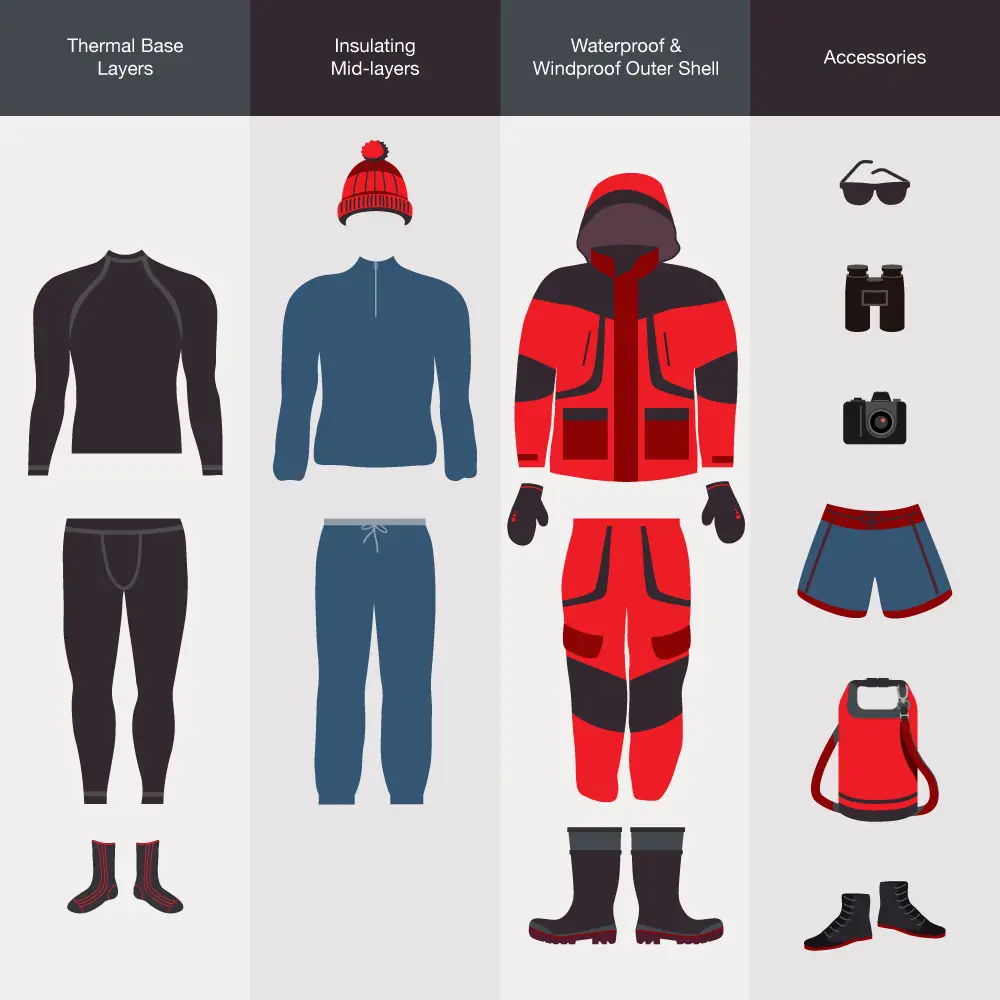
When you book your Arctic or Antarctic holiday with us, we’ll provide you with a comprehensive packing list. In the meantime, here’s an example of some essential items you’re likely to need.
- Thermal base layers, insulating mid-layers, and a waterproof and windproof outer shell to protect against cold temperatures and harsh winds.
- Muck boots (usually provided) will keep your feet dry and a waterproof jacket and trousers will help protect your body from the elements.
- You’ll need a warm hat, gloves and sunglasses, plus comfortable shoes to move about the ship.
- Remember binoculars and a camera, plus a dry bag (or similar) to keep your belongings dry on Zodiac cruises and wet landings.
- Lastly, don’t forget to pack your swimming gear if you want to brave the icy waters for a polar plunge!
Travel insurance is essential when embarking on a journey to remote regions. While standard travel insurance policies may provide some coverage, it's important to ensure that your policy includes specific provisions for traveling to remote and extreme environments. For example, you’ll need to ensure that you’re covered for emergency medical evacuation and repatriation and 24/7 emergency assistance.
We regularly feature offers, ranging from special savings, early booking offers and limited-time promotions across a selection of our wildlife voyages. These may include reduced cabin prices; solo traveller offers or added-value inclusions on selected departures.
Yes. Our latest Wildlife Voyages brochure showcases a collection of our small-ship expeditions, including itineraries, departure dates and inspiration. You can download or view the brochure online, complete our form if you would prefer a printed copy or contact us if you would like tailored recommendations based on your interests.
Wildlife Photography
We feature a range of wildlife photography holidays, which now includes over 90 dedicated small group tours and workshops! Our trips are suitable for beginners and expert photographers, and vary from day workshops to a week or two (or three!) away. Whether you're looking for something in the UK or further afield, all our photography holidays are led by expert photographers, with a wealth of technical skills and experience to ensure that you get the most out of your trip.
No, we don’t provide any photographic equipment at this time. If you join one of our trips you’ll need to bring your own equipment.
We recommend that you have modern mirrorless cameras or DSLRs with interchangeable lenses. It doesn’t matter what brand, all of them provide similar quality and it simply comes down to personal preference. Bridge cameras are also improving all the time and it’s possible to get excellent results. The key requirement is that you have an interest in photography and a camera of some description!
Typically, we recommend a long telephoto lens for a traditional wildlife photography tour. Something that has a focal length of 400-500mm at the longest end of its reach. Modern zoom telephotos are excellent and provide flexibility when out in the field – something such as the Canon 100-500mm or the Nikon 100-400mm. Alternatively, if you own prime lenses and are prepared to travel with them, these will undoubtedly produce the best results.
For certain tours, it may be necessary to travel with a dedicated macro lens. This will always be made clear when you enquire about any trip with us. For further information read our blog on the best wildlife camera lenses.
Macro photography is a specialist field within wildlife photography, focussing on the smaller species. Typically, you need dedicated macro lenses in combination with specialist flash setups, helping you to capture the scene in miniature that lays before you. Our macro photography tours typically focus on invertebrates and cold-blooded species such as amphibians and reptiles.
This is entirely dependent on the tour. For some trips it may be essential to take a tripod with you, while on others it’s unlikely you’ll use one. We’ll always let you know if a tripod is recommended before you travel.
Our photography experts nearly always travel with a laptop and external hard drives, backing up their images at the end of each day. We highly recommend that you find a system that works for you. It’s important in the days of digital photography to back up your memory cards whenever possible.
Typically, there are adequate charging facilities on all of our photographic tours.
We’re really proud to offer a wide range of wildlife photography workshops and tours in the UK each year. These range from one-day workshops to multi-day, dedicated wildlife photography tours.
All of our tours and workshops have been carefully planned to maximise the photographic opportunities available of our target species. Of course, as with any wildlife, we can never guarantee that the wildlife cooperates. Some of our tours maybe focussed on a specific species, while others offer opportunities with a host of species in the chosen destination.
All of our dedicated photography tours are led by an expert wildlife photographer. Each leader is chosen specifically for the trip, using their expertise to help you maximise your time in the field.
We’re proud to work with some of the leading wildlife photographers who have years of experience taking groups to photograph some of the world’s most incredible wildlife. Furthermore, many of our leaders have won awards in leading photographic competitions across the globe. Our leaders include Mark Carwardine, Nick Garbutt, Sean Weekly, and team members Bret Charman, Emma Healey and Ben Sutcliffe.
Our photography tours and workshops have been developed with our photographic leaders, maximising the photographic opportunities. These tours often move at a slower pace, allowing us to spend time with a specific subject, witnessing their behaviour and the action unfold. This is a major difference to our normal wildlife watching trips– the amount of time spent in a particular location.
Yes, as long as you understand that the trip has a photography focus and this will typically entail longer hours in the field and more time observing subjects. We often get asked this question when a photographer is keen to bring a non-photographic partner or friend, and it’s not a problem, providing they’re happy with the focus of the trip.
If you have another question or can’t find the answer you’re looking for please contact us. Our expert team can assist with any questions that you may have.