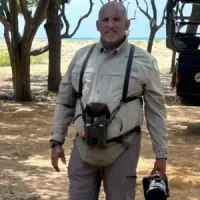
Join expert naturalist Ed Hutchings on this fabulous wildlife journey through Sri Lanka’s verdant forests, wetlands and hills, to discover its unique natural history.
With so many contrasting habitats, easily observed birds, mammals, reptiles and amphibians and wonderful culture and history, Sri Lanka’s appeal runs deep. With a warm tropical climate, excellent tourism infrastructure and exceptionally friendly population, it makes for a perfect winter getaway and an ideal introduction to the natural history of the Indian Subcontinent.
This tour has been designed to show you each of the island’s major ecosystems, from its humid evergreen rainforests to the surprisingly mountainous core, and vast network of wetlands. It really is a naturalist’s paradise.
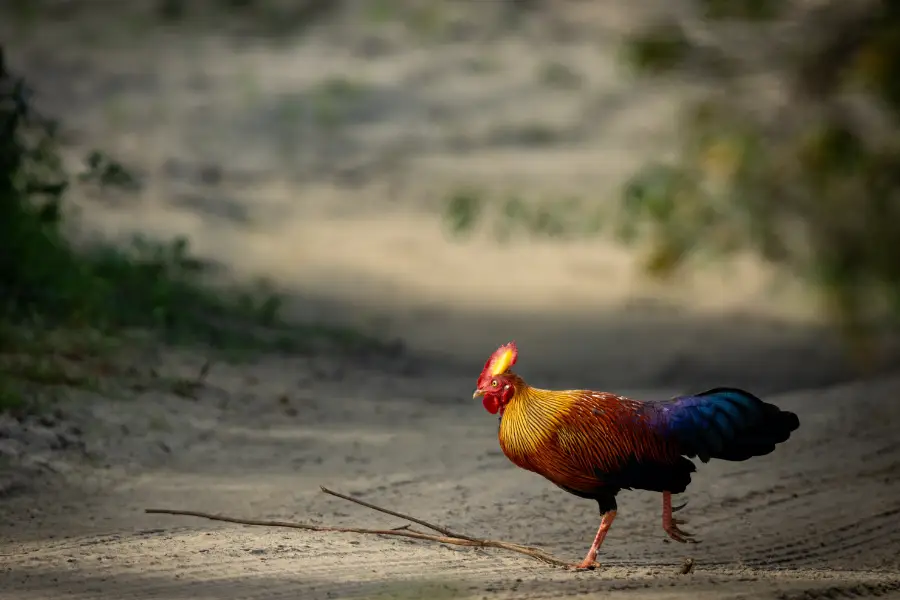
Our itinerary is designed to give you the chance of seeing most, if not all the island’s endemic birds, in addition to a wide selection of the birds typical of the Indian subcontinent. With well over 200 bird species likely to be seen, along with iconic mammals such as elephant and leopard and fascinating smaller creatures, colourful butterflies and rare lizards, there's so much to discover.
What could be better than spending a winter’s fortnight on this warm, friendly tropical island, getting to know the natural history of one of the world’s most biodiverse islands?
Typical Itinerary
-
Day 1:
Depart UK
Depart the UK on an overnight flight from London to Colombo.
-
Day 2:
Arrive in Colombo & transfer to hotel
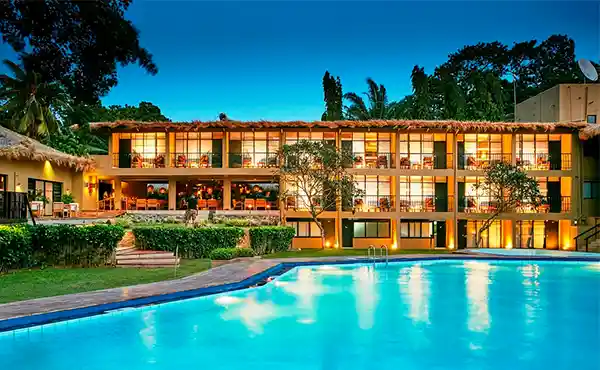
On arrival in Sri Lanka, we're met at the airport and transferred three hours south to our lodge in the Sinharaja Forest Reserve, where we will be based for the next four nights. Here we have the evening to recover from our journey, before gathering together for a welcome dinner.
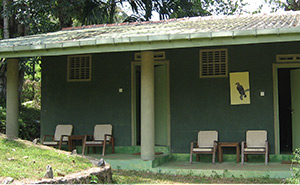
Accommodation: Blue Magpie Lodge, 4-nights
-
Days 3-5
:
Exploring the Sinharaja Forest Reserve
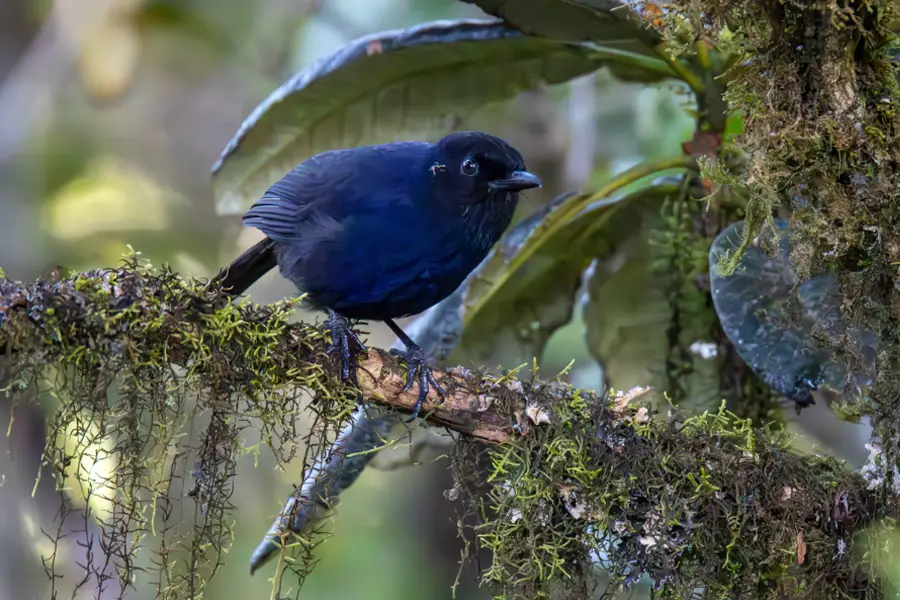
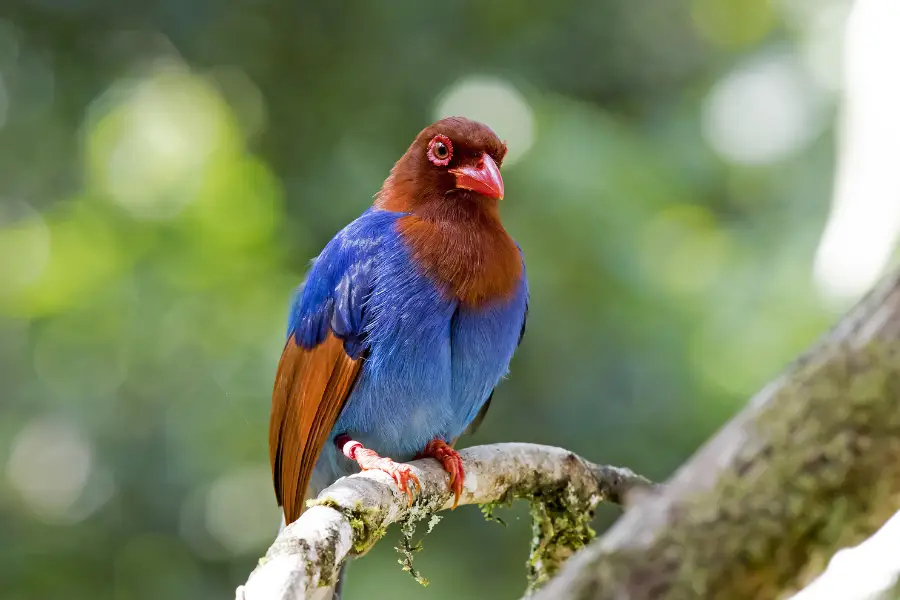
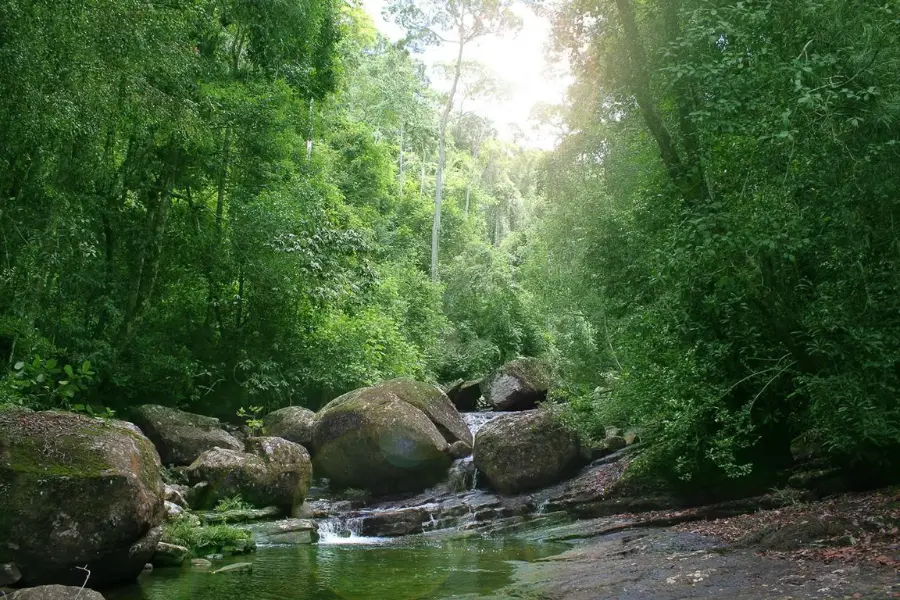
Over the next three days, we enjoy exploring the old-growth rainforest of Sinharaja. Home to more than half of Sri Lanka’s endemic mammals and butterflies, and – remarkably – all but one of its wonderful endemic birds. Visiting particular spots we can enjoy our first excellent views of typical birds of this habitat with the fabulous Sri Lankan blue magpie being a stand-out highlight.
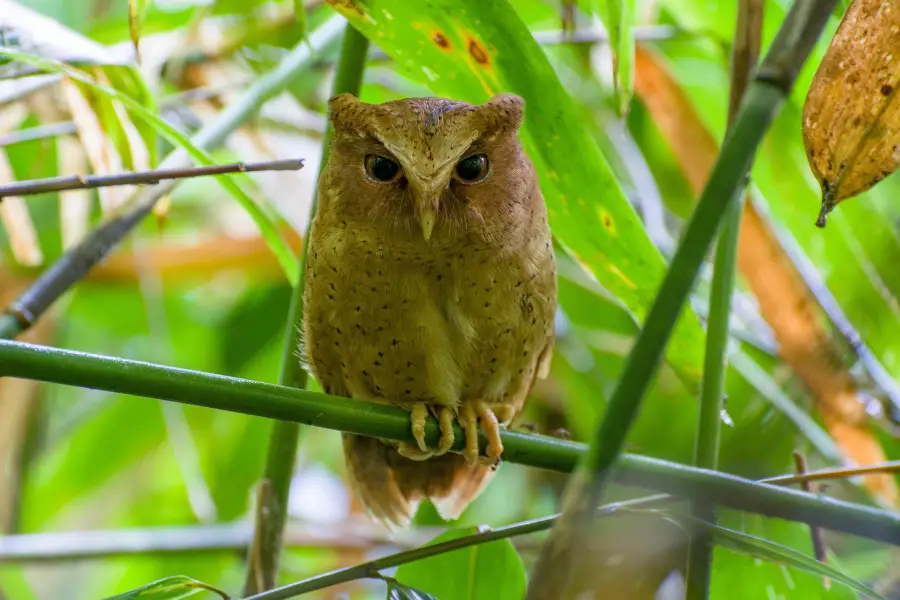
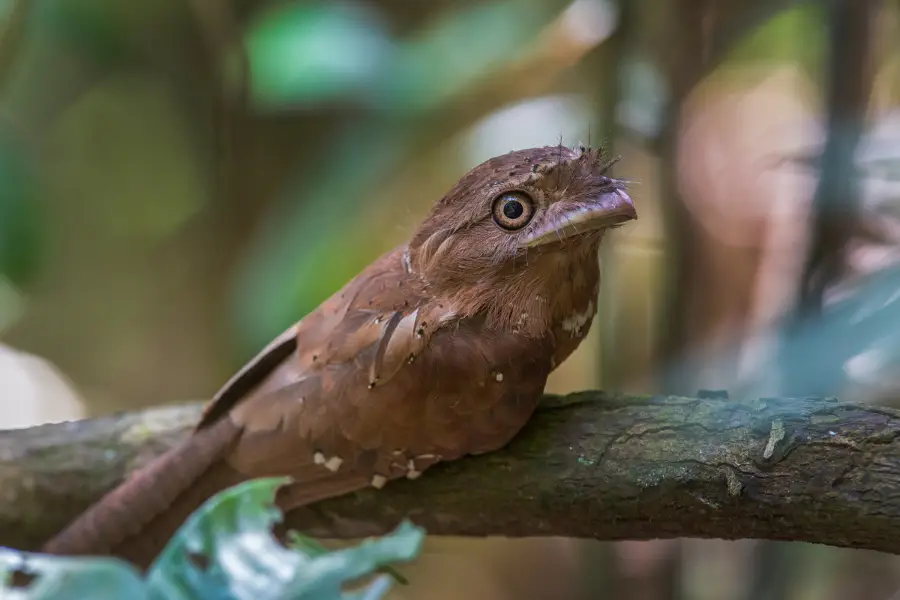
To begin with, we explore the trails close to our village and around the park entrance where we hope to find our first special birds of this region, perhaps even including the Serendib scops owl (only described to science two decades ago). There's also a wealth of other wildlife to discover, much of it unique to this reserve.
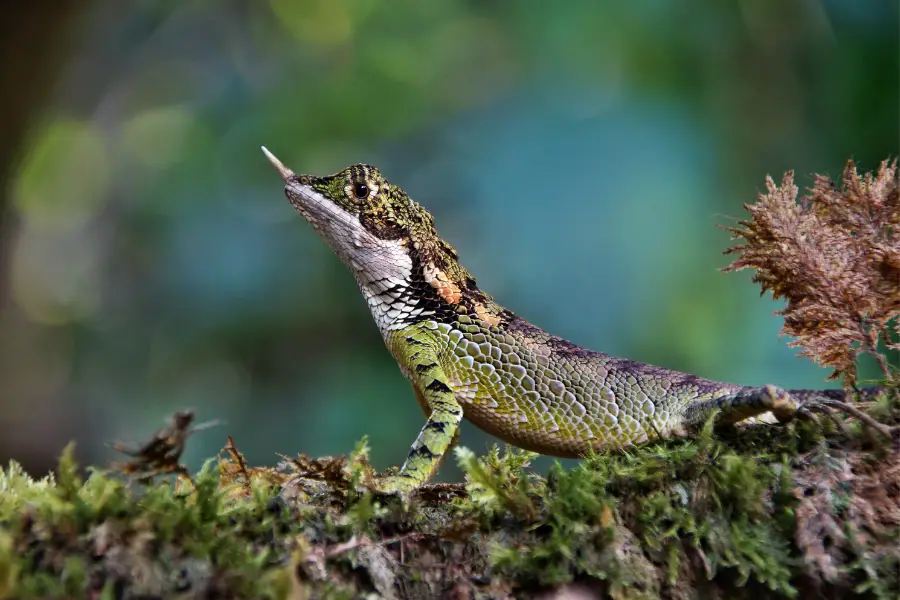
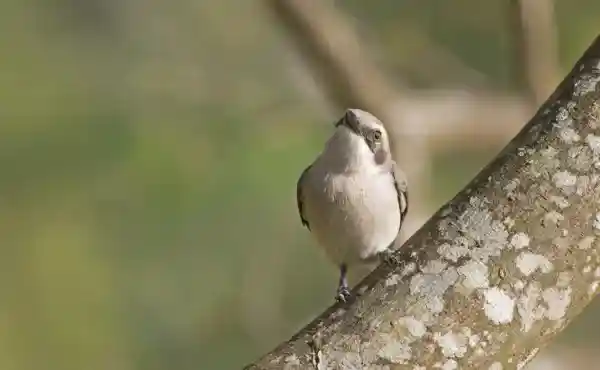
Deeper into the old growth forest we may find mixed feeding flocks holding delights such as Malabar trogon, yellow-fronted barbet, black-capped bulbul, Layard’s parakeet, ashy-headed laughing thrush, white-faced starling, Sri Lanka hill myna and Sri Lankan scimitar babbler and brown-capped babblers. Reptiles such as rough-nosed horned lizards and a myriad of insects, orchids and colourful butterflies, including blue Mormon, Sri Lanka birdwing and the stunning Ceylon tree nymph will also distract us.
-
Day 6:
Transfer to Nuwara Eliya
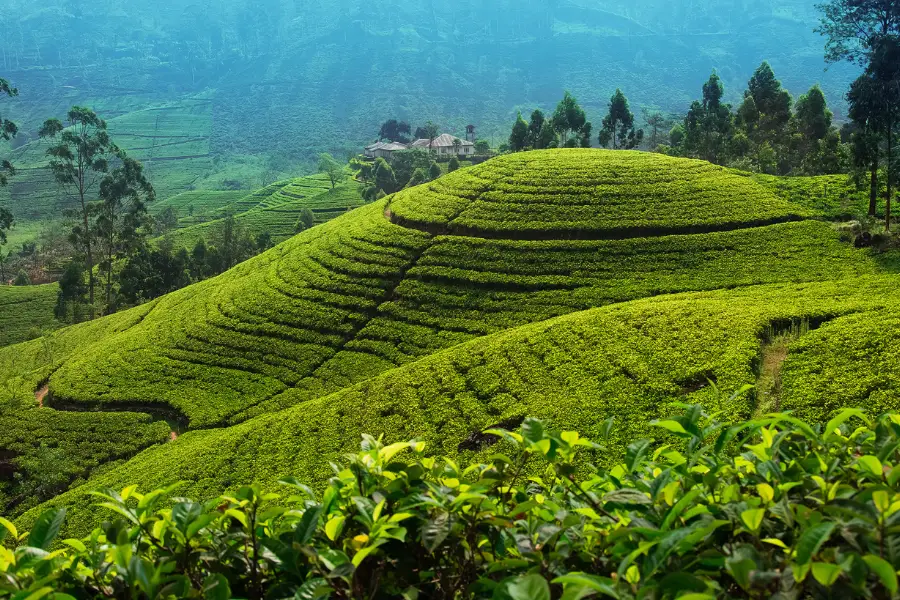
Today we depart after breakfast for Nuwara Eliya, stopping along the way to experience a working tea factory, both for a refreshing cup of tea and to learn about the entire process of growing and harvesting the world-famous tea. We should arrive at our new lodge in time for a late lunch. We can then enjoy some time at leisure and perhaps some birdwatching in the lush hotel grounds and nearby botanical gardens.
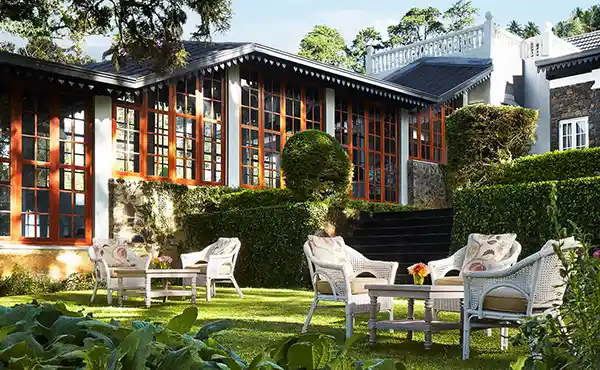
Accommodation: Jetwing St Andrews, 2-nights
-
Day 7:
Explore Horton Plains National Park & evening herpetological tour
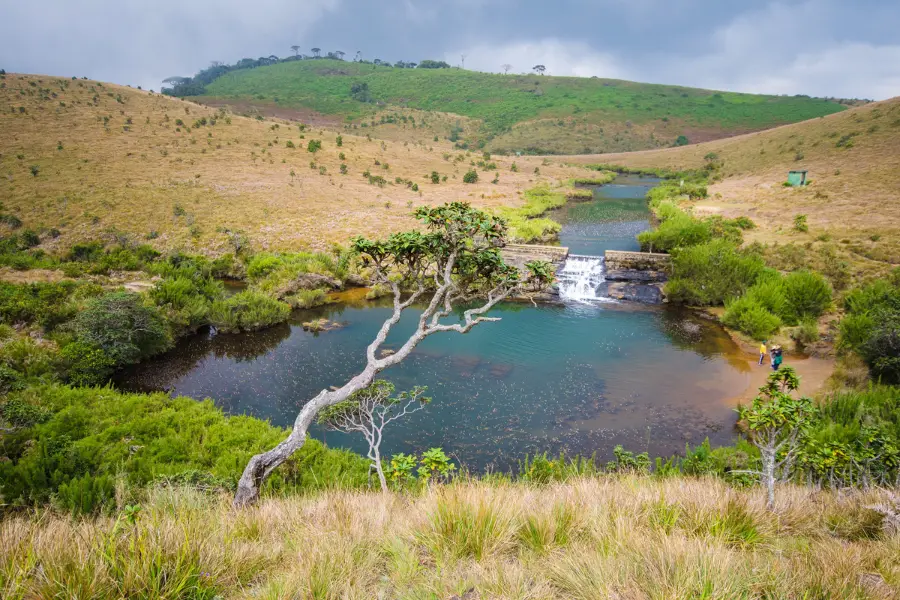
Today we visit Horton Plains National Park, an excellent example of high elevation montane grasslands and cloud forest. We search for a variety of wildlife, from Sri Lankan sambar deer that graze the moorlands and the shaggy endemic montane purple-faced langurs in the trees to the localised black-lipped, rhino-horned or pygmy lizards that shelter amongst the moss-clad shrubs.
Birdlife is also fantastic with the rare black eagle, pied bushchat, Sri Lanka white-eye, black-throated munia, Sri Lanka scimitar babbler, dull blue flycatcher, and the extremely secretive Sri Lanka bush warbler and Sri Lanka whistling thrush amongst highlights. This evening we take torches out for a special night walk in the hotel gardens where up to ten species of frog including the Montane hour-glass tree frog and Parker's globular frog may be observed.
-
Day 8:
Transfer to Gal Oya National Park
Today we depart Nuwara Eliya for the scenic drive down from the hills into the little visited Gal Oya region. This is a particularly unique region for birding, with species such as the painted francolin and the yellow-footed green pigeon, both of which can only be seen in this area.
It's also a good area to find birds such as the Sri Lanka green pigeon, various cuckoos, and woodpeckers including the two endemic species and the Sri Lanka woodshrike. This evening, we can enjoy a gentle birding safari and walk in the Gal Oya region, with the addition of a local guide from the indigenous Vedda community.
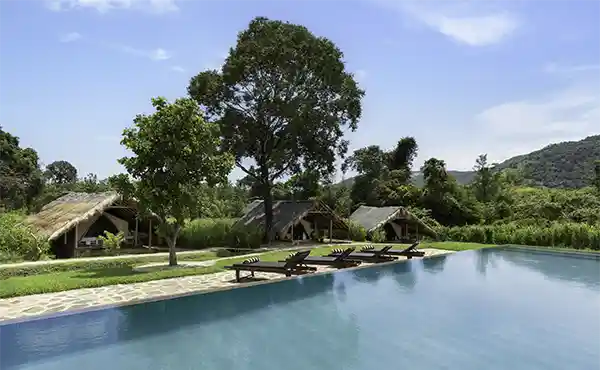
Accommodation: Wild Glamping Gal Oya, 3-nights
-
Day 9:
Exploring Gal Oya National Park
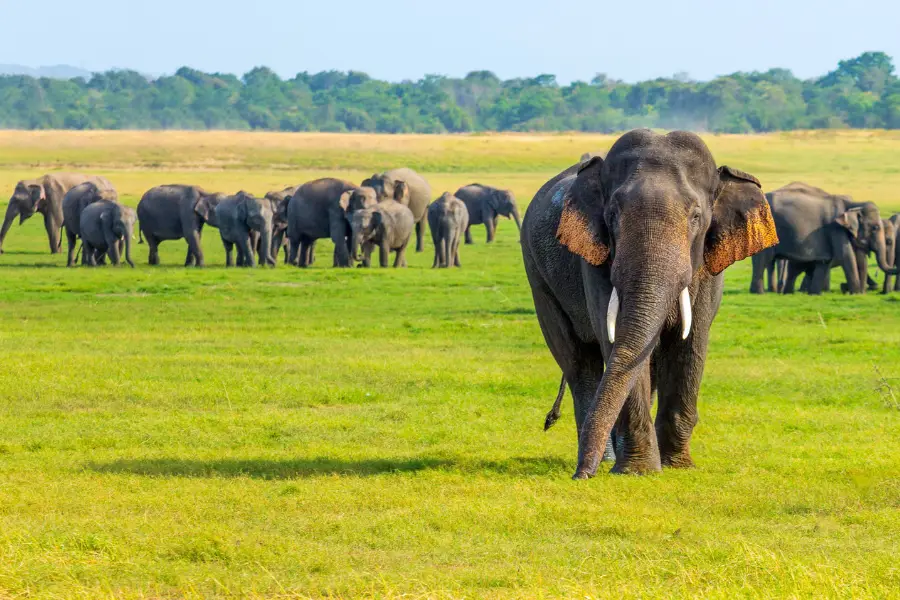
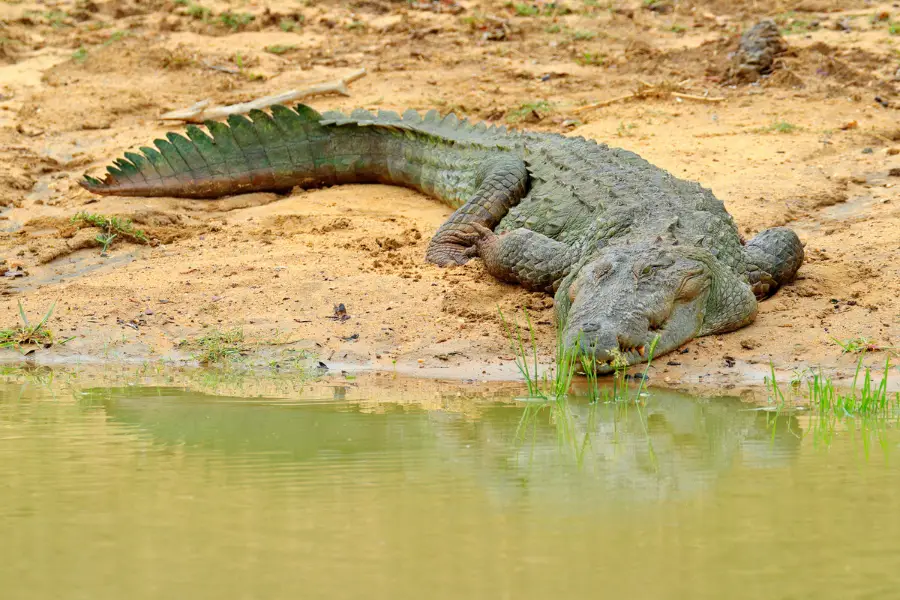
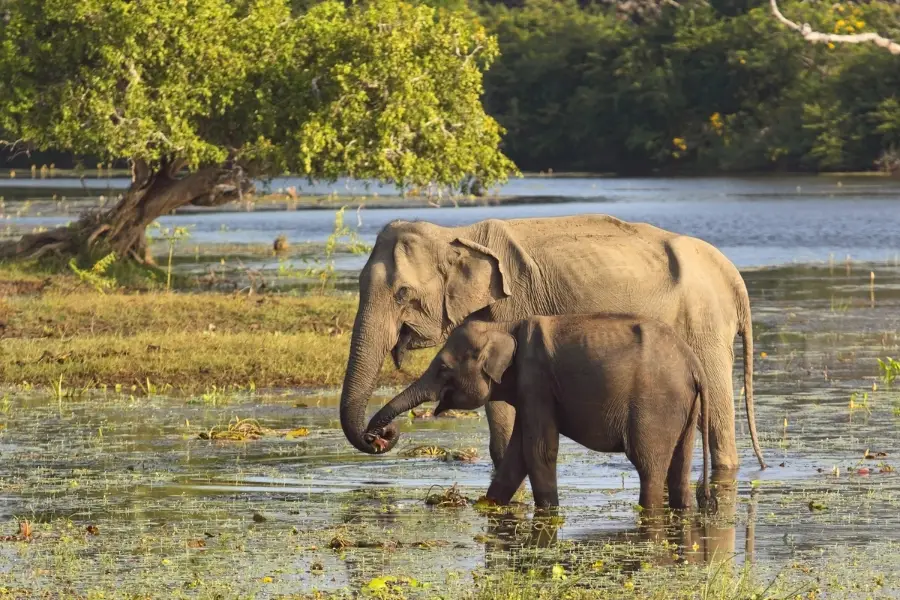
Today we have a full day to explore this seldom visited and rewarding national park. We begin with a short walk to the ancient Rajagala monastery complex and enjoy some birding through the surrounding forests. In the afternoon we take a scenic boat ride on the Senanayake Samudraya, the largest man-made reservoir in the country, where we hope to observe elephants swimming between islands and basking mugger crocodiles and waterbirds along the shore.
-
Day 10:
Day at leisure in Gal Oya
Today's dedicated to relaxing and appreciating our location in the Gal Oya National Park. For those who would like to, there's still the option to enjoy nature walks around the lodge to see birds, butterflies and other smaller wildlife.
-
Day 11:
Transfer to Lunugamvehera National Park
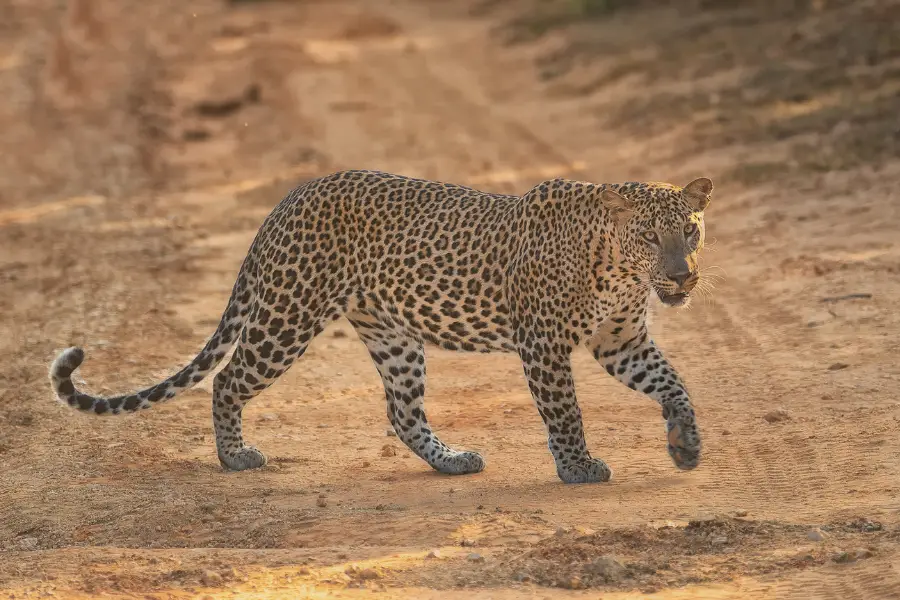
Today we make our way from the wilds of Gal Oya to the dry zone jungles of Lunugamvehera National Park. Known for its high density of leopards, Lunugamvehera which forms part of the large Yala National Park is also a great place to enjoy a plethora of bird and other mammal species. After settling into our accommodation in nearby Tissamaharama, we enjoy our first safari in the late afternoon.
Accommodation: EKHO Safari Tissa, 4-nights
-
Days 12-13
:
Safaris in Lunugamvehera National Park
Over the next two days, we explore Lunugamvehera National Park and perhaps the adjacent block five and three of Yala National Park, which are the less visited and more rewarding sections of the famous Yala ecosystem.
Taking morning and afternoon safaris and returning to our hotel for lunch, we can enjoy exploring this region thoroughly. We seek many of the park’s star species, including its high density of leopard and spotted deer, wild boar and the striking stripe-necked mongoose.
Birdlife includes Malabar pied hornbill, coppersmith barbet, yellow-eyed and tawny-bellied babblers, white-rumped shama and various birds of prey. Close to our hotel at the Tissa wetlands, we can also observe a large colony of Indian flying foxes and a good selection of waterbirds.
-
Day 14:
Safari to Bundala National Park
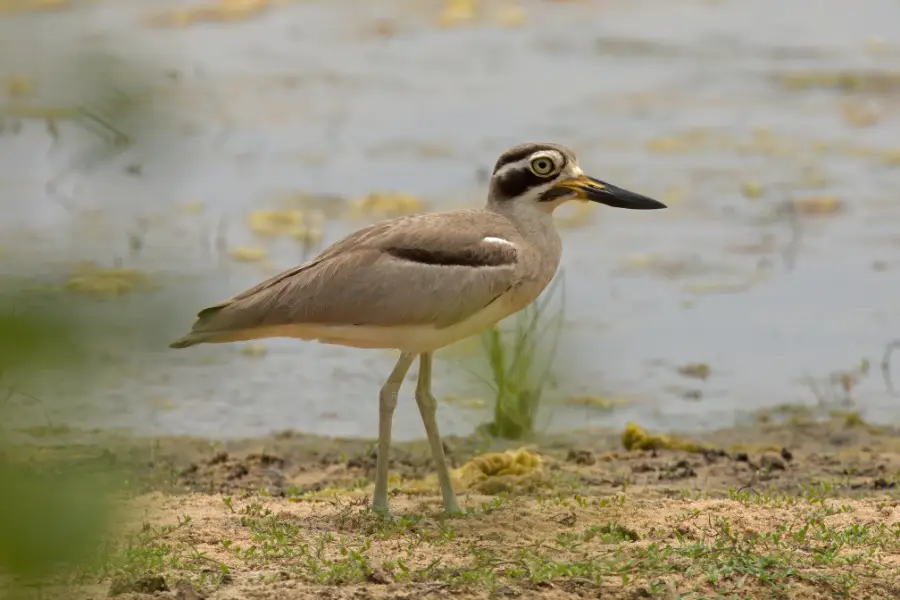
This morning we explore the network of lagoons, saltpans, grass flats and scrub around Bundala National Park, a UNESCO Biosphere Reserve. This is an important stop-over location for a wide variety of winter migrant birds and at the time of our visit we hope to see large flocks of wading birds such as lesser and greater sand plovers, marsh sandpiper, curlew sandpiper and little stint.
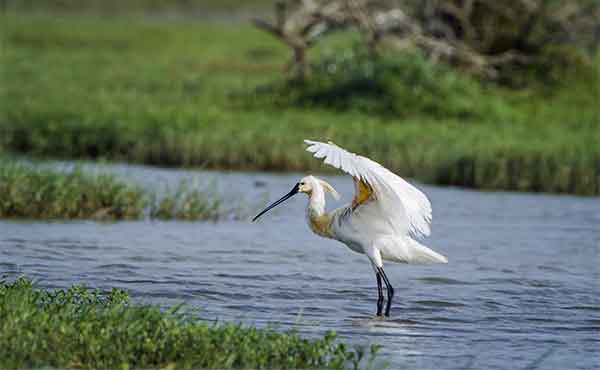
We also hope to enjoy the flocks of spot-billed pelicans, painted and Asian woolly-necked storks, Eurasian spoonbills, egrets, herons, glossy ibis and the majestic white-bellied sea eagle. After lunch and some time to rest back at the hotel, we can enjoy another safari in a different part of Lunugamvehera or Yala National Park.
-
Day 15:
Bundala National Park & transfer to Colombo
This morning we start with a second visit to Bundala National Park to enjoy more of its wetland birdlife and perhaps locate reptiles such as saltwater crocodile. We then check out of the hotel and and head back to Colombo.
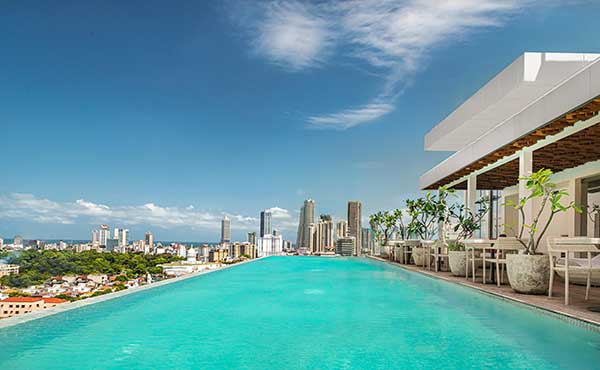
Accommodation: Jetwing Colombo Seven, 1-night
-
Day 16:
Fly to the UK
This morning, we're picked up from our hotel and driven the 45 minutes to the airport for our flight back to the UK.