Explore the rainforest, river and savannah of Guyana’s pristine interior by air, land, river and on foot to witness its remarkable wildlife in a small group, accompanied by local expert naturalist guides.
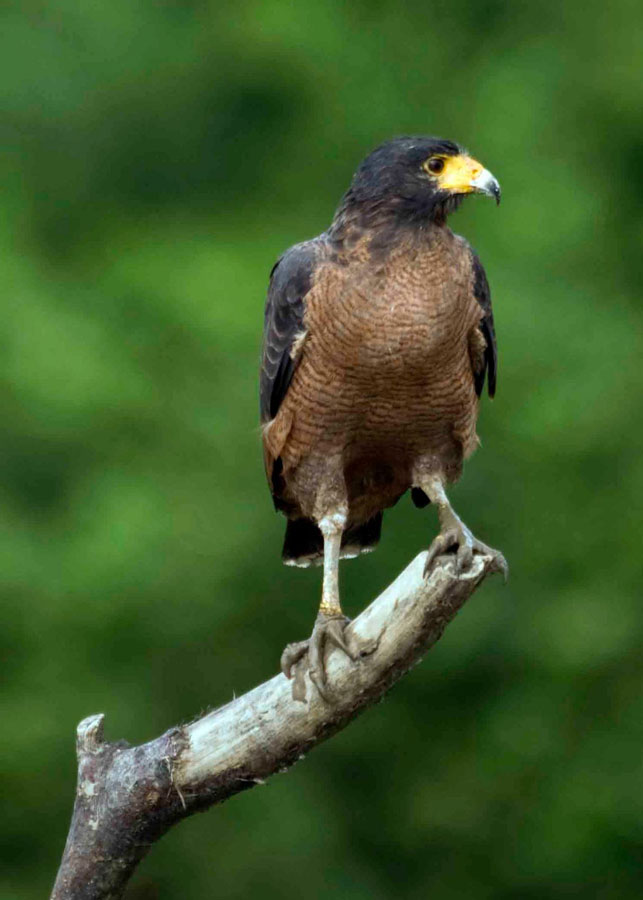
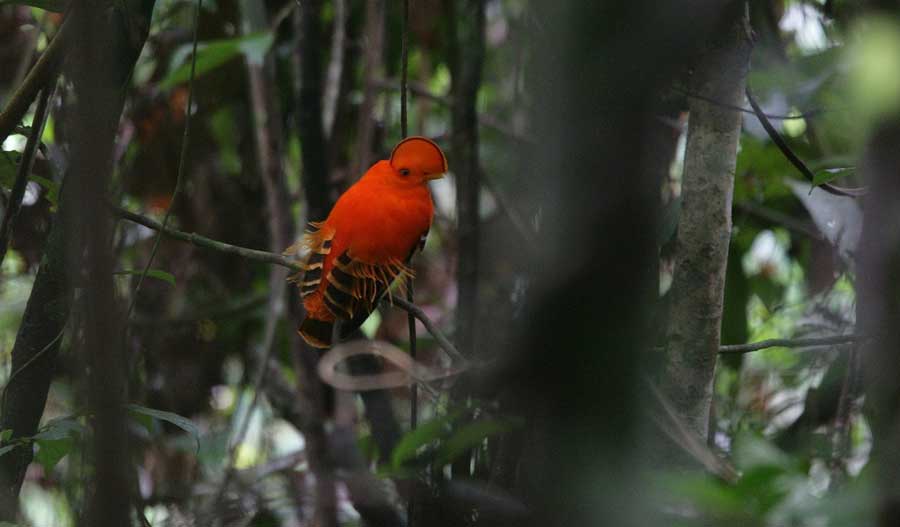
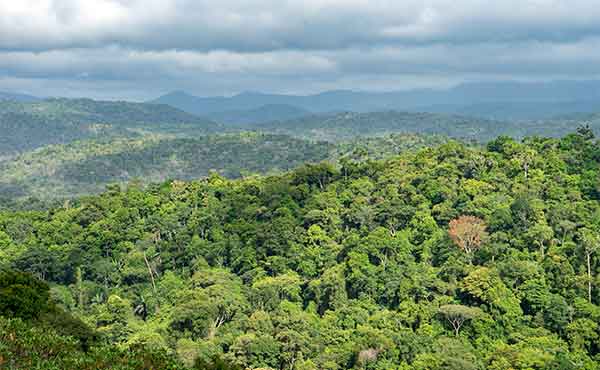
Guyana is roughly the same size as the UK but, with a population of around 750,000 concentrated mainly along the coast, its interior is a vast and unique wilderness. The forests and rivers boast a fascinating and prolific fauna that includes iconic mammals such as the elusive jaguar, giant anteater and giant river otter, plus rare reptiles such as black caiman. In addition, you there are some exquisite birds such as harpy eagle and Guianan cock-of-the-rock – just two of some 800 species recorded here.
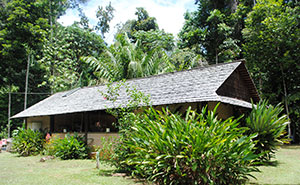
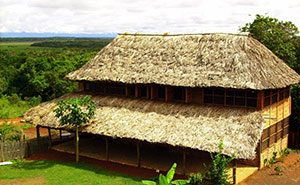
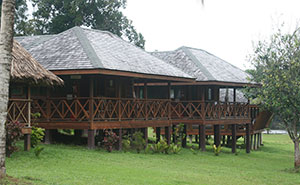
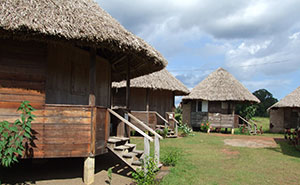
As there are so many rivers and so much impenetrable forest, after flying into the interior, boat is often the best means of transport, as well as a good way of seeing wildlife. There is little choice of accommodation, and during your stay you will sleep in jungle lodges, traditional huts in Amerindian villages, at a former cattle ranch, and at a field research station – in rustic comfort, but always with a warm welcome, as few visitors penetrate this unspoiled corner of South America.
You’ll spend part of the time travelling by four-wheel-drive vehicle on rough jungle tracks, but there are plenty of opportunities to walk trails and experience the manifold delights of the rainforest. Expert naturalist guides accompany you throughout, and at several locations, indigenous guides further enrich the experience through their intimate knowledge of the different habitats.
Read travel consultant Chris Smith's blog about his trip to Guyana.
Typical Itinerary
-
Day 1:
Fly to Georgetown
-
Day 2:
Visit Kaieteur Falls
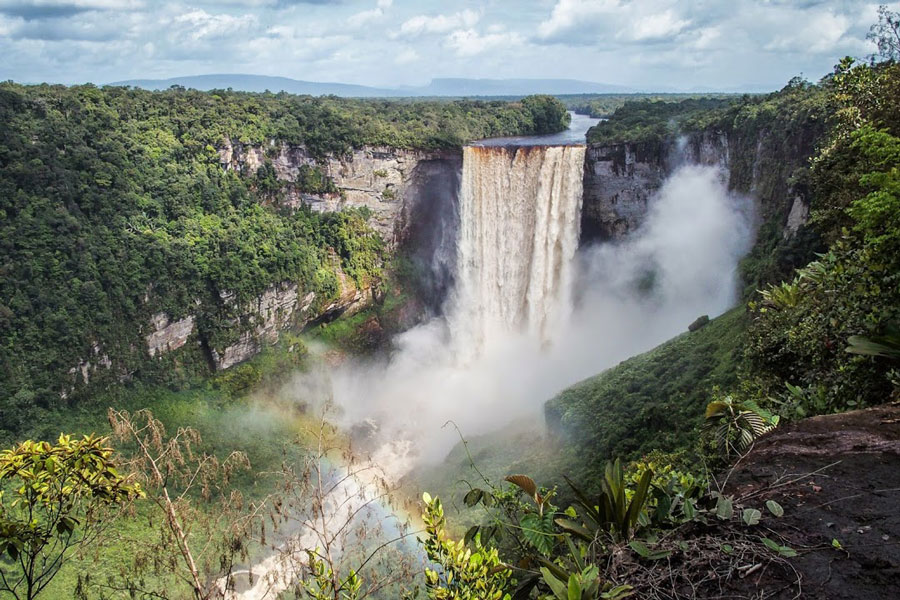
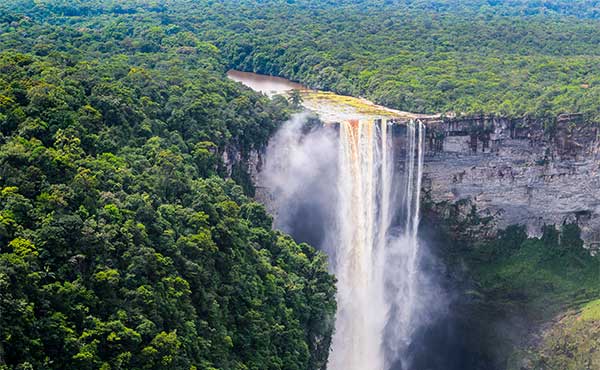
Transfer to nearby Ogle Aerodrome for a scheduled flight over the Demerara and Essequibo Rivers and hundred of kilometres of unbroken tropical rainforest to land at the imposing Kaieteur Falls. Here the broad Potaro River plunges 226 metres in free fall over a sheer cliff, making it one of the world’s most powerful waterfalls.
-
Day 3:
Fly to Iwokrama River Lodge
Transfer back to Ogle Airport for a chartered flight over the rainforest to Fairview, a village deep in the interior, for the short drive to Iwokrama River Lodge. In the late afternoon you explore the extensive trail systems to seek out rainforest mammals such as black spider monkeys or a banded tamandua.
Iwokrama is also home to many bird species, including capuchinbird, black nunbird, chestnut-rumped woodcreeper, Amazonian antshrike and strong-billed woodcreeper. Over dinner you will hear about the important conservation and research work of the Iwokrama International Centre for Rainforest Conservation and Development.
Accommodation: Iwokrama River Lodge, 2-nights
-
Day 4:
Boat trip on Essequibo River, visit to Turtle Mountain & Kurupukari Falls
An early boat trip on the Essequibo River offers an opportunity to hear the dawn chorus before breakfast. You then set off on a short boat ride to the base of Turtle Mountain, keeping an eye out for sloth, capybara, caiman and arapaima – the world’s largest freshwater fish – plus red howler, edge-capped capuchin and black spider monkeys. The exhilarating climb to the 290-metre-high summit takes around two hours, but is worth the effort for the breathtaking views.
On your return there is time to relax for a while, then as it starts to cool off, you set out to visit the Amerindian petroglyphs at Kurupukari Falls. After nightfall you meander along the river by boat looking for tree boas and tree frogs before making your way back to the lodge for dinner.
-
Day 5:
Dawn transfer to Atta Rainforest Lodge
Early transfer though Iwokrama Rainforest, which is fast gaining an international reputation for its jaguar population. Stop en route for birding in the mori scrub, an unusual low forest on sandy soil that supports birds such as rufous-crowned elaenia, black manakin and red-shouldered tanager.
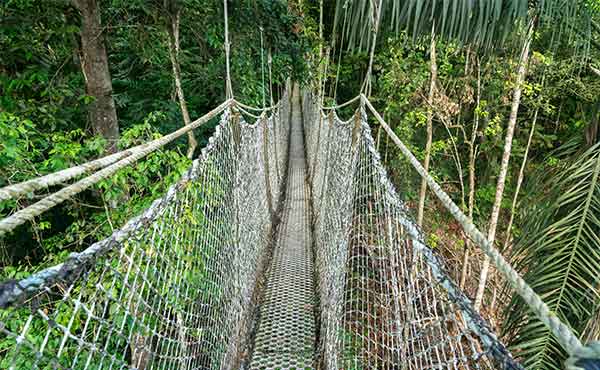
Continue to Iwokrama Canopy Walkway to watch canopy-dwelling birds plus red howler and black spider monkeys. There are trails to walk, or you can explore the area around the lodge, where deer and agouti are regular visitors. Another major target is the white-winged potoo which can be seen from the canopy walkway after dark.
Accommodation: Atta Rainforest Lodge, 2-nights
-
Day 6:
Explore Atta Rainforest
The forest around the lodge offers good birding, but the main attraction is the canopy walkway, from which you can see birds that would be difficult to see from the forest floor. Among the highlights are several species of parakeet, Caica parrot, Guianan puffbird, waved and golden-collared woodpeckers and three species of antwren. If the trees are in fruit, you may see rare dusky purple-tuft and purple-breasted cotinga.
The clearing around the lodge is one of the best places to spot the ‘must-see’ crimson fruitcrow, which often feeds in the nearby trees. A family group of black curassow regularly passes through and, with luck, you should be able to add this usually timid bird to your list.
-
Day 7:
Transfer to Surama & boat trip on Burro Burro River
Welcome the dawn chorus from the canopy walkway and witness the activity as short-tailed nighthawks settle for the day, swifts take to the sky, white-throated and channel-billed toucans yodel, and barred-forest falcons call. After breakfast drive into the forest to seek out Guianian cock-of-the-rock and hear about the uses of jungle plants, then continue to the Amerindian village of Surama, set on a small patch savannah surrounded by rainforest-clad hills.
A 5-kilometre afternoon walk takes you across the savannah and through rainforest to the Burro Burro River, where your guides paddle you in canoes to see giant river otters, tapir, tira, and spider monkeys, before returning to the village for sunset. Later, a night walk reveals the mystery of the forest after dark.
Accommodation: Surama Eco-lodge, 1-night
-
Day 8:
Surama Mountain & transfer to Annai
Rise before dawn to walk across the savannah and climb Surama Mountain in the cool morning air – the best time for birdlife. After breakfast at a lookout with fine views across to the Pakaraima Mountains, return to the village.
Later, transfer by road in a four-wheel drive Bedford truck to the village of Annai which is situated at the foot of the Pakaraima Mountains where the rainforest meets the savannah. Arriving in Annai for lunch, there is an opportunity to explore the grounds of our accommodation in Annai. Learn more about what happens at this unique property before relaxing. There is a swimming pool at your lodge, so you can take the chance to enjoy a swim as well if you wish.
Accommodation: Rock View Lodge, 1-night
-
Day 9:
Guided birding walk on the Panorama Trail & afternoon boat trip along the Rupununi River
This morning we enjoy a birding walk along the Panorama Trail in the Pakaraima Mountains and also hope to see some poison dart frogs out on the trail as well. After breakfast back at the lodge, you drive to the banks of the Rupununi River. Jabiru stork and toco toucan are often seen on this stretch of road, along with red howler and spider monkeys. From Ginep Landing you take a boat on the Rupununi, where – depending on the water level – may see giant otters, as several family groups live along this stretch of river. Your destination, Karanambu Lodge, is the former home of Diane McTurk, who was known for her work rehabilitating orphaned giant river otters.
In the afternoon you head out by boat to look for otters in the wild and see giant Victoria regia waterlilies bloom at dusk. On the way back your guide will use a spotlight to find nocturnal wildlife.
Accommodation: Karanambu Ranch, 2-nights
-
Day 10:
Wildlife watching excursions from Karanambu
The whole day is dedicated to wildlife watching and birding, exploring the varied habitats around Karanambu by boat and Land Rover. In the morning, you head for the savannah to spot giant anteater and there a good chances of seeing these unique mammals. When it comes to birds the grassland species that can be seen include double-striped thick-knees, bi-coloured wren and bearded tachuri, while patches of forest are home to ferruginous pygmy owl, violaceous trogon, blue ground-dove and great antshrike. The river has wood stork, white faced and black-bellied whistling doves and stripe-backed bittern, and as you move around you may see least grebe, South American snipe, rufous-throated sapphire, yellow tyrannulet, cliff flycatcher and ruddy-breasted seedeater.
-
Day 11:
Savannah walk & transfer to Caiman House Field Station
This morning venture out onto the savannah in search of giant anteater. Then, after breakfast, transfer by boat to Caiman House Field Station in the Amerindian village of Yupukari, keeping an eye out for giant river otters, black caiman (which can reach more than four metres in length) and arapaima, and birding as you go.
Accommodation: Caiman House, 1-night
-
Day 12:
Fly back to Georgetown, city tour
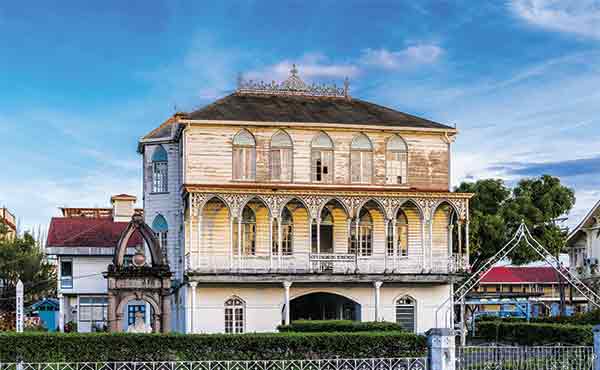
After breakfast, transfer to the town of Lethem, from where you catch a scheduled flight back to Georgetown, taking you over hundreds of miles of broken rainforest as well as the Demerara and Essequibo Rivers. Once in Georgetown, you will have an afternoon tour of the city.
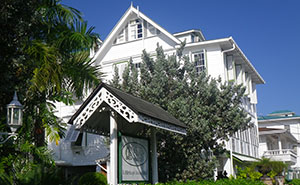
Accommodation: Cara Lodge, 1-night
-
Day 13:
Depart Georgetown
Transfer to the international airport for an overnight flight to the UK.
-
Day 14:
Arrive UK