Craters, Kopjes and Cats of Tanzania
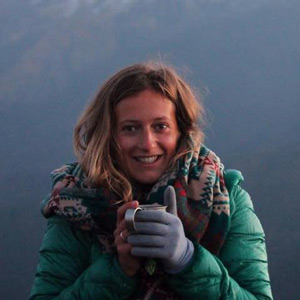
Product Manager Sarah Malcolm travelled through northern Tanzania this March on the Ultimate North Tanzania itinerary to see the wildlife of Tarangire, Ngorongoro and Serengeti in the green season.
As I sit and reflect on my time in Tanzania, I know that words and photographs will not do the experience justice. I will describe to you what I saw and, where I went, but I am not able to convey to you the wilderness, the vastness, or the sensation of this place. You just simply have to visit for yourself.
 From Kilimanjaro Airport to Arusha, in no time I was on the verandah of Giraffe Residence, my welcome drink refreshing me from the long journey as I watched the host of antelope cropping the lawns of the Dolly Estate. Instant tranquillity, with spacious and beautifully furbished rooms, horse rides, pool and delicious meals overlooking the waterhole, which was routinely rippled by a pied kingfisher.
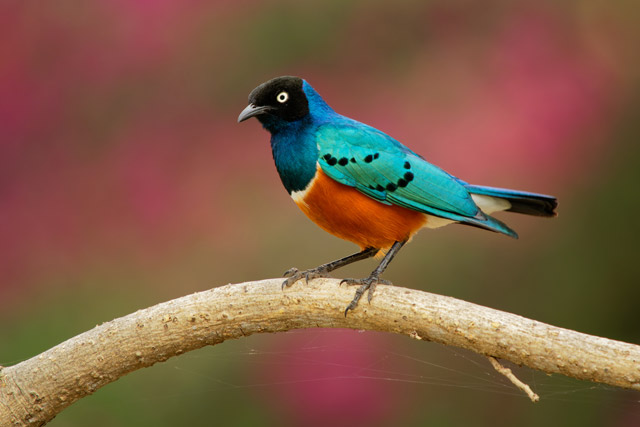
Only 15 minutes from Giraffe Residence is Dolly Airstrip, with small planes shuttling safari goers to and from the bush. My ‘safari’, or ‘journey’ in Swahili, began in Tarangire, a park named after the river which gently meanders its way through the plains. Towering palms marshal the river, whose name means ‘great river of the warthog’. Passing over the Silalle Swamp, a year-round oasis, the plane descends, bringing you to a welcome committee of superb starlings.
 After several years since my last safari, the species trickled back into my remembrance from dormancy. In the Tarangire River, yellow-billed storks, hamerkop, and goliath heron patrol, meticulously picking their steps through the water then become statues as they wait for a passing fish. Hundreds of mottled spinetail, red-rumped swallow and African palm swift, which nest under the bridge, swarm the air.
Arriving in the morning, my extended drive into camp brought a business of dwarf mongoose, peeking from one of the termite mounds which punctuate the grassy rolling plains. A leopard tortoise claimed the road and dik-dik affirmed themselves as an eternal feature of my safari. Yellow collared lovebird, bee-eaters and rollers brought vibrancy to the birds seen, martial and bataleur brought strength while ostrich, bustard and secretary bird demonstrated their size.
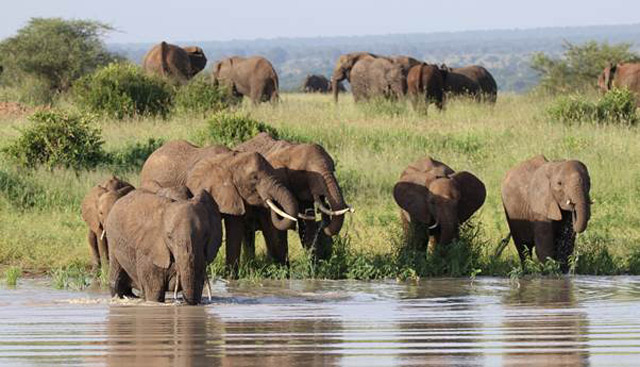 Tarangire is a land of elephants, hundreds move from the forests to the river in their daily routine. Young elephants practice their bravery while little ones test their trunks and splash in the waters. Crossing a road with banked sides proved an obstacle course for the smallest of one herd, whose mother gave a gentle nudge when needed. These banks served as a belly scratch bonanza or slide for others in the herd.
A cool breeze swirled and flattened the grass as we stood beside our vehicle amongst another herd of grazing elephant. Tall grasses at this time of year are systematically blanketed by the perpetually moving flocks of quelea. Hundreds of baobabs stand ancient, their thick trunks tell the story of hundreds of passing elephants over hundreds of years. The symmetry of the euphorbia candelabra a contrast to the neighbouring acacia and fig trees which are important vantage points for tree-climbing lions and leopard while the grass is long.
The young leopard we encountered beside the Gurusi Swamp draped himself over an acacia branch. Between naps, his pale green eyes would fix on us, the only vehicle in the area. After two private hours, we retraced the way to camp. The lush green plains, tinted purple by the pretty lady flowers, turned silver through gold as the sun began to set on the drive.
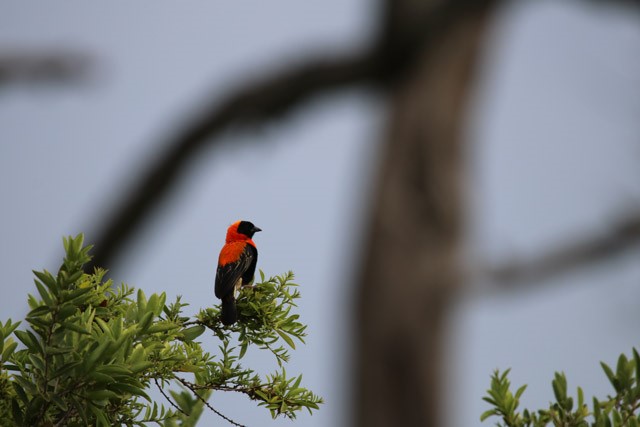
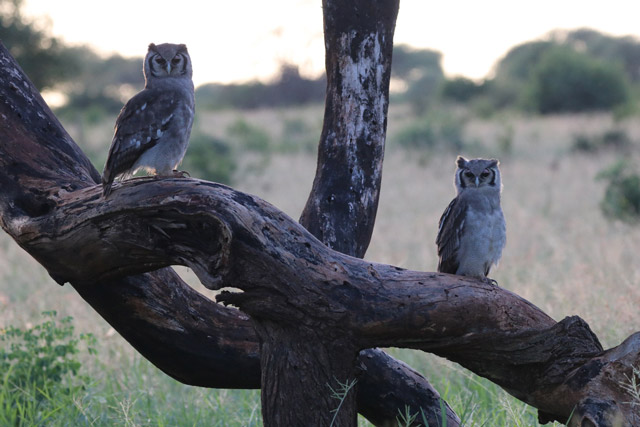
 You don’t realise you have arrived in Kuro Tarangire until the car stops, and you are welcomed with a cool flannel from one of the team. The organic camp is nestled into the riverside bush so as you walk between the secluded tents to the main area, dik-dik and red bishop will share your path amongst all the other wildlife. By the campfire, we listened to the nearby owl until the close-by lion spoke over them and the singing cicadas, while fire-flies danced beneath the Milky Way.
 The soft pink eyelids of the Verreaux’s eagle owl, a subtle characteristic compared to the many birds in ornate breeding plumage at this time of year such as the eastern paradise whydah which danced between trees as we drove in search of the lion brothers which patrol the swamp. After quietly watching them for a while, our bush breakfast by the river beckoned, so we switched our view for a bathing elephant herd with breakfast!
 Leaving Tarangire I headed west – towards the Great Rift Valley. The fertile soils of Tanzania allow plants to flourish and Gibb’s Farm, is the ultimate example. We stopped for lunch at this vibrant oasis, where iridescent sunbirds dart between the mass of colourful flowers. Skyscrapers of gently swaying bamboo and palm fronds lull you into relaxation the moment you arrive.
Passing Lake Manyara and Lake Eyasi we climbed a winding road, bringing the first and unforgettable view of Ngorongoro Crater. As I mentioned earlier, I find my experience hard to justify in words, and no part more so than this view. In one word, breathtaking. The road traverses along the crater rim, and the lands here are Ngorongoro Conservation Area (NCA) so as well as buffalo giraffe, and zebra you will see cows, bomas and Masai communities here - Ngorongoro is the name given to the area after the sound made by the bells on the Masai cattle.
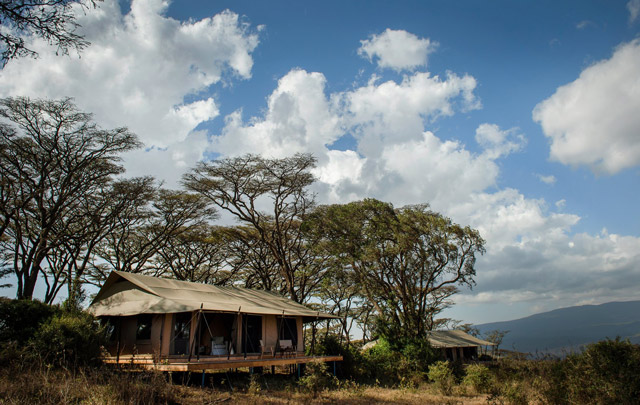
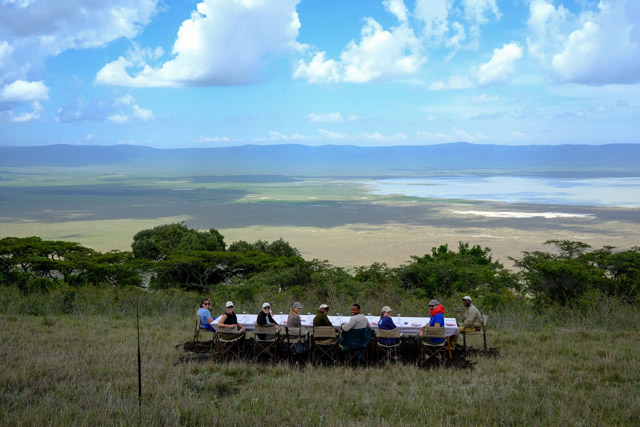 We stayed at the idyllic Entamanu Lodge, and we would have happily spent a full day exploring the grounds and birdlife if the crater didn’t beckon. As we descended, buffalo and leopard joined us on the road, so within 15 minutes we had seen two of the Big Five. The remaining three appeared shortly after, with three distant rhinos before a remarkable encounter as a pride of 12 lion tried to bring down a buffalo only to be thwarted by the other brave buffalos and four enormous bull elephants who marched right through the scene! En route to our breakfast by the hippos, it was a serval which caught our attention as it moved through the grasses in search of its own.
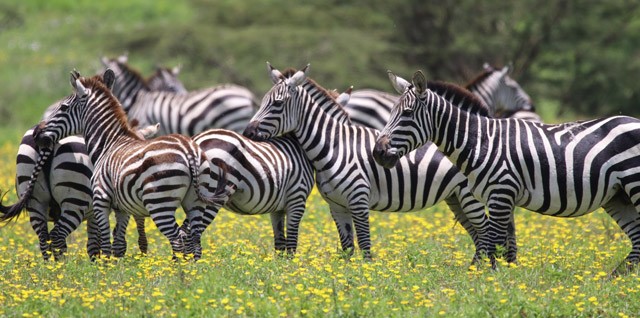
 Leaving the crater, we rolled down past Masai villages where men and women are wrapped in vibrant Shuka’s and adorned in beads. Young boys escorted the livestock, which graze alongside the small herds of zebra and eland.
The road begins to level out into plains as you move into the Ndutu Conservation Area, south of the Serengeti National Park. A handful of wildebeest rapidly grow into thousands … most of the babies at this time of year are a couple of months old, and hyenas rest nearby with bloated bellies while sinister marabou storks fill the trees.
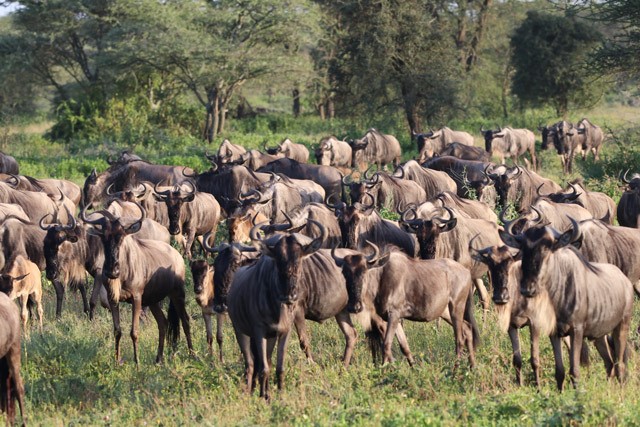 Here our base was Serengeti Safari Camp, which is mobile and follows the migration. The small number of guest tents extend in both directions from the main area, finding space and shade under various acacia trees. In the nearby plains we encountered cheetah and tree-climbing lions, but the most memorable experience was the great herds of the migration. After breakfast on the plains amongst the wildebeest, we had an incredible sighting of African wild cat, adding another species to our safari.
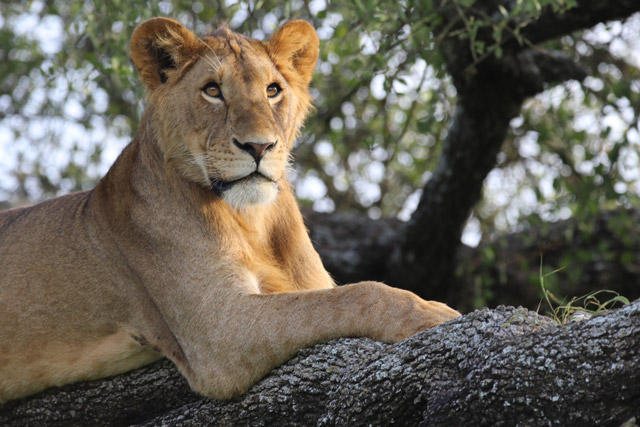 Travelling north to Lamai Camp, the rock kopjes became increasingly frequent and precariously balanced. While rock hyrax proudly decorated these boulders, it was leopard and lion which we searched for and found. Before the migration arrives later in the year, these boulders are an excellent viewing platform for the big cats to seek out topi and hartebeest, and in turn make an platform for us!
Contact our friendly team to book your holiday to any of the above lodges, plan your Ultimate North Tanzania tailor-made holiday.