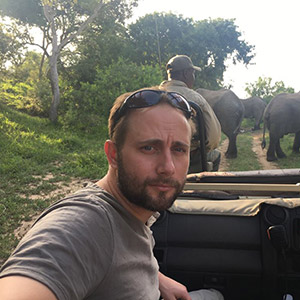
There can be few words more evocative to the wildlife enthusiast than ‘Serengeti’, a word synonymous with Africa’s Great Plains, and it was to these fabled lands that my wife and I travelled in late July, hoping to witness one of the planet’s most magnificent natural spectacles – the ‘Great Migration’.
We decided to concentrate our efforts entirely on Tanzania's Serengeti – with three nights in the centre of the region followed by four nights in the northern section of the park near the Mara River to catch the best of the action.
 Having visited Botswana and Zambia in recent years, it was with some trepidation that we travelled to Tanzania - knowing full well that we would be visiting some of the busiest areas in Serengeti National Park, during peak safari season and in the first week of the school holidays. However, we needn’t have worried. Over the course of our week-long stay, we were fortunate enough to enjoy some incredible sightings with fewer crowds.
Based at two excellent seasonal camps, we were assigned our own vehicle and guide for the duration of our stay; this was crucial to the success of the trip as it allowed us to choose our daily programme, deciding when and where we would go to watch the wildebeest migrate. We effectively took control of the drives and made a conscious decision not to use the radio, backing ourselves and our guide to find the wildlife.
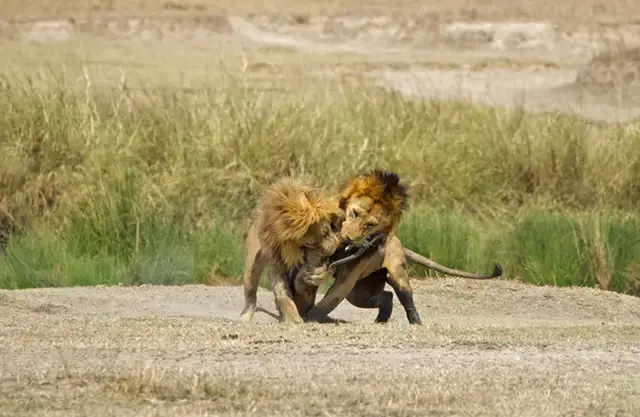 Where sightings were well known, it could become busy with other vehicles, but what quickly became apparent was that the vast majority would only stay for 5–10 minutes, before moving on to the next sighting. For those visitors patient enough to wait around, you could very often end up being the only vehicle and with a little luck, quickly reap the rewards.
We had one such experience with two magnificent male lions that went on to successfully catch a springbok in the middle of the day. Only two hours prior, they had been centre stage to nearly a dozen vehicles, and yet here we were observing the entire hunt from start to finish and in complete solitude.
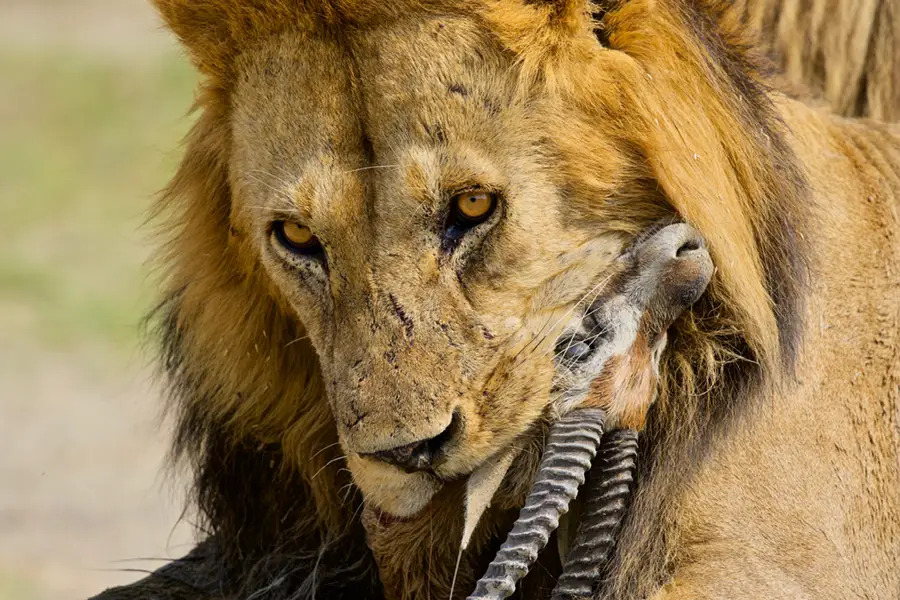 It was the first of many fabulous lion sightings, with cubs, lionesses and large males all providing hours of entertainment, but it was the great wildebeest migration that we were most keen to see, and this meant travelling north to the Mara River.
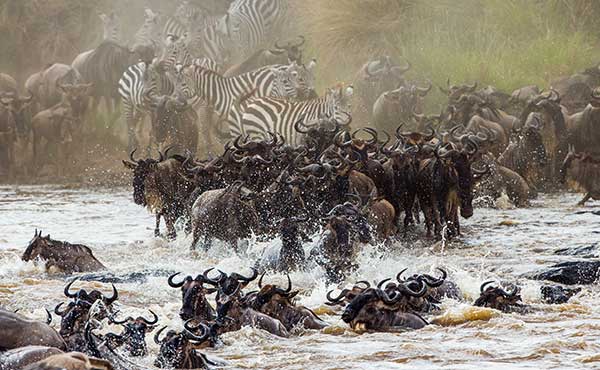
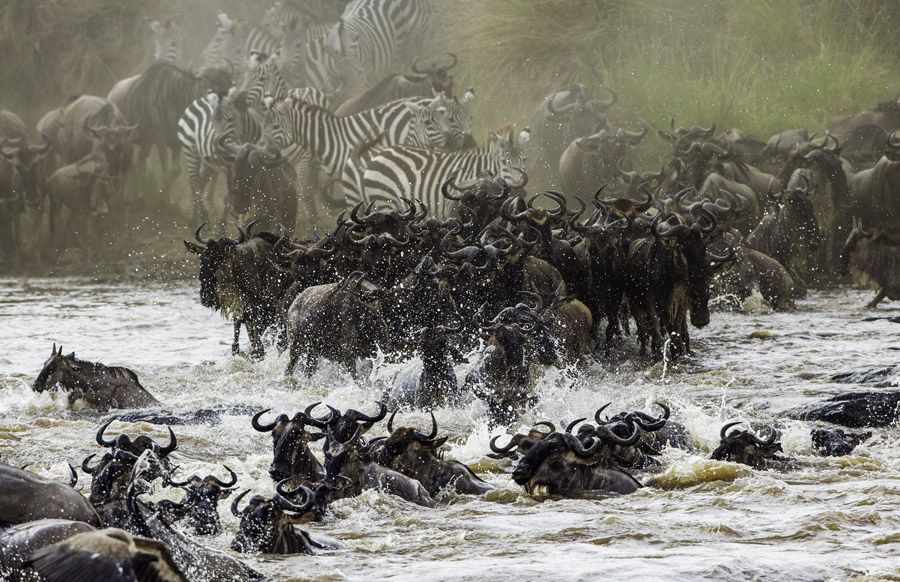
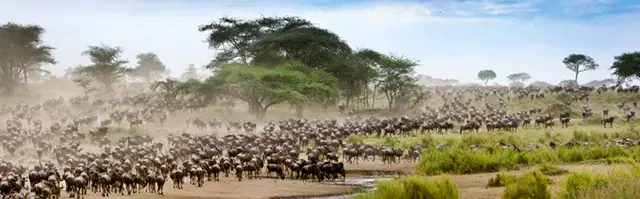
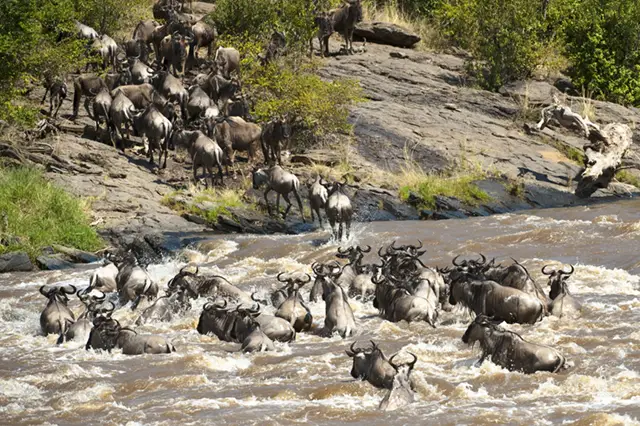
In late July, a large proportion of the Serengeti’s 1.5 million wildebeest have already crossed the river and migrated north into the Masai Mara, but when we arrived there were still tens of thousands to the south, and we were able to witness several dramatic river crossings.
 Such crossings are far from guaranteed, are likely to require a good deal of patience, and in the company of numerous other vehicles. However, when they occur, it's an intensely brutal spectacle, with hundreds and thousands of wildebeest throwing themselves into the river.
In their desperation to get across, they risk injuring themselves, getting swept away in the current or being taken by crocodiles. It’s one of the most traumatic, though fascinating, events I’ve ever seen and not for the faint-hearted.
When viewed alongside the region’s remarkable big cats and in some of Africa’s most breathtaking scenery, the Serengeti makes for a fantastic trip, and we particularly loved the freedom of a private vehicle and guide.
Our Great Migration Holidays
We offer a range of holidays where you can watch the wildebeest migration, and can tailor-make a trip for you, whether you want to time it for the calving season or know the exact area you want to visit. Our holidays to the Serengeti operate from November and June.
The migration cycle starts when the frantic herds begin their journey southward along the eastern corridor of the Serengeti, departing from the Masai Mara in late October or early November in search of fresh grazing areas. They move toward the southern Serengeti's short grass plains, situated below the Ngorongoro Highlands.
By December, this region bursts into life, not just with grazing mammals, but also with a vibrant display of fresh green grass and colourful wildflowers.
 Below we outline the various options, but don't hesitate to contact us for further ideas.
Tanzania Great Wilderness Migration
Our Serengeti Migration Special trip visits both the Central Serengeti and Northern Serengeti from July to October. It's perfect if you're after an experience just like mine, where you can get away from the crowds and test your own skills in the field. Our Spirit of the North trip idea also gives you just this, plus visits Ngorongoro Conservation Area and crater. You stay in mobile camps, allowing you to keep close to the action.
 For photographers, there's surely no better addition to your photography portfolio than the wildebeests crossing the Mara River. Led by Nick Garbutt, our highly popular Serengeti Migration tour visits the Southern Serengeti Plains and Ngorongoro Crater in March and April to capture incredible photographs of the large herds of newborn calves, blue wildebeest, Burchell’s zebra and Thompson’s gazelles.
Kenya Great Wilderness Migration
 Alternatively, we also offer a Migration Special trip to Kenya, visiting the Masai Mara National Reserve during June to October. Spend three days in private conservancies as you enjoy this once-in-a-lifetime spectacle. To witness the iconic river crossings, we recommend visiting either early or late in the season.
If you're keen to watch massive herds of wildebeest, zebra and antelope species consisting of hundreds of thousands of animals, contact our friendly team to book your Migration Special in either the Serengeti National Park or Masai Mara National Reserve.