My Ultimate Indian Wildlife Experience

Product Manager Jordan Fry visited India late last year, and following the success of his trip we launched our India’s Terai in Style and Tigers & Temples trip ideas, covering the locations he visited along with some other very exciting destinations!
Last year I was very fortunate to be hosted by the state government of Utter Pradesh to see some of the best wildlife destinations the state has to offer. My trip featured stays at both the picturesque Chambal Safari Lodge and the spectacular Jaagir Lodge and we visited no less than five national parks and sanctuaries.
The adventure began in Delhi, where we transferred by road to our first lodge of the tour. Situated within its own stunning grounds and draped in bougainvillea, Chambal Safari Lodge is a picture of serenity. A warm welcome was awaiting as we approached the outdoor lounge and garden dining area, surrounded by beautiful trees, flowers and birdlife.
As we were served our welcome drinks, a brown-headed barbet started to call before it came into focus, and not long after a group of jungle babblers decided to vocalise, revealing their location. At lunch we looked to the sky as a pair of Egyptian vultures began to circle in the not too far away distance. The scene was set for an excellent few days of birding.
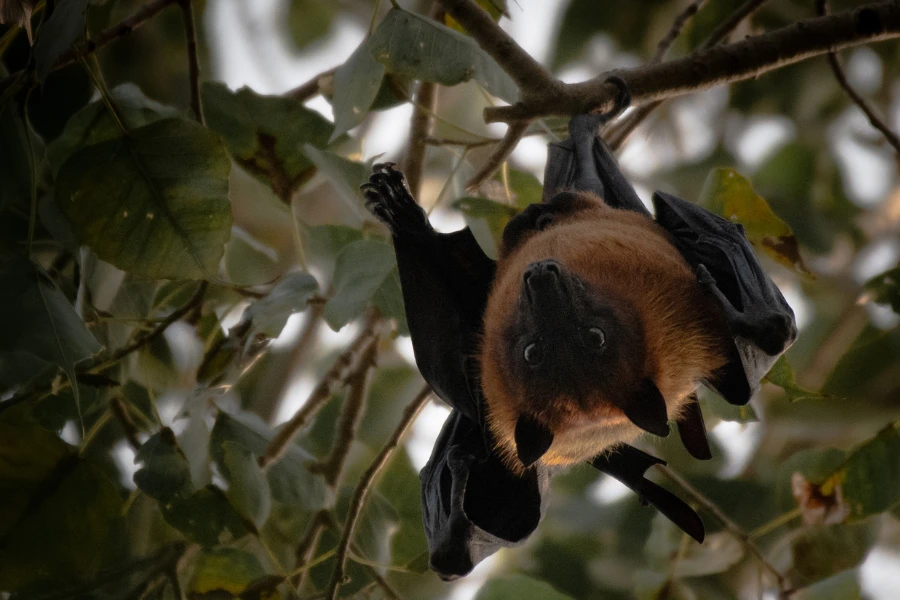
Our afternoon was spent walking the lodge grounds where we encountered their resident colony of Indian flying foxes, rhesus macaques and numerous bird species, including scops owl, grey hornbill and red vented bulbul. As we sipped our G and T’s before dinner, we were graced with the presence of white-throated kingfisher and black redstart.
 Later, as we prepared to head back to our rooms, one of the guides arrived to tell us that he had just seen a civet, so we all quickly followed him to the last known location. After a few minutes of looking, we spotted two Indian civets, side by side in a tree feasting on a medium-sized rodent.
The next morning began with a relaxed breakfast, accompanied by a cacophony of birdsong. Afterwards, our itinerary took us on a brief drive through rural villages before reaching the road to the Chambal River. We disembarked, and set off down a track through hilly outcrops towards the water’s edge, keeping our eyes peeled for birdlife as the mist began to dissipate over the tranquil river. We were treated to sightings of purple sunbird, jungle bush quail and rufous tree pie, to name a few!
The river water was as calm as a millpond as we boarded our boat and set off in search of birds, reptiles and the elusive Gangetic river dolphin. This cetacean has returned to this area due to the preservation efforts of the local people and government - the Chambal River is one of the few unspoilt stretches of river remaining in India.
Shortly after departing the dock, whilst I was still setting up my camera, we spotted a majestic sambar deer buck placed perfectly between two slopes with enormous antlers staring down at us, before he disappeared into the vegetation. Marsh crocodiles were a frequent sight with some incredibly sizable individuals, always intimidating with their prehistoric glare.
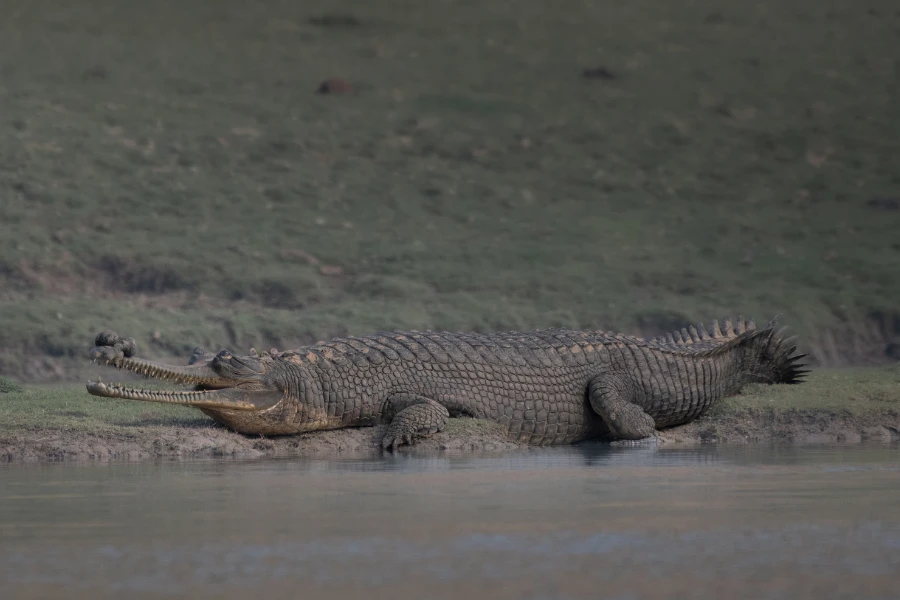
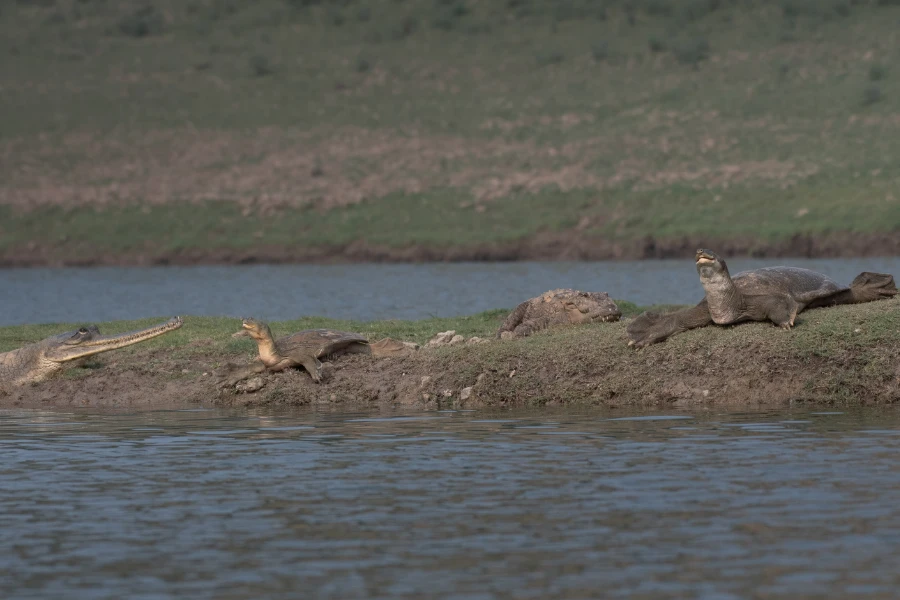
Among the highlights of this river safari though were the gharials, the fish-eating slender snouted crocodilians whose name comes from the shape of the males snout, said to resemble a traditional south Asian pot known as a ‘ghara’. We came across a number of these unique reptiles amongst Indian soft-shelled turtles, mudflap terrapins and numerous bird species such as painted storks, striated herons, green shanks, Pallas gull, bar headed geese and an osprey.
 One member of our group was fortunate to spot a single river dolphin whilst the rest of us were birdwatching, rounding off a very successful day spent on this beautiful river. Upon our return to the lodge, a campfire awaited us with drinks as dinner was prepared, the group shared stories of their travels before another sumptuous meal, after which we retired to our rooms ready for the following day.
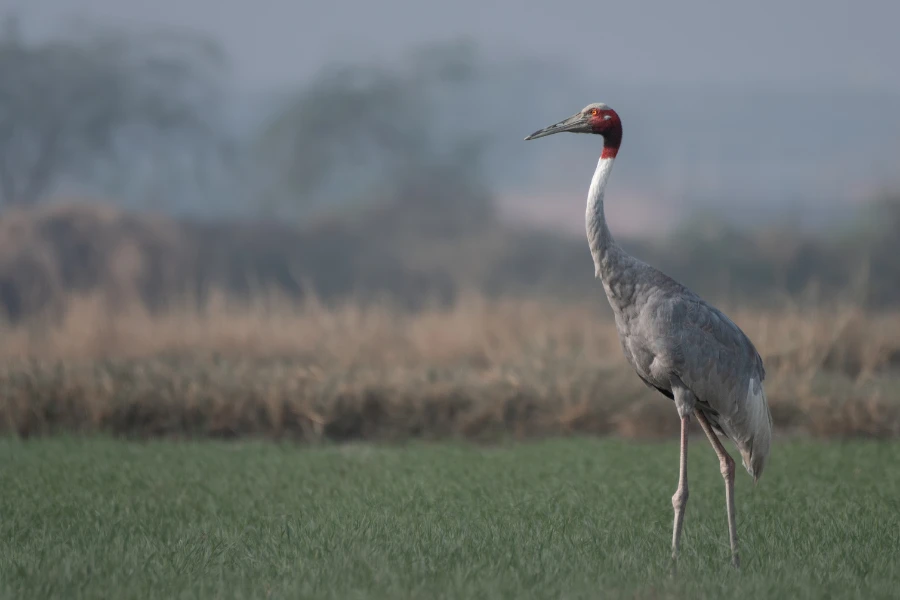
Today, we travelled to our next destination, Jaagir Manor lodge. This day was mostly on the road, with occasional stops for wildlife including magnificent sarus cranes, wading through agricultural land. They're the tallest flying bird species in the world, and it really is an awe-inspiring sight to witness the size of these birds first hand.
 We stopped for a short lunch in the city of Lucknow, the capital of Utter Pradesh, where there are a plethora of temples and palaces to explore. After a few more hours on the road, we arrived at our destination. Jaagir really is a five star property - the service is impeccable, the hospitality unrivalled, the food spectacular, and the property itself is simply stunning, with numerous walkways romantically lit under the night sky. Our stay began with welcome drinks and dinner by the pool, before a tour of the rooms, which were all unique with their own charm and immensely luxurious. Soon after, we headed off to our designated rooms to sleep.
Our first vehicle safari of the trip took us to Pilibhit Tiger Reserve. Pilibhit’s forest is dense, making wildlife viewing a challenge, but there's certainly plenty to be seen here, with numerous prey species and of course the chance of observing the apex predator of India’s forests, the Bengal tiger. The forest itself is a spectacle comprised of dense undergrowth and sal trees, as is typical of the Terai region.
Whilst we didn’t catch a glimpse of any cats, we had a highly successful drive with sightings of wild boar, chital, rhesus macaque, both Terai and hanuman langur, marsh crocodile, spotted tortoise, and masses of bird species including white-bellied oriole, honey buzzard, yellow-bellied prinia, cinereous tit, stork-billed kingfisher, crested hawk-eagle and jungle owlet.
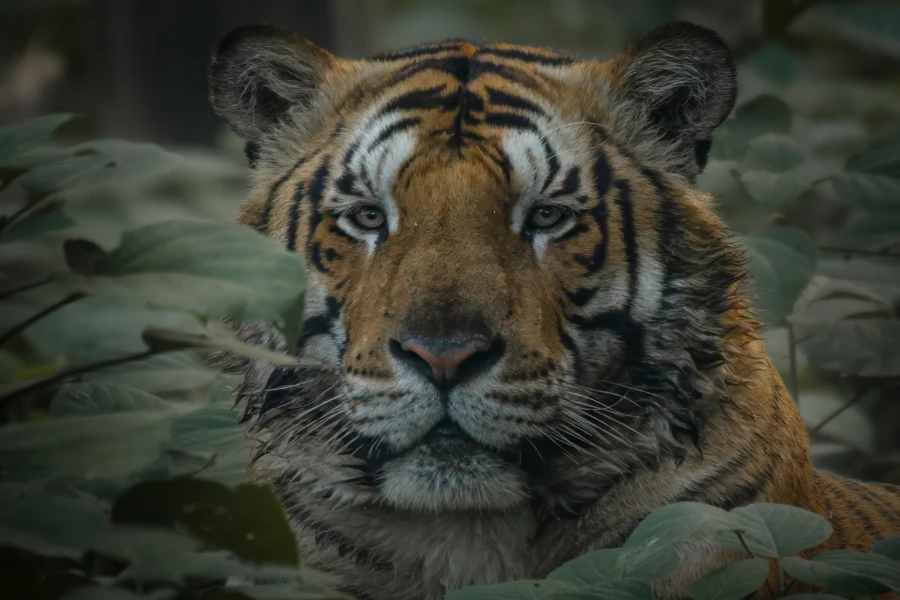
Kishanpur Wildlife Sanctuary was our first destination on day two at Jaagir; this is a spectacular forest where the trees divide the sunlight into marvellous sunbeams, creating a remarkable theatre for the wildlife to make an appearance. We didn’t have to wait long for the star of the show to make an appearance - within 30 minutes of our morning drive, we were alerted to langur alarm calls on the bank of a lake.
We waited. Listening, watching, waiting. The gentle crunch of a branch was the first indication we were close, and then a shadow passing through the foliage. All of a sudden he came into sight, an enormous male Bengal tiger patrolling the waters edge, disappearing and then reappearing several times before he decided to cross the road directly behind us in one of the spaces of dappled light. He then chose to rest just 15 metres from our car and stared in our direction, the thrill of staring such a powerful big cat in the eyes is an experience that is simply unforgettable.
The rest of the drive continued to be rewarding, with sightings of chital, hog deer, barasingha, hanuman langur, wild boar, marsh crocodile and avians such as black francolin, lesser whistling duck, crested serpent eagle and Indian roller.
 The afternoon excursion took us to Dudhwa National Park, an enchanting forest full of mystery and charm. As we traversed the dirt track ahead, the calls of streak-throated woodpeckers rained down on us amongst glimpses of Tickell's blue flycatcher, and the unmistakable beating sound of a great hornbill in flight. A large branch breaking soon took our attention, and shortly afterwards a female Indian elephant appeared briefly and then quickly disappeared into the immense forest. Despite the fleeting sighting, we could hear her and other members of the herd behind a wall of dense greenery until a silence dawned upon us, and we moved on.
This park has had a successful conservation project involving the greater one-horned rhino. Starting with just five individuals, the park now boasts a population of over 40, all protected within a fenced section of the park. Tourists are able to access this section with a permit, and after checking in with the rangers just outside the rhino zone, we were allowed to enter. The tall grasses and various water sources provide the ideal habitat for this megaherbivore, and we came across our first rhino from a distance as it bathed in a shallow river.
As the daylight began to diminish, we drove back towards the enclosure gate, and were granted another sighting. This time a mother with a young calf were gently grazing on the edge of the forest in knee high grass; this intimate moment provided a wonderful conclusion to a very special day.
 As we returned to the lodge, we took a turn down a dirt track and were met by the lodge staff on the edge of a small swamp, laden with drinks and nibbles. We were told the area was a popular haunt of a resident fishing cat - unfortunately the cat chose not to make an appearance on this particular evening, but we were treated to a pair of spotted owlets roosting in a hollowed out tree.
Our penultimate morning at Jaagir Lodge featured a gentle stroll around the property’s grounds in search of birdlife, where we spotted rose-ringed parakeet, white wagtail, pied bush chat and red-naped ibis, amongst many other species. Soon after, we were collected and transported to Katarniaghat Wildlife Sanctuary. This park along with Kishanpur and Dudhwa National Park make up the Dudhwa Tiger Reserve.
Located on the Girwa River, creating a natural border with neighbouring Nepal, this forest reserve with dense vegetation and abundant wildlife offers both boat and jeep safaris. We began with a short boat cruise, again in search of Gangetic river dolphin who frequent this area in healthy numbers.
Unfortunately the dolphins eluded us, but the marsh crocodiles were out in force again, as were gharial, Indian roofed turtles, Indian pond turtles and Indian tent turtles. We were treated to a variety of birds whilst meandering along the river, including grey-headed fish eagle, river tern, oriental darter and ruddy shelduck.
 We left the boat for lunch, before an afternoon drive in this stunning sanctuary. On land, we were treated to sightings of peregrine falcon, swamp francolin, white-throated bush chat, brown-capped pygmy woodpecker and orange-headed thrush. Rhesus macaque, hanuman langur and chital were also spotted, along with fresh elephant tracks, before we returned to the park office to begin our journey back to the lodge. Our final evening was spent regaling tales of our trip before saying our goodbyes.
The visit to India had now come to its climax and all that was left to do was drive back to Delhi for the flight home. This trip was a fantastic experience, and an excellent option for anyone who has visited India and observed tigers before. Spotting wildlife requires slightly more work than other busier reserves, however it makes each sighting far more rewarding. With stunning green forest backdrops, and being in much quieter parks than those found in central India, in terms of car volumes, it makes each sighting just that bit more intimate.
Kishanpur is particularly fruitful when it comes to tiger sightings, and within the rhino zone at Dudhwa National Park, the chances of seeing the greater one-horned rhino are very high. Due to conservation success, five of the rhinos will soon be released into the wider national park.
If you are interested in either of our India’s Terai in Style or Tigers & Temples trip ideas, or a similar itinerary to the one detailed in Jordan's blog, please speak to our team, who can find the perfect fit for you.