Experience some of Sri Lanka’s finest wildlife on this diverse journey through remote forests, bird-filled coastal wetlands and rainforests, showcasing the island’s rich habitats and lesser‑visited regions in the company of expert guides.
Join conservationist Elle Kaye and wildlife photographer Harry Read on an insightful journey through some of Sri Lanka’s most rewarding and little‑visited wildlife sites. This itinerary spans each of the island’s major ecosystems, where within days you may watch elephants in riverine forests, witness thousands of waders feeding in shimmering coastal pools, and encounter colourful endemic birds and lizards in rainforest.
Beginning in the vast, forested landscapes of Wilpattu National Park, we search for Sri Lanka’s iconic leopard among dappled woodland and on the fringes of picturesque natural lakes. From here, we travel to the internationally important wetlands of the Mannar region, home to extraordinary numbers of waders that overwinter here. Seeing huge flocks of species like little stint and lesser sand plover, alongside distinctive species such as crab plover and terek sandpiper, makes for a wader extravaganza unlike anything in Europe. The dry scrub of Mannar Island also offers chances to find elusive species including Indian courser, and even the tiny rusty‑spotted cat.
We then explore the beautiful Wasgamuwa National Park, where herds of Sri Lankan elephants gather in rich riverine forest and floodplain grasslands. The journey continues into Sri Lanka’s mountainous heart with a visit to Horton Plains National Park, a more rugged high‑altitude grassland and cloud forest supporting a wealth of endemic birds, reptiles, amphibians and plants. Here, we also learn about the unique leopard population that inhabits this montane habitat.
The tour concludes in the ancient lowland rainforest of Sinharaja, one of the world’s premier birding destinations. Its towering primary forest, alive with mixed‑species flocks and rare endemics, provides exceptional opportunities for both birdwatching and photography; a perfect finale to this diverse and rewarding wildlife journey.
Typical Itinerary
-
Day 1:
Depart UK
Depart the UK on an overnight flight from London to Colombo.
-
Day 2:
Arrive in Colombo & Transfer to Hotel
On arrival in Sri Lanka, we’re met at the airport and transferred four hours north to our lodge on the edge of Wilpattu National Park, where we’re based for the next two nights. The afternoon's free to unwind after the journey, and in the evening we come together for a welcome dinner.
Accommodation: Thimbiri Wewa Resort Wilpattu, 2-nights
-
Day 3:
Safari in Wilpattu National Park
Today's devoted entirely to exploring Wilpattu National Park, Sri Lanka’s largest protected area covering 1,317 square kilometres. Its mix of dense forest and distinctive sand‑rimmed lakes, known as villus, creates exceptional opportunities for wildlife viewing.
A major focus of our day is searching for Wilpattu’s iconic leopards, which are believed to occur here at a density of 18 individuals per 100 square kilometres. We also have the chance to observe spotted deer, red muntjac, water buffalo, mugger crocodiles, and an impressive variety of birdlife, including the striking Sri Lanka shama.
-
Day 4:
Safari in Wilpattu National Park & Transfer to Mannar Island
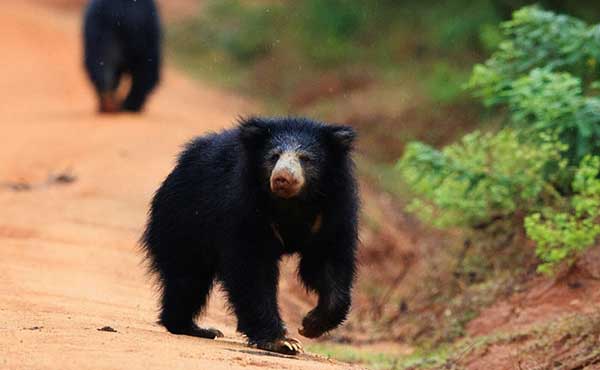
Our day begins with an early morning safari in Wilpattu, with a packed breakfast. Once again, we search for leopard, and with a bit of luck we may also encounter a pair of golden jackals, or the elusive sloth bear.
After the safari, we continue our journey north, crossing onto the arid Mannar Island off Sri Lanka’s north-west coast. The change in landscape and vegetation will be immediately noticeable. We arrive at our lodge in the afternoon, with time to settle in before heading out on a short local excursion to explore the birdlife along the coast.
Mannar is one of Sri Lanka’s most important regions for migratory shorebirds. The island forms a crucial bottleneck point on the Central Asian Flyway, hosting over a million migratory birds each year, particularly waders that rely on this area to overwinter.
Accommodation: Palmyra House, 2-nights
-
Day 5:
Birdwatching on Mannar Island
We spend the morning birding at Vankalai Sanctuary, a Ramsar‑listed wetland of international importance. This rich coastal ecosystem supports an impressive variety of waders, waterbirds, and migrant species. One of its highlights is the flocks of greater flamingos that feed in the lagoons and salt pans. During the winter months, they're joined by vast numbers of northern pintail, Eurasian wigeon, black‑tailed godwit, little stint, black‑winged stilt, and wood, terek, marsh and curlew sandpipers. Resident species such as spot‑billed pelican, painted stork, and white‑bellied sea eagle also thrive here.
In the afternoon, we continue birding around the Adam’s Bridge area, a chain of sandbanks and shallow seas linking Sri Lanka to India. This region is especially rewarding for shorebirds and other coastal species, as well as a well‑known hotspot for the distinctive crab plover and the recently described Hanuman plover. Terns are also abundant here, with greater crested, Saunder’s, roseate, little, and bridled terns all possible sightings.
In the evening, we head out on a night walk in search of the elusive rusty‑spotted cat, the world’s smallest wild cat, which occurs in healthy numbers in the habitats surrounding the lodge.
-
Day 6:
Explore Mannar Island & Transfer to Wasgamuwa
Today we begin by exploring the coastal scrub habitats of Mannar, focusing on the dry-zone and open-country species that are restricted to this arid region of the country. These include the vibrant blue-faced malkoha, Indian courser, grey francolin, pallid harrier, and more.
We then transfer to the south, making our way through diverse countryside to Wasgamuwa.
Accommodation: Lavendish Wild Safari, 2-nights
-
Day 7:
Morning & Afternoon Safaris in Wasgamuwa National Park
Today we explore Wasgamuwa National Park, with both morning and afternoon safaris, giving us the chance to encounter a wide range of mammals and birds.
Wasgamuwa protects classic dry‑zone forest, riverine grasslands, and seasonal floodplains, habitats that make it excellent for elephants and several speciality bird species. It's also pleasantly off the beaten track, meaning wildlife experiences here often feel very intimate.
Mammal sightings may include close encounters with Asian elephants, as well as wild boar and endemic toque macaques. There's also the possibility of spotting leopard or sloth bear, but they remain very shy here.
The birdlife is equally rewarding: red‑faced malkoha, yellow‑fronted barbet, and Sri Lanka green pigeon inhabit the dense evergreen canopy, while species such as Sri Lanka woodshrike, lesser adjutant stork, and grey‑headed fish eagle are more often found in the open landscapes.
-
Day 8:
Morning Safari in Wasgamuwa & Transfer to Nuwara Eliya
Today we head out for an early morning safari in Wasgamuwa National Park, allowing one final opportunity to explore the park’s wilderness and look for species that may have been missed the previous day. In the late afternoon, we transfer into Sri Lanka’s central highlands, ascending through tea plantations, waterfalls, and cool montane landscapes towards Nuwara Eliya.
Accommodation: The Blackpool Hotel, 3-nights
-
Day 9:
Safari in Horton Plains National Park
Today we enjoy a full day exploring Horton Plains National Park, a UNESCO World Heritage Site and Sri Lanka’s most important montane grassland and cloud‑forest ecosystem.
The park supports a small but remarkable population of leopards that have adapted to the cool, high‑altitude environment and specialise in hunting the park’s abundant sambar deer. We learn more about this unique population and may even be fortunate enough to spot one.
Horton Plains is also outstanding for several specialist highland birds, including Sri Lanka whistling thrush, yellow‑eared bulbul, Sri Lanka bush warbler, dusky-blue flycatcher, Sri Lanka white‑eye, and hill swallow.
Amid the dramatic highland scenery, we can also appreciate the region’s distinctive montane plant life, and search for purple-faced leaf monkeys and notable reptiles such as the rhino‑horned lizard and black‑lipped lizard, both of which are characteristic of these upland habitats.
-
Day 10:
Explore Horton Plains & Nuwara Eliya
Today we enjoy a second visit to
Horton Plains, giving us another opportunity to search for its unique high‑altitude wildlife. We can also visit one of the gardens in Nuwara Eliya, which can be exceptionally rewarding for spotting overwintering migrants such as Indian blue robin, pied thrush, Indian pitta, forest wagtail, and Kashmir flycatcher, along with resident species like the velvet‑fronted nuthatch and rufous-bellied and mountain hawk eagles.
-
Day 11:
Transfer to Sinharaja Forest Reserve
Today we descend from the cool central highlands into Sri Lanka’s lowland rainforest zone, a dramatic ecological contrast to the montane landscapes of Nuwara Eliya.
In the afternoon, we arrive at the Sinharaja Forest Reserve, a UNESCO World Heritage Site and one of the country’s most important biodiversity hotspots. After settling in, we head out in the evening for our first night walk, giving us the chance to search for the reserve’s rich nocturnal wildlife.
Accommodation: Jansen’s Bungalow, 3-nights
-
Days 12-13
:
Safari in Sinharaja Forest Reserve
For the next two days, we delve deep into the ancient, old‑growth rainforest of Sinharaja, one of the most extraordinary wildlife sanctuaries in all of Asia. This ancient forest shelters over half of Sri Lanka’s endemic mammals and butterflies, and astonishingly, all but one of the island’s endemic bird species. It's a paradise, and our time here offers some of the finest rainforest birding and photography in the world.
We begin by exploring the forest trails near our village and the park entrance, where we hope to encounter our first speciality species of the region, including the dazzling Sri Lanka blue magpie and perhaps even the elusive serendib scops owl.
Venturing deeper into the untouched rainforest, we may encounter mixed feeding flocks, a Sinharaja spectacle that can include delights such as Malabar trogon, yellow‑fronted barbet, black‑capped bulbul, Layard’s parakeet, ashy‑headed laughing thrush, white‑faced starling, Sri Lanka hill myna, Sri Lanka scimitar babbler, and brown‑capped babbler.
Sinharaja’s appeal extends far beyond birds, as it's also home to some striking reptiles like the rough‑nosed horned lizard and Sri Lanka green pit viper, as well as many unique frogs and a kaleidoscope of insects, orchids, and butterflies.
-
Day 14:
Morning Exploring Sinharaja Forest Reserve & Transfer to Negombo
Today we enjoy a final morning exploring Sinharaja Rainforest, with an emphasis on photography opportunities, mixed-species feeding flocks, and any remaining flora and fauna targets.
In the afternoon, we transfer to Negombo for a relaxing final evening by the beach.
Accommodation: Jetwing Beach, 1-night
-
Day 15:
Fly to the UK
This morning, we're picked up from our hotel and driven 45 minutes to the airport, for our flight back to the UK.