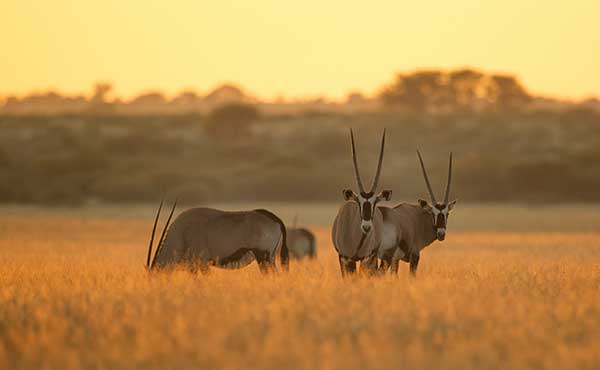
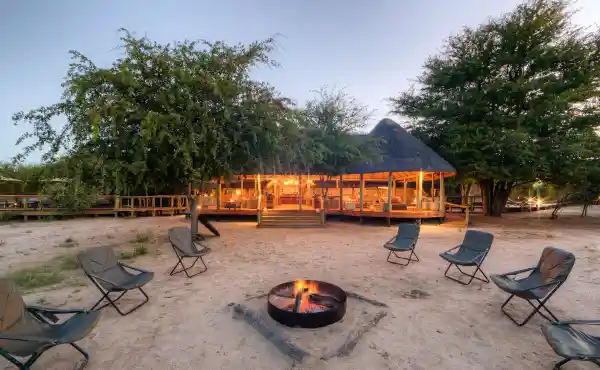
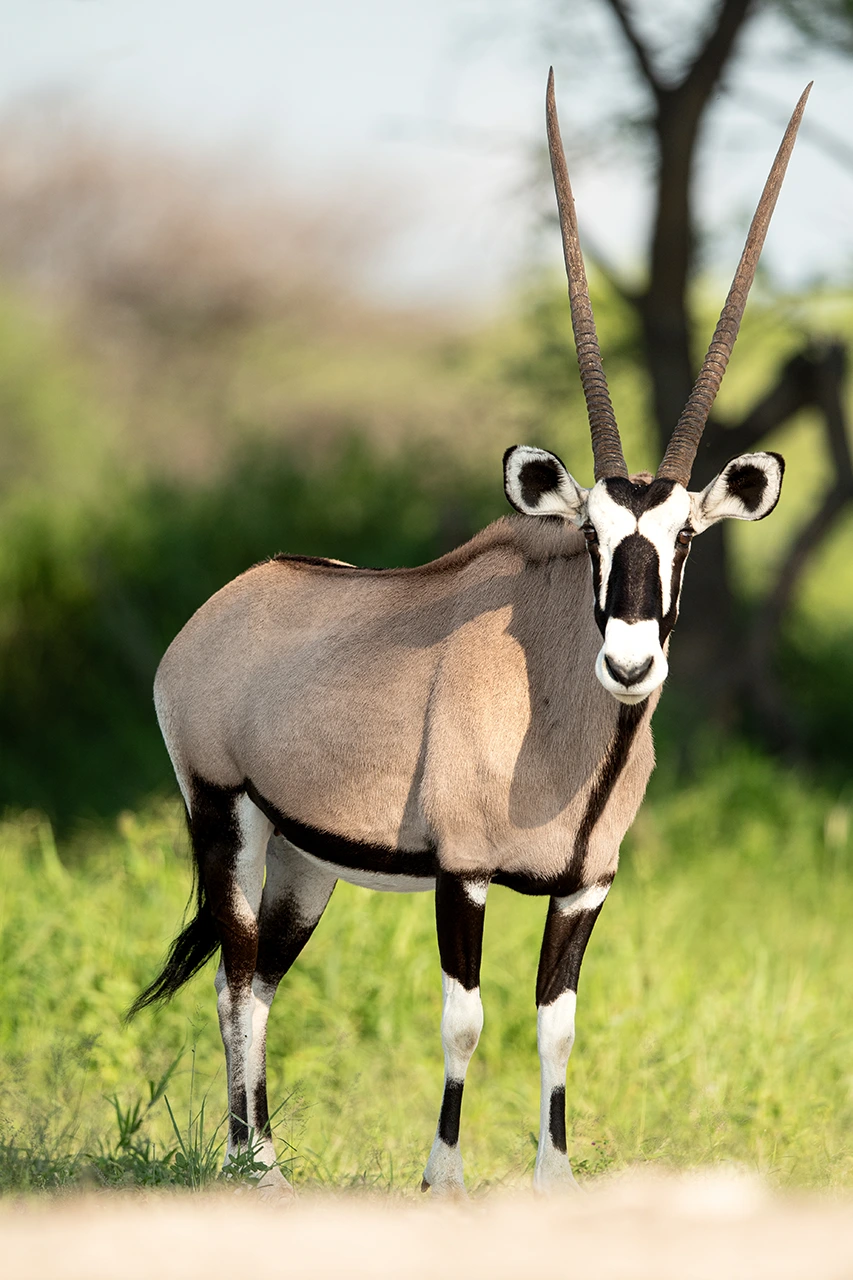
Arriving into Maun, we boarded a 30 minute light aircraft flight to the Dinaka Airstrip within the 40,000 hectare private Dinaka Concession on the edge of the Central Kalahari Game Reserve. As we descended over a miraculous carpet of greenery we spotted red hartebeest, kudu and gemsbok from the plane before meeting our guides and transferring to our first camp. This is an area that at this time of year you can scarcely believe turns into an arid desert, the abundance of life is something to behold. Butterflies littered our path wherever we went and the influx of invertebrates attracted a wealth of satisfied birdlife as they easily plucked insects from the air once they had been disturbed by larger mammals. Upon arrival at Dinaka Camp, we were greeted with a welcome drink and camp orientation, the latter of which was complimented by a gemsbok which came to drink from the waterhole in front of us.
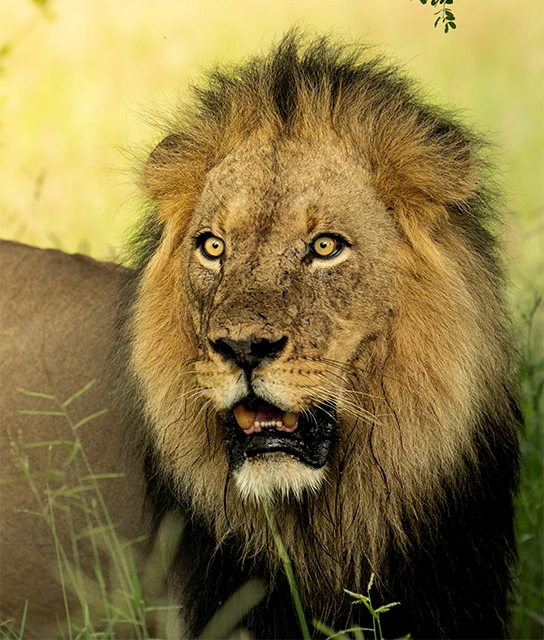
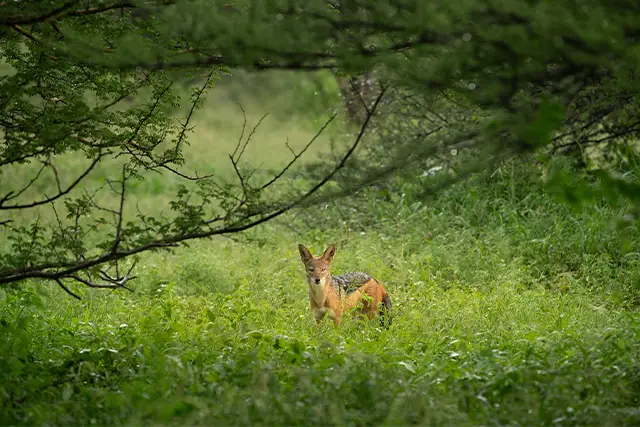
 Later in the afternoon we met for high tea and headed out on our first game drive with some menacing looking skies in the distance. As the lightning crashed and thunder roared, we spotted some black-backed jackals on the road, close to a herd of distinctly shaken up blue wildebeest. We continued down the track where we discovered a committee of white-backed vultures perched close to the ground, which raised our suspicions before we noticed they were accompanied by a pair of tawny eagles, who are often the first to locate a kill. We took a turn into the bush and shortly afterwards came across two of the magnificent black-maned lions that the Kalahari is famed for, feasting on a member of the aforementioned wildebeest herd. A series of thunderous claps spooked the predatory behemoths as the heavens opened and the males dragged their spoils under a nearby bush to wait out the downpour. We sat with them until the sun decided to break through the clouds and the felines shook their heads, stunningly expelling the thousands of tiny droplets from their imposing manes before relaxing in the warm rays now afforded to them with their bellies full.
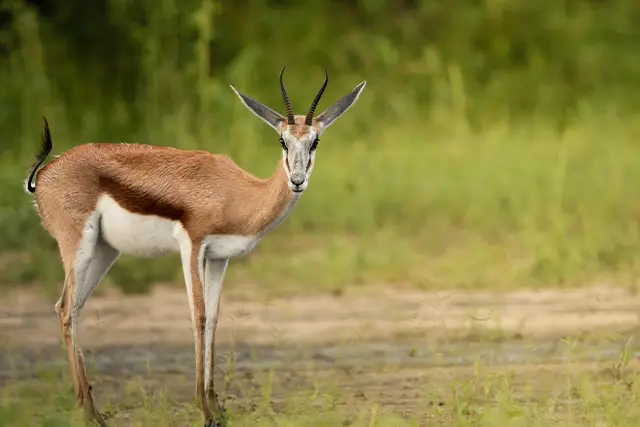
 With the skies now clear, we headed to the airstrip for sundowners where we were greeted by a congregation of springbok, blue wildebeest and red hartebeest. We enjoyed their presence and that of two very inquisitive young jackals while we sipped on our refreshing beverages as northern black korhaan watched us from their grassy cover and crowned lapwing occupied the plains with their distinct scratchy call. Returning to the lodge after dark, we sat around the campfire and reminisced about a fantastic first afternoon.
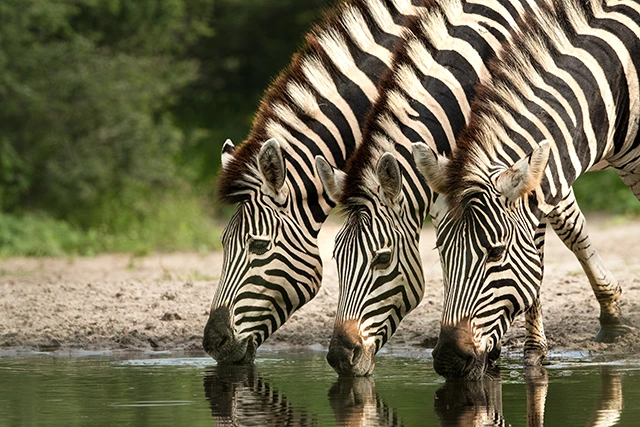
 Following a peaceful night’s sleep, accompanied by the sounds of the bush, our first morning began with our guide collecting us for a game drive, showing us the tracks of a leopard that had passed around the back of our tent in the night. After a coffee and few snacks, we headed out into the bush again, quickly picking up the spoor of lion, brown hyena, leopard, eland and white rhino. We reached a small waterhole with another congregation of antelope, this time with impala replacing the hartebeest, before heading to one of the lodge’s four photographic hides. The hide was above ground overlooking a waterhole and we didn't have to wait long until a small herd of zebra came to quench their thirst whilst we snapped away and enjoyed some coffee and biscuits.
 Our target species for the rest of the morning was white rhino and we set off searching for them, stopping for sightings of steenbok, eland, kudu and gemsbok as well as summer migrants such as lesser grey and white-backed shrikes. A particular highlight was watching a male masked weaver building his nest with the lush green grasses, easily moulded to wrap around the impressive structure. Our guide picked up some indications of rhino and we headed off deep into bush until we stumbled across a crash of seven huddled together, seeking shade from the late morning sun. After spending some time with them as they slept and grazed, we returned to the lodge for a midday siesta around the pool.
 Our afternoon was spent visiting one of the lodge’s sunken hides where we were fortunate enough to enjoy incredible low angle sightings of Namaqua dove, whilst herds of gemsbok and wildebeest came to the water to drink. As the sun began to set, we made our way towards the viewing tower, spotting ostrich along the way. We ascended the tower, where we were greeted by the lodge staff with a selection of drinks and delicious light bites as we appreciated the remarkable vistas across the reserve with the sun setting in the distance.
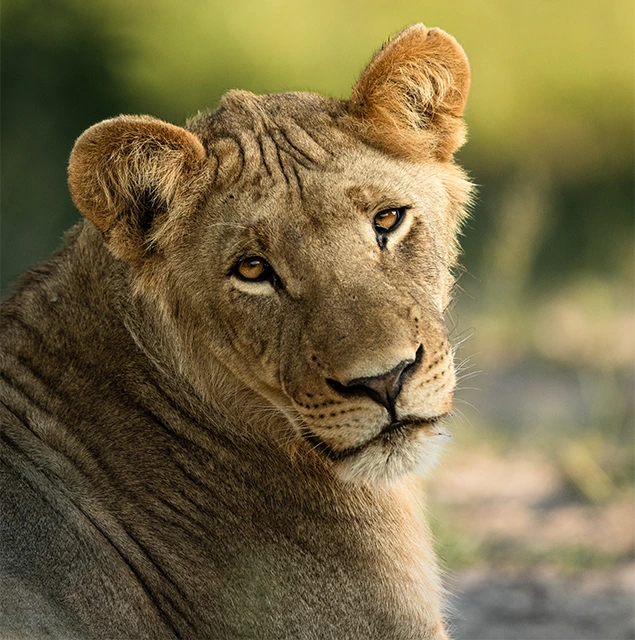
 The final morning in the Kalahari was spent in the presence of lions as we came across a female and her three subadult cubs resting peacefully in the days new light, presenting plenty of photographic opportunities. As the time progressed, we had to return to the airstrip and whilst we waited for our aircraft, a southern pale chanting goshawk appeared to see us off before beginning our journey to the Okavango Delta.
 When it comes to the Okavango, the wet and dry seasons are something of an oxymoron. There's less water in the wet season as the majority of the Delta is covered in grassy plains with the ephemeral bodies of water filled by the heavy rains, whereas in the dry season, the water arrives following the rains in Angola, taking roughly six months for the floods to reach the Okavango and create the wetland paradise the region is so famous for. This year the rains have been the heaviest they've been for a number of years, however this was still the wet season and the landscape as we flew over the Delta was comprised of endless plains intersected by pools of water.
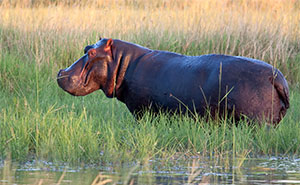
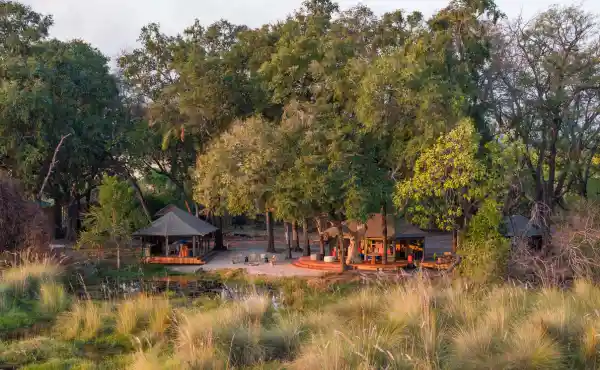
Our short flight descended over the forests of the Moremi Game Reserve touching down at Xakanaxa Airstrip, as we entered the reserve the wildlife and topography was distinctly different from our previous destination. We had our first sighting of elephant, as a large bull meandered through the trees with woodland kingfisher seemingly on every perch and the calls of African fish eagle resonating in the distance. We stopped to enjoy lunch on the banks of a lagoon filled with bellowing hippos before continuing onwards to the spectacular and intricate Okuti Camp, where on arrival a bushbuck darted through the middle of the walkways.
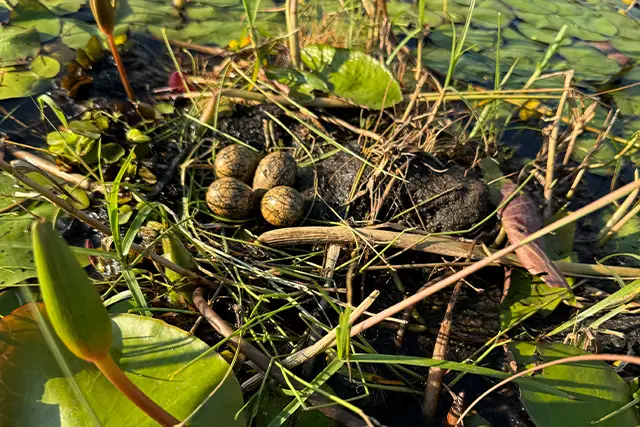
 The camp lies alongside the Maunachira River and Xakanaxa Lagoon and we had time to explore the property and relax by the pool before taking to the water by motorboat. A brief sighting of a bobbing spotted-necked otter was a particular highlight as we made our way to the newly established mokoro station - Okuti is currently the only property in Moremi to offer this activity. After meeting our polers, we climbed into the dugout canoes and begun the tranquil excursion, drifting effortlessly through the reeds. An African jacana danced across lily pads as we located his nest, built from floating plants with four eggs gently hovering on the water's surface. We searched for reed frogs as our guide explained the difference between day and night lilies, with various dragonflies perching on the diverse aquatic foliage. Returning to the motorboat, we stopped in the lagoon for sundowners before continuing to the camp for dinner.
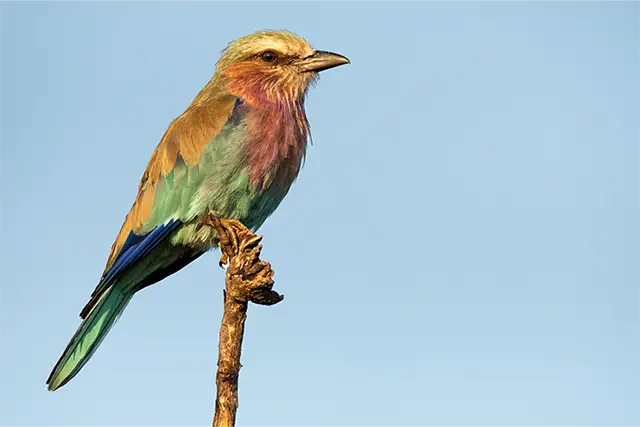
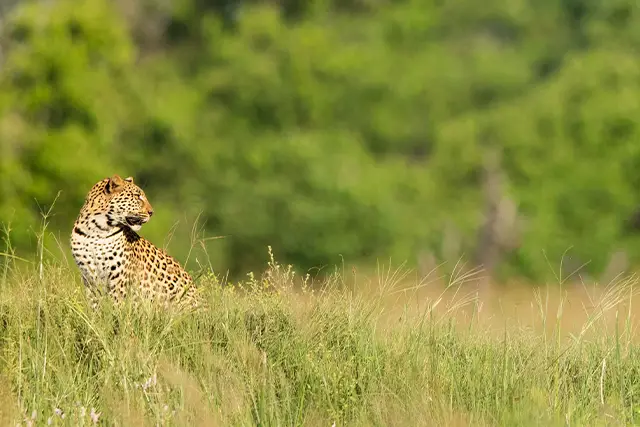
 Setting off into Moremi on a game drive the next morning, the calls of golden-tailed woodpeckers filled the air before we reached an open plain. Three southern ground hornbills could be seen in the distance perched on a dead tree, focusing on the long grass below. We examined the area with southern carmine bee-eaters snatching up the insects disturbed by the vehicles presence, watching the colourful avians intently before something else caught our eye. A young male leopard ascended a hill within the long grass unveiling himself to both us and the hornbills. He stopped to survey the area before disappearing again. We waited patiently and just so happened to be in the right place at the right time as he emerged right in front of our vehicle before crossing the road and vanishing once more. Continuing onwards we stopped for a quick break accompanied by green wood hoopoe and Meyer's parrot before we reached the airstrip for our next flight.
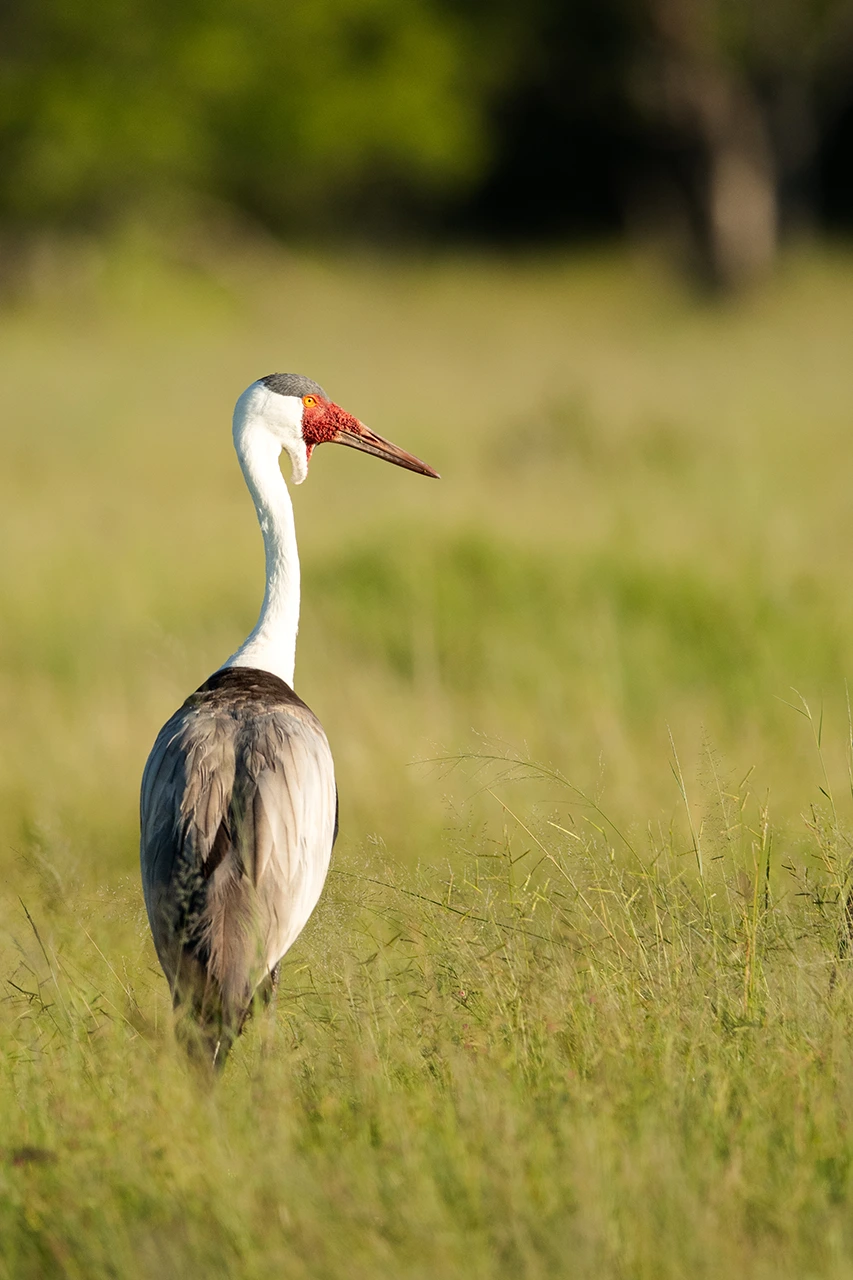
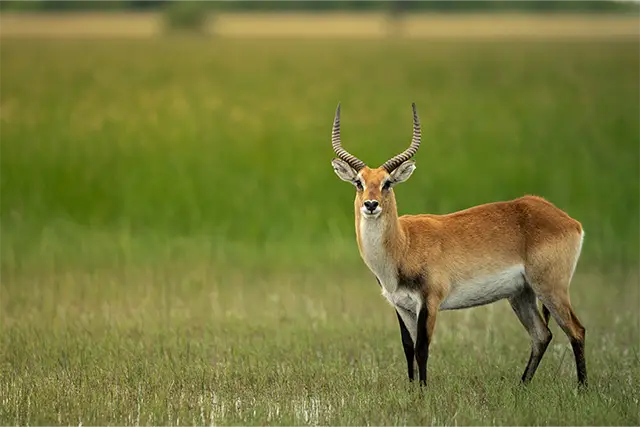
 Arriving at Shinde Airstrip in the Shinde Concession, we were met and transferred by our guides to our next accommodation, Shinde Footsteps. Once again flanked by carmine bee-eaters as we made our way across bridges and deep water crossings whilst enjoying our first sightings of giraffe, red lechwe and baboons. The camp itself is a brilliant combination of rustic bush camp and modern amenity overlooking a permanent lagoon. The afternoon game drive brought sightings of pink-backed pelican, African darter, African spoonbill, squacco and goliath herons around the numerous hippo filled pools. Bateleur eagles patrolled the skies as wattled cranes roamed the plains, weaving through herds of tsessebe whilst warthogs stared us down before retreating into the tall grasses with their aerial-like tails held high. As darkness descended, we returned to camp searching for wildlife under spotlight where we spotted swamp nightjar and side-striped jackal before arriving for a delicious dinner.
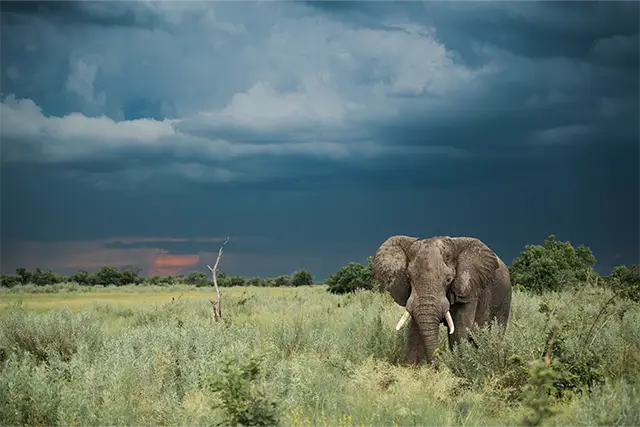
 Waking to a moody sky, we headed out on our morning game drive come transfer to Shinde Camp, just minutes after we departed we were greeted by an enormous bull elephant feasting on the vegetation around Footsteps, backed by the dramatic stormy skies and a slowly rising red sun creating a small window of light in the distance. Hippos grazed and black-backed jackals scoured the grasslands for small rodents as our journey through the concession continued and we enjoyed the thrill of further water crossings that are a quintessential part of the Delta experience.
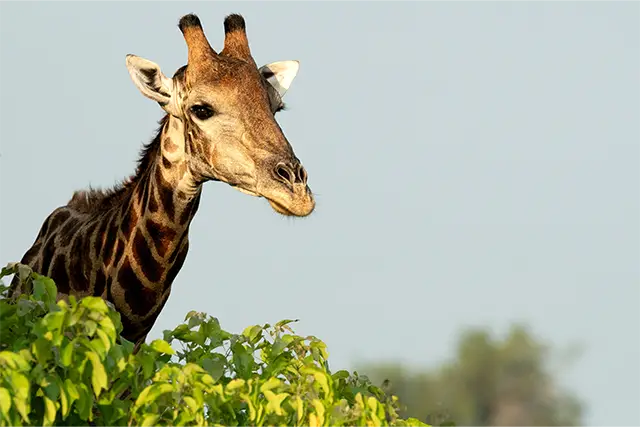
 Shinde Camp is another beautiful camp with raised walkways to navigate the lounges and dining areas, once again with traditional safari décor and touches of modern comfort whilst staying true to the wilderness feel. The afternoon game drive began with a zebra foal playfully dust bathing on the track in front of our vehicle before rounding a corner to find a troop of baboons feeding high up in the trees. A small family of elephants passed us by as we approached a giraffe plucking sausage fruits directly from the branches, twisting its neck with aplomb in order to detach the nutritious offering from its secure stalk. Kudu graciously emerged from the bushes as we spotted a family of southern ground hornbills flocking to a fallen tree as they faced towards the setting sun. We ourselves stopped to appreciate the spectacle at an area comprising four pans teeming with lechwe, two of which were incredibly bold and approached us to within a few metres on foot before laying down. We stood indulging on G&Ts and biltong as the antelope were undeterred by our presence.
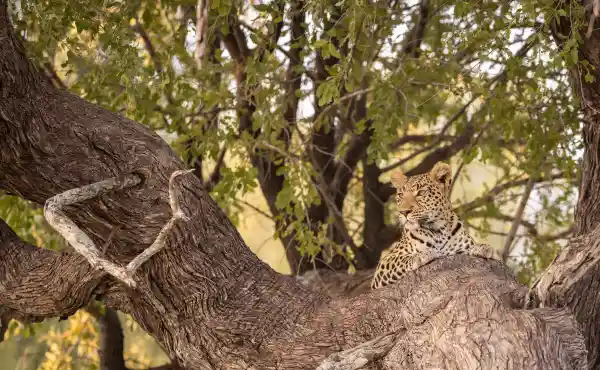
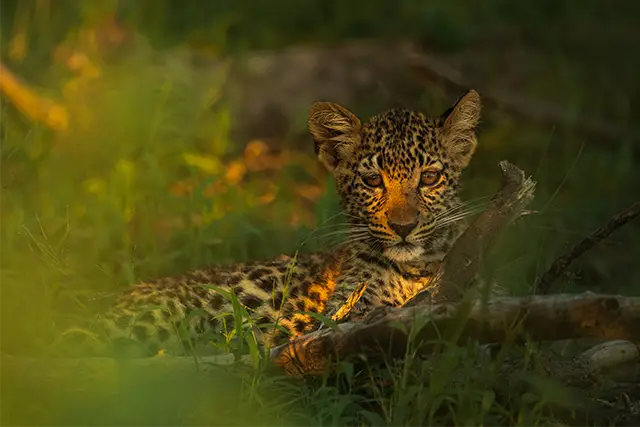
 The best sighting of the trip came the following morning, shortly after leaving camp we were observing a bachelor herd of elephants when we were notified that the other half of our group had found something special. We headed in their direction with anticipation levels rising, minds racing, trying to determine what the surprise could be. We reached an island covered in trees and dense bushes, still surrounded by dry vegetation prior to the floods. An opening appeared as we slowly approached and sat there was a stunning female leopard, then out popped a little head from behind her, a gorgeous four month old cub. We sat with the two of them for a couple of hours as the adventurous youngster climbed trees, got stuck and then called for assistance on multiple occasions, each time the cries for help falling on deaf ears as the mother left him to awkwardly clamber down with none of the elegance traditionally associated with leopards, seemingly teaching him a harsh lesson. Hiding in the long grasses, the little one would stalk and pounce on mum, both bonding and practicing hunting skills for later in life.
Whilst we could have stayed with the pair all day, we had another activity planned and headed for the airstrip. Waiting for us were two helicopters and we promptly took to the skies for a scenic flight, witnessing the sprawling Okavango Delta from above, constantly spotting wildlife; elephant, buffalo, ostrich, giraffe, zebra, red lechwe, hippo, the list went on and on. This was such an eye opening way to explore the Delta and I would highly recommend this activity during a stay as it provides a completely different perspective, even to flying by light-winged aircraft between camps.
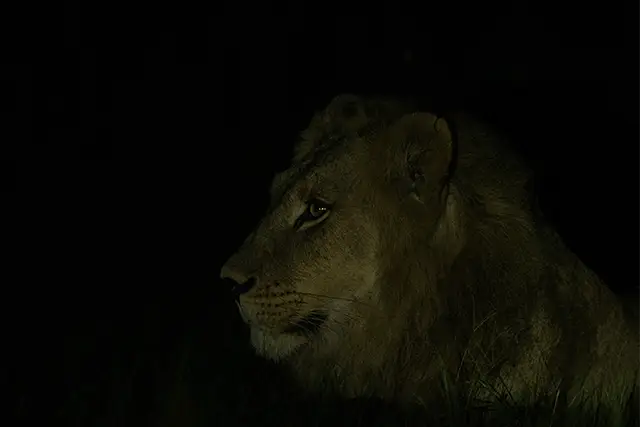
 Our final afternoon was spent on a boat safari, navigating the waterways directly from camp through a forest of reeds as pygmy geese hurriedly flapped overhead, malachite kingfishers rested on reeds, pied kingfishers arrowed towards the water and yellow-billed storks waded close to the banks. Eventually, we reached an opening where African fish eagles soared above and pods of hippos bobbed up and down to monitor our movements. This was a perfectly peaceful ending to an action-packed trip as we sipped on our final sundowners. Following an early dinner, we embarked on our final activity, a night drive. Making use of our guide's spotlight, we ventured into the bush under the cover of darkness spotting water thick-knee, black-backed jackal and grazing hippos before we heard a booming roar. We headed in the direction of the intimidating sound and shortly afterwards came across a lone male lion calling into the night before doing as lions do and falling asleep, a fantastic farewell sighting. The next morning we headed to the airstrip and returned to Maun for our onward arrangements.
 Following the success of this trip, we've now launched our Desert & Delta in Style trip idea, which can be organised to depart in either the green or dry season. Whilst the dry season is likely to produce the best opportunities when it comes to wildlife viewing with less dense vegetation in the Kalahari and more concentrated populations of predator and prey on islands in the Delta when the floods come, the green season does come with some beautiful scenery, abundant birdlife and offers a vastly different experience. Having said that, I truly believe that each of these camps, along with their sister properties, will deliver a first-class wildlife experience, with unforgettable guiding and hospitality whichever season you choose to travel in.
If you're inspired to travel to Botswana for a green season safari, our Desert & Delta in Style trip idea is perfect, and can also be taken during the dry season. Contact our expert team to find out more about this, and all our wildlife holidays to Botswana.